





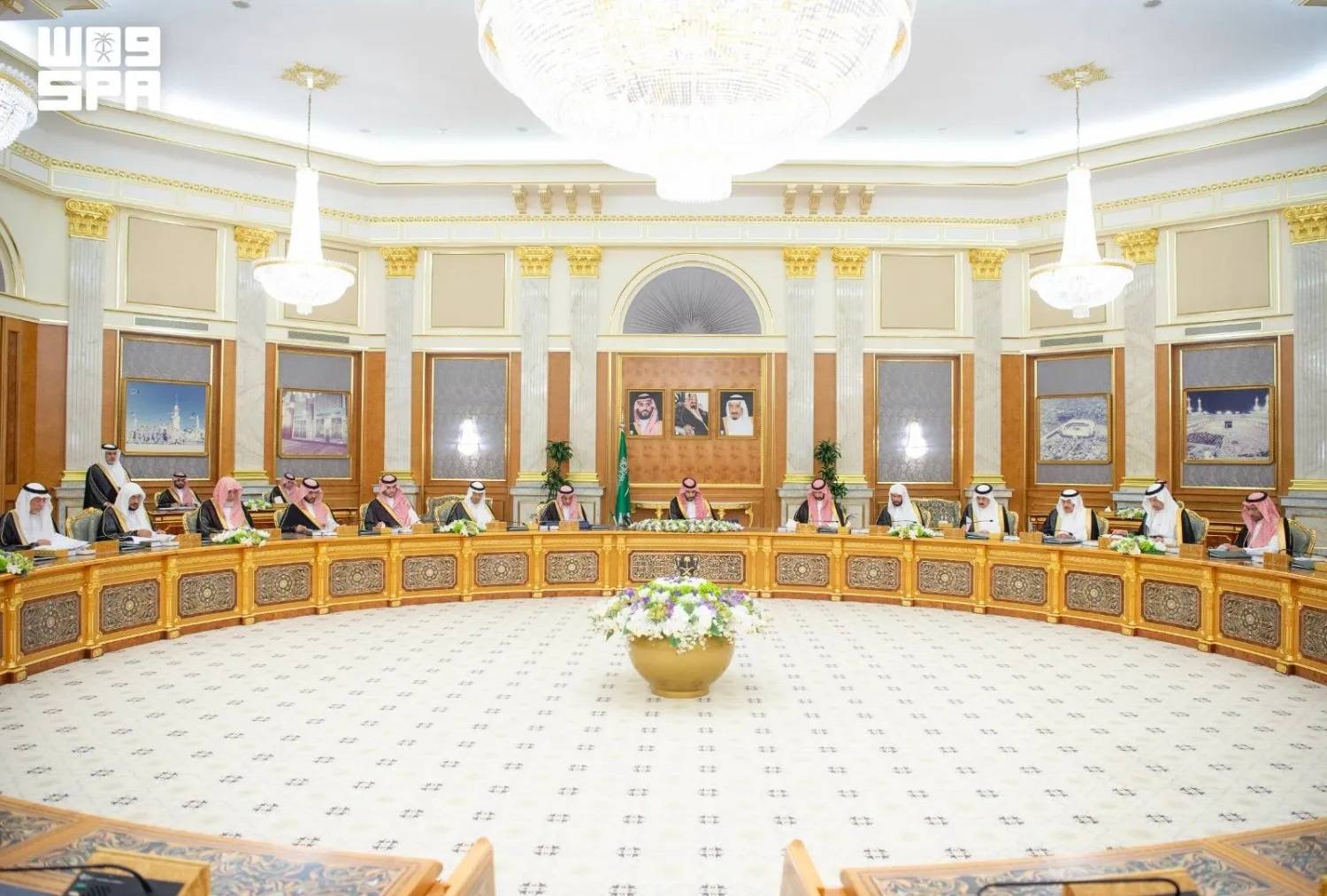
Saudi Arabia's financial system has entered a new phase of structured governance following the Cabinet's approval of the updated State Revenue System during its recent session chaired by Crown Prince and Prime Minister Mohammed bin Salman.
The legislation represents a fundamental shift in the economic philosophy of public finance management, moving beyond the traditional concept of fee collection to establish an integrated framework for strategic planning and comprehensive financial governance.
The significance of the new system extends beyond its regulatory function. It serves as a safeguard for medium- and long-term fiscal sustainability by comprehensively regulating every stage of public revenue management - from initial forecasting and estimation through to final settlement.
Expanding Coverage and Governing Sovereign Revenue Flows
The updated system places all public financial inflows under a unified regulatory framework, expanding the scope of state revenues to include a comprehensive range of structural and sovereign income sources.
These encompass natural resources and national assets - the country's most significant sovereign wealth - as well as fees, taxes, financial charges, and service revenues, which constitute the primary sources of non-oil government budget financing.
The framework also introduces proceeds from privatization and public-private partnerships (PPPs) as a distinct revenue category, aligning closely with the objectives of Saudi Vision 2030, which seeks to increase private sector participation in the national economy.
In addition, the system regulates revenues generated from state-owned assets through sales and leasing activities, financing and investment returns, as well as other sources including fines, penalties, compensation payments, donations, grants, bequests, endowment (waqf) income, zakat funds, and any additional revenue channels approved by the Cabinet.
Ten-Year Revenue Forecasting
One of the system's most significant structural reforms is its long-term forecasting approach, shifting budget estimation from annual planning to a broader strategic horizon.
The Ministry of Finance is now legally authorized to forecast government revenues for periods of up to ten fiscal years, relying on data, projections, and development plans submitted by various government entities.
The framework also provides flexibility for the Ministry to periodically review and revise these forecasts whenever significant domestic or international economic or financial developments occur, improving forecasting accuracy and reducing estimation gaps in the national budget.
The system further regulates revenue collection procedures by requiring government entities to collect revenues when due, record them within the relevant fiscal year, and transfer all collected revenues to the Ministry of Finance's account at the Saudi Central Bank according to timelines established in the implementing regulations.
Government Debt Collection
The system requires government entities to notify debtors on the first working day following the debt's due date. If payment is not made within 45 working days from the notification date, legal collection procedures must begin.
The legislation also introduces flexibility in handling government debts by allowing collection to be postponed for up to one year in exceptional circumstances. It affirms that government debts enjoy priority status and are not subject to statutory limitation periods.
Rules governing debt exemptions and installment arrangements have also been established. Debts not exceeding SAR1 million may be partially or fully waived under specific conditions, including verification that the debtor is genuinely unable to pay. Debts exceeding SAR1 million require approval from the Prime Minister based on the recommendation of the Minister of Finance.
The system also allows debts of up to SAR1 million to be repaid over periods of up to five years, while larger debts - or repayment terms exceeding five years - require approval from the Minister of Finance or an authorized delegate, with installment plans not exceeding 25 years.
From Revenue Collection to Revenue Management
Experts interviewed by Asharq Al-Awsat described the new legislation as a major transformation in government resource management, shifting the focus from simply collecting revenues to establishing an integrated system covering forecasting, planning, collection, receivables management, and oversight, thereby strengthening public finance efficiency and supporting Saudi Arabia's fiscal sustainability objectives.
Dr. Abdullah Almeer, Assistant Professor of Economics at King Fahd University of Petroleum and Minerals, said the legislation represents a transition toward a more comprehensive model of government revenue management that begins with revenue forecasting and planning, continues through collection, and concludes with debt management and performance oversight.
He explained that the updated system shifts from a model focused primarily on revenue collection to one that manages the entire government revenue cycle - from estimation and planning to collection, debt management, receivables administration, and performance monitoring.
According to Almeer, one of the most significant reforms is the move toward strategic revenue management. While the previous system emphasized identifying revenue sources and collecting outstanding debts, the updated legislation introduces medium- and long-term financial planning.
He noted that allowing government entities to forecast revenues over ten-year periods - with periodic reassessments in response to economic changes - will improve revenue forecasting accuracy, enhance medium- and long-term budget preparation, and strengthen the government's ability to manage fiscal risks.
Improving Fiscal Efficiency
Almeer added that the new system is expected to improve financial efficiency by narrowing the gap between projected and actual revenues while enabling faster collection of government receivables immediately after they become due.
He noted that government entities are now required to participate in revenue forecasting and establish specialized revenue development units where needed, increasing accountability for financial resource management and improving collection efficiency.
Regarding non-oil revenues, Almeer expects the legislation to have a positive impact because it assigns government entities direct responsibility not only for collecting revenues but also for developing them.
He emphasized that increasing non-oil revenues depends not only on introducing new fees or revenue streams, but also on improving the management of existing revenues, strengthening collection mechanisms, and enhancing receivables management.
He also pointed out that government entities must now conduct studies and analyses before proposing any new fees, financial charges, or taxes, helping strike a balance between revenue growth and economic development.
Additionally, he observed that recognizing privatization proceeds as a separate revenue source is fully aligned with privatization and public-private partnership initiatives under Saudi Vision 2030.
Clearer Responsibilities and Stronger Governance
Financial and economic consultant Dr. Hussein Al-Attas described the updated legislation as a qualitative shift from revenue collection to integrated government revenue cycle management, covering revenue estimation, recording, monitoring, collection, and the treatment of overdue accounts.
According to Al-Attas, the system clearly defines the responsibilities of government entities and standardizes procedures, reducing inconsistencies in implementation while improving collection efficiency. He expects these reforms to enhance financial planning, reduce revenue leakage, and strengthen fiscal discipline.
He also stressed that strengthening non-oil revenues depends not only on creating new income sources but also on improving the management of existing revenue streams. Better collection procedures, reduced payment delays, and more effective management of government receivables will support sustainable revenue growth.
Al-Attas added that clearly defined responsibilities among government agencies improve transparency and accountability, facilitate performance measurement, and strengthen financial governance through standardized practices for revenue estimation, collection, and receivables management.
Greater Flexibility in Managing Government Debt
Regarding government debt management, Al-Attas said the legislation strikes a balance between improving collection efficiency and considering taxpayers' circumstances by allowing structured repayment plans and installment arrangements under clearly defined rules. These measures are expected to encourage voluntary compliance while reducing defaults and disputes.
He explained that the system also provides flexibility in exceptional cases by permitting temporary deferrals of collection, as well as partial or full debt waivers under specific conditions, including verification of a debtor's ability to repay before exemption decisions are made.
Al-Attas added that the new legislation represents a modern model for government revenue management by strengthening the state's ability to collect its financial rights, reducing the accumulation of public debts, preserving economic activity, and supporting the continued growth of Saudi Arabia's non-oil economy.


