
Saudi Arabia Moves to Strengthen Stability and Development in the Region

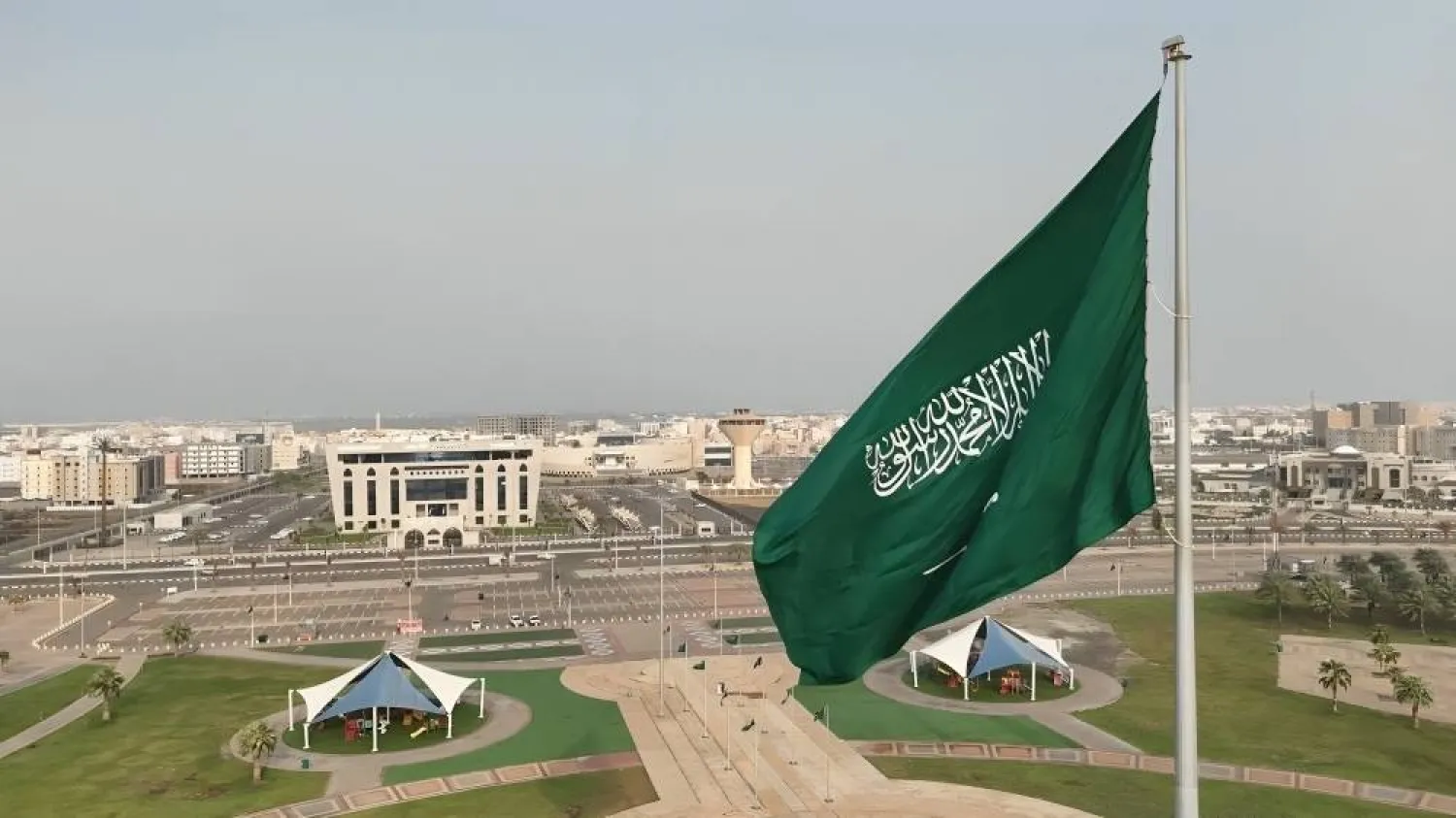
Saudi Arabia continues its initiatives to promote security and peace in the region... The Saudi flag is seen at a site in the city of Jazan (SPA).
TT

Saudi Arabia Moves to Strengthen Stability and Development in the Region

Saudi Arabia continues its initiatives to promote security and peace in the region... The Saudi flag is seen at a site in the city of Jazan (SPA).

At a time of growing uncertainty surrounding the global economy, amid the repercussions of the US-Iranian war, tensions related to the Strait of Hormuz, and risks facing shipping through several vital maritime routes, Saudi Arabia is intensifying its regional initiatives aimed at strengthening security and stability. The approach is based on a vision that links reducing geopolitical risks with creating the conditions necessary for growth, development, and attracting investment.

In this context, the "Makkah Agreement" between Saudi Arabia, Türkiye, and Pakistan stands out as one of the initiatives that specialists believe could contribute to strengthening regional stability and increasing confidence in the economic and investment environment in a region that occupies a pivotal position in global energy markets, trade, and supply chains.

Specialists who spoke to Asharq Al-Awsat said Saudi initiatives are part of a broader strategy aimed at building a more stable regional environment capable of withstanding shocks. They emphasized that strengthening security has a direct impact on the sustainability of energy supplies, the safety of shipping routes, and the movement of trade and investment, while also paving the way for broader economic integration and joint projects among countries in the region.

They also noted that the significance of Saudi initiatives extends beyond immediate security considerations to supporting development by reducing risk levels, strengthening investor confidence, and creating opportunities for new partnerships in energy, industry, technology, mining, logistics, and defense industries.

Stable Energy Supplies and Shipping

Fadl bin Saad Al-Bouainain, a member of the Shura Council, told Asharq Al-Awsat that the initiatives adopted by Saudi Arabia, foremost among them the "Makkah Agreement for Joint Defense" between Saudi Arabia, Pakistan, and Türkiye, could have an impact on the global economy, food security, and international trade, given the region's economic and strategic weight.

He added that the region exports nearly one-fifth of the world's oil needs, in addition to gas and agricultural nutrients, making its stability and security essential to ensuring the continuity of energy supplies and the safety of maritime shipping routes.

Al-Bouainain explained that Crown Prince Mohammed bin Salman places great importance on economic development as a foundation for the prosperity of peoples and states, with a focus on investment flows as one of the drivers of development, alongside strengthening the Kingdom's capabilities in the energy sector and maintaining its influential position within the global supply system.

He said Saudi efforts seek to achieve security and stability in the region in ways that positively affect both the Saudi economy and the economies of neighboring countries. Development, he noted, requires a stable foundation on which to build, while the defense agreement contributes to strengthening deterrence and reducing risks that could affect economic activity.

He pointed out that investors consider the stability of the investment environment a priority when making decisions. Accordingly, strengthening regional security and providing greater clarity over the economic outlook are factors that support the attractiveness of the Saudi market, given the diverse investment opportunities it offers.

According to Al-Bouainain, the "Makkah Agreement" sends reassuring messages to local and foreign investors and strengthens confidence in the sustainability of energy supplies and the protection of critical infrastructure. This could, in turn, affect the pace of projects, investment flows, and trade.

He stressed that Saudi Arabia is relying on "Vision 2030" and its development programs, which require substantial investment, making greater economic certainty and reduced geopolitical uncertainty important factors in supporting capital flows and project implementation.

He added that strengthening the regional security system could encourage investors to seize opportunities and participate in development projects, with the positive effects extending to the economies of the region as a whole, not just Saudi Arabia.

Al-Bouainain noted that the signing of the agreement after years of negotiations reflects the depth of relations between Saudi Arabia, Türkiye, and Pakistan and opens the way for a broader phase of cooperation, supporting efforts to establish security, stability, and prosperity.

He said the initiatives led by the Saudi Crown Prince have helped strengthen the role of diplomacy and political dialogue in addressing regional crises, alongside efforts to unify responses to challenges. This supports security and stability and provides a stronger foundation for economic and development programs.

Economic Integration Takes Shape

Saudi businessman Abdullah bin Zaid Al-Mulaihi, CEO of Saudi technology holding company Al-Tamayoz, said Saudi Arabia continues to work to strengthen confidence in both the domestic and regional economies. He noted that the "Makkah Agreement" is among the initiatives that could enhance the Kingdom's regional and international standing and open the way for a new phase of economic cooperation and integration.

Al-Mulaihi told Asharq Al-Awsat that Saudi steps to strengthen security and stability have a direct impact on the economic and investment environment. He said Saudi-Turkish-Pakistani rapprochement provides a foundation for developing joint political, economic, defense, and human cooperation.

He added that the Kingdom has established itself as an influential political and economic power by building strategic partnerships aimed at achieving shared interests and supporting regional security and stability.

Al-Mulaihi believes that Saudi Arabia's strategy of strengthening stability and building long-term partnerships helps create a more attractive environment for investment and opens opportunities for the private sector in industry, technology, energy, mining, logistics, defense industries, and trade.

He noted that Saudi Arabia has a large economy, a strategic geographic location, and ambitious transformation programs under "Vision 2030."

He said political and security rapprochement could develop into broader economic partnerships benefiting investors and business leaders, particularly through joint projects, knowledge and technology transfer, localization of industries, and increased trade.

Al-Mulaihi emphasized that the economy, development, and citizens are the direct beneficiaries of regional stability. He noted that the Kingdom's political strength and balanced partnerships give the private sector greater confidence and strengthen its ability to attract capital, technologies, and international partnerships.

He concluded that Saudi Arabia is pursuing a vision that combines protecting its interests, strengthening its security, and building the economy of the future. He considered the "Makkah Agreement" a factor that strengthens the Kingdom's position in shaping the region's security, development, and cooperation framework.

The Path to Sustainable Development

Abdulrahman Baashen, head of the Al-Shorouq Center for Economic Studies in Jazan, told Asharq Al-Awsat that Saudi Arabia is strengthening its international credibility by adopting initiatives aimed at reducing risks and supporting stability, including the "Makkah Agreement for Joint Defense." He believes the agreement could help increase economic certainty in the region following the repercussions of the US-Iranian war and tensions in the Strait of Hormuz.

Baashen added that the Saudi approach, which combines political, security, and economic action, supports regional balance and strengthens confidence in the Saudi economy and the region's business environment. This could be reflected in trade, investment, and international partnerships, particularly given the Kingdom's central role in global energy markets.

He expects the next phase to see increased trade and investment activity, particularly in defense-related technology industries, alongside the expansion of strategic partnerships with countries possessing advanced expertise and capabilities in these fields.

Baashen believes the agreement could provide a supportive framework for launching high-value economic projects and initiatives between Saudi Arabia, Türkiye, and Pakistan, with their impact extending to their international partners and laying broader foundations for economic integration and sustainable development among Riyadh, Ankara, and Islamabad.

He noted that developing partnerships in industry, technology, energy, supply chains, infrastructure, and transportation could turn the strategic rapprochement among the three countries into tangible economic opportunities and increase the region's ability to withstand external disruptions.

He stressed that the essence of Saudi initiatives lies in linking security with development. Reducing tensions and strengthening regional stability do not affect only the political sphere, but also extend to protecting trade flows and energy supplies, improving the investment environment, and providing a more sustainable foundation for regional economic growth.


Norway's Sovereign Fund Proposes Deep Cuts to US Treasury Holdings

A general view of the Norwegian central bank in Oslo, Norway March 6, 2018. Picture taken March 6, 2018. REUTERS/Gwladys Fouche
TT

Norway's Sovereign Fund Proposes Deep Cuts to US Treasury Holdings

A general view of the Norwegian central bank in Oslo, Norway March 6, 2018. Picture taken March 6, 2018. REUTERS/Gwladys Fouche

The manager of Norway's $2.3 trillion sovereign wealth fund has proposed significantly cutting its exposure to US Treasuries as part of a wider shake-up of its bond investments to improve returns, according to a letter published this week.

Norges Bank Investment Management has recommended reducing its weighting to government bonds within its benchmark bond index to 50% from 70%, with US Treasuries, the biggest holding, getting the biggest cut, according to the letter.

The changes would mean cutting nearly $80 billion from the fund's current holdings of about $215 billion of US Treasuries as of the end of June, according to Reuters calculations.

Government bond markets have been under pressure recently, with long-term borrowing costs soaring as rising inflation and government debt levels spooked investors.

Norway's sovereign wealth fund, the world's largest, owns on average 1.5% of ⁠all listed companies ⁠globally. Its scale means that portfolio decisions can influence broader market flows. Any cuts to its bond holdings are unlikely to be implemented until several months into 2027 at the earliest.

The letter containing the fund's proposals was sent in response to questions from Norway's finance ministry about the wealth fund's investment strategy for bonds.

Norges Bank IM said it would await the ministry's response, and any changes would be done gradually to limit market impact and transaction costs.

The proposals will form part of recommendations to the ministry in January.

They will be discussed ⁠as part of the fund's annual white paper process next spring, after which the ministry will make a final recommendation to parliament which will then hold a hearing, a Norges Bank IM spokesperson said.

"We recommend that the government subindex of the bond index be reduced from 70% to 50%," Ida Wolden Bache, governor of Norges Bank, and Norges Bank IM CEO Nicolai Tangen wrote in the letter.

"A government share of 50% will be sufficient to cover the liquidity needs, including in periods of turbulence in financial markets."

The fund also proposed considering an increase in investments in unlisted assets in a separate letter, in part as a way to reduce concentration risks that have grown in its equity portfolio amid the boom in the share prices of a handful of US tech companies.

Under its current mandate the fund can own unlisted real estate and renewable energy assets, but it has a lower share of unlisted investments ⁠than comparable funds.

Norges Bank IM said the biggest change to its bond index would be investing in more non-government debt, including mortgage-backed securities, to give it better diversification and exposure to risk premiums.

The spokesperson said total US dollar exposure would remain around 50%, adding: "What changes is the mix inside the dollar market: less US government debt, correspondingly more US mortgage and government-related bonds."

Under the proposals, the bond index weighting to US government bonds would reduce from 34.1% to 21.9%, according to the letter, with the allocation to euro area debt falling more modestly from 16.8% to 14.1%.

The allocation to Japanese government bonds would increase from 4.6% to 7.4%, while the UK allocation would remain unchanged at 4.2%. The fund said the changes would align the index more closely with the broader market weightings.

While US Treasuries exposure would fall, the proposed allocation to US non-government debt would jump from 16.2% to 27.6%, meaning that the overall bond index's weighting to the US dollar would fall only slightly, from 52.9% to 52.5%.

Europe's biggest pension fund, Dutch fund ABP, cut the value of its own US Treasury holdings in the first quarter of this year, Reuters previously reported.


J.P. Morgan, BNP Paribas Forecast December ECB Rate Hike

FILE PHOTO: The logo of the European Central Bank (ECB) is pictured outside its headquarters in Frankfurt, Germany, April 26, 2018. REUTERS/Kai Pfaffenbach/File Photo
TT

J.P. Morgan, BNP Paribas Forecast December ECB Rate Hike

FILE PHOTO: The logo of the European Central Bank (ECB) is pictured outside its headquarters in Frankfurt, Germany, April 26, 2018. REUTERS/Kai Pfaffenbach/File Photo

J.P. Morgan and BNP Paribas said on Thursday they expect the European Central Bank to deliver another 25-basis-point rate hike in December, as persistent inflation risks and elevated energy prices strengthen the case for further tightening.

Both brokerages had previously expected the ECB's tightening cycle to end without a December rate increase.

The revised outlooks suggest borrowing costs in the euro zone will remain elevated for longer than previously anticipated, reflecting resilient regional economic ⁠growth and ongoing energy ⁠supply concerns.

"We think the persistence of the energy shock and the resilience of the economy make second-round effects more likely to materialize," said analysts at BNP Paribas in a note.

Markets have almost fully priced in ⁠a 25-basis-point interest rate hike by the European Central Bank at its September 10 policy meeting, indicating a 99.2% probability, according to data compiled by LSEG.

Oil prices eased but remained above $95 a barrel. At the same time, eurozone bond yields retreated from multiyear highs, following recent market pressure as the escalating conflict in Iran boosted energy prices, stoking fears of persistent inflation and ⁠tighter ⁠monetary policy.

According to Reuters, J.P. Morgan said "an interaction between more persistent energy price pressures, solid growth, sticky core inflation and a neutral rate that the ECB sees edging higher" would be the reason for a further rate hike in December.

BNP Paribas expects the ECB to hike interest rates by 25 bps at its meeting next week while leaving the door wide open to delivering more if evidence of second-round effects builds.


US Sanctions Turkish Bank Golden Global Over Alleged Iran Links

ASHEVILLE, NORTH CAROLINA - SEPTEMBER 1: Treasury Secretary Scott Bessent arrives for a press conference as the 2026 G20 Financial meetings come to a close on September 1, 2026 in Asheville, North Carolina. Melissa Sue Gerrits/Getty Images/AFPages via AFP)
TT

US Sanctions Turkish Bank Golden Global Over Alleged Iran Links

ASHEVILLE, NORTH CAROLINA - SEPTEMBER 1: Treasury Secretary Scott Bessent arrives for a press conference as the 2026 G20 Financial meetings come to a close on September 1, 2026 in Asheville, North Carolina. Melissa Sue Gerrits/Getty Images/AFPages via AFP)

The US Treasury Department on Friday imposed sanctions on a Turkish bank over its alleged ties to Iran's Revolutionary Guard Corps (IRGC), as Washington pushes to economically isolate Tehran six months into their war. 

The latest action targets Golden Global Bank and its subsidiaries, which the US Treasury said "facilitated tens of millions of dollars' worth of transactions" for the IRGC. 

They were also said to have provided Tehran with "key correspondent banking access that allows it to move its funds internationally." 

The bank denied the accusations, saying it "has not concluded any banking transactions that could substantiate" the claims by the US government. 

The institution, which describes itself as "the first investment bank in Türkiye that observes the principles of interest-free banking in all its operations," said it respects "all applicable local and international banking regulations, practices and compliance requirements." 

Last week, Washington took a step towards cutting a major Egyptian bank's United Arab Emirates operations from the US financial system. 

"Financial institutions continue to find out the hard way that we are serious about Operation Economic Outcast," said US Treasury Secretary Scott Bessent in a statement. 

"While we hope no more banks will need to be sanctioned, that ultimately depends on how quickly the international community comes to its senses and ceases support of the murderous Iranian regime," he added. 

Bessent had said Tuesday that Washington would likely announce a bank sanction this week and one next week, as it tries to choke off Tehran economically. 

He was speaking on the sidelines of a Group of 20 finance leaders' gathering in Asheville, North Carolina, where he also sought to rally support from partners to put pressure on Iran. 

Iran has been at war since late February, when the United States and Israel launched a surprise bombing campaign that killed its supreme leader. 

Bessent recently vowed that the United States was declaring an "economic D-Day" on Iran, and warned of harsh consequences for countries that do not join the campaign.