

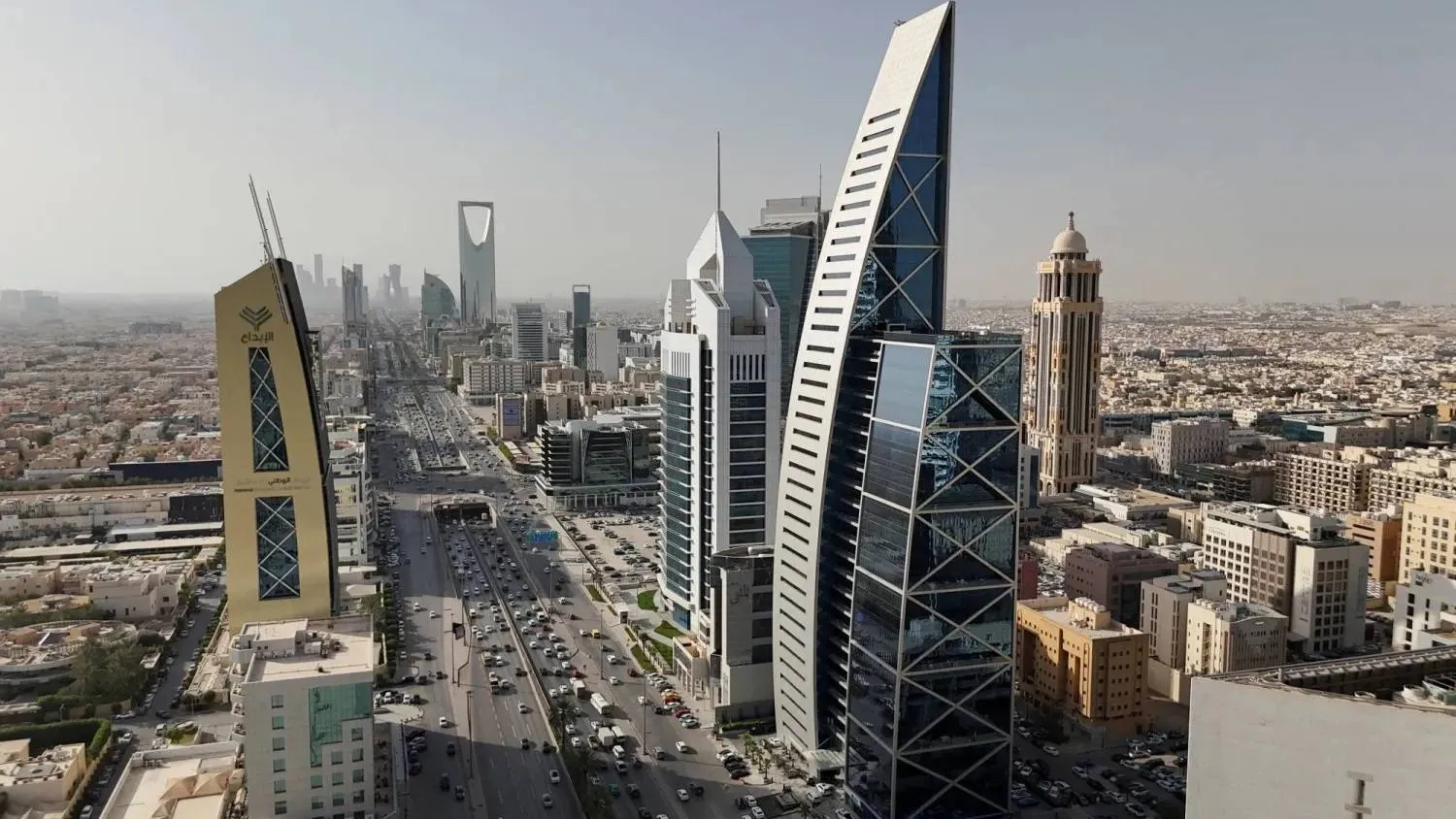

Saudi Arabia Restructures Debt Maturities to Bolster Fiscal Sustainability, Develop the Sukuk Market

Riyadh, Saudi Arabia (Reuters)
TT

Saudi Arabia Restructures Debt Maturities to Bolster Fiscal Sustainability, Develop the Sukuk Market

Riyadh, Saudi Arabia (Reuters)

Saudi Arabia is continuing to enhance the management of its public debt by restructuring the maturities of government sukuk, a move that experts say will strengthen fiscal sustainability and improve the efficiency of the government's debt portfolio.

Mohammed Al-Farraj, senior head of asset management at Arbah Capital, told Asharq Al-Awsat that the early repurchase and issuance of new, longer-dated sukuk represented the application of global best practices in sovereign debt management, aimed at reducing refinancing risk and building a more balanced debt structure.

The National Debt Management Center said it had completed the early repurchase of part of the Finance Ministry’s outstanding sukuk maturing between 2026 and 2030, with a total value of about 17.1 billion riyals ($4.6 billion).

The repurchase was carried out alongside a new sukuk issuance worth about 17.2 billion riyals ($4.6 billion).

The center said the initiative formed part of its efforts to deepen the domestic debt market and strengthen the management of government debt obligations and future maturities, supporting the kingdom’s public finances over the medium and long term.

The new sukuk were issued across five tranches.

The first tranche, worth about 1.45 billion riyals ($387 million), matures in 2031, while the second, valued at 1.62 billion riyals ($432 million), matures in 2033.

The third and largest tranche was worth about 10.55 billion riyals ($2.8 billion) and matures in 2036. The fourth, valued at 1.74 billion riyals ($464 million), matures in 2039, while the fifth, worth 1.80 billion riyals ($480 million), matures in 2041.

Al-Farraj said the early repurchase would reduce refinancing risk by easing the concentration of obligations in particular years and redistributing them over a longer time horizon.

That would give the Finance Ministry greater flexibility in managing cash flows and funding needs, while limiting the risk of having to refinance large amounts at a single point in time, particularly if borrowing costs rise in the future, he said.

Replacing shorter-dated sukuk with securities extending to 2041 would also increase the average maturity of government debt and signal a more proactive approach to managing liabilities, Al-Farraj said.

He added that the move would reinforce confidence among investors and credit rating agencies in the kingdom’s ability to manage its debt efficiently.

The transaction also carries broader implications for the domestic debt market.

Al-Farraj said the longer-dated issuances would help complete the government sukuk yield curve, providing an important pricing benchmark for debt issued by companies and other government entities and improving the efficiency of Saudi Arabia’s debt instruments market.

Sukuk with maturities of more than 15 years would also provide instruments better suited to institutional investors such as pension funds and insurance companies, which seek long-term assets that match their future liabilities, he said.

That, in turn, would support market depth and liquidity.

Al-Farraj said the transaction was part of Saudi Arabia’s efforts to consolidate the domestic sukuk market’s position as one of the largest debt markets in the region.

It also supports the objectives of the Financial Sector Development Program and Saudi Vision 2030 by contributing to a deeper and more efficient debt market.

Al-Farraj described the exercise as a “re-engineering” of the government debt portfolio, combining a smoother maturity profile, lower refinancing risk and stronger fiscal sustainability with the continued development of the domestic sukuk market for the benefit of the government, private sector and investors over the long term.



Goldman Sachs, JP Morgan Expect September Fed Hike as Inflation Lingers

Federal Reserve building in Washington (Reuters)
TT

Goldman Sachs, JP Morgan Expect September Fed Hike as Inflation Lingers

Federal Reserve building in Washington (Reuters)

Goldman Sachs and J.P. Morgan now expect the US Federal Reserve to raise interest rates this week after a string of stronger-than-expected inflation readings challenged hopes that price pressures would continue to ease without additional policy tightening.

The Wall Street banks joined a growing number of forecasters turning more hawkish after data last week showed ‌US consumer ‌and producer prices rose more than expected in August, ‌while ⁠oil prices climbed ⁠above $100 a barrel due to renewed hostilities in the Middle East, reported Reuters.

In a note on Friday, Goldman Sachs abandoned its previous call for rates to remain unchanged and now expects a 25-basis-point increase at the US Fed's September 15-16 meeting. J.P. Morgan, meanwhile, forecasts quarter-point hikes in both September and December.

The latest data have revived concerns that progress toward the Fed's ⁠2% inflation target could stall after months of moderation.

"We ‌think that the FOMC will be ‌reluctant to surprise," Goldman Sachs economist David Mericle said.

J.P. Morgan struck a similarly ‌hawkish tone following the inflation reports.

"The week that saw rising ‌bond yields and energy prices and a firm enough set of inflation readings to make a rate hike at next week's FOMC meeting more likely than not," J.P. Morgan economists led by Michael Feroli said in a note.

The outlook ‌for further Fed tightening will be in focus this week as policymakers conclude their meeting on Wednesday, ⁠while investors ⁠also watch the Bank of Japan for policy signals.

J.P. Morgan said the latest inflation data cast doubt on a sustained disinflation trend, leading it to forecast another Fed rate hike this year and raise its estimate of the long-run policy rate to 3.25%.

Markets are pricing in an 87% chance of a quarter-point Fed rate hike this month, up from about 70% before the latest inflation data, with another increase expected in December, according to CME's FedWatch Tool.

In a separate note on Sunday, Goldman Sachs said it still expects two Fed rate cuts in 2027, though later than previously forecast, as it sees this week's expected hike as driven more by market pricing than inflation fundamentals.


Saudi Arabia’s Dammam Airports Signs Design Contract to Develop King Fahd Int'l Airport

Dammam Airports CEO Eng. Mohammed Al-Hassany and President of WSP for the Middle East and Asia Dean McGrail seen at the signing of the agreement on Sunday. (X)
TT

Saudi Arabia’s Dammam Airports Signs Design Contract to Develop King Fahd Int'l Airport

Dammam Airports CEO Eng. Mohammed Al-Hassany and President of WSP for the Middle East and Asia Dean McGrail seen at the signing of the agreement on Sunday. (X)

Dammam Airports CEO Eng. Mohammed Al-Hassany and President of WSP for the Middle East and Asia Dean McGrail signed on Sunday a design contract to develop the King Fahd International Airport in accordance with the airport's approved master plan.

Al-Hassany said signing the contract marks a significant milestone in the development of King Fahd International Airport.

Dammam Airports is committed to upgrading airport facilities, increasing capacity, and delivering a seamless, high-quality travel experience through modern design solutions and smart technologies that meet travelers' needs and accommodate future growth in passenger and air cargo traffic, he stressed.

This will reinforce the airport's status as an international gateway connecting Eastern Region to the world, he added..

The project scope includes designing the expansion of passenger terminals, upgrading facilities, and improving airport entrances and access roads. It also includes developing baggage handling systems, digital services, and terminal wayfinding systems to streamline travel procedures and enhance passenger comfort.

The master plan aims to serve more than 19.3 million passengers annually by 2030, with capacity to be increased in phases to 32 million passengers per year to meet future travel demand.

It targets increasing air cargo capacity to more than 600,000 tons annually and aircraft operational capacity to 77 movements per hour, supported by comprehensive expansions of infrastructure, runways, and general aviation facilities.

The contract is part of Dammam Airports' ongoing efforts to develop the airport ecosystem, boost operational efficiency, and contribute to achieving the objectives of the Aviation Program and Saudi Vision 2030.


Iraq Signs Technical Consultancy Agreement with Chevron to Develop West Qurna 2 Field

Officials are seen during Sunday's signing of the agreement. (INA)
TT

Iraq Signs Technical Consultancy Agreement with Chevron to Develop West Qurna 2 Field

Officials are seen during Sunday's signing of the agreement. (INA)

Iraq’s Ministry of Oil signed on Sunday an agreement with the US company Chevron to provide technical consultancy to the Basra Oil Company.

The agreement was signed under the auspices of Oil Minister Basim Mohammed Khudair Al-Abadi.

Al-Abadi said the agreement provides consultancy services during the negotiation period with the Basra Oil Company regarding the development of the West Qurna 2 field, reported Iraq’s state news agency INA.

The signing ceremony was attended by the Undersecretary for Upstream Affairs, Naseer Aziz; the Director General of the Basra Oil Company; the Director General of the Oil Marketing Company (SOMO); and the Director General of the Petroleum Contracts and Licensing Directorate.
