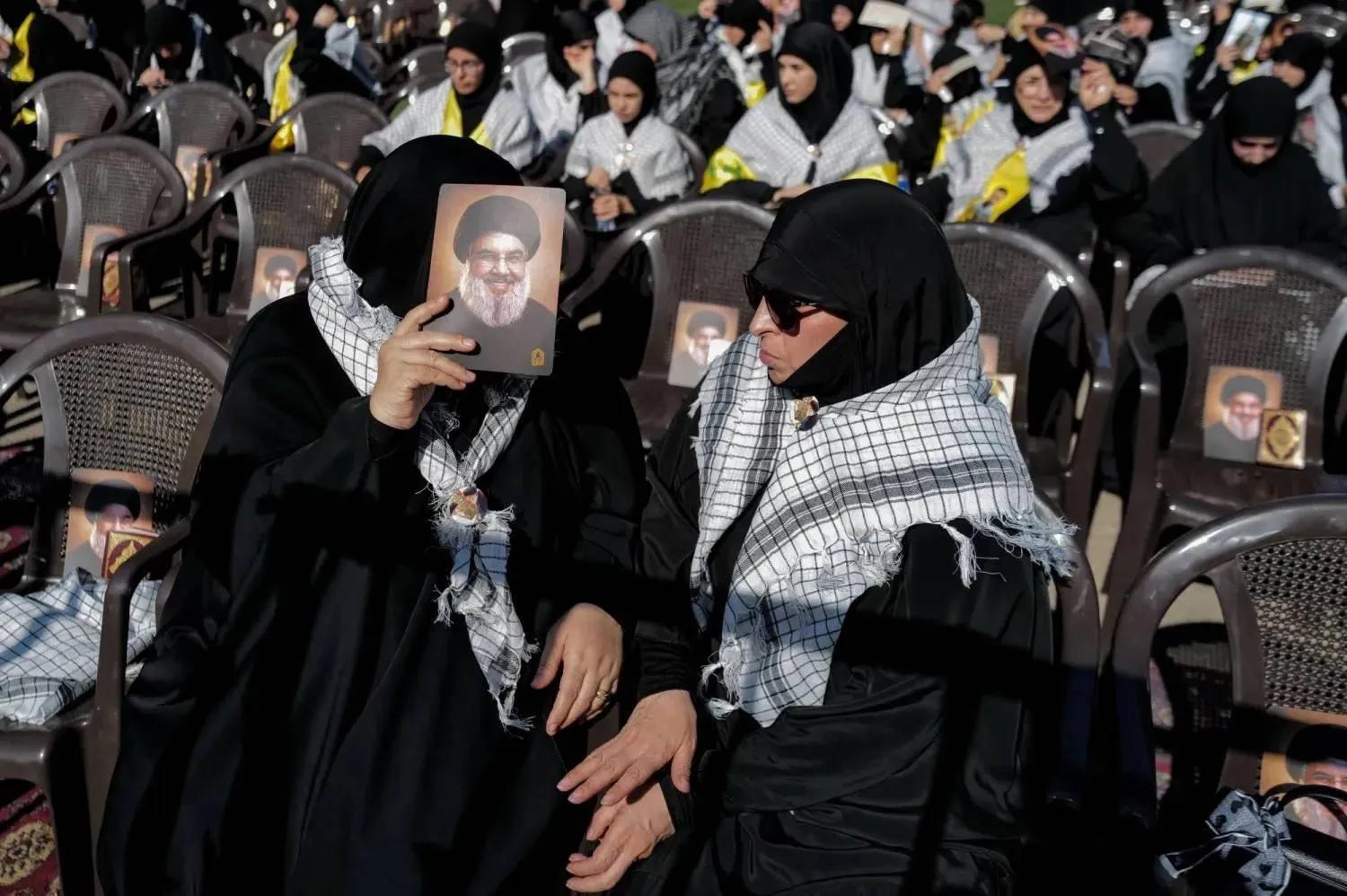

Hezbollah is seeking to ease growing anger among its supporters by pledging to contribute to housing costs for families who lost their homes in the war, nearly six months after a devastating escalation that began on March 2, during which Israel occupied more than 65 villages and towns in South Lebanon.
Hezbollah Secretary-General Naim Qassem’s announcement of plans to contribute to a housing project, alongside a commitment to provide accommodation, repairs and reconstruction using the group’s resources and donations, comes amid mounting frustration over its failure to deliver promised housing allowances for nearly two years.
The delays have worsened conditions for thousands of families, particularly those displaced from border communities.
Hezbollah has yet to disclose details of the initiative, leaving prospective beneficiaries hoping that long-promised payments will soon materialize.
No Full Rent Coverage
Residents of Beirut’s southern suburbs understand the announcement to mean that Hezbollah will cover only part of displaced families’ rent rather than the full amount.
Local sources told Asharq Al-Awsat that the pledge had dashed hopes of full coverage, as provided in 2006 and following the 2024 war.
“We are waiting for the details to be announced to understand the nature of this support,” they added.
The issue has become increasingly pressing for Hezbollah, which faces a financial crisis that Qassem has attributed to a financial “siege” preventing the transfer of funds from Iran to Lebanon.
Researcher Mohammad Shamseddine estimated that around 35,000 families currently require housing assistance.
He told Asharq Al-Awsat that the last payment, made after the March 2026 war, consisted of monthly allowances of up to $400 for households in Beirut and $300 in the south.
No final decision has been reached on the amount to be allocated, its distribution or whether payments would cover specific months or an entire year, he noted.
Following the first round of fighting in 2024, Hezbollah paid up to $10,000 per property for minor repairs, spending an estimated $300 million. It also disbursed $800 million in housing assistance, covering furniture and one year’s rent for those whose homes were completely destroyed.
In 2025, Qassem announced that the group had provided housing allowances to 50,755 people and repaired homes for 332,000 others.
Growing Discontent Among Supporters
Hezbollah opponent Ali Murad linked the announcement to rising dissatisfaction within the group’s support base, ranging from limited objections to occasional public criticism of its decisions and the course it has charted for South Lebanon.
He questioned what options remained available to residents after everything they had endured and whether Hezbollah had a clear vision for the next phase.
Murad told Asharq Al-Awsat that the party was under pressure to offer at least partial accommodation solutions while continuing to blame the state for shortcomings, despite recognizing the severity of its crisis.
He maintained that rental assistance alone could not compensate residents for their losses.
While the government has clear obligations toward its citizens, displaced families primarily need a viable plan allowing them to return to their villages and homes, something currently unavailable, he explained.
Murad urged the state to assume responsibility for the south, not merely by paying compensation or countering Hezbollah, but by becoming the residents’ principal authority and point of reference.
Three Objectives Behind the Pledge
Paris-based professor of law and foreign policy Mohieddine Al-Shuhaimi identified three objectives behind Hezbollah’s announcement.
First, he argued, Hezbollah wants to preempt the state by portraying itself as capable of delivering aid where public institutions appear absent or unable to fulfill their responsibilities.
Second, it seeks to demonstrate that it can still secure funding despite substantial losses, restrictions and sanctions.
Third, the initiative aims to bolster morale among supporters amid emerging, albeit limited and largely unspoken, discontent.
According to Al-Shuhaimi, Hezbollah fears even minor dissent within its ranks and wants to reaffirm its position as the community’s protector rather than leaving that role to the state.
On financing, he observed that although the party has lost substantial revenue sources and parts of its financial network, it retains diminished resources and continues receiving assistance through informal channels despite tighter oversight.
Al-Shuhaimi called on Lebanese authorities to avoid merely reacting to Hezbollah’s initiatives and instead develop a comprehensive financial strategy aligned with a political process.
The state, he concluded, must reclaim its role and work toward ending the exceptional situation created by Hezbollah’s weapons through a coordinated political and financial approach.