



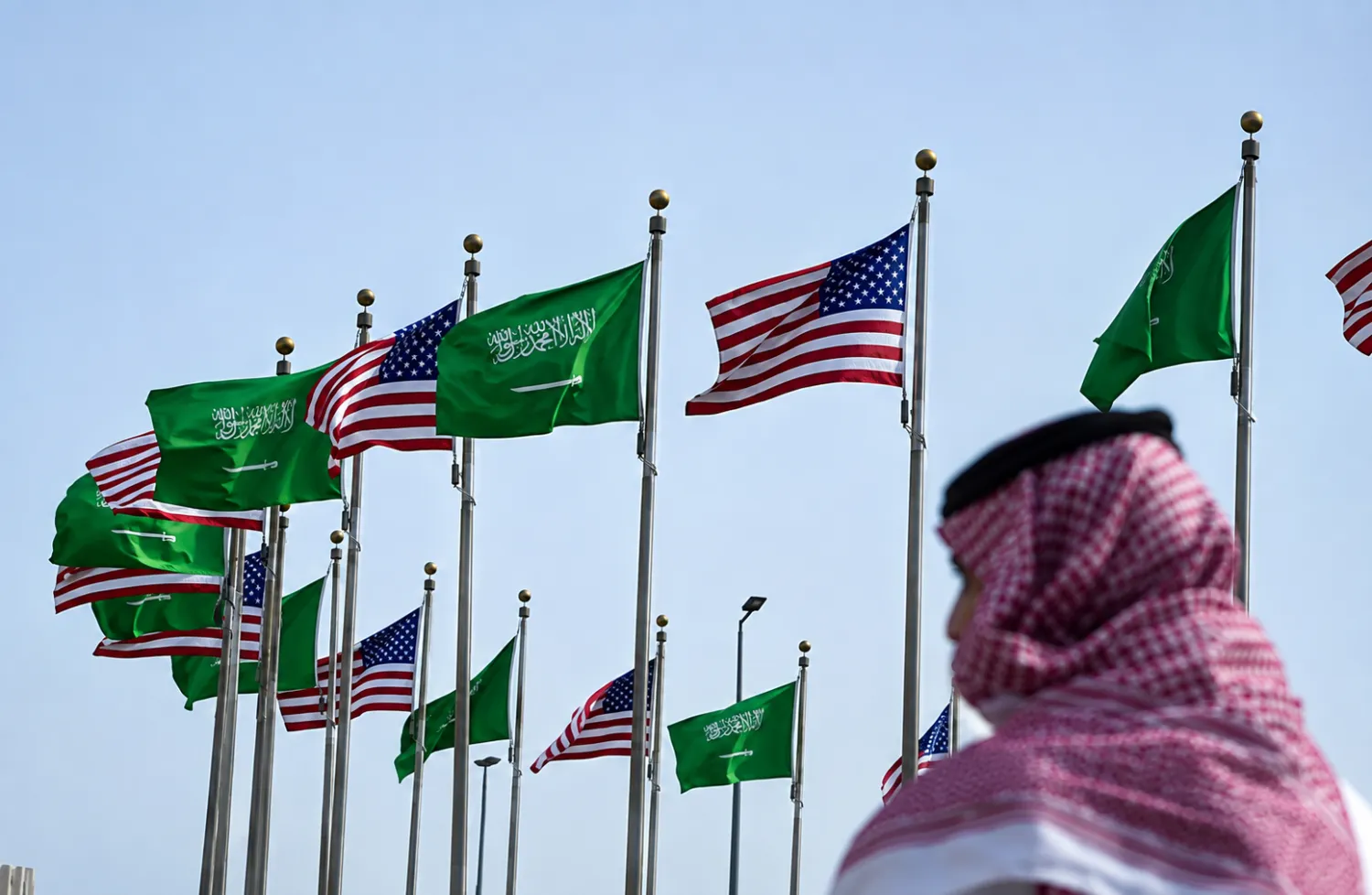

The civil nuclear cooperation agreement between Saudi Arabia and the United States is expected to usher in a new phase of economic and technological partnership that extends well beyond the construction of nuclear reactors and electricity generation, encompassing the localization of high-value industries, the development of specialized human capital, and expanded collaboration in advanced technologies, analysts told Asharq Al-Awsat.
They argue that the agreement could serve as a catalyst for industrial and technology investment in the Kingdom, complementing Saudi Arabia's plans to diversify its energy mix and build a knowledge-based economy. Its significance, however, extends beyond economics into the strategic and geopolitical arena, as global competition over nuclear energy technologies continues to intensify.
On July 22, Saudi Energy Minister Prince Abdulaziz bin Salman and US Energy Secretary Chris Wright signed a civil nuclear cooperation agreement, commonly known as a "123 Agreement," alongside a bilateral safeguards agreement. According to the US Department of Energy, the accords establish the legal framework for a multibillion dollar partnership expected to span decades and pave the way for US companies to participate in Saudi Arabia's nuclear energy program.
Named after Section 123 of the US Atomic Energy Act, such agreements provide the legal basis for peaceful nuclear cooperation between the United States and partner countries, allowing the transfer of nuclear materials, equipment, and technology under strict conditions and safeguards.
As of July 2025, the United States had 26 such agreements in force, covering 50 countries as well as the International Atomic Energy Agency and other entities.
Investment Catalyst
Abbas Dahouk, a former military affairs adviser at the US Department of State, described the agreement as an important strategic milestone in Saudi-US relations, saying it strengthens long-term cooperation in advanced technologies and energy security.
From an economic standpoint, Dahouk told Asharq Al-Awsat that the agreement could attract billions of dollars in investment, generate highly skilled jobs, and support the objectives of Saudi Vision 2030 by helping build a diversified, knowledge-based economy.
The benefits, he said, extend far beyond electricity generation. Peaceful nuclear cooperation could accelerate applications in water desalination, healthcare, scientific research, agriculture, and advanced manufacturing, while also fostering a highly trained workforce in engineering, science, and technology.
Those applications align with Saudi Arabia's National Atomic Energy Project, which seeks to incorporate nuclear power into the country's energy mix to produce electricity, desalinated water, and thermal energy while reducing reliance on hydrocarbons for power generation. The project comprises four core pillars: large-scale nuclear power plants, small modular reactors, the nuclear fuel cycle, and the regulatory framework.
Dahouk believes the agreement lays the foundation for decades of Saudi-US cooperation across energy, technology, education, and industrial development, while supporting the localization of advanced manufacturing, precision engineering, and high-value-added industries.
He added that the development of nuclear expertise and related technologies could generate spillover benefits for emerging sectors, including space, advanced materials, artificial intelligence, and next-generation energy systems, reinforcing Saudi Arabia's ambition to become a regional center for innovation and technological advancement.
Technological Sovereignty
Dahouk also stressed that the agreement carries geopolitical implications extending well beyond its civilian objectives, coming at a time of intensifying strategic competition among the United States, China, and Russia in advanced technology and energy sectors.
He argued that the agreement's success will ultimately be judged not only by its economic and technological returns, but also by its impact on regional stability and nuclear nonproliferation.
According to Dahouk, Riyadh views uranium enrichment as a matter that goes beyond energy production, encompassing technological sovereignty, industrial development, and strategic autonomy, particularly given Saudi Arabia's domestic uranium resources and its long-term ambition to develop them.
Saudi Arabia has already incorporated uranium and thorium exploration into its National Atomic Energy Project to assess domestic reserves, expand local content, build national expertise, and potentially secure future fuel supplies for nuclear power reactors.
Regional Security
Eric H. Fang, Chief Executive Officer of Skytower Group Inc., described the agreement as a historic strategic milestone whose importance extends well beyond the development of civilian nuclear energy. He said its value also lies in strengthening regional security and establishing a long-term framework for stability, governance, and economic growth.
Fang told Asharq Al-Awsat that large-scale manufacturing and long-term investment require a stable geopolitical environment. Building a framework for peaceful nuclear cooperation based on partnership and transparency, he said, can strengthen confidence among governments, investors, and industrial sectors across the region.
Economically, Fang believes nuclear power can provide Saudi Arabia with a stable source of baseload electricity, supporting the rapid expansion of its industrial economy and advancing the objectives of Vision 2030.
He said the agreement could create opportunities to localize high-value industries, including nuclear engineering, advanced materials, precision manufacturing, robotics, digital control systems, and specialized construction, alongside applications in healthcare, agriculture, water desalination, and scientific research.
From Medicine to Space
Fang noted that the peaceful applications of nuclear technology extend far beyond electricity generation to include medical diagnostics, cancer treatment using radioisotopes, food preservation, water desalination, agricultural innovation, industrial inspection, materials science, and advanced research.
He expects the expansion of these activities to foster a highly skilled workforce and support the creation of new industrial ecosystems within the Kingdom, while broadening Saudi-US cooperation in research and development, workforce training, and industrial localization.
According to Fang, this industrial base could also provide a platform for collaboration in precision manufacturing, aviation, space, artificial intelligence, advanced energy systems, and next-generation infrastructure, sectors that he believes will define global economic competitiveness in the decades ahead.
Economic and Geopolitical Equation
Fang argued that the strategic value of the agreement should not be measured solely by its immediate outcomes, but by its ability to establish long-term institutional cooperation that promotes stability while encouraging investment flows and industrial development across the region.
A stable Middle East, supported by strong strategic cooperation between the United States and Saudi Arabia, will encourage greater international investment and accelerate industrial development, according to Fang.


