

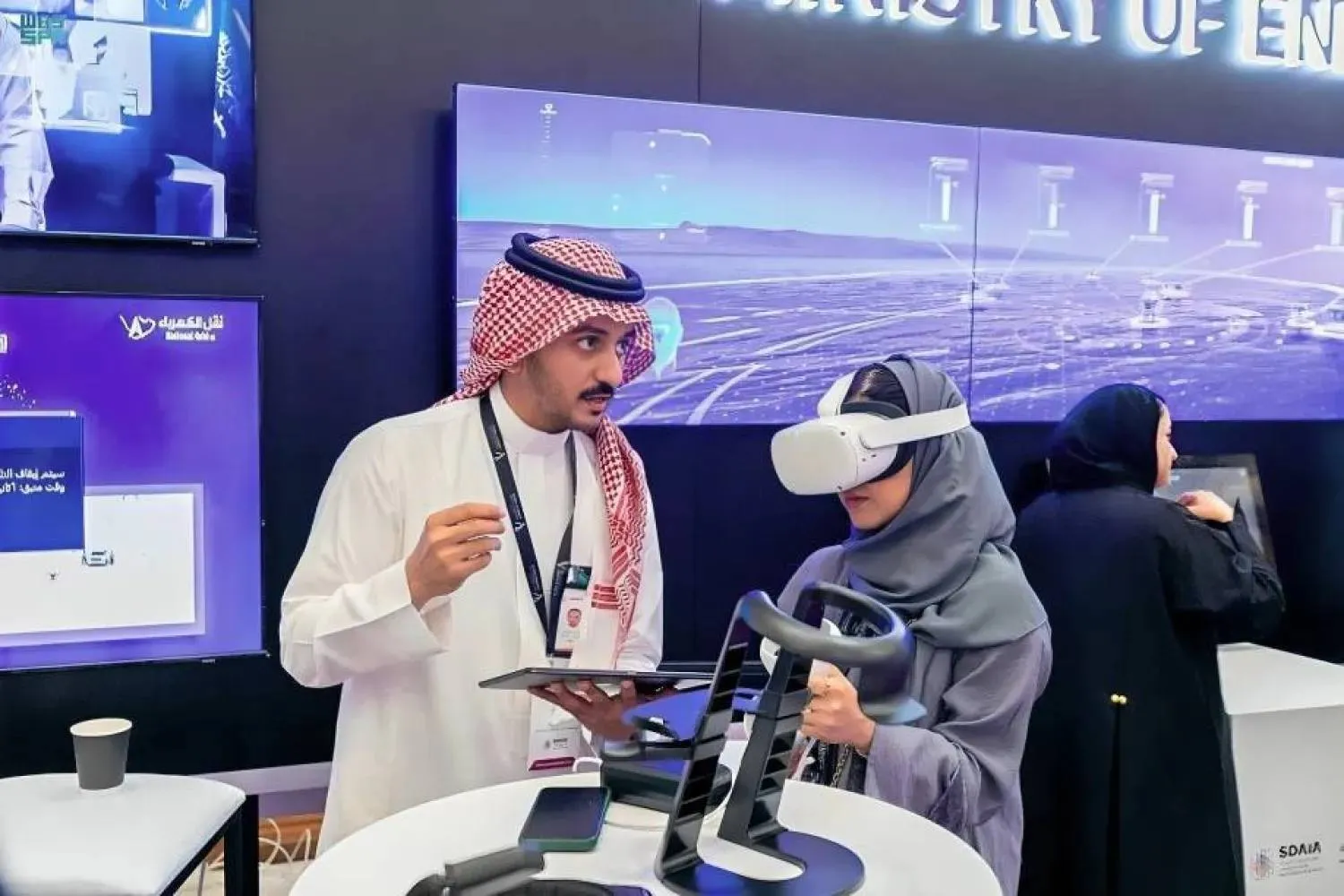

Saudi Arabia Prepares for the AI Age by Building National Talent

An initiative to improve local Saudi talent in AI (Asharq Al-Awsat)
TT

Saudi Arabia Prepares for the AI Age by Building National Talent

An initiative to improve local Saudi talent in AI (Asharq Al-Awsat)

Saudi Arabia has moved forward in preparations for the age of artificial intelligence through a strategy that combines digital infrastructure development with the cultivation of national talent. This approach aims to transform AI technologies into a key driver of economic growth, enhance productivity, and attract investment, in line with the objectives of Vision 2030.

This effort comes as the adoption of AI applications in the Kingdom continues to expand rapidly, alongside an unprecedented increase in education and training programs. These initiatives are strengthening the labor market’s readiness for a skills-based digital economy and reinforcing human capital as the cornerstone for maximizing the economic returns of emerging technologies.

Local indicators confirm this transformation. According to the Saudi Internet Report 2025, the proportion of internet users utilizing AI tools rose to 45.2 percent, up from 21.5 percent a year earlier, representing growth of more than 110 percent. This reflects the increasing use of AI across education, workplaces, and everyday services.

AI Courses in Education

In terms of talent development, more than 6 million students are benefiting from AI curricula in general education. Meanwhile, 79 percent of Saudi universities have incorporated AI courses into their academic programs, and over 30 universities have made these courses a mandatory requirement for all students. Additionally, more than 13,000 teachers have been trained in AI applications.

Dr. Majed Al-Qathami, Professor of Computer and Information Systems at Umm Al-Qura University and former adviser to the Digital Government Authority, believes this trend reflects the Kingdom’s transition “from an economy that consumes technology to one that creates it.”

Speaking to Asharq Al-Awsat, he explained that real economic value is generated when students are capable of developing solutions and technologies that address local challenges.

This, he said, contributes to the establishment of national technology companies, increases the contribution of the non-oil economy, and attracts high-quality investments that depend on the availability of skilled talent.

He added that investing in talent is also an investment in spending efficiency. A significant portion of digital transformation budgets previously went toward foreign expertise and consultancy services. Building local talent reduces recruitment and ongoing training costs, retains expertise within organizations, enhances implementation efficiency, and improves the sustainability of digital transformation projects.

Moving from Technology Consumption to Technology Production

Al-Qathami stressed that Saudi Arabia is gradually evolving from a technology-consuming economy into a technology-producing one.

Echoing this view, Mohammed Al-Bogami, CEO of EjadTech, told Asharq Al-Awsat that investment in national talent represents a step toward becoming not just a user of technology but also a developer, producer, and global partner in the field. This transition strengthens the long-term value added to the national economy.

Al-Bogami noted that investment in AI education should be viewed as an investment in human capital.

Its benefits begin with improving educational quality and workforce skills but extend further to increasing organizational productivity, supporting startup growth, boosting applied research and patent generation, reducing dependence on imported technology solutions, and ultimately building Saudi knowledge-based industries capable of competing globally.

Enhancing Productivity

Al-Bogami also pointed out that the impact of this investment is visible in operational efficiency. AI tools contribute to the development of more personalized training programs and automate evaluation and follow-up processes, reducing training costs and minimizing time spent away from the workplace.

National talent also helps reduce reliance on external experts for system development and operation. At the same time, AI applications automate repetitive tasks, analyze data, improve planning, and identify waste and risks, all of which support increased productivity and better decision-making.

Experts do not attribute the growth in AI adoption solely to education. Rather, they see it as the result of an integrated approach that combines investment in human capabilities with advances in digital infrastructure, widespread internet access, and the growing availability of AI applications. Together, these factors have created an environment conducive to AI adoption across multiple sectors.

Expanding Digital Activity

Indicators from the digital economy reinforce this trend. The number of Saudi domain registrations grew by 18 percent to nearly 84,000 domains, while the private sector accounted for 96 percent of all registered domains, reflecting the expansion of digital economic activity.

In addition, average monthly mobile internet data consumption reached 53 gigabytes per person, approximately three times the global average, highlighting the growing reliance on digital services.

Entrepreneurship and Innovation

In the area of entrepreneurship, the Human Capability Development Program reported supporting 80 digital startup ventures and 60 university-based startups, connecting them with more than 84 investment opportunities and funding entities.

These developments reflect the evolving role of universities, which are increasingly contributing not only to education but also to the broader innovation ecosystem and knowledge economy.

While current indicators suggest that Saudi Arabia has made significant progress in creating a supportive environment for artificial intelligence, experts believe the next phase will depend on the ability of these investments to generate sustainable economic value.

This will be measured through increased sector productivity, the growth of national technology companies, higher levels of innovation, and enhanced competitiveness of the Saudi economy, ultimately translating investments in human capital into tangible economic outcomes.



Diesel Prices Overtake Jet Fuel in Europe as Global Shortage Widens

Petrol prices are displayed at a filling station, as the price of oil and gas has surged amid the conflict in the Middle East, in London, Britain, March 5, 2026 REUTERS/Jack Taylor
TT

Diesel Prices Overtake Jet Fuel in Europe as Global Shortage Widens

Petrol prices are displayed at a filling station, as the price of oil and gas has surged amid the conflict in the Middle East, in London, Britain, March 5, 2026 REUTERS/Jack Taylor

Diesel cargoes are costing more than jet fuel in Europe for the first time in more than a year, LSEG data showed, as the continent replaces lower Middle East air fuel shipments with other sources of supply, but struggles to secure more diesel for industry and agriculture.

Europe has been able to pull in jet cargoes from the US and other countries like Nigeria as prices surged after the start of the Iran war, which disrupted crude and fuel supply. Global diesel supply tightened even further when Russia banned exports amid Ukrainian attacks on its refineries.

"We see a higher risk of persistent scarcity pricing in diesel than in crude heading into winter," analysts at Goldman Sachs said in a note.

Europe boosted imports of jet fuel to 750,000 barrels per day in June — the highest since October 2025 — and a similar rate in July from 612,000 bpd in January, according to Kpler.

By contrast, European diesel imports have dropped to 1.56 million bpd in July from 1.97 million bpd in January. Against that backdrop, the price of diesel overtook that of jet fuel this week, LSEG data showed.

Diesel prices have resumed their rally in recent weeks amid an impasse in Iran peace talks and Russian export disruptions, and are now only 14% below their April peaks. Jet fuel prices, which have also risen in recent weeks, are meanwhile 25% below their March records.

"A brief period of cautious optimism for refined product markets has been quickly overtaken by renewed hostilities in the Strait of Hormuz, the collapse of Russian product supply and a diesel exports ban," said Karim Fawaz of S&P Global Energy.

WEAKENING JET DEMAND LIKELY WEIGHS ON PRICES, ANALYST SAYS

In a further sign of jet's relative weakness, it has dropped against the price of gasoil futures - the benchmark against which it is priced in Europe.

The price assessment of a jet cargo coming into Europe stood at a discount of $24 a metric ton to gasoil futures on August 10, according to LSEG.

This is the widest discount since July 2025, according to LSEG and Argus Media. At the height of the Iran war in March, LSEG and Argus assessed jet's premium at more than $500 a barrel. Weakening jet demand after the summer travel seasonal high and the expectation of higher European imports are likely weighing on prices, said Jay Maroo, analyst at Sparta Commodities.


Türkiye Central Bank Raises End-2026 Inflation Forecast to 28%, Leaves Target Unchanged

 Stray cats wait next to a fisherman at Karakoy sea promenade in Istanbul, Türkiye, Wednesday, June 24, 2026. (AP)
Stray cats wait next to a fisherman at Karakoy sea promenade in Istanbul, Türkiye, Wednesday, June 24, 2026. (AP)
TT

Türkiye Central Bank Raises End-2026 Inflation Forecast to 28%, Leaves Target Unchanged

 Stray cats wait next to a fisherman at Karakoy sea promenade in Istanbul, Türkiye, Wednesday, June 24, 2026. (AP)
Stray cats wait next to a fisherman at Karakoy sea promenade in Istanbul, Türkiye, Wednesday, June 24, 2026. (AP)

Türkiye's central bank raised its inflation forecast for the end of 2026 to 28% from 26% but left its interim inflation target for the same period at 24%, Governor Fatih Karahan said on Thursday.

Presenting the central bank's quarterly inflation report ‌in Istanbul, Karahan said ‌the bank kept ‌its ⁠interim inflation target for ⁠end-2027 steady at 15% and the interim target for end-2028 stayed at 9%.

"The CBRT will ensure the tightness required by the projected disinflation path in line with ⁠the interim targets," Karahan said.

He said ‌the upward ‌revision of the end-2026 forecast was "driven ‌by the increase in the ‌assumption for Turkish lira-denominated import prices in view of the developments in prices of diesel oil, natural gas, and some ‌other commodities".

Last month, the central bank left its key interest ⁠rate ⁠at 37%, as expected, keeping borrowing costs unchanged for a fourth consecutive meeting as it monitors the inflationary impact of the Iran war.

Turkish consumer price inflation rose to 1.78% month-on-month in July while annual inflation dipped slightly from a month earlier to 31.75%.


UK Economy Slows Amid Political Unrest, Middle East War

A person cycles through parched parkland in Birmingham, Britain, 13 August 2026. (EPA)
TT

UK Economy Slows Amid Political Unrest, Middle East War

A person cycles through parched parkland in Birmingham, Britain, 13 August 2026. (EPA)

Britain's economy slowed in the second quarter, the national statistics office reported Thursday, saying that output remained "robust" despite domestic political unrest and fallout from the US-Iran war.

Gross domestic product increased 0.4 percent in the April-June period after GDP expansion of 0.6 percent in the first quarter, the Office for National Statistics (ONS) said in a statement.

Keir Starmer resigned as British prime minister in late June and was replaced around one month later by Andy Burnham, as the Labour government was overtaken in opinion polls by the hard-right party Reform UK.

Following Thursday's data, the country's new finance minister, John Healey, said that under Burnham, Labour was a "hands-on government, putting British interests first -- giving breathing space to those feeling the strain, making our country more resilient and bringing hope back".

Struggling already with elevated inflation, millions of Britons have seen their situation worsen after the US-Iran war sent energy costs soaring.

"I know people are worried about the impact of the conflict in the Middle East on their cost of living, which has been too high for too long and it has added pressure on British businesses," Healey added in a statement.

- World Cup boost -

The latest GDP data showed that output from the services sector grew 0.5 percent in the second quarter, and construction also expanded while production flattened.

"Growth (overall) slowed in the second quarter of the year, following a strong start to 2026, but remained relatively robust," said ONS director of economic statistics, Liz McKeown.

"Services were once again the main driver of growth," she added.

The second quarter had a strong finish, growing 0.3 percent in June after zero expansion in May and a slight dip in April, the ONS said.

It cited the recent football World Cup "as a reason for an increase in turnover in June... by businesses in industries such as wholesale, food and beverage serving activities, publishing activities, television production and advertising".

But Stuart Morrison, research manager at the British Chambers of Commerce, said in a statement that "the headline figures shouldn't disguise the cocktail of cost pressures choking long-term business growth".

He said Healey's first budget, due October 28, "must be a game changer for stronger, sustainable growth", adding that Britain needed "measures that boost trade, investment and productivity".

Burnham has so far concentrated on easing the cost of living for households, with tax on their electricity bills set to be removed this winter.

The Bank of England recently warned that British inflation was set to rise as the Middle East war keeps energy prices high.