


World Bank Calls on Developing Countries to Embrace AI for Better Governance

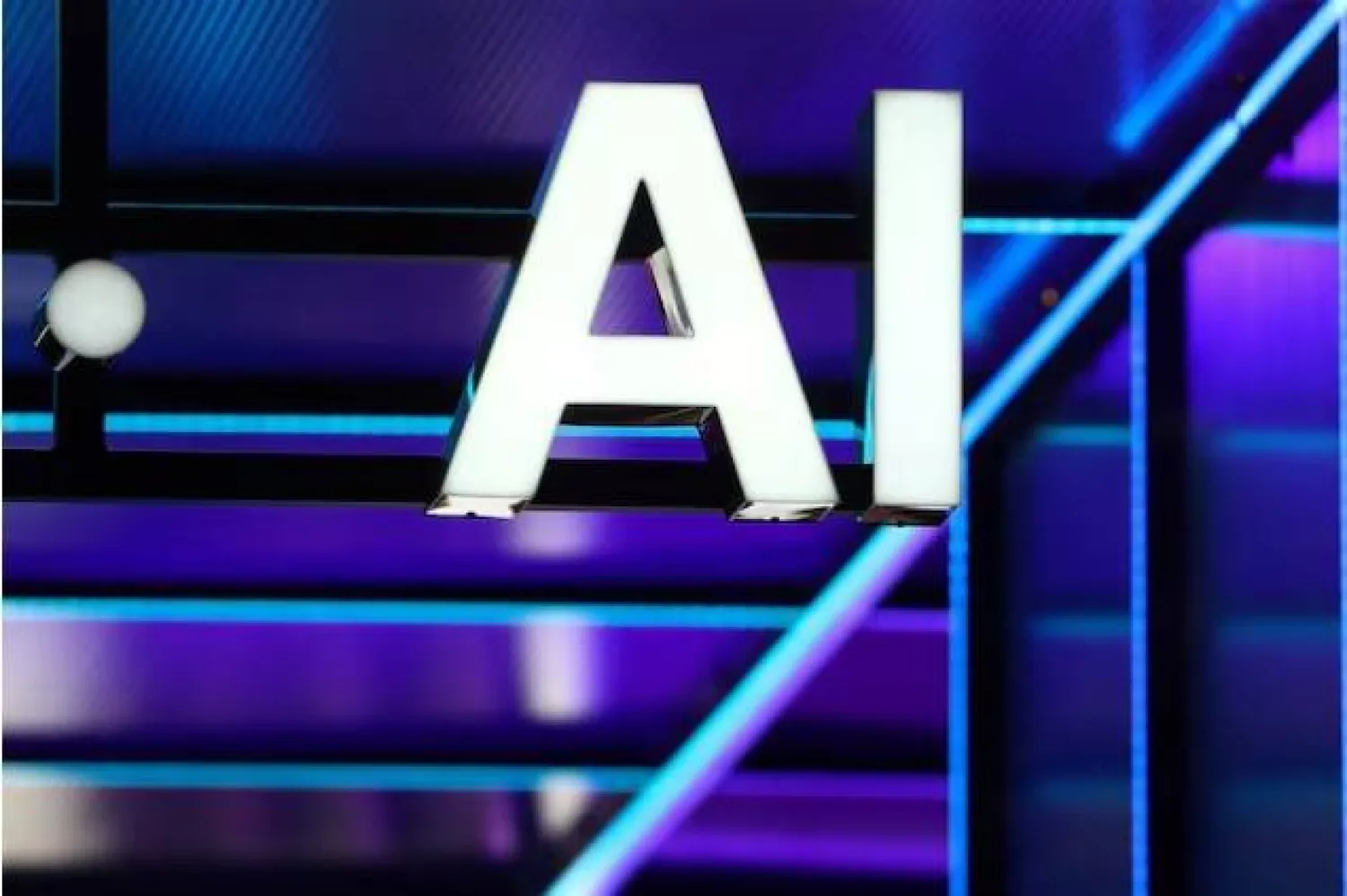
The artificial intelligence AI acronym at the 10th edition of the VivaTech technology startups and innovation fair in Paris, France, June 18, 2026. REUTERS/Gonzalo Fuentes
TT

World Bank Calls on Developing Countries to Embrace AI for Better Governance

The artificial intelligence AI acronym at the 10th edition of the VivaTech technology startups and innovation fair in Paris, France, June 18, 2026. REUTERS/Gonzalo Fuentes

The World Bank on Tuesday called on developing countries to embrace artificial intelligence technology tools to deliver better governance outcomes, warning that they risked being left behind if they failed to do so.

“AI has thrown developing economies a lifeline, and they should seize it,” Indermit Gill, chief economist of the World Bank Group, said as the organization launched its annual World Development Report, according to AFP.

“They do not need large models or big data centers to reap its benefits,” he added, advocating for the adaptation of lower-cost AI tools to local conditions to deliver results in the health, education, justice and agricultural sectors.

Advanced AI models -- largely developed in the United States and China -- offer the ability to quickly analyze data and automate many tasks that otherwise take skilled humans longer to do.

These AI models, however, require huge data centers and large amounts of complex computing power, using massive amounts of electricity and water -- with implications for climate change.

“Developing economies today are in the midst of their weakest average growth performance in three decades,” said a World Bank statement accompanying the report.

“AI could significantly boost that performance before the end of the 2020s while delivering tangible benefits to people,” it added.

The report calls for countries to use AI to “help extend otherwise costly medical, legal, educational, and agricultural services to underserved billions -- doing in a decade what might otherwise take a century.”

Shock After Shock

Lower-income countries have struggled through the 2020s, hit by a series of successive shocks that saw the World Bank earlier this year dub it a “lost decade” for their economic growth.

The Bank has lowered its 2026 global growth forecast to its lowest level since the pandemic, with the economic fallout of the Iran war battering countries around the world.

The shock has hit low-income and developing countries hardest, with Asia the worst-affected region.

The Bank's new report advocates for developing countries to start working with localized AI tools and solutions now, and to invest in electricity generation and distribution; expand access to computing power; and improve the availability of local data.

“The window to get this right is narrow,” said Gaurav Nayyar, director of the report.

“AI presents a once-in-a-lifetime opportunity to solve problems that have resisted solutions for generations,” he added.

For the 6.8 billion people – 83% of humanity -- who live in low-income and developing countries, AI tools will need to be adapted to meet their needs.

The report shares examples of AI applications in governance, such as to increase diabetes screening volumes in Bangladesh, or in reducing costs for Indian farmers through advanced weather forecasts.

The solutions, the report stresses, will need to meet people where they are.

“For example, AI solutions will need to be delivered through voice calls on basic mobile phones for those who cannot read or afford smartphones,” it says.

“Simply importing an AI model does not mean it will work well locally.”

Stark Warning

The report calls for policymakers to also build public trust as they expand AI use.

“Improved public services and better learning outcomes in schools will reinforce trust -- but if AI embeds bias in government decisions or erodes data privacy, that trust will be difficult to recover,” said the statement.

The report delivers a stark warning, too: “AI could widen gaps between countries, increase inequality within them, concentrate market power, weaken trust in public institutions, and create new risks for safety, rights, and social cohesion.”

And while risks to employment in developing countries are low at the moment, it warns that in the long run AI tools could cut off economic mobility by eliminating many of the middle-class jobs that enable it.

The report was written with the aid of several of the world's most advanced AI tools, including offerings from OpenAI, DeepSeek, Google and Anthropic, according to a disclosure.



Diesel Prices Overtake Jet Fuel in Europe as Global Shortage Widens

Petrol prices are displayed at a filling station, as the price of oil and gas has surged amid the conflict in the Middle East, in London, Britain, March 5, 2026 REUTERS/Jack Taylor
TT

Diesel Prices Overtake Jet Fuel in Europe as Global Shortage Widens

Petrol prices are displayed at a filling station, as the price of oil and gas has surged amid the conflict in the Middle East, in London, Britain, March 5, 2026 REUTERS/Jack Taylor

Diesel cargoes are costing more than jet fuel in Europe for the first time in more than a year, LSEG data showed, as the continent replaces lower Middle East air fuel shipments with other sources of supply, but struggles to secure more diesel for industry and agriculture.

Europe has been able to pull in jet cargoes from the US and other countries like Nigeria as prices surged after the start of the Iran war, which disrupted crude and fuel supply. Global diesel supply tightened even further when Russia banned exports amid Ukrainian attacks on its refineries.

"We see a higher risk of persistent scarcity pricing in diesel than in crude heading into winter," analysts at Goldman Sachs said in a note.

Europe boosted imports of jet fuel to 750,000 barrels per day in June — the highest since October 2025 — and a similar rate in July from 612,000 bpd in January, according to Kpler.

By contrast, European diesel imports have dropped to 1.56 million bpd in July from 1.97 million bpd in January. Against that backdrop, the price of diesel overtook that of jet fuel this week, LSEG data showed.

Diesel prices have resumed their rally in recent weeks amid an impasse in Iran peace talks and Russian export disruptions, and are now only 14% below their April peaks. Jet fuel prices, which have also risen in recent weeks, are meanwhile 25% below their March records.

"A brief period of cautious optimism for refined product markets has been quickly overtaken by renewed hostilities in the Strait of Hormuz, the collapse of Russian product supply and a diesel exports ban," said Karim Fawaz of S&P Global Energy.

WEAKENING JET DEMAND LIKELY WEIGHS ON PRICES, ANALYST SAYS

In a further sign of jet's relative weakness, it has dropped against the price of gasoil futures - the benchmark against which it is priced in Europe.

The price assessment of a jet cargo coming into Europe stood at a discount of $24 a metric ton to gasoil futures on August 10, according to LSEG.

This is the widest discount since July 2025, according to LSEG and Argus Media. At the height of the Iran war in March, LSEG and Argus assessed jet's premium at more than $500 a barrel. Weakening jet demand after the summer travel seasonal high and the expectation of higher European imports are likely weighing on prices, said Jay Maroo, analyst at Sparta Commodities.


Türkiye Central Bank Raises End-2026 Inflation Forecast to 28%, Leaves Target Unchanged

 Stray cats wait next to a fisherman at Karakoy sea promenade in Istanbul, Türkiye, Wednesday, June 24, 2026. (AP)
Stray cats wait next to a fisherman at Karakoy sea promenade in Istanbul, Türkiye, Wednesday, June 24, 2026. (AP)
TT

Türkiye Central Bank Raises End-2026 Inflation Forecast to 28%, Leaves Target Unchanged

 Stray cats wait next to a fisherman at Karakoy sea promenade in Istanbul, Türkiye, Wednesday, June 24, 2026. (AP)
Stray cats wait next to a fisherman at Karakoy sea promenade in Istanbul, Türkiye, Wednesday, June 24, 2026. (AP)

Türkiye's central bank raised its inflation forecast for the end of 2026 to 28% from 26% but left its interim inflation target for the same period at 24%, Governor Fatih Karahan said on Thursday.

Presenting the central bank's quarterly inflation report ‌in Istanbul, Karahan said ‌the bank kept ‌its ⁠interim inflation target for ⁠end-2027 steady at 15% and the interim target for end-2028 stayed at 9%.

"The CBRT will ensure the tightness required by the projected disinflation path in line with ⁠the interim targets," Karahan said.

He said ‌the upward ‌revision of the end-2026 forecast was "driven ‌by the increase in the ‌assumption for Turkish lira-denominated import prices in view of the developments in prices of diesel oil, natural gas, and some ‌other commodities".

Last month, the central bank left its key interest ⁠rate ⁠at 37%, as expected, keeping borrowing costs unchanged for a fourth consecutive meeting as it monitors the inflationary impact of the Iran war.

Turkish consumer price inflation rose to 1.78% month-on-month in July while annual inflation dipped slightly from a month earlier to 31.75%.


UK Economy Slows Amid Political Unrest, Middle East War

A person cycles through parched parkland in Birmingham, Britain, 13 August 2026. (EPA)
TT

UK Economy Slows Amid Political Unrest, Middle East War

A person cycles through parched parkland in Birmingham, Britain, 13 August 2026. (EPA)

Britain's economy slowed in the second quarter, the national statistics office reported Thursday, saying that output remained "robust" despite domestic political unrest and fallout from the US-Iran war.

Gross domestic product increased 0.4 percent in the April-June period after GDP expansion of 0.6 percent in the first quarter, the Office for National Statistics (ONS) said in a statement.

Keir Starmer resigned as British prime minister in late June and was replaced around one month later by Andy Burnham, as the Labour government was overtaken in opinion polls by the hard-right party Reform UK.

Following Thursday's data, the country's new finance minister, John Healey, said that under Burnham, Labour was a "hands-on government, putting British interests first -- giving breathing space to those feeling the strain, making our country more resilient and bringing hope back".

Struggling already with elevated inflation, millions of Britons have seen their situation worsen after the US-Iran war sent energy costs soaring.

"I know people are worried about the impact of the conflict in the Middle East on their cost of living, which has been too high for too long and it has added pressure on British businesses," Healey added in a statement.

- World Cup boost -

The latest GDP data showed that output from the services sector grew 0.5 percent in the second quarter, and construction also expanded while production flattened.

"Growth (overall) slowed in the second quarter of the year, following a strong start to 2026, but remained relatively robust," said ONS director of economic statistics, Liz McKeown.

"Services were once again the main driver of growth," she added.

The second quarter had a strong finish, growing 0.3 percent in June after zero expansion in May and a slight dip in April, the ONS said.

It cited the recent football World Cup "as a reason for an increase in turnover in June... by businesses in industries such as wholesale, food and beverage serving activities, publishing activities, television production and advertising".

But Stuart Morrison, research manager at the British Chambers of Commerce, said in a statement that "the headline figures shouldn't disguise the cocktail of cost pressures choking long-term business growth".

He said Healey's first budget, due October 28, "must be a game changer for stronger, sustainable growth", adding that Britain needed "measures that boost trade, investment and productivity".

Burnham has so far concentrated on easing the cost of living for households, with tax on their electricity bills set to be removed this winter.

The Bank of England recently warned that British inflation was set to rise as the Middle East war keeps energy prices high.