Saudi Inflation Holds Steady at 1.8% Despite Global Commodity Market Turmoil

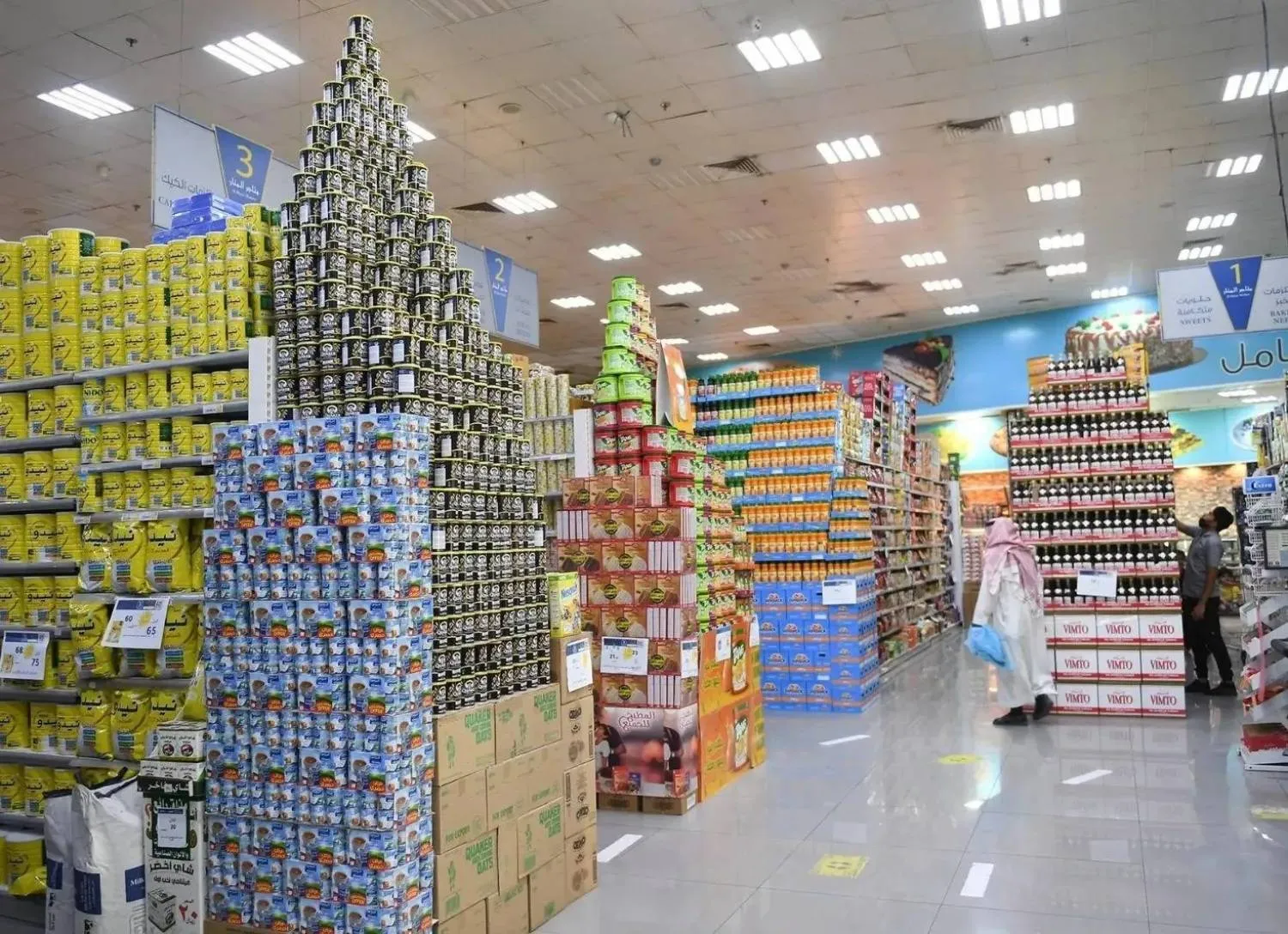
A grocery store in Saudi Arabia (SPA)
TT

Saudi Inflation Holds Steady at 1.8% Despite Global Commodity Market Turmoil

A grocery store in Saudi Arabia (SPA)

Saudi Arabia’s inflation remained subdued in July at 1.8% year on year, reflecting continued overall price stability despite housing and rents remaining the main source of inflationary pressure.

Data released Thursday by the General Authority for Statistics (GASTAT) showed prices for housing, water, electricity, gas and other fuels rose 4.2%, driven by a 4.3% increase in actual housing rents. Food and beverages increased 1.5%, while transport rose 1.4%.

The figures show that inflation remains concentrated in a limited number of categories rather than reflecting broad-based price increases. Saudi Arabia is among the G20 economies with relatively low inflation.

King Abdulaziz University economics professor Salem Baajajah told Asharq Al-Awsat that the 1.8% rate was “a positive reading for the economy, particularly given continuing global inflationary pressures.”

Increases are concentrated largely in housing and rents rather than spreading across the consumer basket, he said.

Economist Ahmed Al-Shahri cautioned that the figure should not be viewed as evidence that price pressures had disappeared, particularly with continued housing demand in major cities.

“The challenge in the coming period will not only be controlling overall inflation, but ensuring that pressures in the housing sector do not develop into a broader wave extending to other spending categories,” he stated.

Housing was the largest driver of inflation in July. Personal care, social protection and miscellaneous goods and services rose 2.9%, driven by an 11.1% increase in other personal effects, while jewelry and watch prices rose 12%. Recreation, sport and culture increased 2.4%.

By contrast, furnishings, household equipment and routine household maintenance declined 0.5%, while clothing and footwear fell 0.4%, helping contain overall inflationary pressures.

Food and beverages contributed 0.3 percentage point to overall inflation, while transport and personal care, social protection and miscellaneous goods and services each contributed 0.2 percentage point.

On a monthly basis, consumer prices rose 0.2% in July from June. Housing, water, electricity, gas and other fuels increased 0.9%, driven by a 7.1% rise in electricity, gas and other fuels. Restaurants and accommodation services rose 0.5%, recreation, sport and culture 0.4%, and transport 0.2%.


Gold Ticks Lower, US Inflation Data in Spotlight

Gold jewellery is displayed at a gold dealer shop window in Hatton Garden, London, Britain, 25 August 2026. (EPA)
TT

Gold Ticks Lower, US Inflation Data in Spotlight

Gold jewellery is displayed at a gold dealer shop window in Hatton Garden, London, Britain, 25 August 2026. (EPA)

Gold slips on Wednesday after scaling a more than three-month high in the previous session, as investors awaited a key US inflation report to gauge the Federal Reserve's interest-rate path.

Spot gold fell 0.6% to $4,626.79 per ounce, by 0625 GMT. Prices climbed to their highest since mid-May on Tuesday after last week's sharp gains following the ‌US Treasury's bond buyback ‌announcement. US gold futures lost 0.2% at $4,683.60.

The ‌Fed's ⁠preferred inflation gauge, ⁠the US Personal Consumption Expenditures (PCE) price index for July, is due at 1230 GMT. Attention is also on Fed Chairman Kevin Warsh's speech on Friday at the central bank's Jackson Hole symposium.

"For gold, the most supportive outcome would be softer-than-expected inflation combined with a dovish or balanced message from Warsh, reinforcing ⁠expectations for lower real yields and reducing the opportunity ‌cost of holding a non-yielding ‌asset," said Wael Makarem, financial markets strategists lead at Exness.

"A renewed deterioration ‌in confidence around US fiscal sustainability could also be ‌important (for gold), particularly given the recent Treasury buyback plans and their impact."

Earlier this month, data showed an unexpected decline in US nonfarm payrolls and in-line consumer inflation, tempering expectations of a September rate hike.

Traders ‌are pricing in a 61.6% chance that the Fed will leave rates unchanged next month, ⁠according to ⁠the CME FedWatch Tool.

On the geopolitical front, Iran said it had restarted talks with neighbor Oman to manage the Strait of Hormuz, sending oil prices lower.

The global economy has weathered the Iran war energy shock better than feared, International Monetary Fund Managing Director Kristalina Georgieva said. However, she raised concerns about deteriorating fiscal conditions in some countries.

Spot gold may retest a resistance at $4,681, a break above which may trigger a gain into the range of $4,707 to $4,743, according to Reuters technical analyst Wang Tao. Spot silver gained 0.2% to $68.75, platinum rose 0.3% to $1,863.58 and palladium firmed 0.7% to $1,335.54.


France Deepens Investment in Saudi Mega-Projects as Partnership Moves Beyond Oil

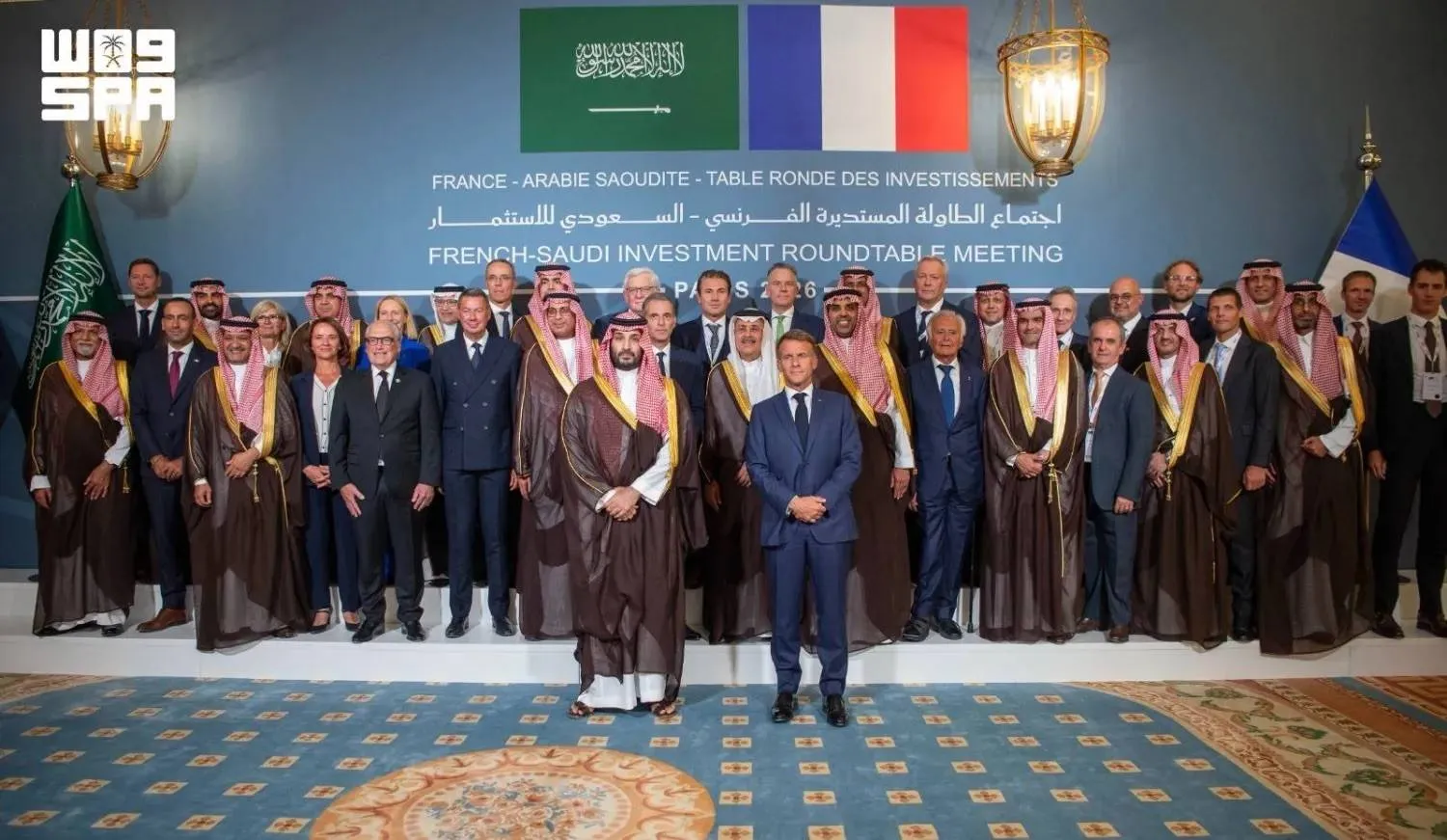
A group photo of the participants in the French-Saudi Investment Roundtable Meeting. (SPA)
TT

France Deepens Investment in Saudi Mega-Projects as Partnership Moves Beyond Oil

A group photo of the participants in the French-Saudi Investment Roundtable Meeting. (SPA)

Saudi-French ties are entering a new phase that extends beyond traditional energy cooperation, with Paris seeking a deeper role in the major development projects underpinning Saudi Arabia’s Vision 2030.

During the visit by Prince Mohammed bin Salman, Saudi Crown Prince and Prime Minister, to Paris, the two countries signed more than 21 agreements and memorandums of understanding backed by credit lines and financing facilities worth billions of dollars.

They cover infrastructure, transportation, healthcare, electricity, aviation, tourism, entertainment, artificial intelligence, and research and development.

The deals signal a French push to embed its companies more deeply in Saudi project value chains rather than simply supplying goods, using financing and credit guarantees to broaden their involvement.

Financing major projects

A key component is a $5 billion credit line to finance contracts carried out by French companies, alongside facilities of up to $3 billion to support electricity projects.

The Saudi Finance Ministry and Bpifrance Assurance Export issued a joint statement on completing operational arrangements for a credit line to finance and refinance existing and future contracts undertaken by French companies in the Kingdom, particularly in infrastructure, urban development, transportation and healthcare.

Saudi Arabia’s National Development Fund also reached an understanding with French public investment bank Bpifrance to explore joint financing and investment opportunities, exchange expertise in development finance, and strengthen institutional and human capabilities.

Energy and technology

Saudi Aramco procurement agreements worth $3.7 billion mark another significant expansion of French involvement in the energy sector, particularly drilling and pipes.

The package also includes cooperation between Aramco Digital and Dassault Systèmes on artificial intelligence, highlighting a shift toward using technology to boost efficiency and productivity.

In aviation, the Saudi Export-Import Bank, Saudia Group and Crédit Agricole signed a three-way memorandum to arrange financing for the group’s acquisition of new Airbus aircraft, combining French financing with Saudi credit support to facilitate the national carrier’s expansion.

France is also seeking a greater role in Saudi Arabia’s growing tourism, entertainment and cultural sectors. Qiddiya Investment Company and the French government agreed to explore the development of a mixed-use, entertainment-focused destination in France, potentially worth about €6 billion over its development period.

The Saudi-French partnership on AlUla was meanwhile extended until 2030, encompassing archaeology, heritage and culture.

The two sides agreed to broaden healthcare cooperation, covering public health, health security, healthcare governance, quality of care, digital health, AI, research and development, innovation, clinical trials and pharmaceuticals.

Saudi Arabia’s National Institute of Health separately reached an understanding with French pharmaceutical group Sanofi to support research, innovation, clinical studies and the development of promising treatments.

Broader investment partnership

Shura Council member and economic adviser Fadl bin Saad Al-Buainain told Asharq Al-Awsat that the Crown Prince’s visit came as the region faced geopolitical challenges and the global economy grappled with shifts affecting energy security and supply chains.

He described the focus on economic cooperation as evidence of a clear strategic approach aligned with Saudi interests, while the credit facilities underscored France’s drive to build a sustainable investment partnership.

The arrangements would help Saudi Arabia advance development projects and the Kingdom’s Vision 2030 while generating returns for French companies, he added.

“The agreements are no longer linked to selling products or oil, but are increasingly tied to economic development, infrastructure, tourism and entertainment, artificial intelligence, research and other important sectors,” Al-Buainain underlined, adding that they would create value and strengthen local content.

He singled out cooperation on AlUla and Qiddiya for their potential impact on culture, tourism and entertainment, sectors Riyadh is seeking to expand as contributors to gross domestic product.

Al-Buainain added that Saudi Arabia was no longer simply seeking economic partnerships, but had become a market that countries were increasingly eager to engage with.

France’s push for closer ties with Riyadh through projects supporting Vision 2030 reflected that shift, he noted.

Commercial law professor and adviser Osama bin Ghanem Al-Obaidy told Asharq Al-Awsat the agreements highlighted the depth of bilateral economic ties, with France ranking as the Kingdom’s fourth-largest investor.

More than 650 French companies operate in Saudi Arabia across transportation and logistics, energy, telecommunications, industry, healthcare, technology, mining, aviation and aerospace, culture and entertainment, digital infrastructure and AI.

Al-Obaidy said the latest deals would reinforce strategic ties and help transform the partnership into a more diverse and sustainable portfolio of projects.



Oil Prices Fall $2 on Iran-Oman Talks to Reopen Strait of Hormuz

A worker rests next to an oil pump on a sunny day in Baku, Azerbaijan, June 16 , 2015. (Reuters)
TT

Oil Prices Fall $2 on Iran-Oman Talks to Reopen Strait of Hormuz

A worker rests next to an oil pump on a sunny day in Baku, Azerbaijan, June 16 , 2015. (Reuters)

Oil prices fell more than $2 a barrel on Wednesday as talks between Iran and Oman revived hopes that the Strait of Hormuz could reopen and remove shipping constraints affecting supply in the key Middle East region.

Brent crude futures fell $2.30, or 2.6%, to $86.28 a barrel by 0447 GMT, earlier dropping to their lowest since August 13. US West Texas Intermediate crude futures were down $2.08, or 2.53%, at $80.29, earlier sinking to their lowest since August 10.

Both benchmarks fell more than ‌3% on Tuesday.

"The ‌market continues to react to developments surrounding navigation through ‌the ⁠Strait of Hormuz, ⁠and hopes for progress in talks between Iran and Oman have triggered selling," said Mitsuru Muraishi, an analyst at Fujitomi Securities.

"That said, uncertainty over the outlook has prompted bargain buying, limiting further losses, and prices are likely to remain range-bound for the time being," he added.

Iran said it had restarted talks with Oman to manage the strait as it faces heightened economic pressure from US President Donald Trump.

Iran and Oman ⁠have been in on-and-off talks for weeks about controlling traffic ‌through the waterway, which handled one-fifth of global ‌oil and liquefied natural gas shipments before the US-Israeli war against Iran began in February.

The ‌two countries said on Tuesday that they discussed "a joint temporary navigational corridor" ‌through the strait and agreed to clear it of mines.

Amid the talks, ship traffic through Hormuz remains lower. Only five commodity vessels — two liquefied petroleum gas tankers and a bitumen tanker exiting and two empty product tankers — transited the waterway on Tuesday, preliminary data from shiptracker Kpler ‌showed, down from the 10-day average of 15 and well below pre-war levels.

Talks on an overall end to the ⁠conflict also ⁠continue. Pakistan and Iran made "significant progress" in talks that focused on the US-Israeli war on Iran and a path to peace, Pakistan's interior minister said on Tuesday, at the end of a visit to Tehran.

On Monday, Washington expanded sanctions aimed at cutting off Iran's economic lifeline, threatening to punish countries that continue to do business with Tehran, though it said it would not impose penalties immediately.

In the US, the American Petroleum Institute reported crude oil inventories rose by about 4.2 million barrels in the week ended August 21, market sources said.

Analysts polled by Reuters estimated crude oil stockpiles would rise by about 600,000 barrels on average. Official data from the EIA, the statistical arm of the US Department of Energy, are due at 10:30 a.m. ET (1430 GMT) on Wednesday.