Oil Set for Second Weekly Rise as Unsettled US-Iran War Crimps Supply

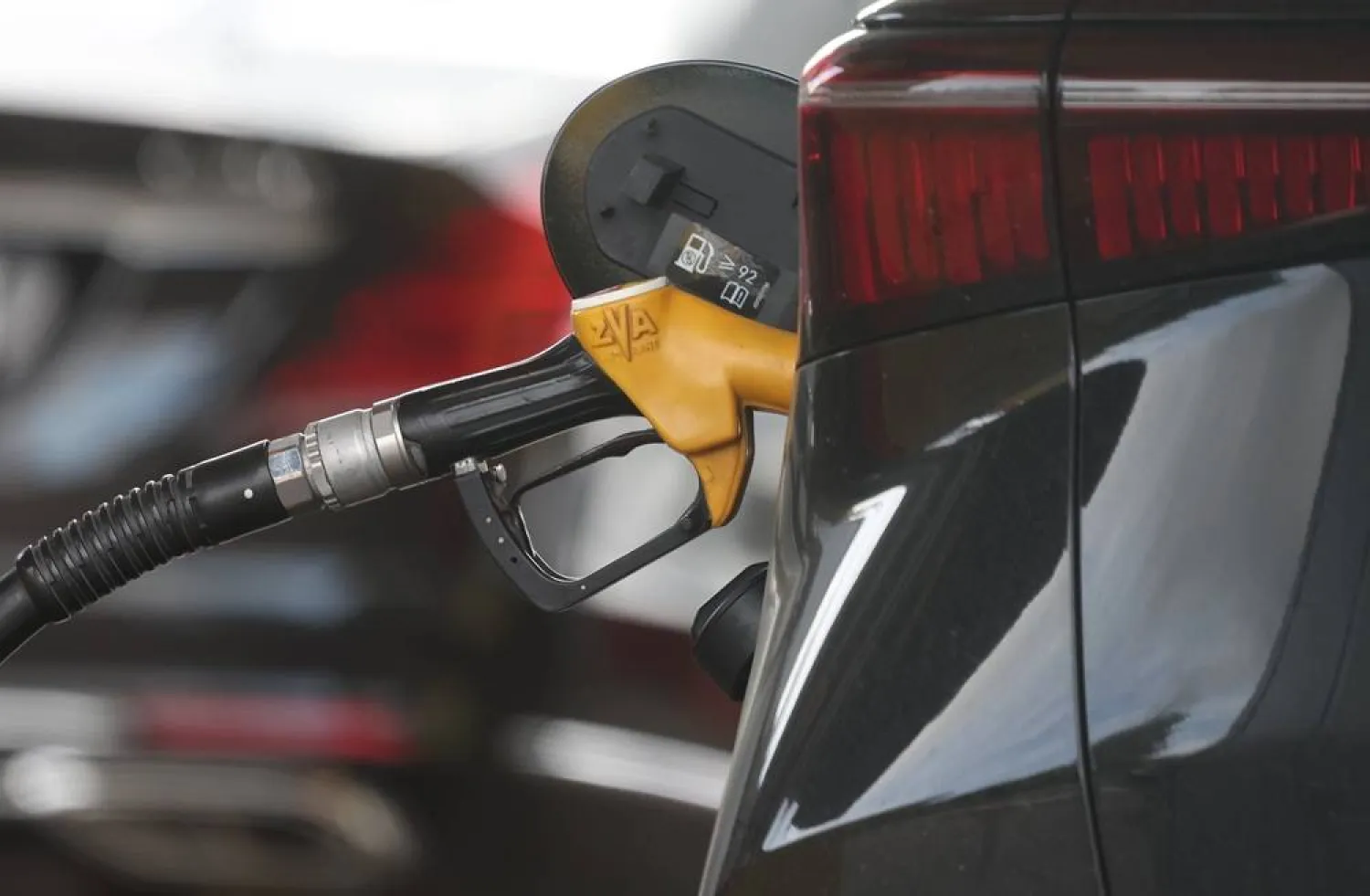
A fuel pump at a Rosneft gas station in Moscow, Russia, 19 August 2026. (EPA)
TT

Oil Set for Second Weekly Rise as Unsettled US-Iran War Crimps Supply

A fuel pump at a Rosneft gas station in Moscow, Russia, 19 August 2026. (EPA)

Oil prices fell slightly on Friday, but were on track for a second weekly rise as the stalemated US-Iran war continues to disrupt supply from the key Middle East producing region.

Brent crude futures fell 23 cents, or 0.3%, to $93.55 a barrel by 0142 GMT, after climbing 2.4% in the previous session. US West Texas Intermediate crude futures slipped 33 cents, or 0.4%, to $86.50 a barrel, after rising 2.3% in the prior session.

During the previous five days of gains, Brent gained more than 7% and WTI climbed more than 8%, ‌reaching their ‌highest since July 24.

Prices have increased on concerns ‌the ⁠inconclusive state of the US-Israeli ⁠war on Iran will mean the continued curtailment of supply from major oil producers.

The earlier peace deal between them expired this week with no effort by either side to restart talks, and US President Donald Trump threatened economic retaliation against nations supporting Iran.

"Both sides are dug in ⁠but lacking the luxury of time to play the ‌waiting game, against a backdrop ‌of crude prices grinding unerringly higher," IG analyst Tony Sycamore said on Friday.

BMI, a ‌unit of Fitch Solutions, said on Friday it will review its ‌Brent price outlook this month, adding that risks to the outlook are "tilted to the upside."

"Exports are already under considerable pressure, because of the twin disruptions in play in the Strait of Hormuz due to the Iranian shut-in ‌of the strait and the US naval blockade on Iran, and the Red Sea due to the ⁠Houthi embargo," ⁠BMI said.

Thousands of people have been killed in the Iran war, which began on February 28 when the US and Israel launched military strikes on Iran.

Seven commodity ships sailed along the Strait of Hormuz on Thursday, just half the previous day's tally, data from ship-tracker Kpler showed. Prior to the Iran war, about one-fifth of global consumption moved through the waterway.

On Wednesday evening, Trump threatened "economic warfare and isolation on an unprecedented scale" against Tehran, warning of consequences for any country that provided "any type of lifeline to Iran".

This week, the UAE suspended all financial and economic transactions with Iran until further notice, highlighting the fraught ties between the major Gulf Arab oil producer and Tehran.


Saudi Listed Real Estate Firms Post $766 Million in First-Half Profit

The Saudi capital, Riyadh (SPA) 
TT

Saudi Listed Real Estate Firms Post $766 Million in First-Half Profit

The Saudi capital, Riyadh (SPA) 

Saudi Arabia’s listed real estate companies posted combined net profit of more than $766 million (SAR 2.87 billion) in the first half of 2026, reflecting a resilient performance despite an 18% decline from the same period last year.

The results were supported by higher property sales, faster project execution and more diversified revenue streams. Fourteen companies reported net profits, while only three posted losses.

Experts and analysts see the market undergoing a regulatory and structural transformation centered on transparency, governance and increasingly differentiated business models, potentially paving the way for selective improvement among the most operationally and financially efficient companies in the second half.

Cenomi Centers led the sector with first-half profit of SAR 588.2 million, down 14.7% year on year. Al Akaria ranked second with about SAR 579 million, a 152.2% surge, while Dar Al Arkan placed third with SAR 498.97 million, up 11.4%.

In the second quarter, combined sector profit slipped just 0.49% to SAR 1.455 billion from SAR 1.462 billion a year earlier.

Project Deliveries

Khaled Almobid, CEO of Menassat Realty Co., told Asharq Al-Awsat that disparities in companies’ financial results were natural because the sector encompasses different business models. Some companies rely on development and sales, others on leasing and recurring income, while some are tied to major projects, specific seasons or destinations.

A company could therefore record a sharp profit increase following project deliveries, asset sales or improved margins, while another could see earnings decline despite maintaining strong operating activity, he explained.

Almobid noted that Al Akaria’s profit surge and Dar Al Arkan’s growth reflected some developers’ ability to capitalize on projects, sales and accumulated demand. Cenomi Centers’ lower earnings, meanwhile, did not necessarily signal weakness in the broader property market, with each company’s performance needing to be assessed according to its business model, revenue sources and financing structure.

Market Reshaping

According to Almobid, new regulations are reshaping the sector by raising professional and transparency standards and encouraging the development and productive use of assets rather than land hoarding.

Financing costs nevertheless remain a major factor because they affect project expenses and the ability of individuals and investors to buy property, influencing sales momentum and profit margins.

He expects selective earnings improvement over the next two quarters rather than uniform growth across the sector. The second quarter’s decline of less than 0.5%, compared with an almost 18% drop for the full first half, could be an early indication that the pace of deterioration is easing.

Companies best positioned to benefit will be those with projects nearing completion, land acquired at favorable costs, disciplined debt levels and strong operating cash flow. The second half could therefore prove stronger for some companies, although Almobid cautioned that it was too early to expect a broad, synchronized profit upcycle.

The next phase, he added, will increasingly differentiate companies: the winners will not necessarily be those with the largest property portfolios, but those most capable of converting their assets into sustainable cash flow and profits.

Regulatory Changes

Real estate expert and appraiser Ahmed Al-Faqih told Asharq Al-Awsat that quarterly and half-year results were more indicative of individual listed developers’ project deliveries and management performance than of the direction of the broader development market.

Sweeping regulatory and legislative changes, particularly governance requirements for developers, are affecting the market, but their impact is unlikely to be fully reflected in major developers’ earnings for about another 12 months.

While some new governance requirements have increased development costs, Al-Faqih noted that real estate balance measures have helped reduce one of developers’ biggest expenses: land. Partnerships with landowners have made this key component more accessible, significantly lowering actual costs.

He concluded that developers’ profitability ultimately depends largely on two factors: their ability to deliver and sell projects without delays, and effective management capable of avoiding major mistakes. Large-scale development projects and regulatory changes are also creating an increasingly competitive environment for Saudi real estate companies.


US Debt Hits $40 Trillion as Higher Yields Open New Opportunities for Gulf Investors

An electronic display in Washington, DC, shows the US national debt on Aug. 19, as federal debt surpassed $40 trillion for the first time. (AFP via Getty Images)
TT

US Debt Hits $40 Trillion as Higher Yields Open New Opportunities for Gulf Investors

An electronic display in Washington, DC, shows the US national debt on Aug. 19, as federal debt surpassed $40 trillion for the first time. (AFP via Getty Images)

As US debt surpasses $40 trillion, Gulf investors are looking beyond the record figure to the broader implications of Treasury yields for capital flows, financing costs and investment strategies.

US assets and the dollar remain central to Gulf portfolios because of the depth of American markets and Gulf currencies’ links to the dollar. At the same time, higher yields are creating opportunities for Gulf sovereign wealth funds to rebalance portfolios and generate stronger returns on new investments.

Economists say the Gulf’s strong financial positions give the region considerable flexibility in navigating shifts in global interest rates. Higher fixed-income yields are also encouraging more diversified strategies spanning bonds, private credit, infrastructure and global equities, alongside growth sectors, such as technology, artificial intelligence and new energy.

Dollar remains central

Abdullah Almeer, assistant professor of economics at King Fahd University of Petroleum and Minerals (KFUPM), said US debt reaching $40 trillion does not pose an “immediate risk” to Gulf dollar-denominated investments, although it increases longer-term structural risks monitored by sovereign wealth funds and central banks.

Almeer told Asharq Al-Awsat that Saudi Arabia holds about $142 billion in US Treasury securities, while the dollar accounts for roughly 57% of global central bank reserves, underscoring its continued central role in the international financial system.

The doubling of US debt from about $20 trillion in 2016 to more than $40 trillion today warrants closer scrutiny of fiscal developments, but does not, for the foreseeable future, diminish the attractiveness of US markets or the dollar’s importance to Gulf economies, he argued.

US dollar bills are seen in front of displayed stock graph in this illustration taken, February 8, 2021. (Reuters)

Higher yields, new opportunities

Persistently high US bond yields could reduce the market value of existing securities and result in valuation losses for some Gulf portfolios.

Almeer does not, however, expect the US economy to default, stressing that American markets retain high levels of liquidity, depth and institutional stability. A large-scale Gulf exit from US assets is therefore unlikely in the foreseeable future.

The main transmission channel to Gulf economies is interest rates. Financing government debt exceeding $40 trillion requires massive Treasury issuance, potentially pushing yields higher, particularly if inflationary pressures persist or oil prices rise.

Saudi Arabia’s riyal peg of SAR 3.75 to the dollar also means its monetary policy is closely tied to US interest rates. A widening rate differential between the two countries could put pressure on the exchange rate and capital flows.

Almeer estimated Gulf financial reserves at about $874 billion, while sovereign wealth fund assets are approaching $5 trillion, giving the region substantial capacity to finance projects and continue attracting investment.

Broader diversification

Rising US debt could encourage Gulf states to further diversify investments toward emerging economies such as India, China and Türkiye, as well as real assets, global infrastructure and fast-growing Asian markets, he added.

Technology, AI and clean energy could also attract a larger share of investment, in line with economic and investment shifts taking place across the region and globally.

Debt figure is not the whole story

Almeer stressed that the $40 trillion threshold does not in itself represent a decisive turning point for the global financial system. Markets focus less on the absolute size of debt than on a country’s ability to finance and service it and maintain investor confidence.

The US still has the world’s largest economy and financial market, while the dollar remains the most widely used currency in international trade and reserves, giving Washington flexibility unavailable to most other economies, he noted.

What makes the figure significant is the accelerating pace of government borrowing and the rising cost of servicing that debt, particularly with interest rates remaining relatively high, he explained.

Economic history also suggests that absolute debt levels are not necessarily the decisive factor in determining crisis risk. Japan, for example, has managed debt exceeding 200% of GDP for extended periods without suffering a sovereign debt crisis, Almeer went on to say.

A Saudi money changer displays Saudi Riyal banknotes at a currency exchange shop in Riyadh, Saudi Arabia July 27, 2017. (Reuters)

Pace of debt growth matters

Mohammed Al-Farraj, Head of Asset Management at Arbah Capital, told Asharq Al-Awsat that the $40 trillion figure should be assessed alongside the pace of debt growth, servicing costs, the annual deficit and markets’ capacity to absorb US Treasury issuance.

He explained that the trajectory does not necessarily signal an imminent threat to Washington’s ability to meet its obligations, but it is reshaping the global investment environment by raising financing costs and altering returns across asset classes.

Higher Treasury yields can reduce the market value of existing bonds while offering better returns on new issues, creating opportunities for investors to rebuild fixed-income portfolios at more attractive levels, he added.

Al-Farraj said the current environment could encourage Gulf sovereign wealth funds to strike a better balance between fixed-income instruments and higher-growth assets, with opportunities in gold, global equities, private credit and infrastructure, alongside more flexible management of US Treasury maturities.

That does not mean abandoning the dollar, but rather adopting more diversified portfolio management while keeping dollar assets at the core of Gulf investment strategies, he remarked.

The main effect of record US debt on the Gulf may therefore be to accelerate the evolution of investment strategies rather than change their direction. The dollar remains pivotal, even as opportunities for Gulf capital expand across bonds, US markets, infrastructure, technology and fast-growing Asian economies.


Libya’s Dbeibah Halts Steel Firm's Production Due to Power Shortages

Prime Minister of Libya's Government of National Unity (GNU) Abdulhamid Dbeibah (Dbeibah's office)
TT

Libya’s Dbeibah Halts Steel Firm's Production Due to Power Shortages

Prime Minister of Libya's Government of National Unity (GNU) Abdulhamid Dbeibah (Dbeibah's office)

Prime Minister of Libya's Government of National Unity (GNU) Abdulhamid Dbeibah ordered the country's biggest steel firm, state-owned Lisco, to halt production due to power shortages, the state-owned Alwataniya TV channel reported on Thursday.

The broadcaster said the PM ordered Libyan Iron and ⁠Steel Company (Lisco)in the coastal city of Misrata to connect its power plant to the national ⁠grid.

Lisco is one of the only companies outside the energy sector still exporting products from the country.

The plant has a design capacity of 1.7 million ⁠metric ⁠tons of liquid steel per year.

Libya has had a power crisis as temperatures soar with outages of up to 10 hours a day in main cities, sparking protests.