



World Gold Council to Asharq Al-Awsat: Saudi Arabia Strengthens Its Position as a Key Market in the Region

A customer looks at gold bracelets at a local store in Saudi Arabia (SPA)
TT

World Gold Council to Asharq Al-Awsat: Saudi Arabia Strengthens Its Position as a Key Market in the Region

A customer looks at gold bracelets at a local store in Saudi Arabia (SPA)

As gold prices climbed to record levels in 2026 and its role as a tool for hedging and portfolio diversification grew amid rising global debt and continued economic and geopolitical uncertainty, Saudi Arabia has emerged as one of the markets undergoing rapid transformation in the gold sector. This has been driven by growth in investment and consumer spending, as well as the expansion of tourism and financial activity.

Andrew Naylor, the World Gold Council's Head of Middle East and Public Policy, believes these shifts are strengthening the Kingdom's position among the region's major gold markets and creating new opportunities for sector growth in the coming years.

In an interview with Asharq Al-Awsat, Naylor said gold has entered a phase in which its role extends beyond its association with immediate crises, as its importance as a strategic asset in investment portfolios continues to grow. Global gold demand, including over-the-counter trading, reached about 1,269 tons in the second quarter of 2026, while demand in the first half of the year rose 2 percent year on year to 2,522 tons. The value of demand reached a record level of about $380 billion.
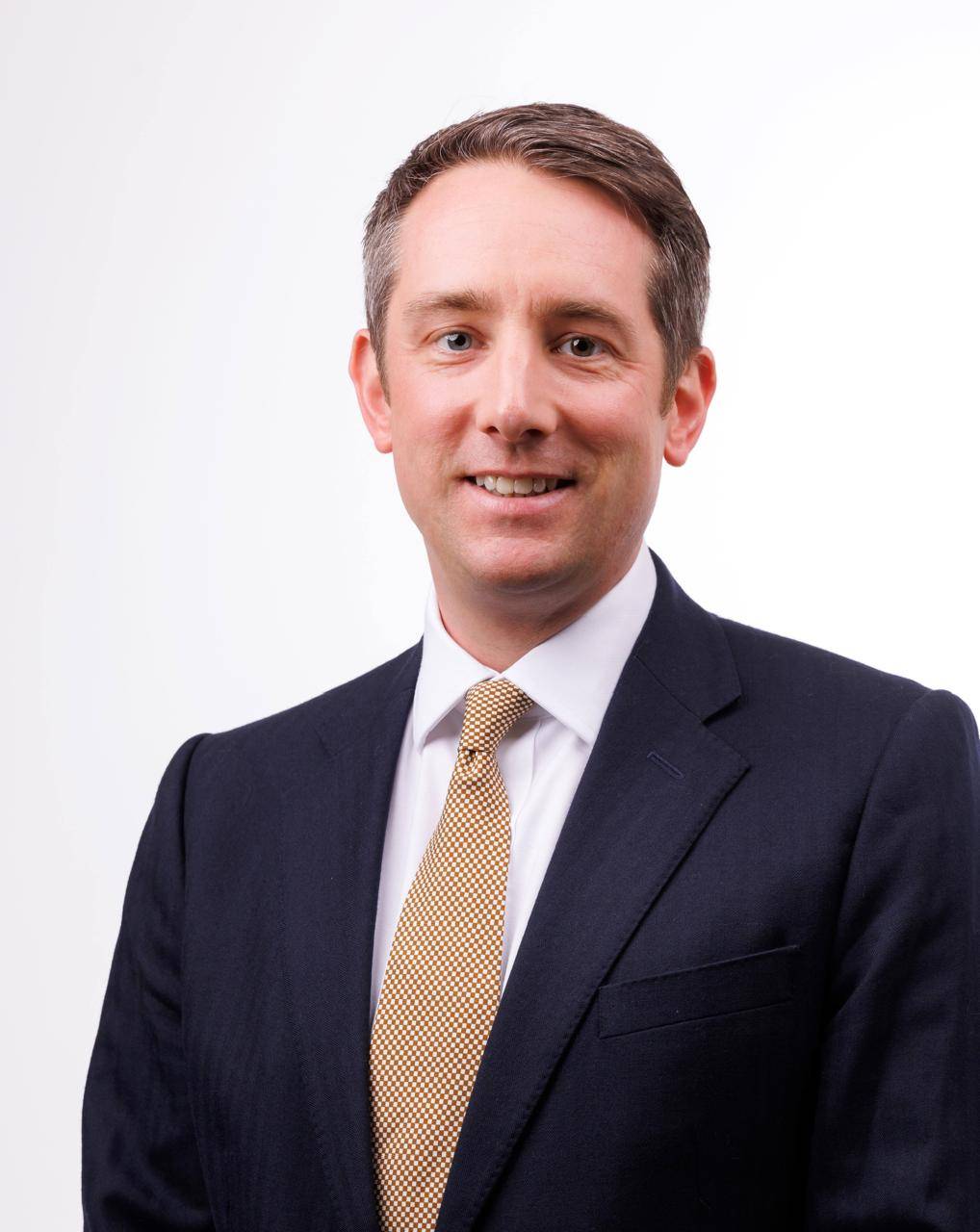
Andrew Naylor, the World Gold Council's Head of Middle East and Public Policy (World Gold Council)

These levels come amid strong gains in gold prices during the year. The metal's average price under the London benchmark reached $4,506 per ounce in the second quarter, a significant increase from its level in the same period last year, despite falling from the record level recorded in the first quarter. The price movement reflects continued investor demand for gold as geopolitical risks intersect with interest rate expectations, currency fluctuations, and elevated debt levels.

Gold received an additional boost in August amid growing concerns about US debt levels, particularly after the US Treasury Department announced that it would double buyback operations for longer-term bonds to at least $4 billion per operation. The announcement on August 19 coincided with declines in Treasury yields and the dollar, while gold jumped more than 3 percent in a single session, signaling continued investor sensitivity to developments in the US debt market and fiscal policy.

Global Economic Risks

Naylor explained that gold's importance has increased amid continued geopolitical and economic uncertainty worldwide, noting that investors are not reacting only to individual events, but to an environment characterized by growing and persistent risks, from geopolitical tensions to uncertainty over inflation and interest rates and volatility in currency markets.

He added that gold continues to play a role in diversifying portfolios, preserving value, and strengthening their ability to withstand volatility, pointing out that concerns over rising global debt levels and their sustainability have become factors supporting interest in gold.

These factors come as recent US inflation data showed that price pressures persist, with annual inflation, as measured by the Personal Consumption Expenditures index, holding at 3.7 percent in July, slightly above market expectations. The persistence of inflation above the Federal Reserve's 2 percent target increases the importance of the path of interest rates and the dollar for gold's performance, as markets await new signals on US monetary policy.

Naylor noted that gold's appeal does not rest on a single factor, explaining that geopolitical developments are one of the drivers, but interact with a broader set of economic, financial, and investment factors.

Investment Maintains Its Momentum

Despite some moderation in investment demand following a strong start to the year, global demand for gold bars and coins remained at elevated levels, while over-the-counter demand, particularly in Asian markets, continued to support the market.

Naylor said investment may remain one of the main drivers of demand in the coming period, as investors seek to diversify their portfolios and hedge against a broader range of risks.

He added that continued geopolitical tensions could provide additional support for demand, but their impact will depend on how they interact with the broader economic and financial environment, including trends in inflation, interest rates, and currencies.

Asia Leads Demand

Asked which regions are best positioned to drive global demand, Naylor said Asia will remain a key market driver, with China and India, along with Middle Eastern markets, continuing to play an important role in investment and jewelry demand.

Demand for gold bars and coins in China reached about 107 tons in the second quarter, compared with 50 tons in India, indicating continued investment interest despite the impact of higher prices on some consumer segments.

He explained that rising prices can alter the composition of demand across different categories, with investment products tending to show greater resilience than jewelry during periods of rising prices.

The Gulf Strengthens Its Role

At the Middle East level, Naylor said geopolitical developments have contributed to increased interest in gold, but investor behavior in the region also reflects a broader trend toward portfolio diversification and hedging against economic and financial volatility and currency risks.

He added that Saudi Arabia and the UAE continue to strengthen their positions as financial and wealth management centers in the region, supporting long-term demand for gold.

He stressed that the Gulf plays a vital role in the global gold market, benefiting from its geographic location, trade networks, and advanced infrastructure in refining, logistics, and trade.

He noted that the development of financial markets and economic growth in the region are creating scope for this role to expand further in the coming years, as the region has moved beyond its traditional role as a consumer market for gold to assume a larger role in global trade and flows.

Saudi Arabia... An Expanding Market

Regarding the Saudi market specifically, Naylor said the Kingdom is attracting growing attention amid ongoing economic transformations, the expansion of investment activity, and higher levels of consumer and tourism spending. These factors are supporting its position as one of the important gold markets in the region.

He added that initiatives linked to Vision 2030, particularly the development of the tourism, retail, and entertainment sectors, along with population growth and evolving spending patterns, are providing a supportive environment for the long-term development of the gold and jewelry sector.

He believes that the growth of tourism and consumer activity in the Kingdom could open new opportunities for the jewelry sector, while the development of financial markets and private wealth supports the investment side of demand.

Central Banks

Regarding central banks, Naylor noted that official demand has become one of the structural factors supporting the market, with central banks adding 289 tons to their reserves in the second quarter, bringing total purchases to 345 tons in the first half of the year.

Although these levels are below the exceptional rates recorded during some earlier periods, they remain strong by historical standards and reflect the continued preference of central banks for gold as a strategic reserve asset.

This comes as discussions intensify around diversifying global reserves, currency risks, and monetary policies, giving official demand for gold a long-term dimension that extends beyond short-term price movements.

The continuation of this demand, alongside growing investment and consumer demand, gives the Saudi market an opportunity to benefit from these shifts, particularly as tourism grows, the retail sector develops, and the investor base expands.

This does not mean that the Kingdom is competing with the world's major centers for gold trading or refining. Rather, domestic economic transformations are enabling it to strengthen its role as an important regional center for gold demand, investment, and related services.

Thus, the story of gold in Saudi Arabia is not only about rising global prices, but also about a broader shift in the nature of demand, where investment intersects with tourism, consumption, and the development of financial markets, at a time when investors globally are seeking assets capable of diversifying portfolios and preserving value amid a more volatile economic environment.


Saudi Tourism Minister Announces Launch of Second Edition of TOURISE Forum in March

Tourists are seen at Saudi Arabia's AlUla. (SPA)
TT

Saudi Tourism Minister Announces Launch of Second Edition of TOURISE Forum in March

Tourists are seen at Saudi Arabia's AlUla. (SPA)

Saudi Minister of Tourism and Chairman of the TOURISE Forum Board Ahmed Al-Khateeb announced on Wednesday the launch of the second edition of the “TOURISE 2027” Forum, under the theme “Alliances That Move the World,” to be held in Riyadh from March 23 to 25, 2027.

The forum, held under the patronage of Prince Mohammed bin Salman bin Abdulaziz Al Saud, Crown Prince and Prime Minister, brings together leading figures from the tourism, technology, investment, sustainability, culture and transport sectors from around the world to discuss the key opportunities and challenges facing these sectors and help shape the next phase of global tourism.

The forum comes as Saudi Arabia presents a prominent example of what can be achieved in the tourism sector as an integrated economic ecosystem. The Kingdom surpassed its initial target of welcoming 100 million visitors annually in 2023, seven years ahead of schedule, and raised its ambition to 150 million visitors annually by 2030.

The TOURISE Forum serves as an attractive platform for investment. Its inaugural edition last year succeeded in catalyzing investments worth $113 billion, spanning destinations, hotels, retail, talent development and AI-powered platforms, demonstrating how cross-sector collaboration can turn ambition into investment and practical action.

The theme of the forum’s second edition, “Alliances That Move the World,” underscores the importance of forging alliances that transcend sectors, borders and business fields, connecting tourism with capital, technology and infrastructure to unlock investment opportunities, accelerate innovation and facilitate the traveler experience, supporting a more growing, sustainable and inclusive global tourism economy.

Minister Al-Khateeb said: “No single destination, company or organization will shape the future of tourism. Rather, it will be determined by the strength of the alliances we build together. Saudi Arabia has witnessed first-hand what can be achieved when ambitions, investments and strategic partnerships come together.”

“Through the second edition of the TOURISE Forum, we are inviting the world to Riyadh to build the alliances that will shape the next 50 years of the tourism sector,” he added.

The Ministry of Tourism announced the first group of speakers for the 2027 edition, comprising leading figures from the tourism, hospitality, technology and destination development sectors. They will showcase their organizations’ contributions to facilitating travel, tourism and mobility, as well as the most promising areas for investment in the global tourism sector.


Riyadh Opens the Way for Driverless Parcel Delivery

One of the autonomous trucks (Asharq Al-Awsat)
TT

Riyadh Opens the Way for Driverless Parcel Delivery

One of the autonomous trucks (Asharq Al-Awsat)

As the mobility landscape within Saudi cities continues to evolve, Riyadh is preparing to embark on a new experience in which no driver sits behind the wheel and the success of a journey does not depend on a driver's ability to navigate the road. By mid-November, 24 autonomous trucks are expected to begin trial operations on the capital's roads, opening the door for the technology to move from passenger transport into parcel and freight delivery.

The move follows the General Transport Authority's sponsorship in May of a memorandum of understanding between Abdul Latif Jameel Motors and China's Zeelos Technology, a company specializing in autonomous driving technologies, with the aim of adopting and enabling autonomous mobility solutions in the Kingdom.

The trucks expected to operate in Riyadh represent one of the practical applications of this cooperation. The first phase will focus on testing the ability of autonomous vehicles to transport parcels within the capital, paving the way for an assessment of their performance and efficiency before moving to broader stages of operation.

Ammar Baterdok, General Manager of Mobility Solutions Projects at Abdul Latif Jameel Motors, told Asharq Al-Awsat that the pilot operation will begin after the completion of geospatial mapping and the training of autonomous driving systems on local roads.

He explained that the fleet allocated to the first phase comprises 24 trucks of different sizes and models. Four have already arrived in the Kingdom, while another 20 are currently in transit, amid logistical challenges affecting shipments from China due to developments in the region.

The trucks have payload capacities of 0.5 tons, 1.5 tons, and 2.5 tons. The fleet includes refrigerated and non-refrigerated models, with the remaining batches expected to arrive successively during October and November.

Free Trials with SPL

Abdul Latif Jameel Motors is carrying out the pilot phase in cooperation with Saudi Post | SPL to transport parcels from the main center to neighborhood centers in Riyadh. The service will be provided free of charge throughout the trial period.

Baterdok said the company is prepared to extend the pilot period for several months if necessary in order to collect sufficient operational and investment data to assess the fleet's performance and economic viability before making a decision on commercial expansion.

The phase will allow the company to test the vehicles under actual driving conditions within the capital, including their ability to navigate local roads and traffic, while also measuring their performance during different operating hours.

Millions Invested to Test Viability

The cost of the pilot phase amounts to millions of riyals, according to Baterdok, covering the purchase of vehicles, customs clearance, fees, and taxes. He explained that the investment is not intended to generate a direct financial return, but rather to test the technology's economic and technical viability and collect the data needed before decisions are made regarding commercial expansion and the size of the future fleet.

Illustrative photo of the inside of the truck (Asharq Al-Awsat)

Operating Savings Could Exceed Truck Costs

The company is banking on autonomous trucks being able to reduce operating costs compared with conventional vehicles. Baterdok explained that the price of an autonomous truck is approximately half that of a conventional fuel-powered truck, whether gasoline or diesel.

The cost gap becomes wider during operation due to lower labor and maintenance expenses, in addition to the possibility of operating the trucks around the clock, except for the periods required for recharging.

In an analysis, logistics expert Hassan Al Halil told Asharq Al-Awsat that the most significant economic impact would come from reducing operating costs and improving supply-chain efficiency. He noted that autonomous trucks could increase fleet utilization, improve route planning, and allow for longer operating periods, particularly on repetitive and defined routes.

Al Halil added that it is too early to establish a fixed percentage for reductions in logistics costs in Saudi Arabia, given that savings vary depending on the type of shipment, distance, and operating model. He said that "the greatest opportunities for savings lie in operating labor costs, increasing truck utilization, reducing waiting times, improving fuel consumption, and maintenance," adding that "the economic value will come from increasing fleet productivity and completing more trips efficiently."

Baterdok, meanwhile, said the absence of a driver allows supply and delivery operations to be shifted to nighttime hours, increasing the efficiency of fleet utilization in major cities such as Riyadh by taking advantage of periods when road traffic is less dense.

According to company estimates, electricity costs account for only about 20 percent of the cost of conventional fuel, while maintenance expenses decline due to the absence of conventional engines and transmissions. Routine servicing therefore focuses to a greater extent on components such as brakes and tires.

The trucks rely on sensors and radar systems for autonomous driving, enabling them to operate in nighttime driving conditions without relying on human vision.

Road Readiness Determines the Path to Expansion

Despite these advantages, Al Halil believes that large-scale operation of autonomous trucks in Riyadh requires more than well-maintained roads. It requires highly accurate maps that are continuously updated, reliable communications systems, smart infrastructure, and coordination among the relevant authorities.

He pointed out that the main challenges within cities include congestion, sudden changes in routes, roadworks, unexpected behavior by some vehicles, dusty conditions, and the handling of loading and unloading points. He said that "the most realistic starting point will be defined, repetitive roads and logistics routes before moving to more complex urban operations."

From Passenger Transport to Parcel Delivery

The truck trial comes as Saudi Arabia expands its testing of autonomous mobility applications, as the technology moves from passenger transport into freight and delivery.

Last year, Saudi Arabia launched autonomous passenger vehicles and is currently operating more than five routes, including the Roshn area, Princess Nourah bint Abdulrahman University, and the route connecting Riyadh Gallery and Hayat Mall.

The service has transported more than 3,100 passengers across 1,600 trips under the supervision of the General Transport Authority, as part of efforts to test autonomous driving technologies in the Saudi urban environment.

The expansion of these applications into the freight sector opens a new field for testing the impact of autonomous driving on the efficiency of delivery operations within cities, at a time when e-commerce is expanding and supply chains are seeing growing demand for more efficient and flexible solutions.

From Roads to the Sky

Abdul Latif Jameel Motors' plans do not stop at ground transportation. The company has begun studying the market for drone-based goods delivery in preparation for entering the field once the necessary regulatory frameworks are in place.

Baterdok expects the process of developing regulations governing goods delivery by drones to take between one and a half and three years. He noted that the company is in discussions with global suppliers of trucks and drones designed to transport goods and individuals.

In evaluating these solutions, the company is focusing on technical readiness, range, speed, the ability of vehicles and aircraft to operate under different weather conditions, and resistance to wind, with the aim of achieving operational readiness as soon as official licenses are issued.

Accordingly, Abdul Latif Jameel Motors' plan is not limited to testing autonomous trucks in Riyadh. It extends to developing a broader system of autonomous mobility solutions, beginning with ground transportation and eventually reaching air-based goods delivery, while testing the technical and economic viability of each solution before moving from trials to commercial expansion.


Strait of Hormuz Ship Crossings Remain in Single Digits

FILE PHOTO: Vessels near the Strait of Hormuz, as seen from Musandam, Oman, September 2, 2026. REUTERS/Stringer/File Photo
TT

Strait of Hormuz Ship Crossings Remain in Single Digits

FILE PHOTO: Vessels near the Strait of Hormuz, as seen from Musandam, Oman, September 2, 2026. REUTERS/Stringer/File Photo

Vessel transits through the Strait of Hormuz remained in the single digits at four on Tuesday, down from seven a day earlier, preliminary shipping data showed on Wednesday, falling well short of the 10-day average of 18.

The drop in traffic through the waterway that handled one-fifth of the world's oil and liquefied ⁠natural gas supply before ⁠the Iran war comes after attacks in the region intensified.

Of the total on Tuesday, two ships were exiting and two were entering, according to the data.

No very large crude carriers ⁠or liquefied natural gas tankers were involved.

Some ships may be sailing through the waterway with their transponders turned off and they are therefore not counted.

One very large gas carrier, Salute, carrying around 470,000 barrels of liquefied petroleum gas exited via the Iranian route, while Panamax-sized tanker Nautilus, carrying around 510,000 barrels of naphtha, exited ⁠via ⁠an unknown dark route, Reuters reported.

The two ships that entered were both laden, with one being a short-range dirty products tanker and the other a dry bulk carrier. Both entered via the Iranian route.

Meanwhile, the number of ships sailing through the Bab el-Mandeb Strait was at 22, little changed on Tuesday compared with a day ago at 24.
