


Hotels Reshape the Real Estate Investment Landscape in Makkah

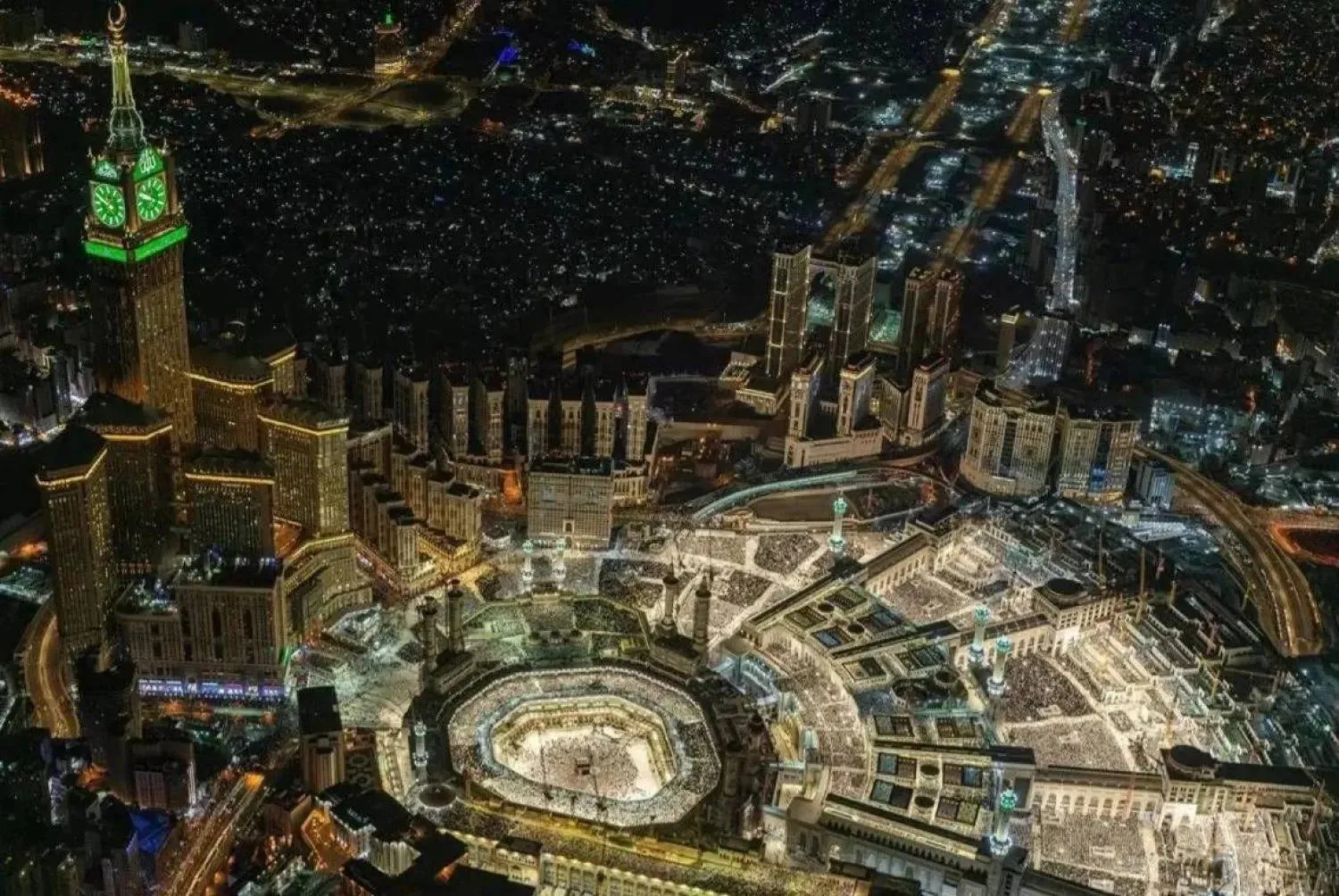
A night view of the Gran Mosque in the holy city of Makkah, Saudi Arabia. (SPA)
TT

Hotels Reshape the Real Estate Investment Landscape in Makkah

A night view of the Gran Mosque in the holy city of Makkah, Saudi Arabia. (SPA)

The real estate market in Makkah is witnessing an accelerating shift toward investment in hospitality assets, fueled by the growing numbers of Hajj and Umrah pilgrims and the expansion of the city's capacity. This trajectory is cementing hotels as a primary source of operational revenue for a number of real estate developers.

This comes at a time when the recovery in hospitality returns has reflected more clearly on the financial results of real estate companies, driven by improving occupancy rates and average room prices, particularly during the Hajj and Umrah seasons.

Sustained demand underpins hospitality boom

Financial and economic advisor Dr. Hussein Al-Attas told Asharq Al-Awsat that Makkah's hospitality sector is experiencing "one of its strongest historical phases."

The growth witnessed by the sector is underpinned by structural factors, foremost among which is the continuous increase in the number of Umrah pilgrims and visitors, alongside the gradual expansion of Hajj capacity and projects tied to Saudi Vision 2030, he added.

He stressed that the expansion of the Grand Mosque, alongside the development of transportation networks, roads, trains, and the enhancement of the visitor experience, has contributed to raising the efficiency of the hospitality ecosystem.

This, in turn, has reflected on occupancy rates and average room prices, with Al-Attas explaining that demand for hotels in Makkah has become more sustainable year-round with the growth of Umrah programs, no longer being limited to peak seasons.

This shift reflects the growing significance of hospitality operations within the business models of real estate firms operating in Makkah. This comes as developers pivot part of their focus away from the sale of lands and units toward the development of income-generating assets that can be retained and operated over the long term.

Hotels drive profitability

The performance of the Jabal Omar Development Company exemplifies the growing importance of hospitality operations in the financial results of Makkah real estate developers. The company returned to profitability in the second quarter of 2026 with a net profit of 158.1 million riyals, compared to a loss of 42.1 million riyals in the same period last year, while revenues increased by 42.5 percent to 715.2 million riyals.

The company attributed the revenue growth primarily to the sustained improvement in hotel performance, particularly during the Hajj season, alongside the opening of the "Rotana" hotel earlier this year, according to a disclosure published on the Saudi Exchange (Tadawul) website.

Al-Attas said hospitality operations have become the primary engine of profitability for a number of real estate companies in Makkah, after previously relying more heavily on land sales or the development of traditional real estate projects.

He explained that rising occupancy rates and improving average room prices support the operational revenues of hotels, while the recurring nature of these revenues provides companies with more stable cash flows compared to returns generated from asset sales.

Khaled Al-Mobid, CEO of Menassat Real Estate Company, stated in an exclusive comment to Asharq Al-Awsat that Makkah possesses an exceptional advantage represented by the sustained demand for hospitality.

He explained that the continuous influx of Hajj and Umrah pilgrims, alongside the objectives of Vision 2030, lends hospitality investment greater attractiveness compared to a number of other real estate assets, particularly in locations close to the Grand Mosque and projects linked to transportation and services.

Al-Mobid pointed to a shift in developer strategies away from focusing on the sale of real estate units toward developing income-generating assets, such as hotels and serviced apartments, alongside leveraging international hospitality brands.

A developer's focus is no longer confined to construction, but has extended to operational quality and asset management, as a project's value has become linked to its operational performance rather than its development cost alone, he remarked.

Rising supply tests the market's capacity to absorb growth

The expansion of hospitality investment in Makkah coincides with an increase in room supply, which may intensify competition among operators, particularly within categories witnessing the entry of new projects.

Al-Attas said that in the short term, this increase could exert limited pressure on pricing within certain segments if the new additions are concentrated within the same hotel tier. However, over the medium and long term, demand will be capable of absorbing a significant portion of this expansion, given government targets to boost the numbers of Umrah pilgrims and visitors, and Makkah's transformation into a destination welcoming growing influxes year-round.

According to Al-Attas, the volume of supply will not be the sole decisive factor, as the quality of the hospitality product, location, service standards, and the efficiency of revenue management will play a primary role in a hotel's ability to maintain high occupancy rates and returns.

Al-Mobid said that increasing room counts will not suffice to guarantee project profitability as competition intensifies, noting that a hotel's ability to maximize revenue per room and achieve operational efficiency will become more vital with new projects entering the market.

Operational efficiency key to maintaining margins

Conversely, Makkah's hospitality sector faces a series of challenges that could test investors' profit margins in the coming period, led by rising costs for land, construction, and operations, alongside wages, energy, maintenance, and financing costs, in addition to the need for qualified personnel to manage hospitality establishments efficiently.

Al-Attas said that rising operational costs and persistently high interest rates could exert pressure on companies, at a time when increased competition will force operators to focus more heavily on operational efficiency and boosting the guest experience to maintain profit margins.

Sustaining high occupancy rates outside of peak seasons presents another challenge for the sector, requiring the diversification of target markets and the attraction of new visitor segments in alignment with the expansion of Umrah programs and the objectives of Vision 2030.

Al-Mobid said future profitability hinges on product quality, operational efficiency, and maximizing revenue per room.

He stressed the importance of diversifying hotel tiers, leveraging modern technologies in revenue management, reducing operational costs, and delivering a premium hospitality experience.

With demand and supply expanding simultaneously, the future of hospitality investment in Makkah is pivoting toward a heavier reliance on asset operational efficiency, product quality, and location, rather than an increase in hotel capacity alone. This shifts developers' ability to manage assets and convert growing visitor numbers into sustainable cash flows into a decisive factor in the future.


Europe’s Central Bankers Fear More Turbulence in Testy US Relations

US Federal Reserve Chairman Kevin Warsh takes a break in the rain with Bank of Canada Governor Tiff Macklem and Bank of England Governor Andrew Bailey during the Kansas City Fed’s annual economic symposium, in Jackson Hole, Wyoming, US, August 28, 2026. (Reuters)
TT

Europe’s Central Bankers Fear More Turbulence in Testy US Relations

US Federal Reserve Chairman Kevin Warsh takes a break in the rain with Bank of Canada Governor Tiff Macklem and Bank of England Governor Andrew Bailey during the Kansas City Fed’s annual economic symposium, in Jackson Hole, Wyoming, US, August 28, 2026. (Reuters)

Europe's central bankers are leaving an annual getaway with their US counterparts far from reassured that long-standing norms in global cooperation remain intact and worried that more turmoil is ahead for an already testy relationship with Washington, sources familiar with the discussion said.

Federal Reserve policymakers went out of their way to ease their counterparts' concerns this week, promising to honor all of their commitments.

But, given the separation between the central bank and the administration, they could offer no guarantees against sudden policy shifts by President Donald Trump, more than half a dozen officials on the sidelines of the Kansas City Fed’s annual Jackson Hole Economic Symposium said.

Recent US Treasury interventions to prop up the Japanese yen and to lower longer-term US borrowing costs were particularly concerning as they foreshadowed more intervention and breaks with norms, the officials, who asked not to be named, said.

After the August 1 yen transaction, US Treasury Secretary Scott Bessent confirmed that the Treasury had sold euros for the Japanese currency and said he reassured central banks in the region that the move was "just a reallocation of resources." On Friday, he said that the foreign exchange assets to buy yen came from the Treasury's Exchange Stabilization Fund.

But European officials were especially annoyed the ‌US did not give them ‌a customary heads-up that euro sales were part of the transaction, the sources said.

"That was infuriating," one ‌of them ⁠said. "You always pick up ⁠the phone and give heads-up."

"The message to me is that the US does whatever it wants."

Others were more forgiving and said the transaction was so unusual that it may have been an honest oversight.

Spokespeople for the European Central Bank and the Federal Reserve declined to comment.

A US official said the US-Japan intervention was undertaken to counter disorderly movements in the yen and to support stability in global financial markets.

"It was not directed at anyone else," the official said. "Treasury maintains close and ongoing communication with our international counterparts, but we do not comment on the operational details of those discussions."

DEBT BUYBACK CONCERNS

The sources also said that Bessent’s plan to increase buybacks of longer-dated bonds -- transactions that may need to be financed by issuance of more shorter-term maturities -- was also a concern to European central bankers because, like the yen purchase, ⁠it indicates the administration was willing to take unusual measures to cap borrowing costs.

"These interventions normally offer just ‌temporary relief," a second source said. "But they are clearly worried. So what is next? Will they put ‌pressure on the Fed to start buying bonds on the market?"

While the Fed is the sole US monetary policymaking body, independent in that mission by design from the elected administration, ‌the sources said Trump has shown he is willing to go to extraordinary lengths to get his will across.

Their concern was that this ‌could then set off upheaval in markets that would go far beyond the US.

The US official responded by repeating earlier statements that the increased long-end bond buybacks were aimed at providing greater liquidity in longer-dated sectors where Treasury gets high-quality buyback offers.

"They are not monetary policy or an effort to impose a cap on interest rates," the official said.

On Thursday, however, a US Treasury official had told reporters the Treasury was "really focused on bringing those long-end yields lower" because they had risen above what the department viewed as "fair value."

SWAP ‌LINES AT RISK?

Another of the Europeans' worries was that political meddling could eventually involve the dollar liquidity backstops provided by the Fed to the world's biggest central banks, considered a cornerstone of global financial stability, some of the ⁠sources said.

These swap lines ensure that ⁠commercial banks around the world retain their access to US dollars, especially in moments of financial stress.

The Fed renews this facility year after year on the premise that it actually safeguards US interests and markets, since overseas banks in moments of global market upheaval could otherwise be forced to dump US bonds.

"But rationality doesn't always prevail with this administration," a third source said. "When they run retaliatory trade policies with their closest allies, Trump could just say, 'Hey, they're ripping us off' and the swap lines could be gone overnight."

The sources said there has not been even a hint that these backstops are in danger, and they still expected them to remain unchanged. The swap lines are authorized by the Federal Open Market Committee itself and operated exclusively by the Fed, not the administration.

"Decisions concerning Federal Reserve facilities and swap-line arrangements rest with the Federal Reserve," the Treasury official said. "Nothing Treasury has announced regarding either yen operations or debt buybacks suggests otherwise."

The official added that Bessent looked forward to discussing financial stability issues with G20 finance ministers and central bank governors in the coming days in Asheville, North Carolina, seeking to further press the administration's agenda on isolating Iran, fostering growth and reducing global imbalances.

Fed Chairman Kevin Warsh travelled to Europe just over a month into his job and went out of his way to foster good relations with officials there, leaving a predominantly positive impression, the sources said.

In his debut Jackson Hole conference as Fed leader, he also posed for a customary photo with Bank of Canada Governor Tiff Macklem, a small but still notable gesture since Trump is now engaged in an escalating and bitter trade war with Canada.


UAE Central Bank to Inspect Egyptian Bank's Branches after US Sanctions

UAE central bank - WAM
TT

UAE Central Bank to Inspect Egyptian Bank's Branches after US Sanctions

UAE central bank - WAM

The UAE central bank said Saturday it would inspect a major state-owned Egyptian bank's branches, after Washington said it would cut off the institution's operations in the Gulf state from the US financial system.

"For Banque Misr branches in the UAE, the Central Bank has decided to conduct a special and urgent examination that includes a forensic/in-depth lookback covering the period referred to in the statement issued by the US authorities," it said in a statement.

The Treasury Department's action will only take effect after a month-long public comment period.

The UAE Central Bank also said that it is currently studying the available options regarding the status of the bank in the event it is decided to impose the special measure against it after completing the procedures in accordance with US laws.

"The appropriate decision in this regard will be taken in due course, taking into consideration the obligations of the bank towards its customers in the UAE."


Insurance Operations Lift Saudi Sector Profits 24.3% to Nearly $500 Million

Cars drive along a street in Riyadh. (Reuters)
TT

Insurance Operations Lift Saudi Sector Profits 24.3% to Nearly $500 Million

Cars drive along a street in Riyadh. (Reuters)

Saudi Arabia's insurance sector has entered a new phase of growth, driven by improved insurance service results, greater operational efficiency, and stronger claims and risk management. This has translated into higher profits for listed companies, which rose by about 24.3 percent in the first half of 2026 to 1.87 billion riyals ($498.6 million).

The increase signals an improved ability across the sector to convert growth in business activity and premiums into more sustainable profitability.

The performance comes as demand for insurance products in the Kingdom continues to grow, driven by the expansion of health and motor insurance, alongside rising needs arising from projects, infrastructure, and new economic activities. Higher insurance and reinsurance revenues, combined with investment returns and the performance of major companies, contributed to strengthening the sector's overall results.

A review of company results shows a clear disparity in performance. Seventeen companies recorded profits during the period, 11 of which reported growth in net profit, while nine companies posted losses.

Bupa Arabia topped the sector in profitability, reporting profits of 694.08 million riyals, up 4.14 percent from the same period last year, when it earned about 666.49 million riyals. The increase was supported by higher net insurance service results and growth in operations, along with an increase in net investment results and other income.

Tawuniya ranked second, reporting net profit of 609.85 million riyals despite a notable 16.36 percent decline from the more than 729.11 million riyals it earned in the corresponding period of 2025. The company attributed the decline to lower net insurance results and higher insurance service expenses, following the recognition of large claims in its engineering and energy lines.

Al Rajhi Takaful ranked third among the sector's most profitable companies, with profits reaching 207.84 million riyals, a modest 2.7 percent increase from approximately 202.37 million riyals in the same period a year earlier. The increase was driven by higher insurance revenues from motor, medical, and general insurance activities, as well as higher net investment results and returns from its investment portfolio.

In the second quarter alone, profits across the sector reached 923.43 million riyals, up 24.87 percent from 739.5 million riyals in the same quarter of 2025. Sixteen companies in the sector reported net profits in the second quarter of 2026, with 11 of them recording higher profits than in the corresponding quarter of 2025. The remaining companies posted quarterly losses.

Not a Passing Figure

Commenting on the sector's results, financial and economic expert Dr. Suleiman Al-Humaid Al-Khalidi, a member of the Saudi Economic Association, told Asharq Al-Awsat that the 24.3 percent increase in the net profits of Saudi insurance companies to about 1.87 billion riyals in the first half of 2026 “is not a passing figure.” Rather, he said, it reflects an important shift in the sector's performance, driven by three main factors.

He explained that the first factor was improved insurance service results, supported by premium growth, better pricing, and improved risk management. The second was greater efficiency in managing claims and costs, which he described as a key factor in the sector's shift from focusing on revenue growth to achieving more sustainable underwriting profitability.

The third factor, he added, was the contribution of investment portfolios to overall results, particularly amid the investment environment from which financial institutions had benefited in the preceding period. He stressed that the 24.3 percent profit growth should not be viewed as uniform across all companies, as the larger companies have a clear impact on the sector's overall results because of the size of their operations.

He noted that the most important indicator in the first-half results was that the improvement had become largely tied to the quality of the insurance operations themselves, rather than solely to investment returns or non-operating items. This, he said, reflects an evolution in the nature of the growth taking place in the sector.

Al-Khalidi expects the positive trend in the performance of insurance companies to continue through the second half of 2026, albeit at a more moderate pace than in the first half. He pointed to several supporting factors, foremost among them continued growth in health and motor insurance, as well as insurance for projects and infrastructure.

He noted that the expansion of the Saudi economy and the increase in assets and economic activities requiring insurance coverage are creating room for demand to grow and for new products to be developed in the market, including areas that have not previously achieved sufficient penetration, such as life insurance and private property insurance.

At the same time, Al-Khalidi identified three main challenges that warrant monitoring: rising claims, particularly in health insurance; pricing competition; and fluctuations in investment returns. He said the real winner in the next phase would not necessarily be the company achieving the greatest growth in premiums, but rather the one able to achieve the more difficult balance of increasing premiums while improving insurance results, controlling claims and expenses, and generating stable investment returns.

He stressed that the Saudi insurance sector is entering a different phase, in which the focus is no longer limited to market growth but has shifted toward converting that growth into sustainable profitability and improving the quality of capital and returns. This makes the second-half results of 2026 an important test of whether this transformation is sustainable.

3 Challenges

Al-Khalidi noted that there are three challenges that should be monitored: rising claims, particularly in health insurance; pricing competition; and fluctuations in investment returns. He added that the real winner in the next phase would not necessarily be the company achieving the greatest growth in premiums, but the company capable of achieving the more difficult balance of premium growth, improved insurance results, disciplined claims and expenses, and stable investment returns.

He noted that the Saudi insurance sector is entering a different phase, and that the focus is no longer simply on market growth but on turning that growth into sustainable profitability and achieving higher-quality capital and returns. This makes the second-half results of 2026 particularly important in assessing the sustainability of this transformation.
