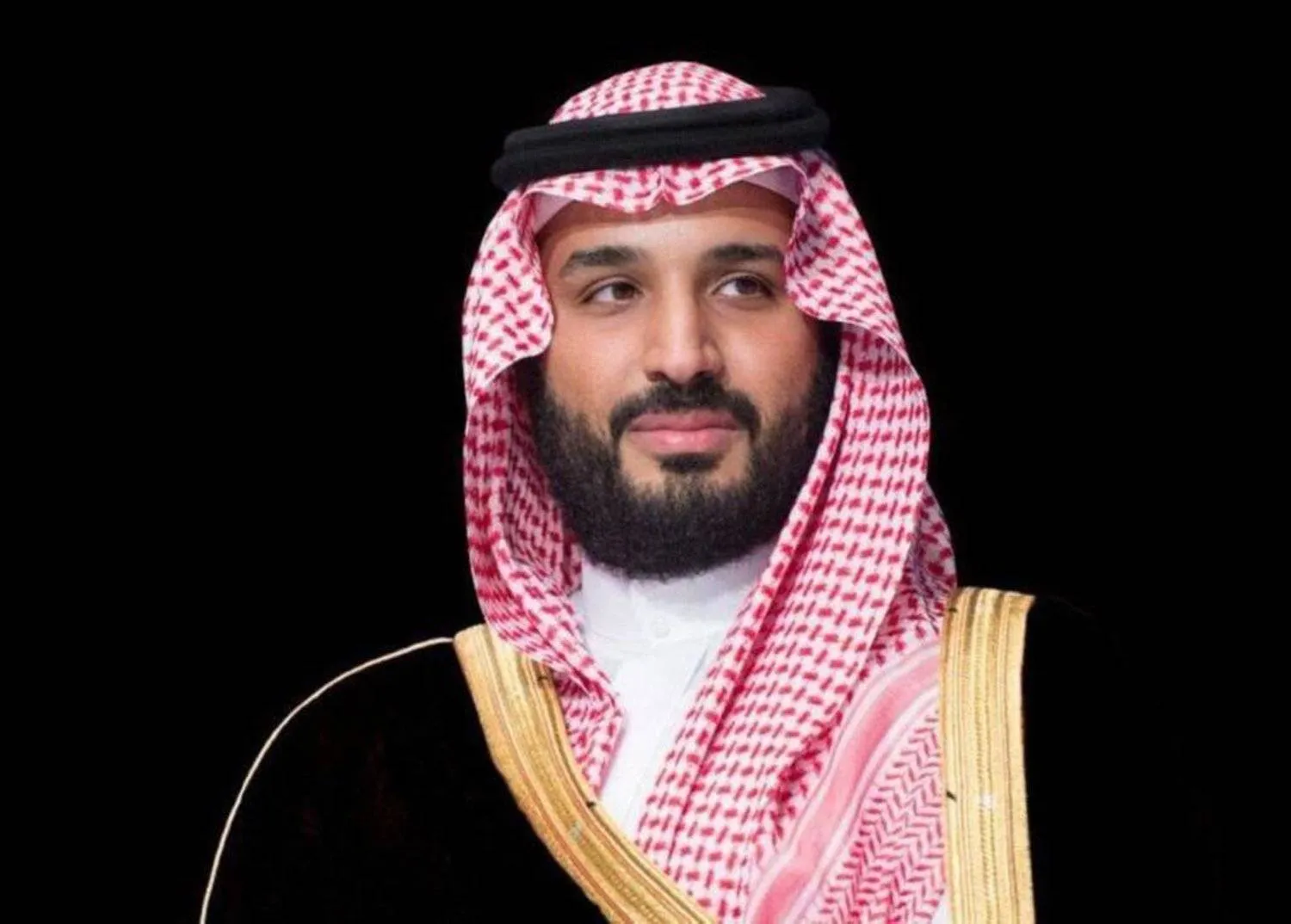
Saudi Crown Prince Launches CEER's Flagship Vehicles

Saudi Crown Prince Mohammed bin Salman (SPA)
TT

Saudi Crown Prince Launches CEER's Flagship Vehicles

Saudi Crown Prince Mohammed bin Salman (SPA)

Prince Mohammed bin Salman bin Abdulaziz Al Saud, Saudi Crown Prince, Prime Minister and Chairman of the Board of Directors of the Public Investment Fund (PIF), has launched EXOBOT, the flagship electric vehicles from CEER, Saudi Arabia's national automotive company.

This national milestone reflects Saudi Arabia's strategic direction toward developing an advanced industrial sector aligned with the objectives of Saudi Vision 2030 and further strengthening Saudi Arabia’s position in the global automotive industry, SPA reported.

Commenting on this occasion, the Crown Prince said: "The launch of CEER's first vehicles represents another step forward in Saudi Arabia's progression to build a sustainable and prosperous industrial ecosystem. It further enables the automotive sector as a key driver of economic growth, through attracting investments, empowering national talent, and expanding the private sector's role to further position Saudi Arabia to become a leading regional and global hub for this industry."

The EXOBOT sedan and SUV vehicles represent part of a planned portfolio of seven models that will be launched over the next five years, including midsize and compact vehicles with various propulsion options to serve different customer needs.

These vehicles will be manufactured at CEER Manufacturing Complex (CMC), the largest automotive production facility in the Middle East and one of the most technologically advanced in the world.

Additionally, the EXOBOT sedan and SUV feature a distinctive design inspired by Saudi Arabia's landscape, rooted in its culture, and reflective of its vision. Designed and engineered locally, the vehicles have been developed according to the highest global standards, further strengthening Saudi Arabia's position as a rising force in the global automotive industry.

By 2034, CEER is projected to contribute over SAR30 billion ($8 billion) to Saudi Arabia's GDP, over SAR80 billion ($21 billion) to trade balance improvement, and create quality direct and indirect jobs.

The announcement aligns with PIF's efforts to develop an integrated and competitive local automotive ecosystem, as part of PIF's mandate as a key driver of Saudi Arabia's economic diversification. PIF launched CEER in 2022 as the first Saudi vehicle brand to support the development of the national industrial ecosystem, attract investments, create opportunities for the private sector, and increase Saudi GDP.


Syria Forecasts Strong Economic Growth as EU Plans 2027 Investment Conference

 Syrian Economy Minister, Mohammad Nidal al-Shaar, EU Commissioner, Dubravka Suica, Head of the Delegation and Ambassador of the European Union to Syria, Michael Ohnmacht, Syria's Deputy Minister of Foreign Affairs and Expatriates for International Cooperation, Qutaiba Qadish, and other attendees attend the EU-led Syria Partnership Cooperation Forum in Damascus, Syria, November 17, 2026. (Reuters)
Syrian Economy Minister, Mohammad Nidal al-Shaar, EU Commissioner, Dubravka Suica, Head of the Delegation and Ambassador of the European Union to Syria, Michael Ohnmacht, Syria's Deputy Minister of Foreign Affairs and Expatriates for International Cooperation, Qutaiba Qadish, and other attendees attend the EU-led Syria Partnership Cooperation Forum in Damascus, Syria, November 17, 2026. (Reuters)
TT

Syria Forecasts Strong Economic Growth as EU Plans 2027 Investment Conference

 Syrian Economy Minister, Mohammad Nidal al-Shaar, EU Commissioner, Dubravka Suica, Head of the Delegation and Ambassador of the European Union to Syria, Michael Ohnmacht, Syria's Deputy Minister of Foreign Affairs and Expatriates for International Cooperation, Qutaiba Qadish, and other attendees attend the EU-led Syria Partnership Cooperation Forum in Damascus, Syria, November 17, 2026. (Reuters)
Syrian Economy Minister, Mohammad Nidal al-Shaar, EU Commissioner, Dubravka Suica, Head of the Delegation and Ambassador of the European Union to Syria, Michael Ohnmacht, Syria's Deputy Minister of Foreign Affairs and Expatriates for International Cooperation, Qutaiba Qadish, and other attendees attend the EU-led Syria Partnership Cooperation Forum in Damascus, Syria, November 17, 2026. (Reuters)

Syria's economy is expected to ‌grow by more than 8% annually over the next three years, its finance minister said on Tuesday, as the EU confirmed plans for a major investment conference in Damascus next year to help rebuild the war-ravaged country.

Yisr Barnieh, presenting his economic outlook at the Syria Partnership Cooperation Forum that brings together its international backers, forecast 12.8% real GDP growth in 2026. He did not give specific projections for 2027 and 2028 or name the main factors behind the expected growth.

At the meeting in the Syrian capital Damascus, Barnieh also said nominal GDP – unadjusted for inflation – should rise from $48.1 billion this year to $70.1 billion by 2029.

Syria ‌is recovering ‌from 14 years of civil war that ended with the ‌December ⁠2024 fall of ⁠ex-President Bashar al-Assad. The economy more than halved in size between 2010 and 2022 and more than 90% of the population live in poverty, according to the UN.

EU Commissioner for the Mediterranean Dubravka Suica told Reuters on the sidelines of the forum that public financing alone would not be enough to support Syria.

"Today's forum is preparation for next year's great international conference, which will be ⁠an investment conference, which will be held here," she said.

EU ‌AID

Barnieh also outlined plans to raise state ‌revenue from 17% to more than 25% of GDP by 2030 and direct tax ‌revenue from 2.7% to over 10%, while halving poverty. He did not ‌elaborate on how.

Suica said €340 million of the EU's €620 million package for Syria in 2026-2027 would support social and basic services, including education, with the remainder for humanitarian assistance.

The funds were still undergoing contracting procedures, while a separate €175 million package announced in 2025 would be fully ‌contracted by year-end.

She said the EU was supporting an €11.8 million rehabilitation project at the Deir Ali power plant ⁠near Damascus, while seeking ⁠further investments in renewable energy, including solar, wind and hydrogen.

At the forum, Syria and the EU launched a Technical Assistance Hub to support institutional and economic reforms, signed new EU-funded development contracts and agreed on steps to facilitate Syrian exports to European markets.

Suica noted that EU foreign ministers had agreed on Monday to move ahead with reviving a long-stalled Association Agreement negotiated in 2008 under Assad, although Syria would need to pass legislation and update regulations to prepare its financial system for the agreement's free-trade provisions.

"Nobody will invest capital in a country where the capital is not safe," she said.

Suica said the EU was financing the training of 900 Syrian police officers at a Jordanian academy under a €4 million annual program, describing it as trilateral cooperation between Brussels, Amman and Damascus.


Iraq Resumes Crude Oil Pumping for Export Purposes via Pipeline to Türkiye, Oil Minister Says

A general view of oil tanks at Türkiye’s Mediterranean port of Ceyhan, some 70 km (43.5 miles) from Adana, February 19, 2014. (Reuters)
TT

Iraq Resumes Crude Oil Pumping for Export Purposes via Pipeline to Türkiye, Oil Minister Says

A general view of oil tanks at Türkiye’s Mediterranean port of Ceyhan, some 70 km (43.5 miles) from Adana, February 19, 2014. (Reuters)

Iraq has resumed the pumping of crude oil for export purposes through the Kirkuk-Ceyhan pipeline to Türkiye at an initial capacity of 120,000 barrels per day, with plans to gradually increase flows to 500,000 bpd, the country's oil minister said on ‌Tuesday.

The reopening ‌of the pipeline, which ‌has ⁠been shut for ⁠more than a decade, provides Iraq with an additional export route for oil from the north of the country, alongside a pipeline from the Kurdistan region, ⁠reducing its reliance on ‌southern terminals and ‌shipments through the Strait of Hormuz.

OPEC's ‌second-largest producer has been working ‌to find alternative export routes for its oil since the strait, its usual outlet, was disrupted by the ‌Iran war.

The overall impact on Iraq's exports from the ⁠reopening ⁠of the Kirkuk-Ceyhan pipeline will depend on available supplies and whether the volumes come in addition to existing shipments.

Exports via the 960-km pipeline, which once handled about 0.5% of global supply, were halted in 2014 after repeated attacks by ISIS militants.


EU Sees Eurozone Economy Hold Up Despite Iran War

European Union flags flap in the wind outside EU headquarters in Brussels, Monday, Nov. 16, 2026. (AP Photo/Virginia Mayo)
TT

EU Sees Eurozone Economy Hold Up Despite Iran War

European Union flags flap in the wind outside EU headquarters in Brussels, Monday, Nov. 16, 2026. (AP Photo/Virginia Mayo)

The EU on Tuesday raised its growth forecast for the eurozone this year after the economy weathered the energy shock from the Middle East conflict better than expected, while warning that inflation would remain high.

The European Commission expects GDP in the 21-country single currency area to expand by 1.2 percent this year, up from its forecast of 0.9 percent last spring.

It also expects the euro area to grow by 1.2 percent next year.

"In 2026, Europe's economy is holding up better than expected. But we cannot take this for granted, nor can we be content with resilience alone," EU economy chief Valdis Dombrovskis said in a statement.

Brussels now expects eurozone inflation to hit 3.1 percent in 2027, up sharply from its previous forecast of 2.3 percent.

The EU also revised up its prediction for consumer price rises this year, expecting inflation to reach 3.2 percent after a previous forecast of 3.0 percent, AFP reported.

The US war against Iran launched in late February has sent global energy costs soaring, with Tehran's retaliation against Washington's Gulf allies sharply curtailing oil and natural gas supplies.

The EU said energy inflation would "moderate" next year but food inflation was "set to accelerate" as higher energy and fertilizer costs feed through to prices and extreme weather in summer 2026 disrupted harvests.

Eurozone inflation climbed to a three-year high of 4.0 percent in October, raising expectations of another interest rate hike by the ECB this year.

The commission said economic growth in the first three quarters of 2026 was "driven by steady consumption and a sharp rebound in exports of goods, which benefited manufacturing activity".

But it warned that "risks to the outlook remain linked to the evolution of the ongoing conflicts and their implications for global energy markets".

The EU also pointed to several "sources of uncertainty" including geopolitical tensions, trade policy, financial market turmoil and other technological, security and climate-related risks.

Forecasts for the EU's two biggest economies, Germany and France, also showed a significant divergence. Germany is now expected to grow by 1.3 percent this year, more than double the 0.6 percent predicted in the spring.

But France will only grow by 0.4 percent this year, significantly below the 0.8 percent forecast in spring.

And next year it will fare no better, the EU said, with France expected to grow by 0.6 percent compared to 1.0 percent for Germany.