'Handful' of G20 Countries Reject US Stance on Excess Industrial Capacity

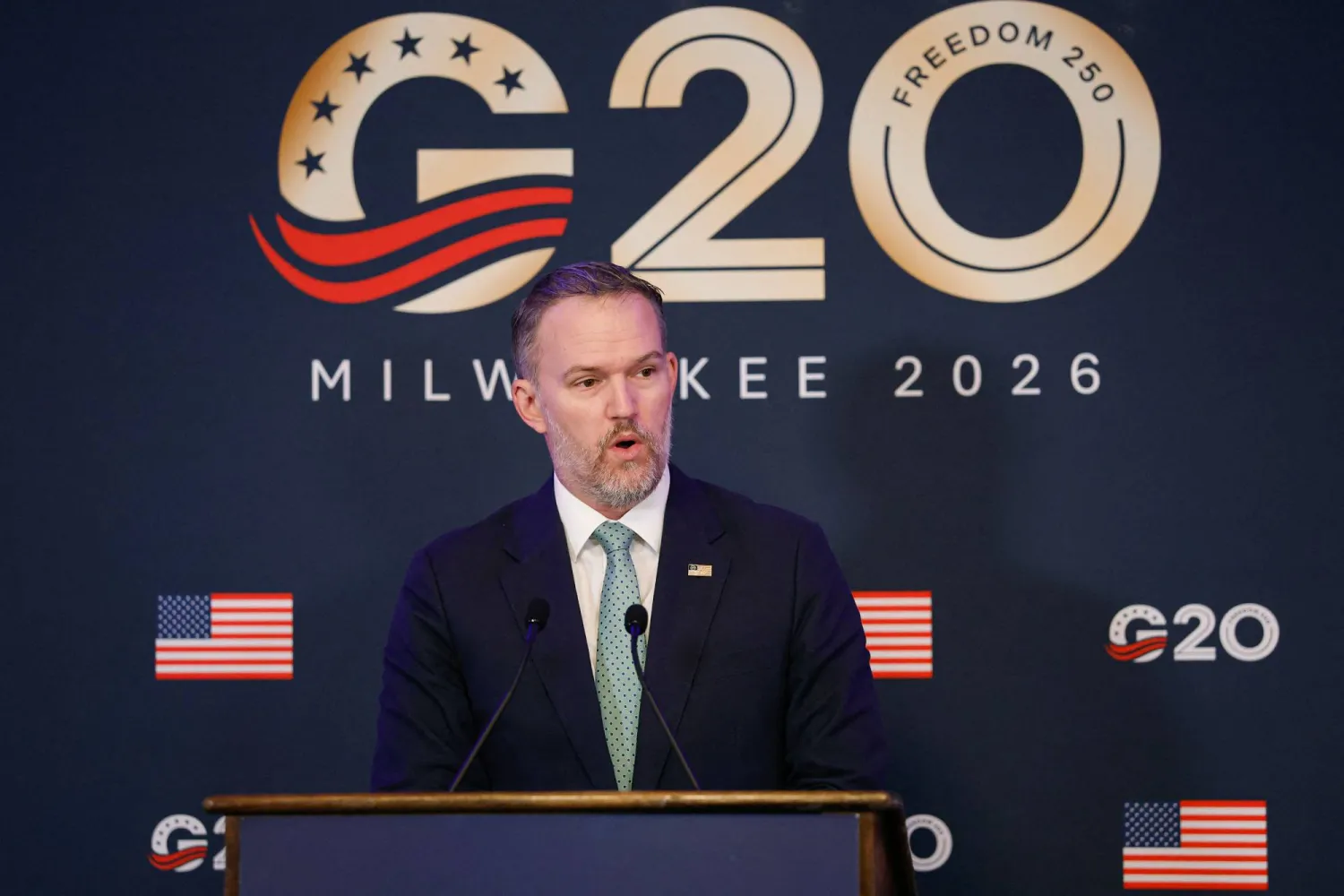
US Trade Representative Jamison Greer speaks on the second day of the G20 Trade Ministerial Meeting in Milwaukee, Wisconsin - October 1 (AFP)
TT

'Handful' of G20 Countries Reject US Stance on Excess Industrial Capacity

US Trade Representative Jamison Greer speaks on the second day of the G20 Trade Ministerial Meeting in Milwaukee, Wisconsin - October 1 (AFP)

A "handful" of Group of 20 trade ministers rejected US calls to curb excess industrial capacity and "non-market" policies, the US Trade Representative's office said on Friday, exposing divisions within the group of major economies.

The US, this year's G20 chair, issued the statement a day after a trade meeting in Milwaukee that revealed that only two countries — Mexico and Argentina — signed on to a US-led statement calling for more work and cooperation to eliminate goods produced with forced labor from supply chains, Reuters reported.

The rejection from the vast majority of G20 countries follows the Trump administration's imposition of ‌tariffs of 10% or ‌12.5% on goods from 59 countries and the European Union over allegations ‌that ⁠they fail to ⁠adequately enforce bans on forced labor.

USTR also is conducting a second "Section 301" tariff investigation into 16 trading partners that show signs of excess industrial capacity. The probe is widely expected to lead to new duties in coming months.

The USTR statement did not name countries that objected to the excess-capacity statement. But China had objected to a similar G20 statement denouncing forced labor and non-market economic policies that lead to excessive exports at a finance leaders' meeting a month ago in North Carolina.

"The draft ministerial statement was supported by all but a handful ⁠of members, a few of whom firmly rejected creating this pathway toward cooperative ‌action" on excess capacity, the statement said, adding that this "severely ‌disappointed" the US G20 presidency.

China's excess industrial capacity and industrial subsidies have been key themes of the US-led G20 ministerial ‌meetings so far this year. Beijing has rejected claims that its industrial policies have created excess capacity, ‌accusing Western countries of using the issue to justify protectionist measures.

The US said that G20 trade ministers reached consensus on denouncing the weaponization of food trade, with members agreeing that trade in food or agricultural inputs should not be used as a tool for economic or political coercion.

In that G20 joint statement, the ministers defined the weaponization of ‌food as measures to "slow, stop, block or direct the flow of food and agricultural inputs" to exert coercive pressure to extract unrelated geopolitical concessions.

"We ⁠condemn food weaponization, as ⁠it poses a significant humanitarian and economic threat," the G20 trade ministers said.

After pressure from US President Donald Trump that included the threat of a US diesel export ban, Group of Seven countries on Friday agreed to release some 100 million barrels of diesel reserves to try to drive down record-high US diesel prices. The fuel is widely used in agricultural production.

TARIFF STRUCTURE DISCUSSIONS

US Trade Representative Jamieson Greer said on Thursday that he did not seek a joint statement on a fourth discussion topic, reforming the "most favored nation" system of published, unconditional global tariff rates that underpin the World Trade Organization. MFN tariffs have defined the global trading system since the end of World War Two.

Greer has argued that the MFN principle has been abused by non-market-oriented economies such as China that have subsidized industries, but it does not allow these countries to be treated differently.

The US statement said some G20 members had expressed a willingness to consider changes to MFN, including expanding exceptions to the principle and issuing new legal interpretations to enable greater use of existing exceptions.

Gold Ticks Up on Softer Dollar, but Heads for Weekly Fall

FILE PHOTO: Gold bangles are displayed inside a jewelry store in the old quarters of Delhi, India, May 11, 2026. REUTERS/Bhawika Chhabra/File Photo
TT

Gold Ticks Up on Softer Dollar, but Heads for Weekly Fall

FILE PHOTO: Gold bangles are displayed inside a jewelry store in the old quarters of Delhi, India, May 11, 2026. REUTERS/Bhawika Chhabra/File Photo

Gold edged higher on Friday as the dollar weakened, but the metal was still on track for a small weekly loss as investors weighed signals from the Federal Reserve on interest rates.

Spot gold rose 0.2% to $4,179.19 per ounce by 0633 GMT, but was down 0.4% so far in the week. US gold futures for ‌December delivery climbed ‌0.7% to $4,200.50.

"Gold has been trapped in a ‌range ⁠of $4,221, with the ⁠bottom of the range at $4,075 being met earlier this week," said Kelvin Wong, a senior market analyst at OANDA.

"Inflationary trends still remain hot as the core CPI data and core PPI data for September are hitting beyond expectations."

The US dollar headed for its first weekly fall in five weeks, making greenback-priced bullion more ⁠affordable for buyers overseas.

US producer prices increased by ‌the most in 4-1/2 years ‌last month amid rising costs for goods and services, in the latest sign ‌that inflationary pressures are broadening beyond energy-related products.

The data followed ‌Wednesday's consumer price report, which showed prices accelerated in September on a surge in gasoline costs.

Traders are pricing in a 13% probability of a rate hike later this month and 89% chance of an increase ‌in December, according to CME's FedWatch Tool.

Fed Chairman Kevin Warsh voiced optimism on Friday about ⁠US economic strength ⁠and surprise about how well global economies have been "hanging in there" amid recent geopolitical shocks, despite tighter monetary policy to fight inflation.

However, Chicago Fed President Austan Goolsbee said this week's stronger-than-expected inflation data had been "discouraging".

While gold is considered a hedge against inflation, higher interest rates reduce the appeal of the non-yielding asset.

Elsewhere, several large Indian mutual funds issued public notices late on Thursday suspending bulk subscriptions to gold exchange-traded funds.

Among other metals, spot silver rose 0.5% to $57.73 per ounce, platinum gained 0.3% to $1,630.56 and palladium was up 0.8% at $1,135.11. However, all three metals headed for weekly losses.


ACWA to Asharq Al-Awsat: Energy Storage Key to Saudi Renewable Expansion

Sakaka Solar Photovoltaic Power Plant (ACWA). 
TT

ACWA to Asharq Al-Awsat: Energy Storage Key to Saudi Renewable Expansion

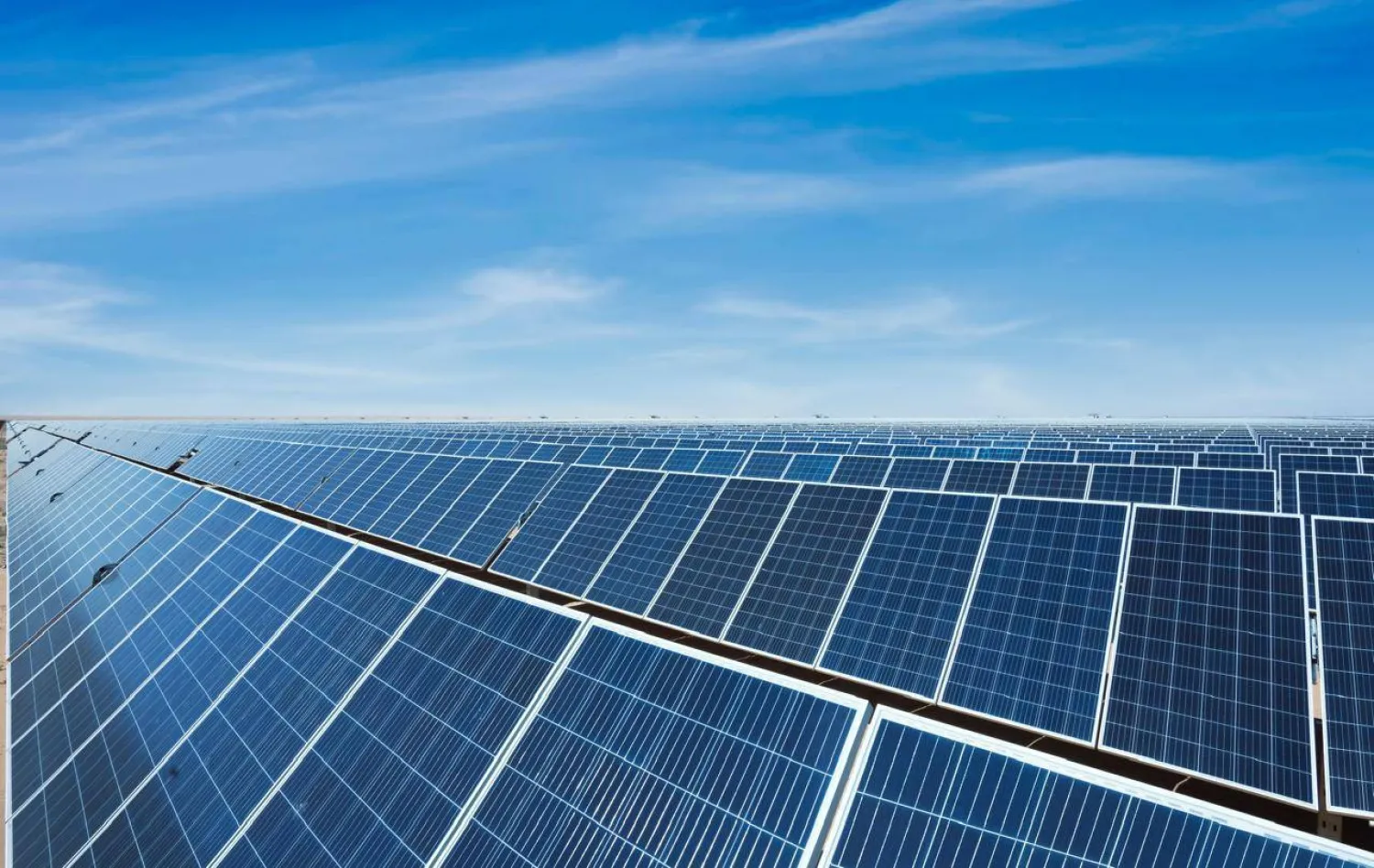
Sakaka Solar Photovoltaic Power Plant (ACWA). 

Saudi Arabia’s ACWA is expanding its renewable energy, electricity storage and water desalination projects as the rapid growth of artificial intelligence and data centers drives up power demand and increases the need for reliable, efficient and competitively priced electricity.

Omar al-Hassan, ACWA CEO in Saudi Arabia, told Asharq Al-Awsat that the accelerating expansion of AI and data centers was reshaping the energy sector’s requirements.

The challenge is no longer limited to generating more electricity, he explained, but also involves ensuring a continuous supply, operational efficiency and competitive costs.

ACWA is developing projects that combine renewable energy and storage with solutions to strengthen supply reliability, drawing on its experience in large-scale power and water projects.

The company’s total power generation capacity stands at 98.2 gigawatts, while its desalination portfolio has a capacity of 9.7 million cubic meters per day.

Al-Hassan also highlighted ACWA’s efforts to harness digital technologies and AI to improve the performance of its assets, going beyond meeting rising electricity demand to developing more efficient and reliable solutions.

Storage supports renewable energy expansion

As Saudi Arabia expands its solar and wind projects, electricity storage is becoming increasingly important, allowing power generated during periods of abundant supply to be stored for use when demand rises.

Al-Hassan expects storage to play a growing role in the Kingdom’s energy system alongside generation facilities and transmission networks.

In August 2026, ACWA signed three agreements with the Saudi Power Procurement Company, acting as the principal buyer, to develop battery energy storage projects in Haden, Muwayh and Al-Kahfah.

The projects have a combined power capacity of 1,500 megawatts and an energy storage capacity of 6,000 megawatt-hours, under agreements spanning 15 years.

Al-Hassan described the projects as evidence of opportunities in the Saudi market and the importance of storage in supporting renewable energy expansion.

He expects storage to become an increasingly significant factor in planning new projects, depending on grid needs, individual project requirements and economic feasibility.

Red Sea project demonstrates off-grid potential

ACWA’s Red Sea project, which combines solar generation and battery storage, has demonstrated the feasibility of operating an integrated utilities system powered by renewable energy and storage without connecting to the national electricity grid.

The project began commercial operations in September 2026 and includes a 340-megawatt solar power plant and a battery storage system with a capacity of 1,227 megawatt-hours.

According to al-Hassan, the project underscores the importance of integrated planning from the outset, with generation and storage capacities designed to meet actual demand and ensure uninterrupted supplies.

He emphasized that the success of renewable energy projects depends not only on generation capacity but also on the integration of system components and operational efficiency, while accounting for differences in site requirements, costs and operating conditions.

Partnerships to advance desalination

In the water sector, ACWA sees opportunities to advance desalination through greater use of renewable energy and more efficient technologies, helping reduce energy consumption and production costs while meeting growing demand.

With a desalination portfolio capable of producing 9.7 million cubic meters of water per day, the company is focusing on improving plant efficiency, developing desalination technologies and reducing reliance on conventional energy sources wherever technically and economically feasible.

In August 2026, ACWA signed a memorandum of understanding with Veolia to cooperate on improving desalination plant designs, equipment and operational performance.

It also signed a joint development agreement with Indonesia’s PT Garam to establish a project combining seawater desalination with industrial salt production.

The project would use shared infrastructure to meet water needs and support industrial activities.

Al-Hassan identified further growth opportunities in increasing water production, improving the efficiency of existing plants, developing new technologies and expanding partnerships to provide reliable water supplies at competitive costs.


25th WPC Energy Congress in Riyadh Draws Record Attendance of More than 33,000 Visitors

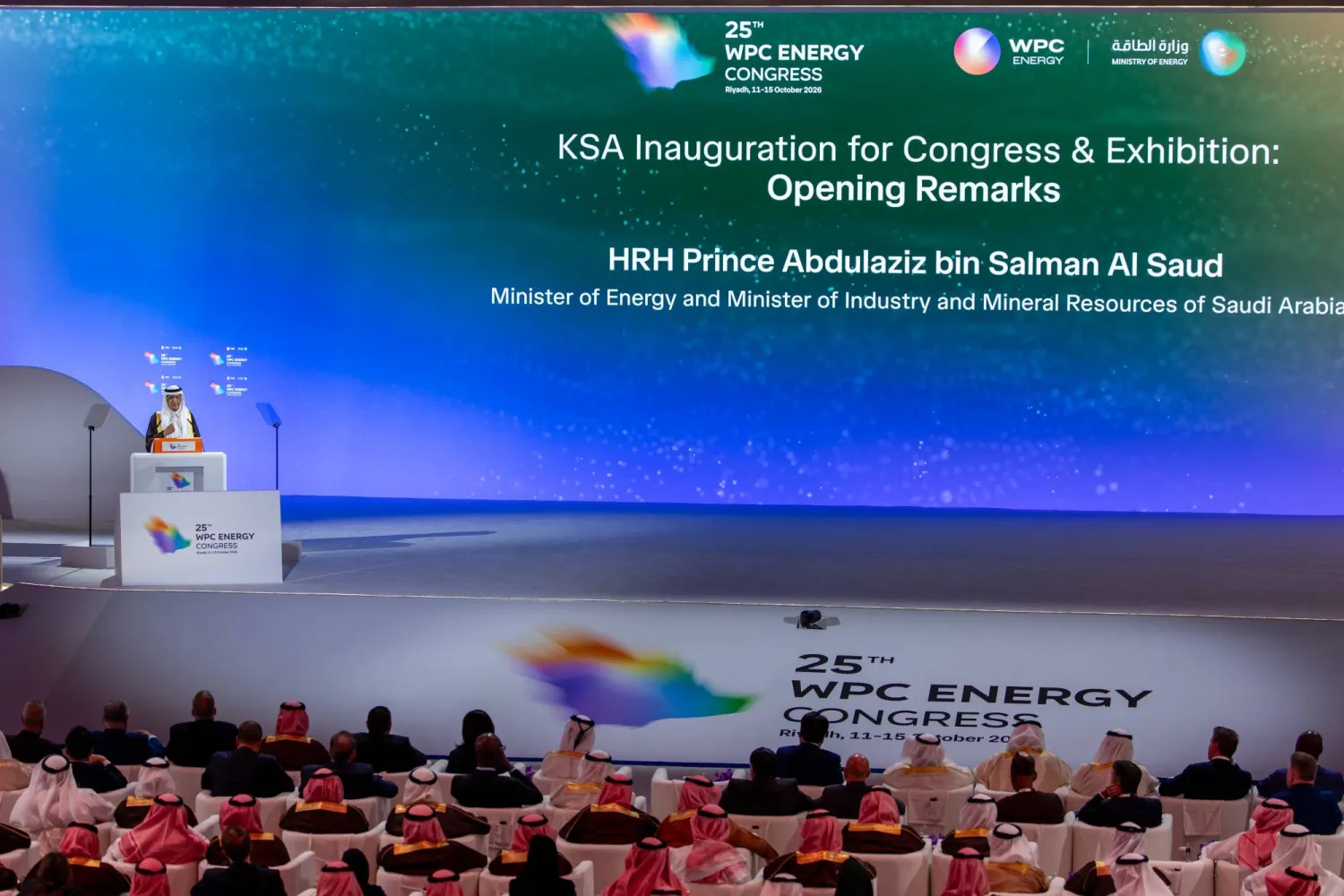
Prince Abdulaziz bin Salman during the opening of the World Petroleum Congress in Riyadh (Asharq Al-Awsat)
TT

25th WPC Energy Congress in Riyadh Draws Record Attendance of More than 33,000 Visitors

Prince Abdulaziz bin Salman during the opening of the World Petroleum Congress in Riyadh (Asharq Al-Awsat)

The 25th WPC Energy Congress in Saudi Arabia drew a record audience of more than 33,000 visitors, alongside participants from 135 countries and 489 media representatives, making it the most attended edition in the event’s more than 90-year history.

Saudi Arabia hosted the congress for the first time from October 11 to 15 as part of Riyadh Energy Week, under the theme “Pathways to an Energy Future for All.” The event brought together ministers, officials, company executives and energy experts to discuss supply security, investment, innovation and the future of oil and gas markets.

Prince Abdulaziz bin Salman bin Abdulaziz, Minister of Energy and Minister of Industry and Mineral Resources, officially opened the congress alongside Pedro Miras, president of the WPC.

The sessions explored key issues shaping the future of the energy sector, including artificial intelligence, digital transformation, energy efficiency, transport technologies, financing and resilient infrastructure. Discussions also examined the policies and investments needed to enhance energy security and foster international partnerships across the energy value chain.

Ministerial discussions also examined the future of global oil and gas markets, priorities for developing Saudi Arabia’s energy sector under Vision 2030, and ways to build more resilient systems capable of responding to crises and meeting the needs of different countries.

In recognition of achievements in the sector, the Dewhurst Award was presented to Vicki Hollub, a board member and former chief executive of Occidental Petroleum, making her the first woman to receive the award, according to the statement.

The congress also hosted the inaugural Energy Hackathon, launched by the Ministry of Energy as part of Riyadh Energy Week, attracting more than 6,700 participants from over 40 Saudi cities. Prince Abdulaziz bin Salman honored six winning teams across three categories: operational efficiency, innovative vision and smart control.

Alongside the congress, Riyadh hosted the 16th meeting of the Arab Ministerial Council for Electricity, which discussed updates to the two agreements governing the Arab Common Electricity Market and a pilot electricity exchange project involving Saudi Arabia, Egypt and Jordan. The meeting also addressed cooperation in renewable energy, energy efficiency, and clean hydrogen.

Riyadh Energy Week also featured the 17th Clean Energy Ministerial (CEM17) and the 11th Mission Innovation Ministerial (MI-11), as part of efforts to strengthen international cooperation in the energy sector.

At the close of the congress, Kazakhstan was named host of the 26th edition, which will take place in the capital, Astana, from June 11 to 15, 2028. It will mark the first time the congress has been held in Central Asia.