


Riyadh Ranks Among Top Four Global Initiatives at World Smart City Awards

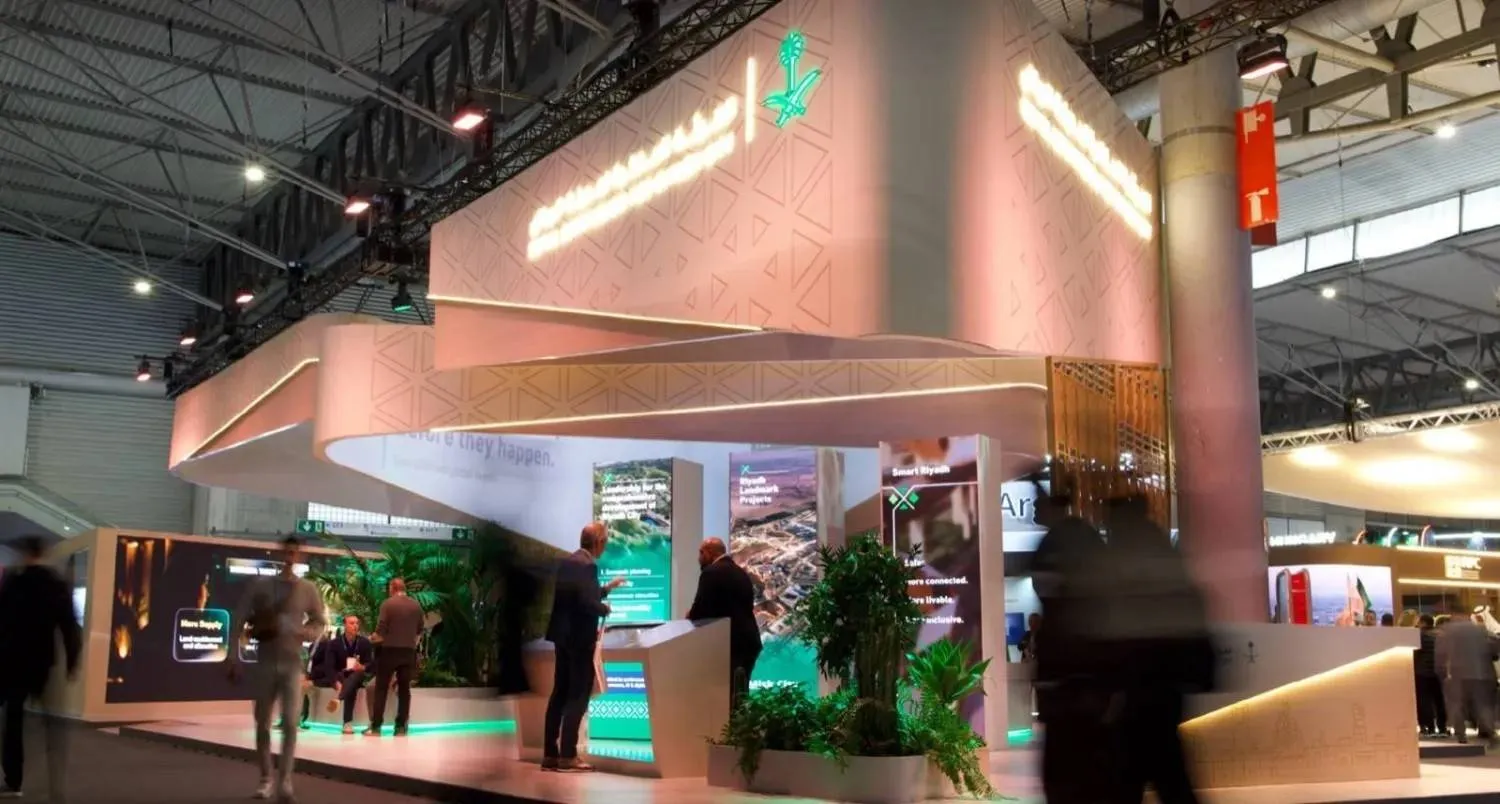
 Visitors at the Royal Commission for Riyadh City's pavilion during the Smart City Expo World Congress in Barcelona (RCRC)
Visitors at the Royal Commission for Riyadh City's pavilion during the Smart City Expo World Congress in Barcelona (RCRC)
TT

Riyadh Ranks Among Top Four Global Initiatives at World Smart City Awards

 Visitors at the Royal Commission for Riyadh City's pavilion during the Smart City Expo World Congress in Barcelona (RCRC)
Visitors at the Royal Commission for Riyadh City's pavilion during the Smart City Expo World Congress in Barcelona (RCRC)

Three Riyadh projects received international recognition at the 2026 World Smart City Awards, held during the Smart City Expo World Congress in Barcelona, Spain, with one winning its category and two reaching the finals.

The Riyadh Infrastructure Projects Center (RIPC) was named among four finalists for the Governance & Economy Award for its "Infrastructure in One Source" initiative, which uses an Integrated Infrastructure Coordination Plan to improve infrastructure planning and coordination.

Riyadh Metro was also among four finalists for the Mobility Award, while the Real Estate Balance Program (Tawazoun) won the Infrastructure & Building Award.

The awards attracted 533 entries from 68 countries worldwide.

The Integrated Infrastructure Coordination Plan aims to improve infrastructure project quality across Riyadh Region by establishing a comprehensive framework for planning and coordination among government agencies, private-sector organizations and service providers.

The initiative seeks to improve project execution, minimize conflicts between construction activities and strengthen coordination during the planning and implementation stages.

Riyadh's recognition also extended to public transportation, with Riyadh Metro reaching the finals of the Mobility Award for its development of an integrated public transportation network that contributes to more efficient and sustainable mobility in the Saudi capital.

Smart cities and residents' quality of life

Dr. Maher Shirah, Director General of the Smart Cities General Department at the Royal Commission for Riyadh City (RCRC), told Asharq Al-Awsat that the value of smart cities lies in their impact on residents' lives.

He said housing, access to opportunities, efficient public services and confidence in urban development management were essential elements of a city offering a higher quality of life.

Shirah said Riyadh's experience with real estate balance demonstrated the importance of addressing these priorities together, as the Tawazoun program seeks to correct imbalances in the property market and facilitate homeownership amid the capital's rapid growth.

He confirmed that Tawazoun had won the Infrastructure & Building Award at the 2026 World Smart City Awards, an achievement separate from RIPC's selection as one of four finalists for the Governance & Economy Award.

Shirah said the relationship between real estate balance and smart cities rested on three main dimensions.

The first is understanding the city through data. Monitoring the real estate market, analyzing differences between neighborhoods and comparing current housing supply with future demand provide a clearer picture of urban challenges and help authorities develop more effective interventions.

Using data to manage urban development

The second dimension involves translating knowledge into practical action, Shirah said.

He explained that data delivers value when it informs decisions on land development, infrastructure provision, housing initiatives and market monitoring, strengthening institutions' ability to respond to complex urban challenges.

The third dimension focuses on outcomes that matter to residents.

Shirah said access to housing was a fundamental part of how people experience their city and assess its performance, noting that the IMD Smart City Index measures residents' perceptions of their ability to find housing at affordable rents.

He added that international frameworks take a comprehensive approach to smart cities.

The Cities in Motion Index, developed by IESE Business School, covers urban planning, governance, technology, the economy and social cohesion, while the International Telecommunication Union's United for Smart Sustainable Cities (U4SSC) framework links digital transformation to quality of life, inclusion, infrastructure and sustainability.

Shirah said the Tawazoun program's long-term impact would be measured by improvements in housing accessibility, service efficiency, the quality of decision-making and residents' experiences.

Building a smart city requires institutions capable of translating information into coordinated action and turning that action into tangible improvements in residents' lives, he said.

Riyadh's presence at the World Smart City Awards

The recognition came during the Smart City Expo World Congress, held in Barcelona from Nov. 3 to 5, with the World Smart City Awards ceremony taking place on Nov. 4.

The awards recognize cities, public agencies and organizations developing innovative solutions and initiatives to make urban areas smarter, more sustainable and better places to live.

They highlight pioneering approaches to using technology and innovation to address urban challenges and improve the efficiency of public services and infrastructure, while allowing cities and participating organizations from around the world to exchange expertise and experiences.

The Riyadh Infrastructure Projects Center achieved similar recognition in 2025 when its "Road Resurfacing Governance" initiative was selected among four finalists for the Governance & Economy Award.

The initiative sought to establish a unified framework for governing work procedures, improving coordination, planning and implementation, raising safety standards and reducing conflicts and disruptions associated with infrastructure projects.

Riyadh's participation in the awards reflects the diversity of its smart city initiatives, spanning infrastructure project management, urban planning, public transportation and real estate market balance.

These initiatives highlight efforts to improve public services, increase urban efficiency and enhance residents' quality of life.

According to the Royal Commission for Riyadh City, this international recognition builds on efforts by authorities across Riyadh Region to develop and manage infrastructure projects and adopt smart, sustainable solutions in support of Saudi Vision 2030, while improving quality of life and the efficiency of urban projects and services.



OPEC+ Countries Reaffirm Commitment to Market Stability

FILE PHOTO: OPEC logo is seen in this illustration taken, October 8, 2023. REUTERS/Dado Ruvic/Illustration/File Photo
TT

OPEC+ Countries Reaffirm Commitment to Market Stability

FILE PHOTO: OPEC logo is seen in this illustration taken, October 8, 2023. REUTERS/Dado Ruvic/Illustration/File Photo

The seven OPEC+ countries, which previously announced additional voluntary adjustments in April and November 2023, namely Saudi Arabia, Russia, Iraq, Kuwait, Kazakhstan, Algeria, and Oman met virtually on November 29, 2026, to review global market conditions and outlook.

The seven countries reviewed current market conditions and emphasized the essential role of the Declaration of Cooperation (DoC) in supporting the stability of global energy markets. In this context, the seven countries highlighted the critical importance of safeguarding international maritime routes to ensure the uninterrupted flow of energy.

The countries also expressed concern regarding attacks on energy infrastructure, noting that restoring damaged energy assets to full capacity is both costly and takes a long time, thereby affecting overall supply availability.

Accordingly, the seven countries stressed that any actions undermining energy supply security, whether through attacks on infrastructure or disruption of international maritime routes, increase market volatility and weaken the collective efforts under the DoC to support market stability for the benefit of producers, consumers, and the global economy.

The seven countries will continue consultations and review market conditions through the Joint Ministerial Monitoring Committee (JMMC).


Syria’s Finance Ministry: 2026 Budget Deficit Estimated at $1.8 Billion, Not $2.8 Billion

Syrian Finance Minister Mohammed Yisr Barnieh meets with a World Bank mission for the Public Financial Management Modernization Project on November 28 (Finance Ministry).
TT

Syria’s Finance Ministry: 2026 Budget Deficit Estimated at $1.8 Billion, Not $2.8 Billion

Syrian Finance Minister Mohammed Yisr Barnieh meets with a World Bank mission for the Public Financial Management Modernization Project on November 28 (Finance Ministry).

Syria’s Ministry of Finance has dismissed reports that the country’s 2026 budget deficit is expected to reach $2.8 billion, clarifying that the estimated shortfall stands at approximately $1.8 billion based on conservative projections.

The ministry also said that figures circulating about salaries, pensions and development loans were not all based on official announcements or sources.

In a statement, the ministry stressed that the deficit outlined in the published 2026 budget was based on conservative estimates and did not represent the final fiscal outcome, which would depend on actual budget execution through the end of the financial year.

The budget projected revenues of approximately $8.716 billion and expenditures of $10.516 billion, resulting in an estimated deficit of $1.8 billion.

The ministry explained that its published financial performance report for the first half of 2026 showed a deficit of around $1 billion. However, it noted that government revenues are not evenly distributed between the two halves of the year.

Based on revenue collection patterns in previous years, approximately 30% to 35% of annual revenues are typically collected in the first half, compared with 65% to 70% in the second half.

The ministry attributed its expectation that the year-end deficit would be lower than initially budgeted to improving revenues and government measures to control and rationalize spending.

It emphasized that these projections remain estimates based on specific assumptions and sources and should not be treated as official or final fiscal results.

Regarding reports of salary and pension increases and a new minimum wage, the ministry said the figures and percentages being circulated had not been officially announced by either the ministry or the government.

It confirmed, however, that options for improving salaries and pensions remain under review in coordination with the Ministry of Administrative Development and other relevant authorities, taking into account the direct impact of these measures on the living conditions of employees and retirees.

Ministry Denies Annual Interest on Development Fund Loans

Regarding loans signed with the Saudi Fund for Development, the ministry denied reports circulating on some platforms that the agreements carry annual interest of 3%.

It clarified that the financing consists of concessional development loans that bear no interest and are subject only to modest administrative fees.

The ministry described the arrangements as similar to qard hasan, or interest-free loans, because they do not impose interest charges.

It stressed that the government's policy focuses on controlling public debt, avoiding unjustified borrowing and limiting loans to development purposes under highly concessional terms.

The ministry added that the loan agreements would be submitted to the People's Assembly for approval in accordance with established procedures.


Saudi Stock Market Closes 0.9% Higher, Above 10,000 Points

A man monitors stock prices in Saudi Arabia (AFP)
TT

Saudi Stock Market Closes 0.9% Higher, Above 10,000 Points

A man monitors stock prices in Saudi Arabia (AFP)

The Saudi stock market ended Sunday's session higher, with the Tadawul All Share Index (TASI) rising 0.9% to close at 10,009 points, gaining 86 points. This marked its first close above the 10,000-point threshold since falling below it last week.

The gains came amid improved performance by heavyweight stocks, while trading liquidity fell to its lowest level since January 2026, with turnover reaching approximately SAR 2 billion ($533 million), indicating continued investor caution despite the market's advance.

Al Rajhi Bank shares rose 1.1%, Saudi National Bank gained 1%, and Saudi Aramco advanced 0.4%.

Amana Insurance topped the gainers with a 7.8% increase, followed by Wataniya Insurance at 7.6% and Gulf Insurance Group (GIG) at 6.3%.

Shares of Petro Rabigh, Al Jouf, BCI, Banan, Salama and Gulf General Insurance also rose between 5% and 6%.

Conversely, Budget Saudi, Jahez, SACO and Saudi Ceramics declined between 2% and 4%.