Saudi Energy Companies Post $105.6 Billion in Profits Over Nine Months

A general view of Saudi Aramco's Shaybah oil field in the Empty Quarter (Reuters)
TT

Saudi Energy Companies Post $105.6 Billion in Profits Over Nine Months

A general view of Saudi Aramco's Shaybah oil field in the Empty Quarter (Reuters)

Energy companies listed on the Saudi Exchange recorded strong earnings growth during the first nine months of 2026, with combined net profits rising 42.8% to SAR 396.15 billion ($105.64 billion) compared with the same period last year.

The performance came amid sharp shifts in global energy markets driven by geopolitical tensions, supply disruptions and rising shipping costs, which affected companies across the energy industry to varying degrees.

The Saudi results reveal significant differences in how companies benefited from these developments. While Saudi Aramco accounted for the overwhelming majority of sector profits, Bahri recorded a sharp earnings increase and Petro Rabigh returned to profitability. Some drilling companies, however, reported weaker results.

Growth also extended into the third quarter, when the six companies' combined net profits rose 50.1% to SAR 145.15 billion ($38.71 billion).

Global Energy Companies' Profits

The improvement in earnings was not limited to Saudi companies. Major international oil producers also reported strong gains in the third quarter, supported by supply disruptions, higher energy prices and wider refining margins.

ExxonMobil's net profit reached $15.4 billion, compared with $7.5 billion in the same quarter last year.

Shell's adjusted earnings rose to $10.81 billion from $5.43 billion, while TotalEnergies' adjusted net income surged to $9.1 billion from $4 billion a year earlier.

The companies said supply disruptions in the Middle East, combined with limited available refining capacity and declining inventories, had pushed refining margins to historically high levels.

According to Reuters, Shell's refining margins approached $42 per barrel, while those at TotalEnergies reached approximately $33.20 per barrel, boosting earnings from petroleum products and trading operations.

Aramco Leads Sector Profits

Saudi Aramco topped the energy sector in net profits during the first nine months of 2026, with earnings attributable to shareholders rising 36.1% to SAR 379.02 billion ($101.07 billion), compared with SAR 278.57 billion ($74.29 billion) in the corresponding period last year.

The company accounted for approximately 95.7% of the sector's combined net profits, reflecting the considerable weight of its results in determining overall performance.

That dominance also underscores the importance of examining the other companies individually to understand developments across different energy-related activities.

Aramco's revenue and other income related to sales increased 20.8% to approximately SAR 1.52 trillion ($405.33 billion), compared with around SAR 1.25 trillion ($333.33 billion) during the first nine months of 2025.

Bahri Records Sharp Profit Surge

The National Shipping Company of Saudi Arabia (Bahri) ranked second in net profits, recording a 586.7% surge to approximately SAR 9.98 billion ($2.66 billion), compared with SAR 1.45 billion ($386.7 million) during the first nine months of the previous year.

Revenue also climbed 268.4% to approximately SAR 26.1 billion ($6.96 billion), up from SAR 7.08 billion ($1.89 billion).

The performance reflects the company's gains from stronger maritime transportation activity and higher freight earnings, particularly in oil shipping, which increased its contribution to the combined profit growth of listed energy companies.

Petro Rabigh Returns to Profitability

Rabigh Refining and Petrochemical Company (Petro Rabigh) recorded a significant turnaround, posting net profits of approximately SAR 6.7 billion ($1.79 billion) during the first nine months of 2026, compared with losses of SAR 3.29 billion ($877.3 million) in the corresponding period last year.

Revenue increased 113.6% to around SAR 52.03 billion ($13.88 billion), compared with SAR 24.36 billion ($6.50 billion) a year earlier.

The improvement was supported by higher operating rates at the company's industrial complex, increased sales volumes, stronger prices for refined and petrochemical products, and lower financing costs.

The year-on-year comparison was also affected by weaker production and sales during the corresponding period of 2025, when the company's operating facilities underwent a comprehensive scheduled maintenance shutdown.

Drilling Companies Face Pressure

Changes in global energy markets did not benefit every segment of the sector.

ADES Holding reported a 23% decline in net profit to approximately SAR 459.8 million ($122.6 million), compared with SAR 597.3 million ($159.3 million) during the first nine months of 2025, despite a 44% increase in revenue to around SAR 6.77 billion ($1.81 billion).

Revenue growth was driven by the expansion of international operations and contributions from new acquisitions, while earnings were affected by lower operating margins, higher expenses and the temporary suspension of several regional operations.

Arabian Drilling Company's net profit fell 90.6% to approximately SAR 6.9 million ($1.84 million), compared with SAR 73.3 million ($19.55 million) a year earlier.

Revenue declined 8.1% to approximately SAR 2.4 billion ($640 million).

Saudi Arabian Refineries Company (SARCO) also reported a 24.4% increase in net losses to approximately SAR 27.5 million ($7.33 million), compared with losses of SAR 22.1 million ($5.89 million) during the first nine months of the previous year.

The deterioration reflected impairment losses related to the market value of certain investments, alongside higher general and administrative expenses.
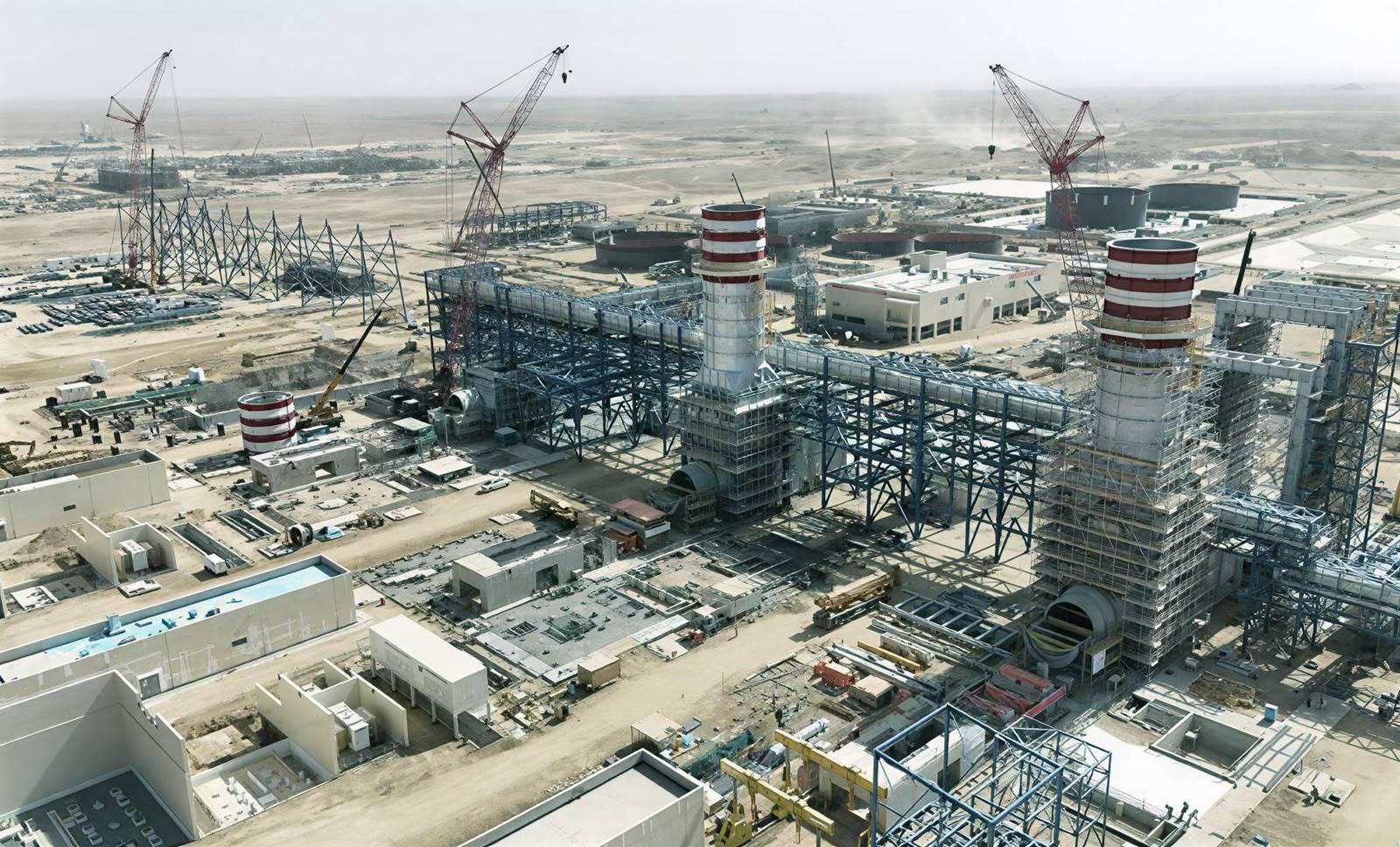
The Qassim 1 Independent Power Plant project (ACWA)

Third-Quarter Results

In the third quarter of 2026, the six listed energy companies recorded a 50.1% increase in combined net profits to approximately SAR 145.15 billion ($38.71 billion), compared with SAR 96.72 billion ($25.79 billion) in the same quarter last year.

The results extended the earnings growth recorded during the first nine months.

Aramco maintained its leading position, with third-quarter profits attributable to shareholders reaching approximately SAR 137.39 billion ($36.64 billion), up 41.3% year-on-year.

Bahri ranked second after its quarterly net profit jumped 890.7% to approximately SAR 5.09 billion ($1.36 billion), compared with SAR 513.4 million ($136.9 million) in the third quarter of 2025.

Petro Rabigh continued its recovery, reporting profits of approximately SAR 2.58 billion ($688 million), reversing losses of SAR 1.24 billion ($330.7 million) a year earlier.

The turnaround was supported by improved operating rates, higher sales volumes and stronger product margins.

ADES Holding, meanwhile, reported a 55.8% decline in quarterly net profit to approximately SAR 94.9 million ($25.3 million), despite a 34.8% increase in revenue, reflecting continued pressure on profitability.

Arabian Drilling returned to quarterly profitability, recording net income of approximately SAR 31.4 million ($8.37 million), compared with losses of SAR 9.4 million ($2.51 million) in the corresponding period of 2025.

The improvement was supported by higher rig utilization rates and greater operational efficiency.

Saudi Arabian Refineries Company posted a quarterly loss of approximately SAR 22.5 million ($6 million), compared with a profit of SAR 1.6 million ($427,000) in the third quarter of 2025.

The quarterly figures highlight the continuing divergence in performance across the energy sector.

While Aramco, Bahri and Petro Rabigh drove earnings growth, some drilling and investment companies continued to face pressure on profit margins and financial results, reflecting differences in business models, operating conditions and costs.

Uneven Performance and Sustainable Growth

Commenting on the sector's financial results, financial and economic expert and market analyst Dr. Suleiman Al-Humaid Al-Khaldi, a member of the Saudi Economic Association, said the performance of Saudi energy companies during the first nine months of 2026 reflected strong growth in combined profits, which increased more than 42% to approximately SAR 396.15 billion.

However, he cautioned that the headline figures concealed significant differences between companies and activities within the sector.

Speaking to Asharq Al-Awsat, Al-Khaldi explained that Saudi Aramco was the principal driver of sector earnings growth, generating approximately SAR 379 billion and accounting for 95.7% of combined profits.

This made Aramco's financial results the single most influential factor in overall sector performance, supported by higher revenue and improved operating results.

Al-Khaldi noted that Bahri recorded the most significant profit increase among the listed companies, with earnings rising approximately 587%, benefiting from stronger maritime transportation activity, particularly oil shipping, and higher freight rates.

He said the sustainability of this growth would depend on demand levels, shipping rates and operating costs, given the cyclical nature of the maritime transportation industry.

Al-Khaldi also described Petro Rabigh's return to profitability as one of the most notable developments in the sector's results.

The turnaround was driven by higher operating rates and sales volumes, improved product prices and reduced financing costs.

However, he pointed out that the comparison was also influenced by maintenance work that affected the company's results during the same period last year.

This made it important to distinguish between a recovery from a low comparison base and sustainable improvements in operating performance.

Conversely, Al-Khaldi highlighted declining profits at ADES Holding and Arabian Drilling, along with widening losses at Saudi Arabian Refineries Company.

He stressed that growth in combined sector profits did not necessarily indicate improved performance across all companies, particularly as some activities continued to face pressure from operating and financing costs and weaker profit margins.

Al-Khaldi said sustaining earnings growth in the coming period would depend on companies' ability to improve operational efficiency, control costs and translate revenue increases into actual profits.

He emphasized the importance of assessing each business segment independently rather than relying solely on aggregate growth indicators to evaluate the sector's financial performance.


Saudi Energy Companies Post $105.6 Billion in Profits Over Nine Months

A general view of Saudi Aramco's Shaybah oil field in the Empty Quarter (Reuters)
TT

Saudi Energy Companies Post $105.6 Billion in Profits Over Nine Months

A general view of Saudi Aramco's Shaybah oil field in the Empty Quarter (Reuters)

Energy companies listed on the Saudi Exchange recorded strong earnings growth during the first nine months of 2026, with combined net profits rising 42.8% to SAR 396.15 billion ($105.64 billion) compared with the same period last year.

The performance came amid sharp shifts in global energy markets driven by geopolitical tensions, supply disruptions and rising shipping costs, which affected companies across the energy industry to varying degrees.

The Saudi results reveal significant differences in how companies benefited from these developments. While Saudi Aramco accounted for the overwhelming majority of sector profits, Bahri recorded a sharp earnings increase and Petro Rabigh returned to profitability. Some drilling companies, however, reported weaker results.

Growth also extended into the third quarter, when the six companies' combined net profits rose 50.1% to SAR 145.15 billion ($38.71 billion).

Global Energy Companies' Profits

The improvement in earnings was not limited to Saudi companies. Major international oil producers also reported strong gains in the third quarter, supported by supply disruptions, higher energy prices and wider refining margins.

ExxonMobil's net profit reached $15.4 billion, compared with $7.5 billion in the same quarter last year.

Shell's adjusted earnings rose to $10.81 billion from $5.43 billion, while TotalEnergies' adjusted net income surged to $9.1 billion from $4 billion a year earlier.

The companies said supply disruptions in the Middle East, combined with limited available refining capacity and declining inventories, had pushed refining margins to historically high levels.

According to Reuters, Shell's refining margins approached $42 per barrel, while those at TotalEnergies reached approximately $33.20 per barrel, boosting earnings from petroleum products and trading operations.

Aramco Leads Sector Profits

Saudi Aramco topped the energy sector in net profits during the first nine months of 2026, with earnings attributable to shareholders rising 36.1% to SAR 379.02 billion ($101.07 billion), compared with SAR 278.57 billion ($74.29 billion) in the corresponding period last year.

The company accounted for approximately 95.7% of the sector's combined net profits, reflecting the considerable weight of its results in determining overall performance.

That dominance also underscores the importance of examining the other companies individually to understand developments across different energy-related activities.

Aramco's revenue and other income related to sales increased 20.8% to approximately SAR 1.52 trillion ($405.33 billion), compared with around SAR 1.25 trillion ($333.33 billion) during the first nine months of 2025.

Bahri Records Sharp Profit Surge

The National Shipping Company of Saudi Arabia (Bahri) ranked second in net profits, recording a 586.7% surge to approximately SAR 9.98 billion ($2.66 billion), compared with SAR 1.45 billion ($386.7 million) during the first nine months of the previous year.

Revenue also climbed 268.4% to approximately SAR 26.1 billion ($6.96 billion), up from SAR 7.08 billion ($1.89 billion).

The performance reflects the company's gains from stronger maritime transportation activity and higher freight earnings, particularly in oil shipping, which increased its contribution to the combined profit growth of listed energy companies.

Petro Rabigh Returns to Profitability

Rabigh Refining and Petrochemical Company (Petro Rabigh) recorded a significant turnaround, posting net profits of approximately SAR 6.7 billion ($1.79 billion) during the first nine months of 2026, compared with losses of SAR 3.29 billion ($877.3 million) in the corresponding period last year.

Revenue increased 113.6% to around SAR 52.03 billion ($13.88 billion), compared with SAR 24.36 billion ($6.50 billion) a year earlier.

The improvement was supported by higher operating rates at the company's industrial complex, increased sales volumes, stronger prices for refined and petrochemical products, and lower financing costs.

The year-on-year comparison was also affected by weaker production and sales during the corresponding period of 2025, when the company's operating facilities underwent a comprehensive scheduled maintenance shutdown.

Drilling Companies Face Pressure

Changes in global energy markets did not benefit every segment of the sector.

ADES Holding reported a 23% decline in net profit to approximately SAR 459.8 million ($122.6 million), compared with SAR 597.3 million ($159.3 million) during the first nine months of 2025, despite a 44% increase in revenue to around SAR 6.77 billion ($1.81 billion).

Revenue growth was driven by the expansion of international operations and contributions from new acquisitions, while earnings were affected by lower operating margins, higher expenses and the temporary suspension of several regional operations.

Arabian Drilling Company's net profit fell 90.6% to approximately SAR 6.9 million ($1.84 million), compared with SAR 73.3 million ($19.55 million) a year earlier.

Revenue declined 8.1% to approximately SAR 2.4 billion ($640 million).

Saudi Arabian Refineries Company (SARCO) also reported a 24.4% increase in net losses to approximately SAR 27.5 million ($7.33 million), compared with losses of SAR 22.1 million ($5.89 million) during the first nine months of the previous year.

The deterioration reflected impairment losses related to the market value of certain investments, alongside higher general and administrative expenses.

The Qassim 1 Independent Power Plant project (ACWA)

Third-Quarter Results

In the third quarter of 2026, the six listed energy companies recorded a 50.1% increase in combined net profits to approximately SAR 145.15 billion ($38.71 billion), compared with SAR 96.72 billion ($25.79 billion) in the same quarter last year.

The results extended the earnings growth recorded during the first nine months.

Aramco maintained its leading position, with third-quarter profits attributable to shareholders reaching approximately SAR 137.39 billion ($36.64 billion), up 41.3% year-on-year.

Bahri ranked second after its quarterly net profit jumped 890.7% to approximately SAR 5.09 billion ($1.36 billion), compared with SAR 513.4 million ($136.9 million) in the third quarter of 2025.

Petro Rabigh continued its recovery, reporting profits of approximately SAR 2.58 billion ($688 million), reversing losses of SAR 1.24 billion ($330.7 million) a year earlier.

The turnaround was supported by improved operating rates, higher sales volumes and stronger product margins.

ADES Holding, meanwhile, reported a 55.8% decline in quarterly net profit to approximately SAR 94.9 million ($25.3 million), despite a 34.8% increase in revenue, reflecting continued pressure on profitability.

Arabian Drilling returned to quarterly profitability, recording net income of approximately SAR 31.4 million ($8.37 million), compared with losses of SAR 9.4 million ($2.51 million) in the corresponding period of 2025.

The improvement was supported by higher rig utilization rates and greater operational efficiency.

Saudi Arabian Refineries Company posted a quarterly loss of approximately SAR 22.5 million ($6 million), compared with a profit of SAR 1.6 million ($427,000) in the third quarter of 2025.

The quarterly figures highlight the continuing divergence in performance across the energy sector.

While Aramco, Bahri and Petro Rabigh drove earnings growth, some drilling and investment companies continued to face pressure on profit margins and financial results, reflecting differences in business models, operating conditions and costs.

Uneven Performance and Sustainable Growth

Commenting on the sector's financial results, financial and economic expert and market analyst Dr. Suleiman Al-Humaid Al-Khaldi, a member of the Saudi Economic Association, said the performance of Saudi energy companies during the first nine months of 2026 reflected strong growth in combined profits, which increased more than 42% to approximately SAR 396.15 billion.

However, he cautioned that the headline figures concealed significant differences between companies and activities within the sector.

Speaking to Asharq Al-Awsat, Al-Khaldi explained that Saudi Aramco was the principal driver of sector earnings growth, generating approximately SAR 379 billion and accounting for 95.7% of combined profits.

This made Aramco's financial results the single most influential factor in overall sector performance, supported by higher revenue and improved operating results.

Al-Khaldi noted that Bahri recorded the most significant profit increase among the listed companies, with earnings rising approximately 587%, benefiting from stronger maritime transportation activity, particularly oil shipping, and higher freight rates.

He said the sustainability of this growth would depend on demand levels, shipping rates and operating costs, given the cyclical nature of the maritime transportation industry.

Al-Khaldi also described Petro Rabigh's return to profitability as one of the most notable developments in the sector's results.

The turnaround was driven by higher operating rates and sales volumes, improved product prices and reduced financing costs.

However, he pointed out that the comparison was also influenced by maintenance work that affected the company's results during the same period last year.

This made it important to distinguish between a recovery from a low comparison base and sustainable improvements in operating performance.

Conversely, Al-Khaldi highlighted declining profits at ADES Holding and Arabian Drilling, along with widening losses at Saudi Arabian Refineries Company.

He stressed that growth in combined sector profits did not necessarily indicate improved performance across all companies, particularly as some activities continued to face pressure from operating and financing costs and weaker profit margins.

Al-Khaldi said sustaining earnings growth in the coming period would depend on companies' ability to improve operational efficiency, control costs and translate revenue increases into actual profits.

He emphasized the importance of assessing each business segment independently rather than relying solely on aggregate growth indicators to evaluate the sector's financial performance.


Saudi Arabia Bets on Space to Strengthen Its Position in Industries of the Future

Historic launch of NASA's Artemis II mission, with Saudi participation, on April 1, 2026 (Reuters)
TT

Saudi Arabia Bets on Space to Strengthen Its Position in Industries of the Future

Historic launch of NASA's Artemis II mission, with Saudi participation, on April 1, 2026 (Reuters)

The US-Iran war has reshaped investment priorities across the region, forcing Gulf economies to contend with its repercussions for trade and capital flows. In Saudi Arabia, efforts to diversify investment and broaden the range of targeted sectors continue, with growing attention to strategic industries and advanced technologies, including the space industry.

The Kingdom's ambitions in the sector received a further boost on November 3, when the Cabinet, chaired by Crown Prince and Prime Minister Mohammed bin Salman, approved the National Space Policy. The move aims to support the development of a national space ecosystem and advance its scientific, technological and investment activities.

The decision comes as the Communications, Space and Technology Commission (CST) projects that Saudi Arabia's space economy will grow from SAR 33 billion ($8.8 billion) in 2024 to SAR 119 billion ($31.7 billion) by 2035, representing a compound annual growth rate of 12%. The domestic space market is expected to reach SAR 21 billion ($5.6 billion).

Experts told Asharq Al-Awsat that Saudi Arabia continues to strengthen its position as a destination for high-value investment, driven by the objectives of Vision 2030, which remain the principal catalyst for investment activity even during regional and international crises.

They said turmoil in the region, including threats to shipping through the Strait of Hormuz and Bab Al-Mandab, had affected regional economies but had not halted Saudi efforts to develop strategic sectors, including space and satellite industries.

The experts noted that expanding partnerships and investment agreements during 2026 reflected growing opportunities in the sector, given the links between space technologies and several vital industries and their increasing importance to economic development and national security.

They expect Riyadh to strengthen its position in the global space industry over the coming years and called for the creation of a dedicated investment fund to support companies and projects operating in the sector.

Building a Domestic Space Industry

Engineer Frank M. Salzgeber, former Acting Vice Governor for the Space Sector at Saudi Arabia's Communications, Space and Technology Commission (CST), believes the Kingdom has the foundations needed to become a leading player in the space economy.

Speaking to Asharq Al-Awsat, he expressed strong confidence in the future of Saudi Arabia's space economy, pointing to existing demand and the opportunity for the Kingdom to assume a leadership role in the industry.

Salzgeber, an investor in New Space companies and chief executive of Altairi Space, said data from CST and SpaceTech Gulf showed that the number of organizations and companies operating in Saudi Arabia's space sector had doubled in recent years to more than 425 entities.

He noted that space data analytics had recorded the strongest growth.

According to Salzgeber, space has become closely associated with national security and sustainable development, while also emerging as one of the world's promising commercial markets.

He attributed the development of Saudi Arabia's space ecosystem to three principal institutional pillars.

The first is CST, which serves as the regulatory authority, developing regulations and policies, strengthening the ecosystem, building national capabilities and providing market data.

The second is the Saudi Space Agency, which plays a central role in enabling scientific activities and expanding international partnerships.

The third is Neo Space Group (NSG), a subsidiary of the Public Investment Fund, which leads commercial activities in the national space sector.

Salzgeber, who previously served as head of innovation and ventures at the European Space Agency, identified a major investment opportunity in addressing the gap in domestic manufacturing of complete commercial satellites.

He called for a localization target of 67.5% of the value of space-sector contracts, arguing that such a measure would help establish a domestic industrial base capable of meeting local demand and expanding into international markets.

He said Saudi small and medium-sized enterprises could benefit from offset programs associated with space and defense contracts, enabling them to supply more components and technologies to international companies.

Salzgeber expressed hope that Saudi companies would eventually manufacture space components for US defense and aerospace company Lockheed Martin, highlighting the potential for domestic manufacturers to integrate into global supply chains.

He emphasized the importance of directing investment toward hardware manufacturing rather than focusing exclusively on services and applications, arguing that developing domestic production capabilities was essential to establishing a fully integrated space industry.

He also urged major venture capital firms to expand financing for companies operating in the sector with links to the Saudi market.

Assessing the Kingdom's strengths, Salzgeber pointed to its geopolitical position, which could make it a trusted partner for a wide range of international players.

He suggested Saudi Arabia could become a new Switzerland in the space industry, supported by its young talent and private capital.

He also called for a specialized space investment fund to provide financing for startups and industrial projects, helping turn emerging opportunities into productive and commercial ventures.

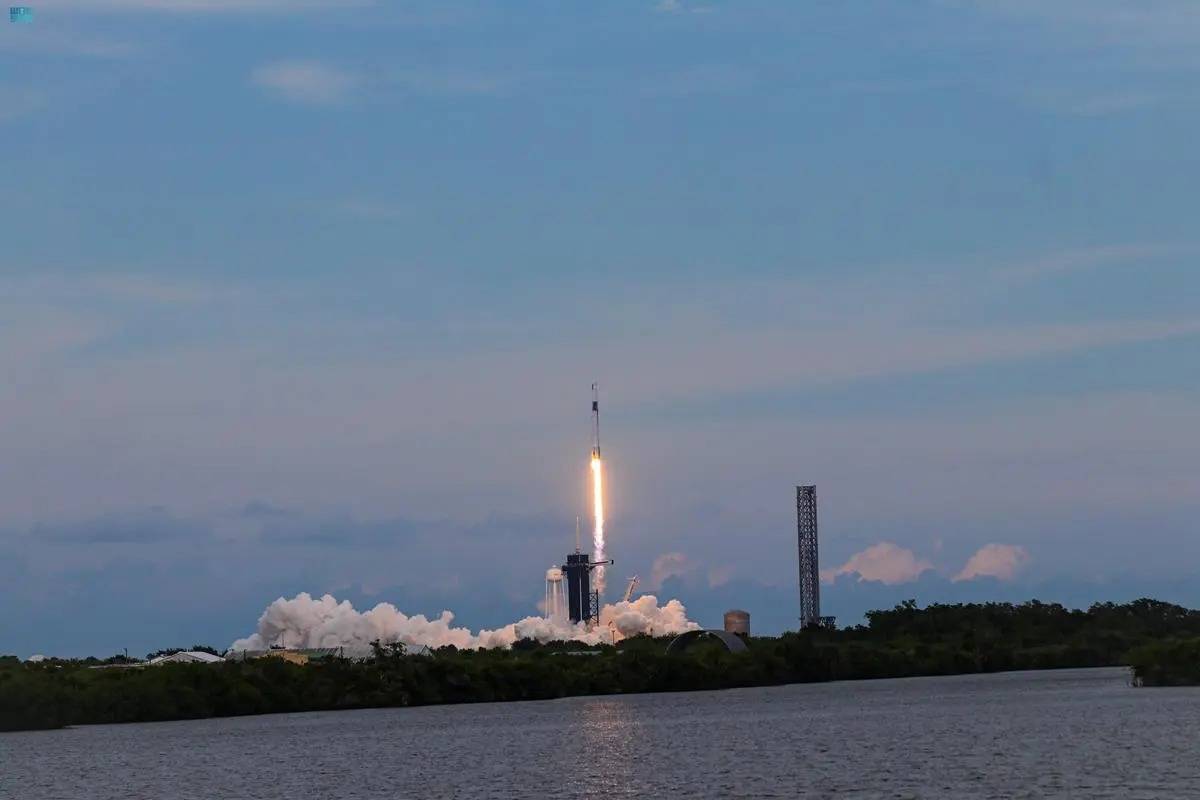
A Saudi-launched mission to the International Space Station from Cape Canaveral in Florida, United States (SPA)

Space Strengthens Links Across Industries

Dr. Abdul Rahman Baashen, head of the Al-Shorouk Center for Economic Studies in Jazan, said Vision 2030 had established programs and initiatives that strengthened the Saudi economy's ability to withstand shocks and helped create a development and investment response capable of adapting to regional changes, including the consequences of the ongoing war.

Speaking to Asharq Al-Awsat, Baashen said Saudi investment priorities were increasingly focused on developing strategic industries and addressing gaps in the country's industrial and technological ecosystem.

He noted growing interest in investments supporting sustainable development, particularly artificial intelligence, technology-intensive industries and space.

Baashen said several recent agreements and partnerships had focused on the space, defense and security sectors.

He explained that the space industry was particularly important because of its connections to numerous economic and industrial activities and its role in supporting essential services and stimulating growth.

Developing the sector, he argued, could help sustain investment and commercial activity in Saudi Arabia.

Baashen attributed the continued momentum in investment to Vision 2030, which he described as the primary driver of investment even during regional and international crises.

He said current developments were creating new opportunities for initiatives and projects involving advanced technologies and space.

He stressed that the regional war had not interrupted Saudi efforts to enhance the Kingdom's investment appeal and competitiveness, noting continued foreign investor interest in emerging sectors, including space.

As evidence, he cited the shift in Saudi Arabia's net foreign direct investment from an outflow of approximately $1.7 billion in the first quarter of the year to an inflow of $4 billion in the second quarter.

He also pointed to an increase in foreign exchange reserves to $440.7 billion at the end of September, representing annual growth of 3.7%.

Billions of Riyals in Space Investment Expected Through 2029

Saudi businessman Abdullah bin Zaid Al-Meleihi, chairman of Saudi Excellence Holding Company, said the Kingdom was entering a new phase of investment in space industries, supported by rapid technological advances and Vision 2030 objectives aimed at localizing strategic industries and expanding the private sector's role.

Speaking to Asharq Al-Awsat, Al-Meleihi said changes in modern warfare, particularly the growing reliance on artificial intelligence, cybersecurity, unmanned aircraft and satellites, had helped redirect global investment and created economic and industrial opportunities for domestic investors and companies.

He added that the repercussions of the regional war had not prevented Saudi Arabia from developing strategic industries and might even have contributed to a realignment of investment priorities.

Al-Meleihi said the target of localizing more than 50% of military spending by 2030 would create substantial opportunities for investment partnerships between the public and private sectors, including in space industries and related technologies.

He noted that Saudi investors had recognized early on the importance of moving into technology and strategic industries, prompting growing interest in international partnerships focused on transferring knowledge and advanced technologies and establishing specialized manufacturing capabilities within the Kingdom.

He stressed that opportunities extended beyond factories and industrial projects to include research and development, training and the preparation of Saudi professionals.

Al-Meleihi also emphasized the importance of public-private cooperation in building an advanced industrial and technological ecosystem.

He predicted that the space industry would attract billions of riyals in investment between 2027 and 2029, supported by expanding international partnerships and rising demand for advanced technologies.

He stressed that these projections represented his own investment outlook rather than official figures for approved investments.

Al-Meleihi said Saudi Arabia possessed the economic, industrial and investment capabilities needed to become a major player in defense, security and space industries.

He argued that the Kingdom could move from consuming technology to developing, manufacturing and localizing it, strengthening its position as a regional hub for these industries.

He also noted that changes in warfare were reshaping not only military doctrines but also the direction of global capital flows.

He expects defense, security and space industries to become among Saudi Arabia's most prominent areas of strategic investment in the coming period.

Al-Meleihi said the Kingdom was entering a new economic and industrial era in which the future would favor those investing today in technology, knowledge and advanced industries.

He added that Saudi Arabia, under Vision 2030, was well positioned to strengthen its standing among countries with significant influence in these sectors, both regionally and internationally.


Geopolitical Tensions Reshape Global Corporate Priorities

Container ships at a Saudi port (SPA)
TT

Geopolitical Tensions Reshape Global Corporate Priorities

Container ships at a Saudi port (SPA)

Global companies are being forced to rethink where they invest, produce and source goods as geopolitical tensions and trade disputes make cost and efficiency alone insufficient to guide business decisions.

Rivalry among major powers, mounting trade restrictions and supply chain disruptions are prompting businesses to reassess their markets, suppliers and exposure to risks beyond national borders.

The shift marks a gradual retreat from an economic model built on maximizing efficiency through global production networks toward one that prioritizes security, resilience and the ability to weather crises.

Diversifying suppliers and markets is no longer simply a growth strategy. It has become a safeguard against dependence on specific sources and an increasingly volatile global environment, even if that means higher costs.

The scale of the shift is evident in the International Chamber of Commerce's 2026 survey, released by the World Chambers Federation. It found that 70% of chambers of commerce worldwide ranked geopolitical tensions as a leading business challenge, up 14 percentage points from 2025.

Political risks have now overtaken tariffs and inflation as the biggest concern for businesses and markets.

Trade risks force a rethink of priorities

Uncertainty is no longer confined to conflict zones. It is spreading across economies and weighing on business conditions, according to the survey, a copy of which was obtained by Asharq Al-Awsat.

Chambers of commerce in 61% of the countries surveyed said the trade environment was hurting their operations in 2026.

Trade uncertainty topped the list of concerns, cited by 70% of chambers, followed by tariffs at 63% and import and export restrictions at 39%.

The figures highlight the mounting pressure on businesses as trade barriers rise and fears of retaliation threaten the flow of goods and investment.

The fallout goes beyond international trade, driving up production costs and prices.

Chambers in nearly nine out of 10 countries reported rising prices, while those in eight out of 10 expected inflationary pressures to persist, indicating that businesses and markets are absorbing some of the costs of trade disruptions.

Companies are responding by redrawing their trade networks rather than relying on a narrow pool of suppliers and markets.

Export diversification emerged as the leading strategy, favored by 73% of respondents, followed by switching to alternative suppliers at 64%.

Relocating production, meanwhile, continued to lose favor, suggesting companies would rather strengthen and diversify existing networks than move manufacturing operations on a large scale.

Cautious optimism amid rising risks

Despite the mounting challenges, the business outlook is far from uniformly gloomy.

Chambers of commerce rated economic conditions as good, very good or excellent in more than half the countries surveyed. Only 10% or fewer of the countries received poor or very poor ratings.

Expectations for business activity also improved.

Chambers in six out of 10 countries anticipated an increase in activity, up from five out of 10 in the 2025 survey.

The findings suggest businesses are not necessarily pulling back. Instead, they are adapting to new risks and reorganizing operations to sustain growth in a more volatile environment.

AI emerges as economic opportunity and geopolitical battleground

The forces reshaping global business extend well beyond trade and supply chains. Technology has become another arena of economic and geopolitical competition.

Artificial intelligence is at the center of that shift.

As companies race to harness AI to boost productivity, the technology is also becoming closely tied to countries' ability to secure advanced chips, infrastructure, data centers and the computing power needed to develop it.

The survey showed AI adoption accelerating sharply. The share of chambers reporting widespread use of the technology reached 32%, nearly tripling since 2024.

Optimism about its potential remains strong.

More than 93% of participating chambers expected the AI boom to continue, while around 90% believed it would improve productivity.

But enthusiasm for efficiency gains is accompanied by growing concern over jobs.

Around 40% of chambers expected AI to have a positive impact on employment. Yet half of respondents anticipated a decline in office-based jobs, compared with 32% who expected losses in manual occupations.

Chambers in emerging economies were generally more optimistic about AI's employment impact than those in advanced economies.

Those concerns are unfolding alongside an intensifying global contest for technological leadership.

The survey revealed a growing perception of China as the frontrunner in the AI race.

Half of participating chambers ranked China as the most advanced country in the field, compared with 38% that chose the United States — a view shared even by some respondents in North America.