Opening Saudi Legal Market to Foreign Firms Boosts Investment Competitivenesshttps://english.aawsat.com/business/5342782-opening-saudi-legal-market-foreign-firms-boosts-investment-competitiveness
Opening Saudi Legal Market to Foreign Firms Boosts Investment Competitiveness
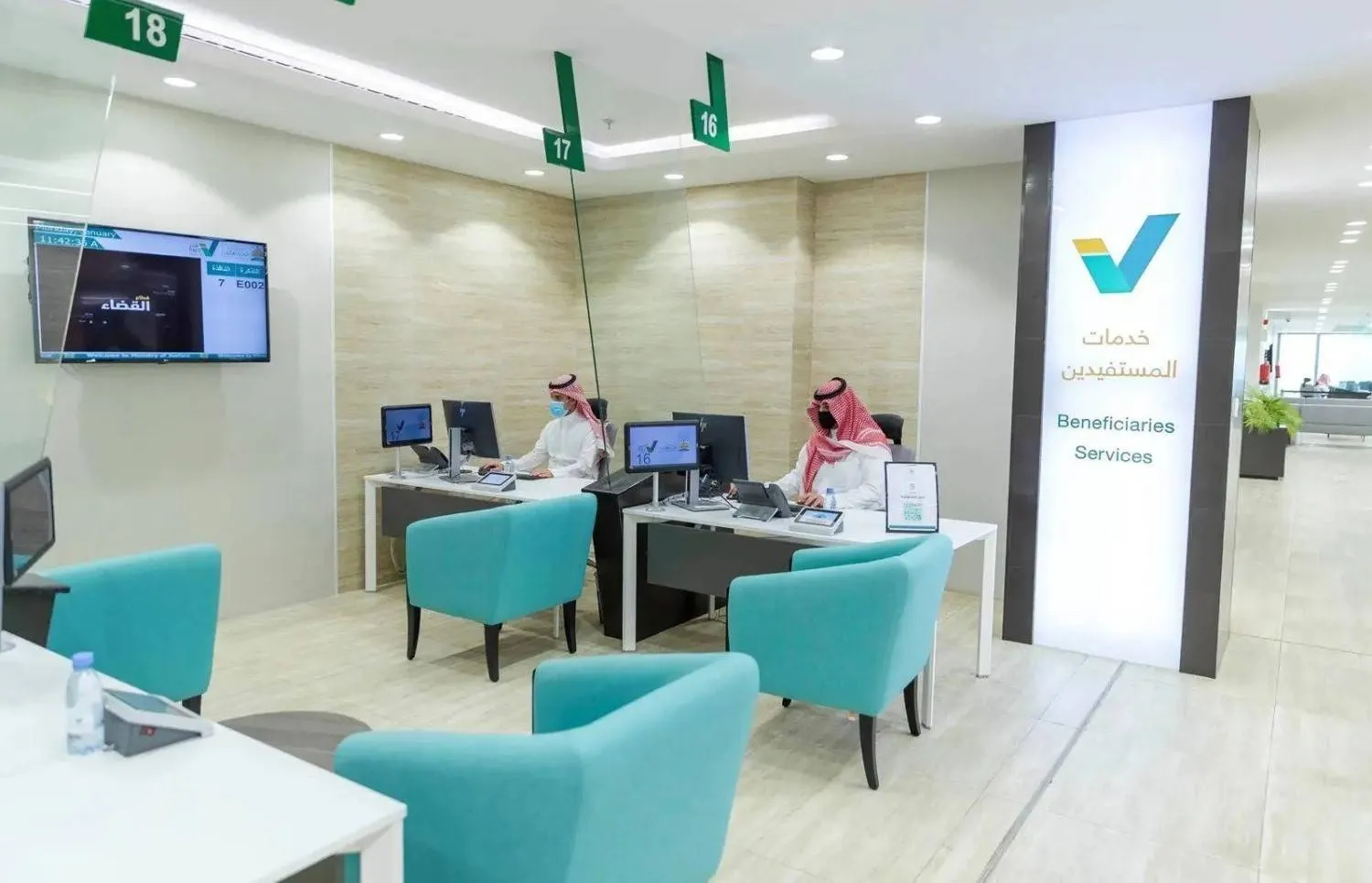
Client services at Saudi Arabia’s Ministry of Justice (SPA)
The Saudi Cabinet's decision to amend the Code of Law Practice, allowing foreign law firms to establish professional companies in the Kingdom under specific regulations, opens new opportunities for the legal services sector. The move aims to strengthen competitiveness and expand investment in professional services.
The decision comes as local and international companies increasingly seek specialized legal services to support business expansion and investment projects in Saudi Arabia.
The amendment is expected to do more than increase the number of firms operating in the sector. It is also anticipated to stimulate competition, raise quality and governance standards, facilitate the transfer of international expertise and develop professional practices in line with the Kingdom's ongoing economic and investment transformation.
International Expertise
Among the anticipated benefits is an improvement in the quality of legal services and practices through the adoption of international expertise in handling complex commercial cases and transactions, alongside advanced standards for risk management, compliance and professional governance.
Legal professionals say the decision responds to the growing scale of government and investment projects, which are driving demand for specialized legal services.
They also believe allowing foreign law firms to establish professional companies in Saudi Arabia could attract more regional headquarters of multinational corporations and strengthen the Kingdom's position as a hub for business and professional services.
Expanding Client Choice
Lawyer and legal consultant Khalid Ababtain said opening the Saudi market to international law firms represents an important step toward developing the legal services sector and enhancing its competitiveness.
He explained that a well-functioning market should not be built around protecting service providers from competition, but rather around enabling clients to obtain services that meet their needs at the best possible quality and most appropriate cost.
Speaking to Asharq Al-Awsat, Ababtain said clients have different priorities. Some seek the lowest price, while others prioritize quality and specialized expertise regardless of cost. Still others seek a balance between the two.
He explained that the entry of international law firms would not merely increase the number of competitors. It would also give clients a wider range of options and encourage domestic firms to improve their services, deepen their specializations and enhance operational efficiency.
Ababtain said the expansion of projects and investments across the Kingdom requires a legal market capable of providing sophisticated services in mergers and acquisitions, project finance, commercial arbitration and other highly specialized fields.
He stressed that the impact of competition should not be measured solely by its benefits to legal service providers, but also by the value it creates for clients and investors.
A competitive legal market, he said, is not one that shields lawyers from their rivals, but one that encourages both to compete for client satisfaction. He described this as the essence of competition and one of the most significant benefits of opening Saudi Arabia's legal market.
Improving Legal Practice Standards
Lawyer Zohour Faisal Al-Turki told Asharq Al-Awsat that the Cabinet's decision to amend the Code of Law Practice, allowing foreign law firms to establish professional companies in the Kingdom, would encourage greater specialization within the legal sector rather than continued reliance on general legal service models.
She said the Saudi economy increasingly requires highly specialized legal expertise in sectors such as energy, technology, finance, infrastructure and real estate investment.
According to Al-Turki, the benefits would also extend to developing Saudi legal talent through training and professional development, while creating more opportunities for Saudi lawyers to work in international legal environments and gain experience handling cross-border contracts and commercial and investment disputes.
She added that the decision could turn the entry of international law firms into a meaningful opportunity to train Saudi lawyers, transfer knowledge and develop specialized legal education and training programs.
Al-Turki said the move would also help improve standards for assessing the quality of legal services, ensure adherence to professional ethics, protect client confidentiality and safeguard the independence of legal practice.
She emphasized that the decision would encourage local professional partnerships and knowledge sharing, helping Saudi law firms build the competitive capabilities needed to benefit from market liberalization rather than simply contend with increased competition.
She added that these developments would support the establishment of a legal market capable of providing advanced services to multinational companies and strengthen Riyadh's position as a regional hub for professional services.
CEER Signs SAR2.6 Billion Financial Agreement with Arab National Bank and Riyad Bankhttps://english.aawsat.com/business/5342786-ceer-signs-sar26-billion-financial-agreement-arab-national-bank-and-riyad-bank
CEER Signs SAR2.6 Billion Financial Agreement with Arab National Bank and Riyad Bank
The signing marks a key milestone that unites CEER with two of the Kingdom’s premier financial institutions - SPA
CEER, Saudi Arabia’s first homegrown automotive brand, signed a financial agreement worth approximately SAR2.6 billion with Arab National Bank (anb) and Riyad Bank to further advance CEER’s strategic objectives in its contribution towards the growth of the Saudi automotive manufacturing industry.
The agreement was signed at CEER’s headquarters in Riyadh by Chief Financial Officer of CEER Joerg Schuessler, Chief Wholesale Bank Officer at Arab National Bank Louai Alzaher, and Chief Corporate Banking Officer at Riyad Bank Mohammed Abu Al-Naja, SPA reported.
The signing marks a key milestone that unites CEER with two of the Kingdom’s premier financial institutions and demonstrates robust private-sector confidence in CEER’s strategic direction, operational readiness, and long-term commercial viability, directly aligning with the industrial diversification objectives of Saudi Vision 2030.
At the signing ceremony, Schuessler said: "This agreement reflects anb and Riyad Bank's confidence in CEER's business model and long-term outlook. Together, we are investing in the future of a Saudi automotive brand built for the Kingdom and its future economic ambitions."
Alzaher added: “We are proud at anb to have led and arranged this agreement for CEER, reflecting the Bank’s commitment to supporting strategic national projects and enabling businesses to execute their strategic plans. This agreement also underscores anb’s role as an active banking partner in supporting promising economic sectors, particularly the automotive manufacturing industry, contributing to strengthening the Kingdom’s industrial sector and advancing the objectives of Saudi Vision 2030.”
Abu Al-Naja stated: “The signing of this financing agreement with CEER reaffirms Riyad Bank’s commitment to supporting national industries and advancing sustainable transport in line with Saudi Vision 2030 and the Saudi Green Initiative.”
Opening Saudi Legal Market to Foreign Firms Boosts Investment Competitivenesshttps://english.aawsat.com/business/5342782-opening-saudi-legal-market-foreign-firms-boosts-investment-competitiveness
Opening Saudi Legal Market to Foreign Firms Boosts Investment Competitiveness
Client services at Saudi Arabia’s Ministry of Justice (SPA)
The Saudi Cabinet's decision to amend the Code of Law Practice, allowing foreign law firms to establish professional companies in the Kingdom under specific regulations, opens new opportunities for the legal services sector. The move aims to strengthen competitiveness and expand investment in professional services.
The decision comes as local and international companies increasingly seek specialized legal services to support business expansion and investment projects in Saudi Arabia.
The amendment is expected to do more than increase the number of firms operating in the sector. It is also anticipated to stimulate competition, raise quality and governance standards, facilitate the transfer of international expertise and develop professional practices in line with the Kingdom's ongoing economic and investment transformation.
International Expertise
Among the anticipated benefits is an improvement in the quality of legal services and practices through the adoption of international expertise in handling complex commercial cases and transactions, alongside advanced standards for risk management, compliance and professional governance.
Legal professionals say the decision responds to the growing scale of government and investment projects, which are driving demand for specialized legal services.
They also believe allowing foreign law firms to establish professional companies in Saudi Arabia could attract more regional headquarters of multinational corporations and strengthen the Kingdom's position as a hub for business and professional services.
Expanding Client Choice
Lawyer and legal consultant Khalid Ababtain said opening the Saudi market to international law firms represents an important step toward developing the legal services sector and enhancing its competitiveness.
He explained that a well-functioning market should not be built around protecting service providers from competition, but rather around enabling clients to obtain services that meet their needs at the best possible quality and most appropriate cost.
Speaking to Asharq Al-Awsat, Ababtain said clients have different priorities. Some seek the lowest price, while others prioritize quality and specialized expertise regardless of cost. Still others seek a balance between the two.
He explained that the entry of international law firms would not merely increase the number of competitors. It would also give clients a wider range of options and encourage domestic firms to improve their services, deepen their specializations and enhance operational efficiency.
Ababtain said the expansion of projects and investments across the Kingdom requires a legal market capable of providing sophisticated services in mergers and acquisitions, project finance, commercial arbitration and other highly specialized fields.
He stressed that the impact of competition should not be measured solely by its benefits to legal service providers, but also by the value it creates for clients and investors.
A competitive legal market, he said, is not one that shields lawyers from their rivals, but one that encourages both to compete for client satisfaction. He described this as the essence of competition and one of the most significant benefits of opening Saudi Arabia's legal market.
Improving Legal Practice Standards
Lawyer Zohour Faisal Al-Turki told Asharq Al-Awsat that the Cabinet's decision to amend the Code of Law Practice, allowing foreign law firms to establish professional companies in the Kingdom, would encourage greater specialization within the legal sector rather than continued reliance on general legal service models.
She said the Saudi economy increasingly requires highly specialized legal expertise in sectors such as energy, technology, finance, infrastructure and real estate investment.
According to Al-Turki, the benefits would also extend to developing Saudi legal talent through training and professional development, while creating more opportunities for Saudi lawyers to work in international legal environments and gain experience handling cross-border contracts and commercial and investment disputes.
She added that the decision could turn the entry of international law firms into a meaningful opportunity to train Saudi lawyers, transfer knowledge and develop specialized legal education and training programs.
Al-Turki said the move would also help improve standards for assessing the quality of legal services, ensure adherence to professional ethics, protect client confidentiality and safeguard the independence of legal practice.
She emphasized that the decision would encourage local professional partnerships and knowledge sharing, helping Saudi law firms build the competitive capabilities needed to benefit from market liberalization rather than simply contend with increased competition.
She added that these developments would support the establishment of a legal market capable of providing advanced services to multinational companies and strengthen Riyadh's position as a regional hub for professional services.
Loans Expand and Deposits Shift: A New Funding Equation for Saudi Bankshttps://english.aawsat.com/business/5342735-loans-expand-and-deposits-shift-new-funding-equation-saudi-banks
Loans Expand and Deposits Shift: A New Funding Equation for Saudi Banks
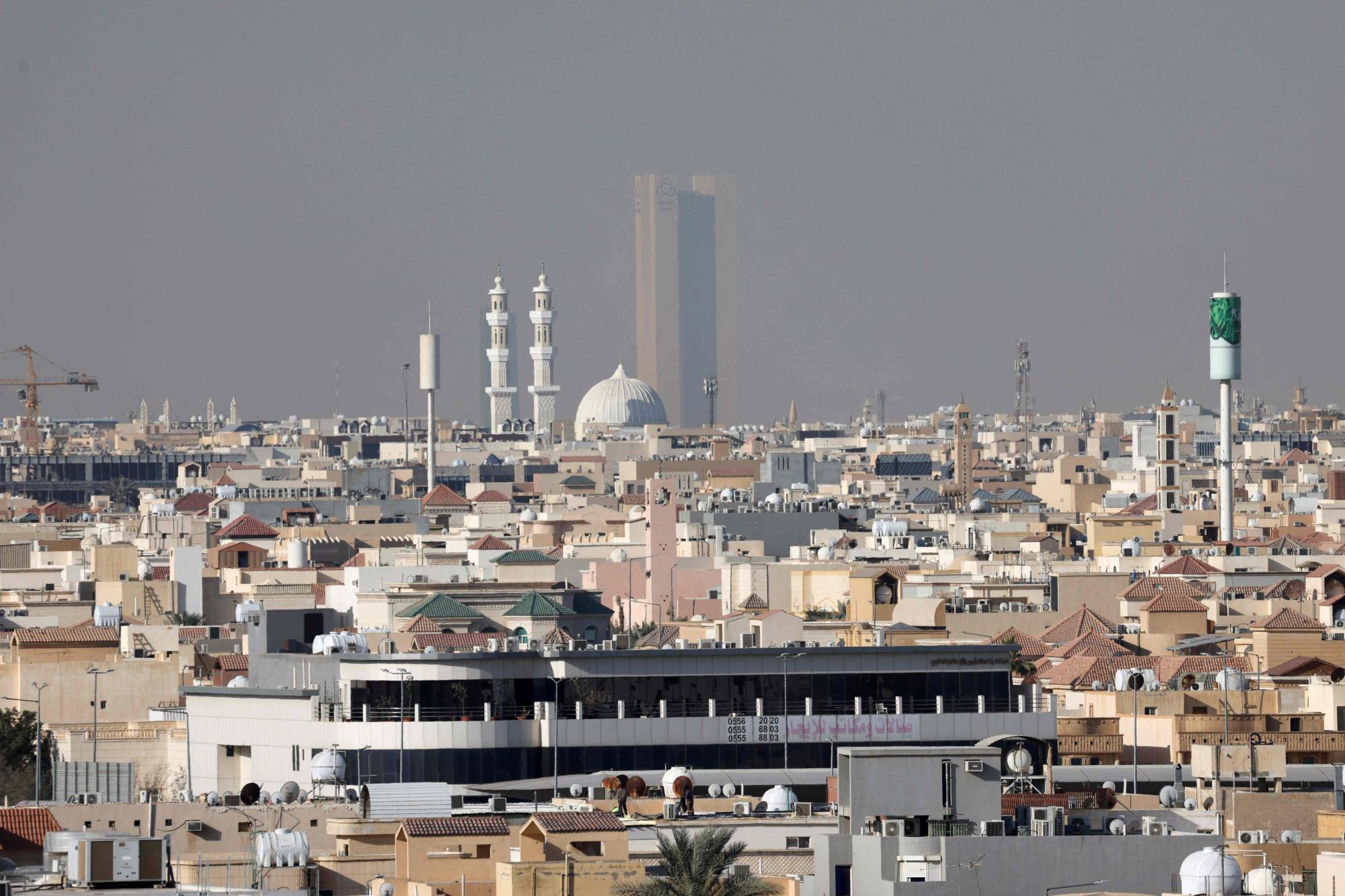
Vehicles pass the King Abdullah Financial District complex in the Saudi capital Riyadh, March 31, 2026. (AFP)
Saudi banks continue to finance economic activity amid accelerating credit growth, supported by their strong financial positions and diversified funding sources. However, managing these sources and their costs has become increasingly critical as deposit structures shift and competition to attract them intensifies, at a stage where banks are seeking to balance meeting financing demand with preserving profit margins.
Banks rely on a diversified funding base to sustain their lending role, encompassing government and private deposits, as well as debt markets and wholesale funding instruments. In this context, movements in government deposits carry particular weight in the banking funding equation, given their share in the overall deposit structure and their capacity to bolster liquidity available to lenders.
This coincides with sustained credit demand from corporates, individuals, and investment projects, making the diversification of funding sources and the management of their costs key factors in maintaining lending momentum and supporting economic activity.
In an assessment of these developments, Anton Lopatin, senior director for the banking sector at Fitch Ratings, told Asharq Al-Awsat that Saudi banks still maintain adequate liquidity levels despite tighter funding conditions and higher financing costs.
He explained that this became evident during the third quarter of 2026, when lending grew by around 2 percent against a roughly 1.5 percent decline in deposits, creating a gap between credit and deposit growth and intensifying competition among banks to attract funds.
The Alrajhi Bank building is seen in the background in Riyadh on December 3, 2024. (AFP)
Lopatin noted that under these conditions, banks are moving to increase their reliance on time deposits and wholesale market funding, which includes borrowing from other financial institutions and banks, or raising funds through bond and sukuk issuances. Although these instruments provide banks with additional funding sources, their cost can be higher than that of traditional deposits.
He stressed that these developments reflect pressures related to funding sources and their costs, rather than an issue with liquidity levels across the banking sector.
Data from the Saudi Central Bank (SAMA) reveals a notable acceleration in lending during September, with bank loan balances rising by approximately 35.9 billion riyals ($9.6 billion) - the largest monthly increase in 16 months - bringing the total portfolio to around 3.5 trillion riyals ($933 billion), representing an annual growth rate of 7.3 percent.
Conversely, the pace of credit expansion has slowed since the beginning of the year; the cumulative increase in loans over the first nine months stood at roughly 204 billion riyals ($54.4 billion), about one-third lower than the increase recorded during the corresponding period in 2025, reflecting slower growth in bank financing compared to last year.
On the funding side, total bank deposits declined to around 3.076 trillion riyals ($820.3 billion) by the end of September, marking a slight monthly decrease of 0.1 percent, though remaining up 4.8 percent on an annual basis. However, a quarterly comparison reveals a deposit contraction of roughly 1.8 percent, with government deposits serving as the primary driver.
Government deposits fell by about 34.2 billion riyals ($9.1 billion) during the quarter, accounting for nearly 61 percent of the total drop in deposits, to stand at roughly 1.008 trillion riyals ($268.8 billion), or nearly one-third of all bank deposits.
It is worth noting here that government deposits are not limited to funds held at commercial banks, but also include balances maintained by government entities at the Saudi Central Bank.
In this context, Lopatin explained that government entity balances at SAMA reached around 370 billion riyals ($99 billion) by the end of the third quarter, saying that movements in these deposits are tied to government cash management and can impact liquidity levels at commercial banks depending on how they are deployed.
Government deposits account for roughly one-third of total bank deposits, making them a key funding source for the sector, he went on to say.
Movements in government funds affect the liquidity available to banks in two ways. First, through increases or decreases in government deposits held directly at commercial banks, which raises or lowers the total deposits they rely on for funding. Second, through government balances held at the SAMA; transferring a portion of these funds to commercial banks, when needed to finance government spending, can add new resources to the banks' funding base.
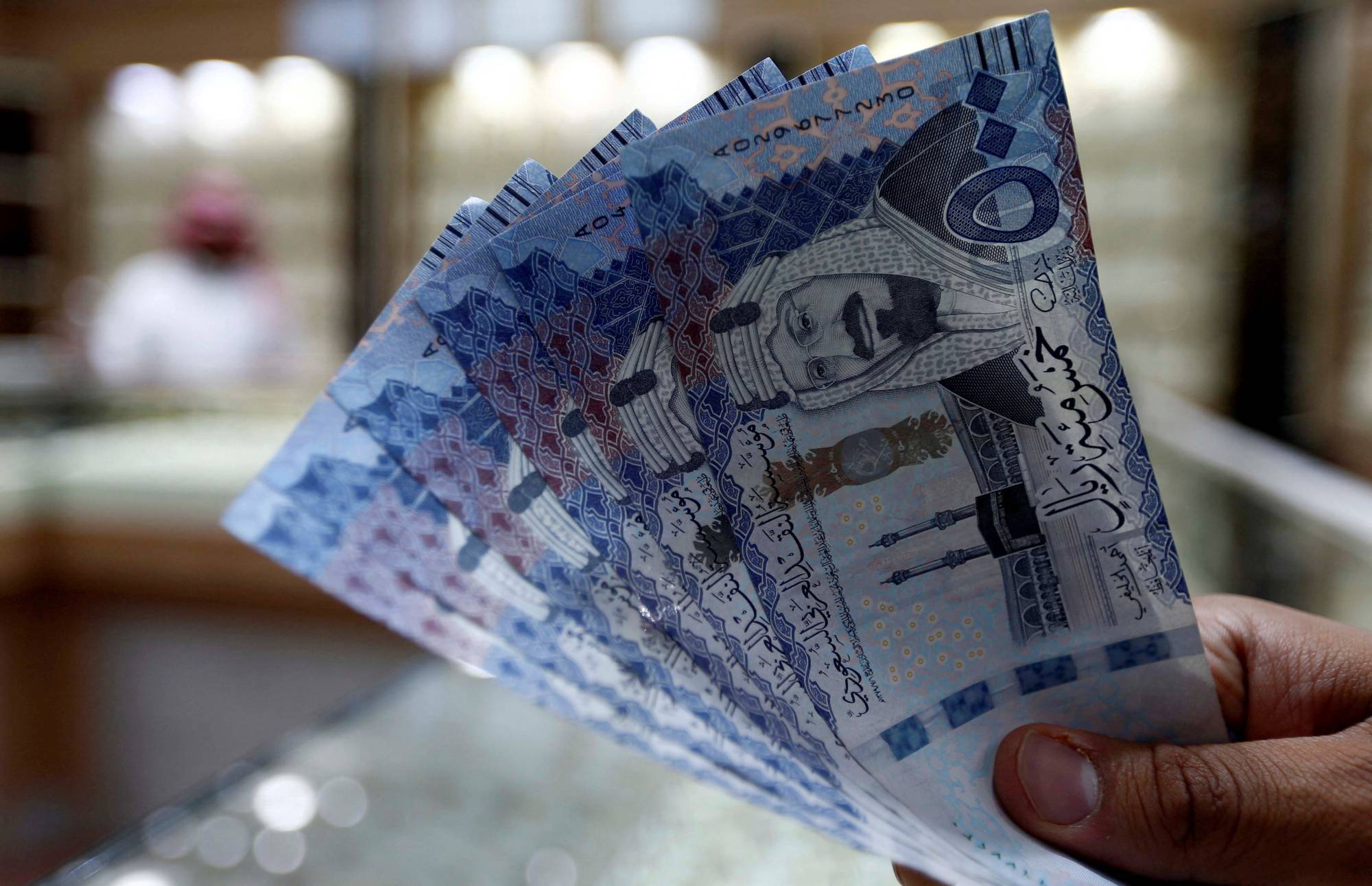
A Saudi money changer displays Saudi Riyal banknotes at a currency exchange shop in Riyadh, Saudi Arabia July 27, 2017. (Reuters)
Time deposits advance
Meanwhile, the composition of deposits shifted. Time and savings deposits rose by roughly 17.5 billion riyals ($4.7 billion), or 1.3 percent, during September to reach around 1.417 trillion riyals ($377.9 billion), lifting their share to 46.1 percent of total deposits. Demand deposits fell by 1.4 percent to around 1.405 trillion riyals ($374.7 billion), bringing their share to 45.7 percent.
Annual data underscores the breadth of this shift. The share of time and savings deposits climbed to 46.1 percent by the end of September 2026, compared with 39.3 percent a year earlier, while the share of demand deposits dropped from 50.4 percent to 45.7 percent. As a result, time and savings deposits surpassed demand deposits in value, signaling a move by a larger portion of depositor funds toward yield-bearing instruments.
This shift carries significant implications for funding costs, as retaining deposits and attracting new funds requires offering more competitive yields, which could drive up the cost of funds for banks compared to relying on demand deposits. However, a higher share of time and savings deposits does not necessarily translate into a proportional increase in funding costs, as actual costs remain tied to the yield levels offered by banks, as well as deposit maturities and terms.
Riyal funding
The shift in funding conditions is also evident in the widening spread between the three-month Saudi Interbank Offered Rate (SAIBOR) and the US Secured Overnight Financing Rate (SOFR), a gap that reflects differing funding conditions between the two markets and carries particular significance in Saudi Arabia given the riyal's peg to the dollar.
According to available data, the spread reached roughly 120 basis points. While local interest rates are influenced by US monetary policy moves due to the currency peg, the cost of riyal funding is also shaped by liquidity levels and demand for funds in the domestic market, making the widening spread an important indicator of evolving funding conditions within the Kingdom.
Lopatin explained that the widening spread between SAIBOR and SOFR reflects heightened competition among banks to attract riyal funding as credit growth continues to outpace deposit growth. However, he said that this development does not in itself indicate stress on the banking system or a liquidity shortage, but rather reflects the higher cost of attracting deposits and banks' move to diversify their funding sources to meet their needs.
Limited regional spillover
On regional developments, Lopatin said the war with Iran contributed to heightened market volatility and drove up wholesale funding costs during certain periods, though Fitch has not observed significant outflows from Saudi banks that could be directly linked to geopolitical events.
He added that banks remain able to diversify their funding sources and access alternatives, including private placements and syndicated loans, even during periods of volatility in public debt markets.
He explained that the direct impact of regional developments on bank liquidity flows remains limited compared with domestic factors that carry greater weight in shaping funding conditions, foremost among them growing credit demand and the need to attract deposits and diversify funding sources.
IMF: Banking resilience
These assessments align with the International Monetary Fund's reading of the Saudi banking sector in its 2026 Article IV consultation report. Although the IMF noted a decline in excess liquidity and a widening spread between riyal and dollar interest rates, coinciding with credit growth outpacing deposit growth and rising funding needs, it stressed that banks remain financially sound, backed by a strong capital base and comfortable liquidity levels that position them to absorb shocks and sustain lending activity.
Financial indicators support this evaluation. Data for 2025 showed that the capital adequacy ratio of Saudi banks reached 20.5 percent, while the Tier 1 capital ratio stood at 18.8 percent. Non-performing loans also registered around 1 percent of total loans, their lowest level in a decade, according to IMF data. On liquidity, the ratio of liquid assets to total assets reached 20.2 percent, while their ratio to short-term liabilities hit 38 percent, according to the Fund's figures.
The logo of the Saudi Central Bank at the Fintech Conference. (Turky Al-Agili)
Funding through 2027: Continued growth at a higher cost
This financial soundness provides a supportive foundation for banks to continue financing economic activity, though the challenge lies in their ability to sustain credit expansion amid rising funding costs and intensifying competition for deposits.
Lopatin said tighter funding conditions are not expected to constrain Saudi banks' capacity to support economic activity and finance Vision 2030 projects, though they could weigh more heavily on profit margins.
Continued credit growth outpacing deposit growth leaves banks with several options, including offering more competitive yields to attract funds, increasing reliance on market-based funding, or slowing the pace of loan growth, he said. Credit expansion has already begun to decelerate compared with earlier levels.
Higher funding costs could pressure net interest margins, particularly since banks cannot always pass the increase on to borrowers amid competition for high-creditworthiness clients, he went on to say. Consequently, lenders may become more selective in pricing new loans, without necessarily imposing broad restrictions on financing for the private sector or Vision 2030 projects.
Lopatin pointed to factors that could help ease funding pressures, including higher oil revenues and increased production, should they translate into higher government spending and deposit growth. In addition, the transfer of a portion of government balances held at SAMA to commercial banks could provide them with supplementary funding resources, coupled with the central bank's role in managing any temporary liquidity pressures.
Nevertheless, Fitch expects funding conditions to remain relatively tight through 2027, with the possibility of periodic improvements. Lopatin attributed this to ongoing financing needs tied to major investments and mega-projects under Vision 2030, which require growing credit resources.
Under these conditions, banks will continue to diversify their funding sources by attracting deposits and expanding issuances of bonds, sukuk, and wholesale funding instruments, while growth in government deposits or a slowdown in credit could help ease pressures, even though a rapid return to the abundant liquidity levels the sector previously experienced remains unlikely.
Ultimately, Saudi banks appear well-positioned to continue financing the economy and keeping pace with the demands of economic transformation, backed by their strong financial positions and diverse available funding channels.
Despite higher funding costs and intensifying competition for deposits, banks' ability to diversify funding sources and manage their credit portfolios gives them flexibility to navigate these shifts and sustain their role in supporting economic activity and Vision 2030 projects, while working to strike a balance between lending growth and sustainable profitability.
لم تشترك بعد
انشئ حساباً خاصاً بك لتحصل على أخبار مخصصة لك ولتتمتع بخاصية حفظ المقالات وتتلقى نشراتنا البريدية المتنوعة