


From Leaf Crisps to Pudding, India’s ‘Super Food’ Millet Finds Its Way onto the G20 Dinner Menu

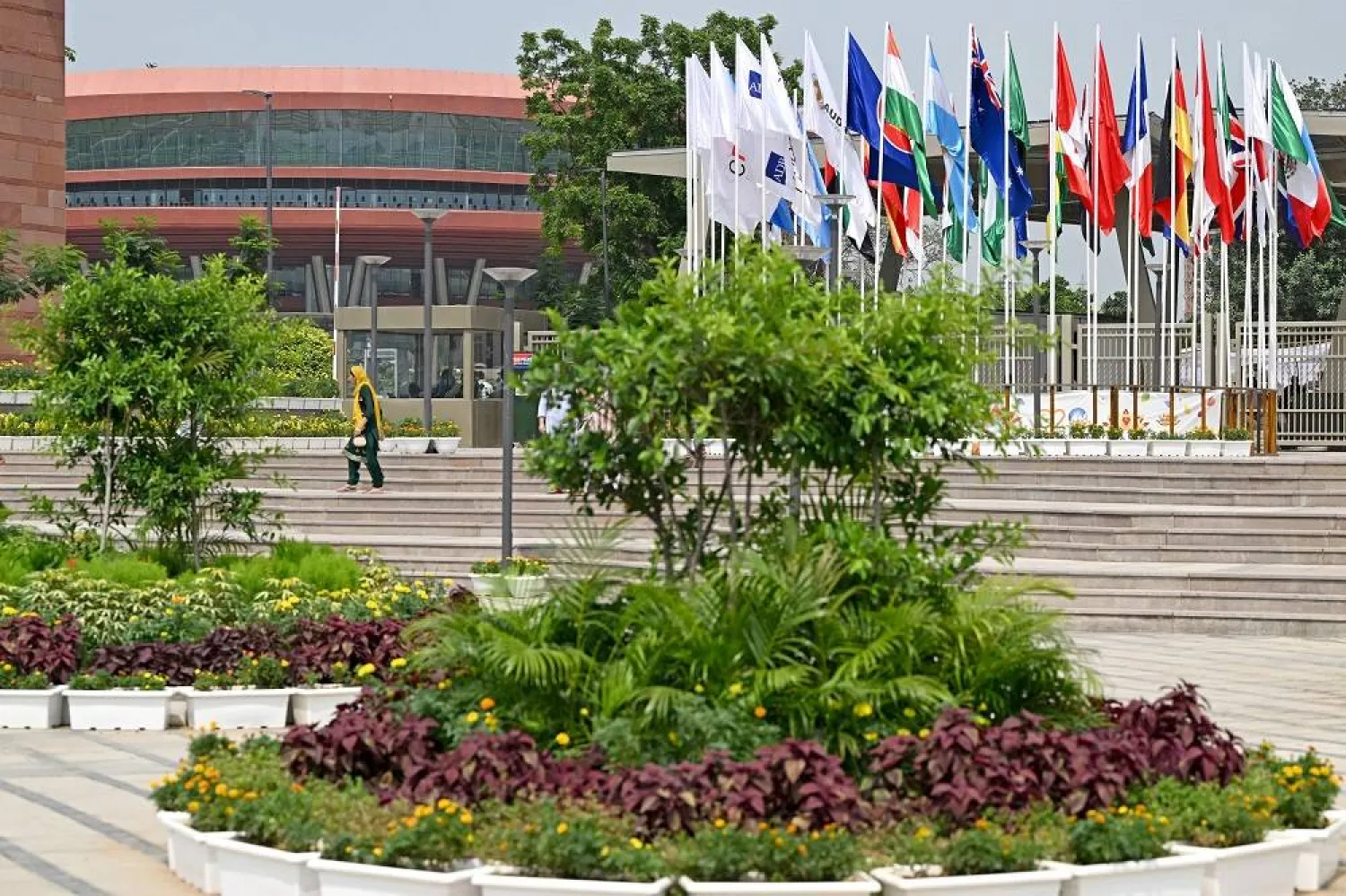
The International Convention Center "Bharat Mandapam" the venue for the upcoming G20 Summit scheduled to be held next month, pictured in New Delhi on August 31, 2023. (AFP)
TT

From Leaf Crisps to Pudding, India’s ‘Super Food’ Millet Finds Its Way onto the G20 Dinner Menu

The International Convention Center "Bharat Mandapam" the venue for the upcoming G20 Summit scheduled to be held next month, pictured in New Delhi on August 31, 2023. (AFP)

When the leaders of the Group of 20 arrived in host country India, they were feted by a classic Indian formula of Bollywood song and dance on the tarmac. Now as they tuck into dinner, they are in for yet another cultural treat: dressed-up versions of a humble, earthy grain that's a staple for millions of Indians.

Millets are a group of grains India has been championing as a super food — versatile, climate-friendly and, if prepared right, presumably delicious enough for world leaders. And after a grueling day of discussions at the summit that saw the African Union added as a new G20 member, delicacies made from it will be rolled out in various forms.

The world leaders will gather for the meal at the Bharat Mandapam building, a sprawling exhibition center in the heart of New Delhi, which twinkled with blinking lights on Saturday night.

Among the vegetarian delicacies are oxtail millet leaf crisps topped with yoghurt and spiced chutney, Kerala red rice tossed with millet crisp and curry leaf, and a cardamom scented barnyard millet pudding with fig and peach compote, according to the menu seen by the Associated Press.

Prime Minister Narendra Modi declared 2023 as the Year of Millets, and so did the United Nations. Even the White House took note of the grain — in June, plant-based courses of millet were on the menu for some 400 guests invited to a White House state dinner for Modi, who is a vegetarian.

The focus on millets is seen as an effort to revive a hardy and healthy crop that has been cultivated for millennia but was largely cast aside by European colonists who favored corn, wheat and other grains.

Rich in proteins, potassium and vitamin B, and gluten-free, the grain's fans tout its flexibility — you can knead it into rotis or flatbreads, make a batter out of it for dosas or savory crepes, or just boil it, like you would rice, and serve it with spiced lentils, or dal.

Over centuries, millets have been cultivated around the world — including in Japan, Europe, the Americas and Australia — but their epicenter has traditionally been India, China and sub-Saharan Africa.

In total, there are about nine types of millet, and India — the largest producer — grows all of them. The South Asian country accounts for 80% of millet production in Asia and 20% globally, according to a report from the ORF.

Millets are more tolerant of poor soils, drought and harsh growing conditions, and can easily adapt to different environments without high levels of fertilizer and pesticide. They also don’t need as much water as other grains, making them a sustainable option especially in dry and arid regions.

Under Modi’s rule, the grain has found a resurgence of sorts. At the G20 meeting focused on agriculture in June, he said India's food and agriculture policy was a mix of “back to basics” and “march to the future.”

Millets, he said, exemplified this. They are not new, they've been cultivated for thousands of years, "but markets and marketing had influenced our choices so much that we forgot the value of traditionally grown food crops.”

After a thrust by the government to promote the grain, various startups across India have rolled out cafes — some even on wheels — that sell only millet-made snacks. On Instagram, chefs and Bollywood celebrities are promoting the grain by sharing recipes, with some focusing on millet's nutritional value and how it helps in weight loss.

Indian ministers are also making sure the humble grain is recognized by global guests.

Prominent among them is billionaire tech mogul and philanthropist Bill Gates, who during a visit to India this year tried his culinary skills at making millet khichdi, an Indian stew typically made with lentils and rice.



Saudi Arabia: Ship of Tolerance Initiative Promotes Cultural Dialogue in Jeddah

The Royal Institute of Traditional Arts (Wrth) will offer traditional craft workshops throughout Ramadan. SPA
TT

Saudi Arabia: Ship of Tolerance Initiative Promotes Cultural Dialogue in Jeddah

The Royal Institute of Traditional Arts (Wrth) will offer traditional craft workshops throughout Ramadan. SPA

The Saudi Ministry of Culture, in collaboration with the "Lenobadir" volunteer and community partnership program and the Athr Foundation, has launched the Ship of Tolerance initiative in Historic Jeddah during Ramadan.

The initiative aims to enhance shared human values through arts, and promote tolerance and coexistence among children and families. It provides an educational and cultural experience aligned with the area’s unique character as a UNESCO World Heritage site.

As part of this global art project, children will create artworks that represent acceptance and dialogue.

The Royal Institute of Traditional Arts (Wrth) will offer traditional craft workshops throughout Ramadan, linking the initiative's values with local heritage and enriching visitors' connection to the region's identity.

This effort supports cultural programs with educational and social dimensions in Historic Jeddah, activating local sites for experiences that combine art, crafts, and community participation. It aligns with the National Strategy for Culture under Saudi Vision 2030, focusing on heritage preservation and expanding culture's impact on daily life.


Oscar Contender ‘Hamnet’ Boosts Tourism at Shakespeare Heritage Sites 

A view of Shakespeare’s Birthplace, William Shakespeare's childhood home, in Stratford-upon-Avon, Britain, February 9, 2026. (Reuters)
TT

Oscar Contender ‘Hamnet’ Boosts Tourism at Shakespeare Heritage Sites 

A view of Shakespeare’s Birthplace, William Shakespeare's childhood home, in Stratford-upon-Avon, Britain, February 9, 2026. (Reuters)

On a cloudy winter's day, visitors stream into what was once William Shakespeare's childhood home in Stratford-upon-Avon and the nearby Anne Hathaway's cottage, family residence of the bard's wife.

Hathaway's cottage is one of the settings for the BAFTA and Oscar best film contender "Hamnet", and the movie's success is drawing a new wave of tourists to Shakespeare sites in the town in central England.

Shakespeare's Birthplace is the house the young William once lived in and where his father worked as a glove maker, while Hathaway's cottage is where he would have visited his future wife early in their relationship.

Typically, around 250,000 visitors, from the UK, Europe, the United States, China and elsewhere, walk through the locations each year, according to the Shakespeare Birthplace Trust. ‌The charity looks after ‌Shakespeare heritage sites, which also include Shakespeare's New Place, the site of ‌the ⁠Stratford home where the ⁠bard died in 1616.

Visitors are flocking in this year thanks to "Hamnet", the film based on Maggie O'Farrell's 2020 novel, which gives a fictional account of the relationship between Shakespeare and Hathaway, also known as Agnes, and the death of their 11-year-old son Hamnet in 1596.

"Visitor numbers have increased by about 15 to 20% across all sites since the film was released back in January. I think that will only continue as we go throughout the year," Richard Patterson, chief operating officer for the Shakespeare Birthplace Trust, said.

"They particularly want ⁠to look (at) Anne Hathaway's cottage and the specifics around how the family ‌engaged in the spaces and the landscape in and around ‌the cottage... you can see why he would have been inspired."

NEW ACCESS TO SHAKESPEARE

"Hamnet" has 11 nominations at ‌Sunday's British BAFTA awards, including best film and leading actress for Jessie Buckley, who plays Agnes. It ‌also has eight Oscar nominations, with Buckley seen as the frontrunner to win best actress.

"Hamnet" is set in Stratford-upon-Avon and London although it was not filmed in Stratford.

It sees Paul Mescal's young Shakespeare fall for Agnes while teaching Latin to pay off his father's debts. The drama, seen mainly through Agnes' eyes, focuses on their ‌life together and grief over Hamnet's death, leading Shakespeare to write "Hamlet".

"Shakespeare... is notoriously enigmatic. He writes about humanity, about feeling, about emotion, about conflict, ⁠but where do we understand ⁠who he is in that story?" said Charlotte Scott, a professor of Shakespeare studies and interim director of collections, learning and research at the Shakespeare Birthplace Trust.

"And that's driven people creative and otherwise for hundreds and hundreds of years. Where is Shakespeare's heart? And this is what the film I think has so beautifully opened up."

Little is known about how the couple met. Shakespeare was 18 and Hathaway 26 when they married in 1582. Daughter Susanna arrived in 1583 and twins Judith and Hamnet in 1585.

The film acknowledges the names Hamnet and Hamlet were interchangeable back then. While grief is a dominant theme, audiences also see Shakespeare in love and as a father.

"A lot of people will see this film not necessarily having... had any kind of relationship with Shakespeare," Scott said.

"So people will come to this film, I hope, and find a new way of accessing Shakespeare that is about creativity, that is about understanding storytelling as a constant process of regeneration, but also crucially, looking at it from that kind of emotive angle."


Culture Ministry Continues Preparations in Historic Jeddah to Welcome Visitors during Ramadan 

Historic Jeddah has emerged as a leading cultural tourism destination during Ramadan. (SPA)
TT

Culture Ministry Continues Preparations in Historic Jeddah to Welcome Visitors during Ramadan 

Historic Jeddah has emerged as a leading cultural tourism destination during Ramadan. (SPA)

The Saudi Ministry of Culture is continuing its efforts to revitalize Historic Jeddah in preparation for welcoming visitors during the holy month of Ramadan, offering cultural programs, events, and heritage experiences that reflect the authenticity of the past.

The district has emerged as a leading cultural tourism destination at this time of year as part of the “The Heart of Ramadan” campaign launched by the Saudi Tourism Authority.

Visitors are provided the opportunity to explore the district’s attractions, including archaeological sites located within the geographical boundaries of the UNESCO World Heritage-listed area, which represent a central component of the Kingdom’s urban and cultural heritage.

The area also features museums that serve as gateways to understanding the city’s rich heritage and cultural development, in addition to traditional markets that narrate historical stories through locally made products and Ramadan specialties that reflect authentic traditions.

These initiatives are part of the ministry’s ongoing efforts to revitalize Historic Jeddah in line with the objectives of Saudi Vision 2030 and aiming to transform it into a vibrant hub for arts, culture, and the creative economy, while preserving its tangible and intangible heritage.