
Iranian Mourning Ceremonies Prompt New Crackdowns in Echo of 1979 Revolution

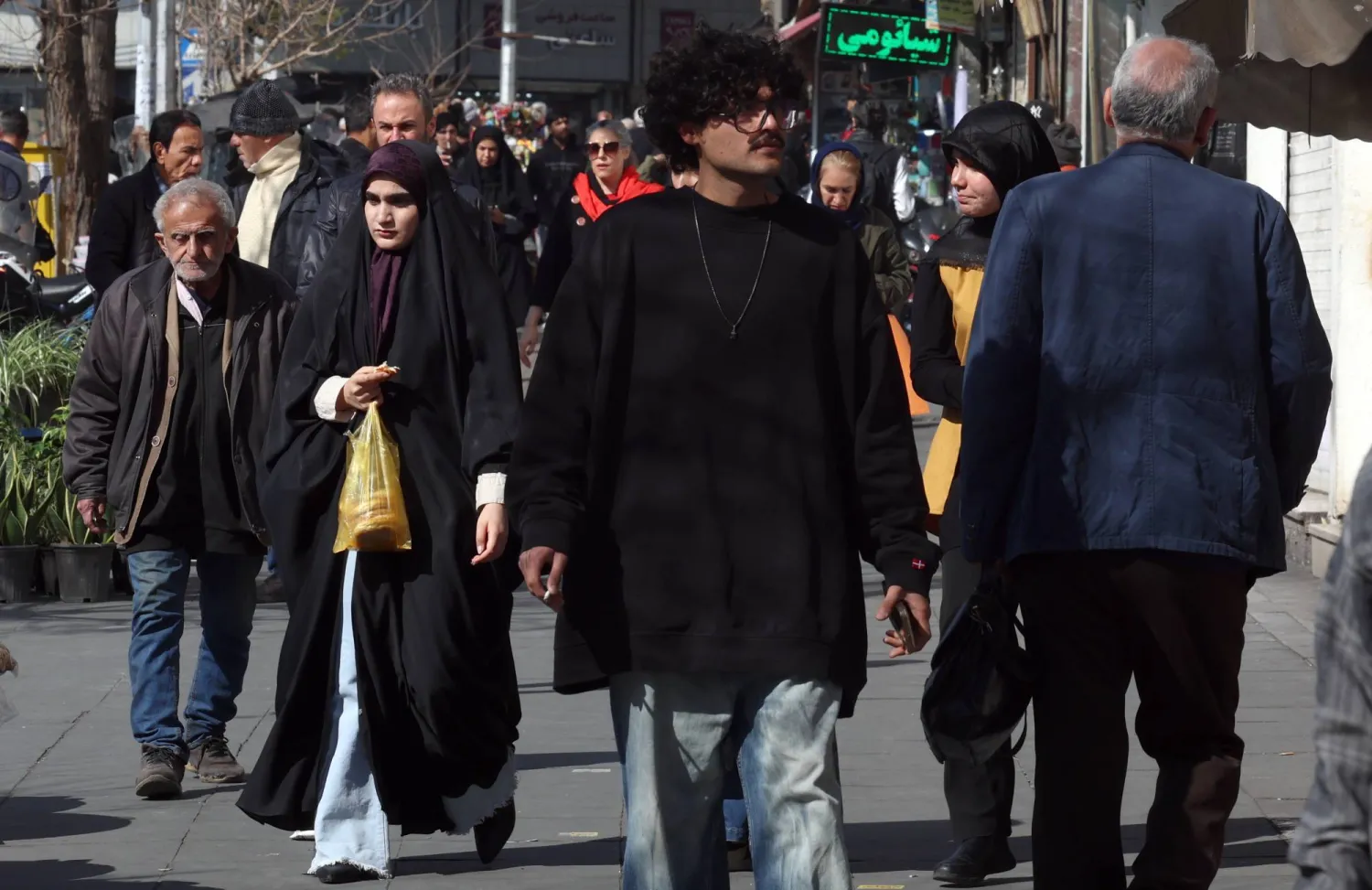
Iranians walk on a street in Tehran, Iran, 16 February 2026. (EPA)
TT

Iranian Mourning Ceremonies Prompt New Crackdowns in Echo of 1979 Revolution

Iranians walk on a street in Tehran, Iran, 16 February 2026. (EPA)

Iranians have returned to the streets this week to mourn those killed by security forces during last month's anti-government demonstrations, sparking some new crackdowns in an echo of the 1979 revolution that brought down the US-backed Shah.

The anti-Shah revolutionaries turned Shiite Muslim memorial processions 40 days after each death into new protests, which prompted renewed violence from the authorities and fresh "martyrs" for the cause.

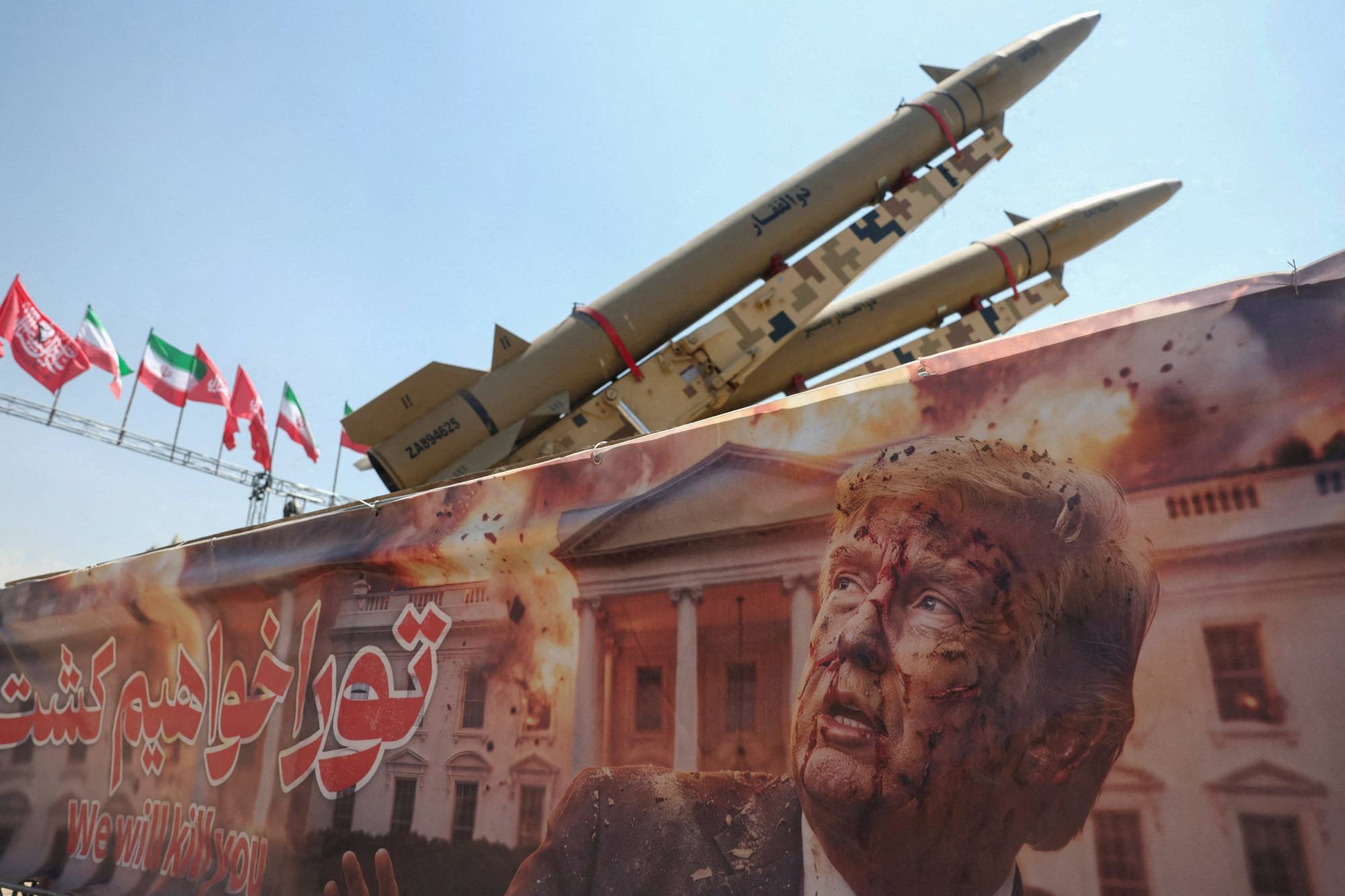
The clerical establishment's opponents, deploying the same tactics after five decades, have yet to match the momentum of those times, but Iran's clerical rulers, threatened with military attack by US President Donald Trump over their nuclear and security policies, have demonstrated their concern.

They deployed security forces to some cemeteries and invited citizens to attend state-organized 40-day "Chehelom" ceremonies on Tuesday after apologizing to "all those affected" by violence they blamed on people described as "terrorists".

"They tried to prevent history repeating itself by holding these ceremonies in mosques across ‌the country. To ‌prevent any gatherings of angry families in cemeteries, but they failed," said one rights activist ‌in ⁠Iran who declined ⁠to be named for fear of retribution.

SECURITY FORCES CLASH WITH MOURNERS

Videos circulating on social media showed families holding their own memorials across Iran on Tuesday, 40 days after security forces began two days of widespread shooting that human rights groups say killed thousands of protesters.

Some of Tuesday's memorials turned into wider anti-government protests and some were met with deadly force.

In the Kurdish town of Abdanan in Ilam province, witnesses and activists said security forces opened fire on hundreds of mourners gathered at a cemetery.

Videos showed people scattering as gunfire rang out amid chants of "Death to the dictator", a reference to Iran's Supreme Leader Ali Khamenei.

Reuters journalists verified that ⁠the videos were filmed at the cemetery. They were unable to verify the date but ‌found no versions posted before Tuesday: eyewitnesses and activists said that was when ‌people gathered at the cemetery were fired upon.

Hengaw, a Kurdish Iranian rights group, said at least three people were injured and nine ‌arrested in Abdanan. Similar clashes were reported in Mashhad and Hamedan. Sources in Iran said internet access was heavily restricted ‌in those cities.

WEDNESDAY IS 40 DAYS SINCE HEIGHT OF JANUARY PROTESTS

More mourning ceremonies were expected to be taking place on Wednesday, 40 days since the deadliest two days of the January unrest, although communications restrictions meant that it was not immediately possible to tell how many or their outcome.

January's unrest grew from modest economic protests in December among traders in Tehran's Grand Bazaar into the gravest threat to ‌Iran's theocracy in nearly five decades, with protesters calling for ruling clerics to step down.

Authorities cut internet access, blaming "armed terrorists" linked to Israel and the United States ⁠for the violence, and have arrested ⁠journalists, lawyers, activists, human rights advocates and students, rights groups say.

Iranian officials have told Reuters the leadership is worried a US strike could erode its grip on power by fueling more protests. Repression, inequality, corruption and the sponsorship of proxies abroad are the main grievances.

"How long can they kill people to stay in power? People are angry, people are frustrated," said government employee Sara, 28, from the central city of Isfahan.

"The Islamic Republic has brought nothing but war, economic misery and death to my country".

Trump has deployed aircraft carriers, fighter jets, guided-missile destroyers and other capabilities to the Middle East for a possible attack if talks to limit Iran's nuclear program and weaken its foreign proxies do not yield results.

Even without a US attack, continued isolation from Western sanctions would likely fuel further public anger.

In 1979, the anti-Shah revolt in provincial towns and villages was amplified by oil workers whose strikes cut most of Iran's revenue, and bazaar merchants who funded the rebel clerics.

This time there have been no reports of either, but people have adopted some of the small-scale tactics, chanting “Allah is great” and “Death to the dictator”, often from rooftops, during nightly demonstrations, according to witnesses and social media posts.


Iran Arrests Man Accused of Running Starlink Internet Network

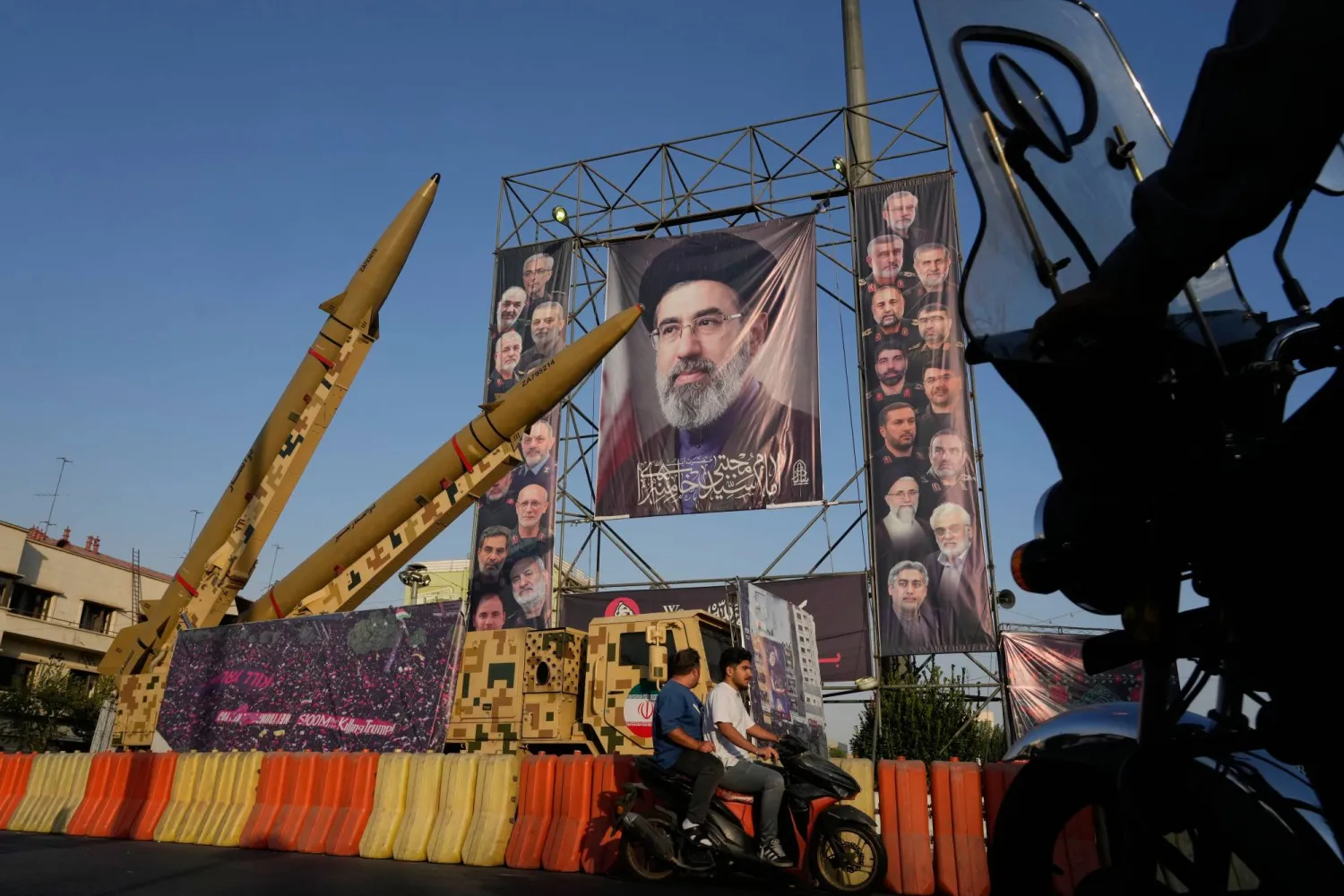
 A man leaves a subway train past an image of the late Iranian Supreme Leader Ali Khamenei, in Tehran, Iran, Friday, March 13, 2026. (AP)
A man leaves a subway train past an image of the late Iranian Supreme Leader Ali Khamenei, in Tehran, Iran, Friday, March 13, 2026. (AP)
TT

Iran Arrests Man Accused of Running Starlink Internet Network

 A man leaves a subway train past an image of the late Iranian Supreme Leader Ali Khamenei, in Tehran, Iran, Friday, March 13, 2026. (AP)
A man leaves a subway train past an image of the late Iranian Supreme Leader Ali Khamenei, in Tehran, Iran, Friday, March 13, 2026. (AP)

Iranian authorities have arrested a man accused of leading a network that sold access to the internet via Starlink terminals, a technology that is banned in Iran, the ISNA news agency reported on Friday.

Iran has been digitally sealed off from the rest of the world by a complete internet blackout since the start of the Middle East war.

To get around those restrictions, some Iranians have turned to Starlink terminals from the US company SpaceX, which connect to the internet via satellites.

Doing so is a criminal offence in Iran punishable with prison time.

"A 37-year-old man, who had put in place a network in several provinces of the country to sell access to the unrestricted internet via Starlink, has been arrested" in Shiraz, ISNA reported, citing a deputy police commander for Fars province.

It did not say when the arrest took place.

Iranians were previously placed under an 18-day internet blackout in January, the longest so far, amid anti-government protests during which thousands were killed.

At the time, the authorities managed to disrupt the operation of Starlink terminals.

Under Iranian law, people found guilty of "the use, transportation, purchase or sale of electronic internet communication devices such as Starlink" used to access banned content can be jailed for up to two years in prison.


Middle East War ‘Benefits No One and Harms Many’, Merz

German Chancellor Friedrich Merz in Bardufoss in connection with Cold response 2026, in Bardufoss, Norway, 13 March 2026. (EPA)
TT

Middle East War ‘Benefits No One and Harms Many’, Merz

German Chancellor Friedrich Merz in Bardufoss in connection with Cold response 2026, in Bardufoss, Norway, 13 March 2026. (EPA)

German Chancellor Friedrich Merz said Friday that the Middle East war must end "as soon as possible" as the conflict "benefits no-one and harms many economically, including us".

Asked whether Europeans should make direct contact with Iran to ask for the Strait of Hormuz to be reopened, Merz said: "We are making every effort to end this war... all diplomatic channels are being used."

Speaking at a press conference in Norway alongside his Norwegian and Canadian counterparts Jonas Gahr Store and Mark Carney, Merz stressed that Germany shared the "important goals of the United States and Israel".

"Iran must not threaten Israel and other neighbors," Merz said, adding that Tehran's nuclear and ballistic missile programs must end and that the country "must stop supporting terrorism at home and beyond".

However, Merz added that "with each day of war, more questions arise than answers" and that "a convincing plan is needed" on conducting the war.

"We are witnessing a dangerous escalation. Iran is indiscriminately attacking states in the region, including close partners and allies of our own country, Germany," the chancellor said.

"The Strait of Hormuz has become impassable. We condemn this in the strongest possible terms.

"We have no interest in an endless war," Merz added. "We need a perspective for a peaceful order now."


Iran’s New Supreme Leader Wounded, Likely Disfigured, Hegseth Says

US Secretary of Defense Pete Hegseth speaks during a press conference at CENTCOM headquarters at MacDill Air Force Base in Tampa, Florida, USA, 05 March 2026. (EPA)
TT

Iran’s New Supreme Leader Wounded, Likely Disfigured, Hegseth Says

US Secretary of Defense Pete Hegseth speaks during a press conference at CENTCOM headquarters at MacDill Air Force Base in Tampa, Florida, USA, 05 March 2026. (EPA)

Iran's new Supreme Leader Mojtaba Khamenei is wounded and likely disfigured, US Defense Secretary Pete Hegseth said on Friday, questioning Khamenei's ability to govern after nearly two weeks of US and Israeli attacks on Iran.

No images have been released of Khamenei since an Israeli strike at the start of the war that killed much of his family, including his father and wife. His first comments came in a statement read out by a television presenter on Thursday. In the statement, he vowed to keep the Strait of Hormuz shut and called ‌on neighboring ‌countries to close US bases on their territory or risk Iran targeting ‌them.

"We ⁠know the new ⁠so-called not so supreme leader is wounded and likely disfigured. He put out a statement yesterday. A weak one, actually, but there was no voice and there was no video. It was a written statement," Hegseth told a briefing.

"Iran has plenty of cameras and plenty of voice recorders. Why a written statement? I think you know why. His father - dead. He's scared, he's injured, he's on the run and he lacks legitimacy."

An Iranian official told Reuters on Wednesday that the newly appointed supreme leader was lightly injured, but ⁠was continuing to operate, after state television described him as war-wounded.

Hegseth was joined ‌by General Dan Caine, the chairman of the Joint Chiefs ‌of Staff, at a briefing in which they emphasized US military strikes to knock out Iran's missile and ‌drone capabilities and its navy.

'NO QUARTER'

During the briefing, Hegseth said that the United States would show ‌no mercy in the war.

"We will keep pressing, keep pushing, keep advancing. No quarter, no mercy for our enemy," Hegseth said.

"No quarter" is the refusal to spare the life of someone who has expressed their intention to surrender - something prohibited by law.

"International humanitarian law prohibits the use of this procedure, that is, ordering that there shall ‌be no survivors, threatening the adversary therewith, or conducting hostilities on this basis," according to the International Committee of the Red Cross (ICRC).

Hegseth has moved to ⁠reshape the top ranks ⁠of the military justice system, replacing the judge advocates general for the Army, Navy and Air Force.

The United States has carried out strikes against more than 6,000 targets in Iran over the past 14 days. Almost two weeks of US-Israeli bombings have killed around 2,000 people in Iran.

A US official, speaking on the condition of anonymity, said the Pentagon was sending an additional warship, along with the Marines on board, to the Middle East. The Pentagon has previously said additional troops would be heading to the region.

But despite the US attacks on Iran, more Iranian drones were reported flying into Kuwait, Iraq, the UAE, Bahrain and Oman. Additionally, six US service members were killed on Friday when a US military refueling aircraft crashed in western Iraq, in an incident the US said involved another aircraft but was not the result of hostile or friendly fire.

Since the US and Israel started carrying out strikes against Iran on February 28, 11 US troops have been killed.