


RCRC Shares Kingdom’s World Expo Vision with UNESCO World Heritage Committee

The logo of the Royal Commission for Riyadh City (RCRC)
TT

RCRC Shares Kingdom’s World Expo Vision with UNESCO World Heritage Committee

The logo of the Royal Commission for Riyadh City (RCRC)

Saudi Arabia’s Royal Commission for Riyadh City (RCRC) has held a reception for members of the UN Educational, Scientific, and Cultural Organization (UNESCO) World Heritage Committee and briefed them on the Kingdom’s bid to host World Expo 2030 in the capital Riyadh.

“Riyadh Expo 2030 is part of the Kingdom’s endeavor to enable all countries to make an impact on the international scale, with the aim of creating a bright future for the planet under the theme ‘Together for a Foresighted Tomorrow’,” said Eng. Abdulaziz Alghannam, the Technical Director of the Riyadh Expo 2030 bid, at the reception on Friday.

“The three sub-themes of Riyadh Expo 2030 represent the Kingdom’s vision to present the most impactful World Expo ever, collaborating for a better future, where ‘Prosperity for All’ seeks to achieve a prosperous and a peaceful planet in which science and innovation are accessible to all. Also, ‘Climate Action’ promotes creative solutions to climate change by uniting international efforts, and ‘A Different Tomorrow’ seeks to harness science, innovations, and technologies to develop new tools for individuals and societies,” he said.

Alghannam added: “Inspired by Saudi Vision 2030, Riyadh Expo 2030 pays great attention to the Kingdom’s civilization, rich heritage, ancient traditions, and cultural treasures, which we would be proud to showcase to the Riyadh Expo 2030 visitors through immersive experiences.”

He stressed that the capital city is fully prepared to host this international exhibition and present the most impactful and unprecedented edition in the history of World Expo.

The members of the UNESCO World Heritage Committee were briefed about the Kingdom's ambitious goals for Riyadh Expo 2030 and the major ongoing development projects which will be ready by 2030.

They were also briefed on Riyadh Expo 2030’s sustainability plans, including clean energy, high standards of resource efficiencies and detailed strategies to enhance and conserve biodiversity, eliminate food wastage, and green waste management and recycling.

The reception by RCRC was held on the sidelines of the Kingdom’s hosting of the meeting of the World Heritage Committee in Riyadh from September 10 to 25, in its capacity as the current chair of the UNESCO World Heritage Committee.

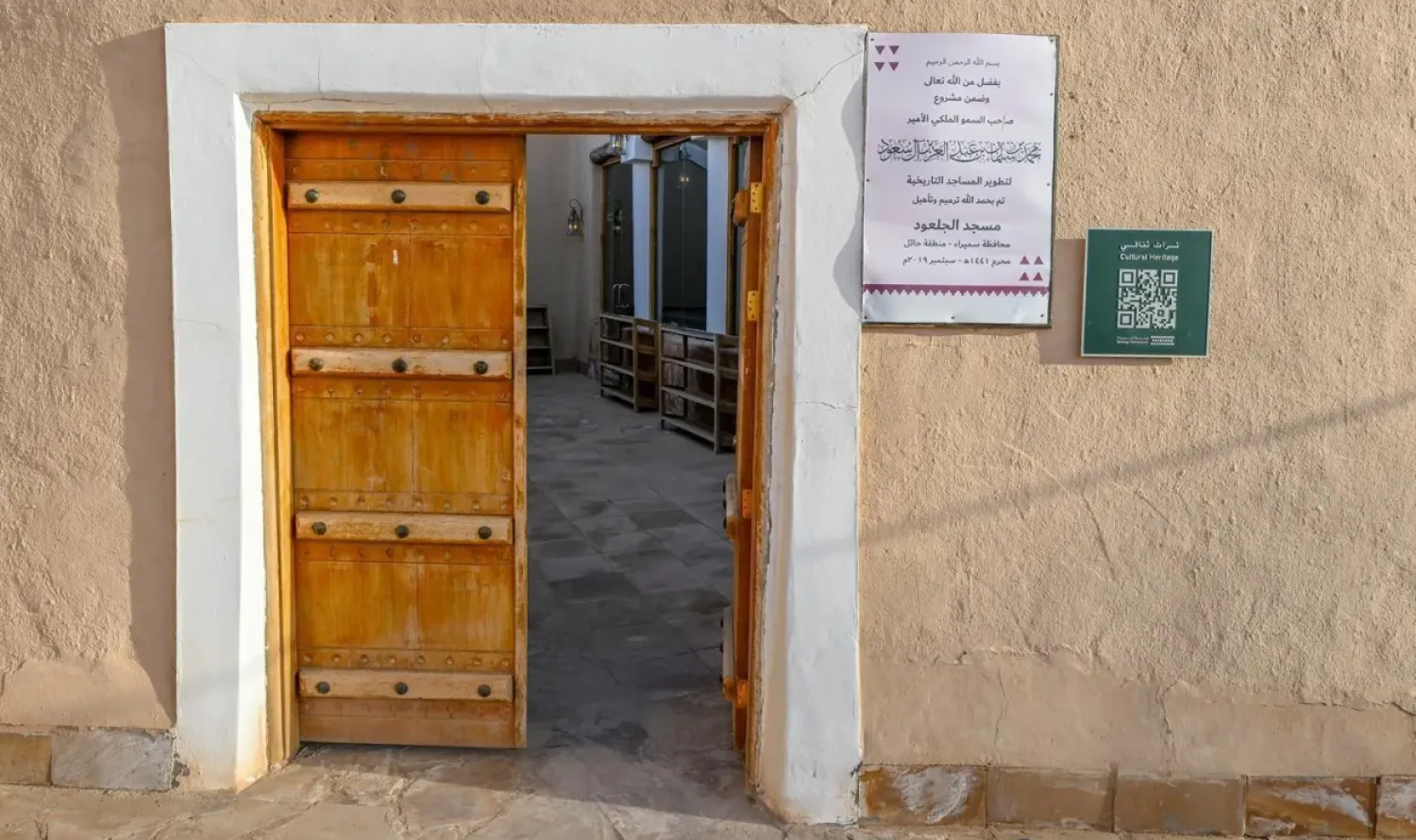


Prince Mohammed bin Salman Project Restores Historical Al-Jaloud Mosque in Hail

​​​​​​​The recent renovation by specialized Saudi firms increased the mosque's capacity from 80 to 129 worshippers and its area to 250 square meters - SPA
TT

Prince Mohammed bin Salman Project Restores Historical Al-Jaloud Mosque in Hail

​​​​​​​The recent renovation by specialized Saudi firms increased the mosque's capacity from 80 to 129 worshippers and its area to 250 square meters - SPA

The Prince Mohammed bin Salman Project for the Development of Historical Mosques has completed the comprehensive restoration of Al-Jaloud Mosque in Hail Region as part of its first phase.

Dating back to 1761 (1175 AH), this 265-year-old landmark in Samira Governorate served as a vital stop on the ancient pilgrimage route between Makkah and Kufa, SPA reported.

Originally constructed from mud, stone, and tamarisk wood, the mosque has undergone several expansions, including a notable 1371 AH project funded by King Saud bin Abdulaziz.

The recent renovation by specialized Saudi firms increased the mosque's capacity from 80 to 129 worshippers and its area to 250 square meters.

By integrating modern building standards with traditional architectural identity, the project fulfills the Saudi Vision 2030 objective of preserving the Kingdom's urban heritage while rehabilitating historical sites for worship.


Saudi Coffee Remains Key Crop and Cultural Treasure during Ramadan

The ministry encourages consumers to choose national coffee products for their nutritional value - SPA
TT

Saudi Coffee Remains Key Crop and Cultural Treasure during Ramadan

The ministry encourages consumers to choose national coffee products for their nutritional value - SPA

The Saudi Ministry of Environment, Water and Agriculture has confirmed that Saudi coffee is a key national agricultural crop and an important cultural legacy, especially during Ramadan.

Coffee cultivation thrives in the southwestern and southern highlands, benefiting from a favorable climate and fertile soil.

Regions such as Jazan, Aseer, Al-Baha, Makkah, and Najran host over 1.3 million productive coffee trees, yielding more than 870 tons of coffee annually, according to SPA.

Jazan leads with over 966,000 trees producing more than 642 tons. Aseer has more than 243,000 trees yielding around 175 tons.

Al-Baha boasts about 72,000 trees; Makkah has over 12,000 trees yielding more than 10 tons; and Najran has over 9,000 trees producing over seven tons.

The ministry encourages consumers to choose national coffee products for their nutritional value, emphasizing that supporting local agriculture promotes farmer livelihoods and enhances food security in line with Saudi Vision 2030 goals.


Red Sea Museum Opens 'Sunken Treasures' Exhibition to Highlight Maritime Heritage

Saudi Arabia, under Vision 2030, is investing in world-class cultural infrastructure that serves both local communities and international visitors. SPA
TT

Red Sea Museum Opens 'Sunken Treasures' Exhibition to Highlight Maritime Heritage

Saudi Arabia, under Vision 2030, is investing in world-class cultural infrastructure that serves both local communities and international visitors. SPA

The Red Sea Museum celebrated the opening of 'Sunken Treasures: The Maritime Heritage of the Red Sea' exhibition on Wednesday in an event that brought together cultural leaders, researchers, and community partners in Historic Jeddah.

The exhibition is now open to the public through May 29.

The opening ceremony featured a panel discussion on maritime heritage and underwater archaeology, bringing together leading experts. The discussion explored the critical processes of discovery, documentation, and conservation that transform submerged cultural heritage into valuable historical knowledge, highlighting collaborative efforts between the Heritage Commission, Historic Jeddah Program, and various archaeological missions working along the Saudi coast of the Red Sea to safeguard this vital heritage for future generations.

Guests then embarked on an exclusive curator-led tour with Director of the Red Sea Museum Eman Zidan, and Co-Director, Saudi-French Archaeological Mission in Farasan Dr. Solène Marion de Procé, who guided visitors through the exhibition's thematic sections exploring how shipwrecks became archives of history and eventually transformed into living coral reefs.

The museum exemplifies how historic artifacts and contemporary cultural conservation work hand in hand. SPA

The evening concluded with a Ramadan reception, reflecting the museum's commitment to creating cultural programming that honors the spirit of the holy month while celebrating the launch of this significant exhibition.

The opening of Sunken Treasures represents a significant moment for the Red Sea Museum as Saudi Arabia's first institution dedicated specifically to the Red Sea's maritime history, cultural heritage, and biodiversity.

Housed in the restored Bab Al Bunt building, a structure that has welcomed travelers arriving by sea for generations, the museum exemplifies how historic artifacts and contemporary cultural conservation work hand in hand.

Saudi Arabia, under Vision 2030, is investing in world-class cultural infrastructure that serves both local communities and international visitors while positioning the Kingdom as a global leader in museum innovation, research, and public engagement.