


Louvre Abu Dhabi Reveals Jury Panel, Shortlisted Artists for Art Here 2024 and Richard Mille Art Prize

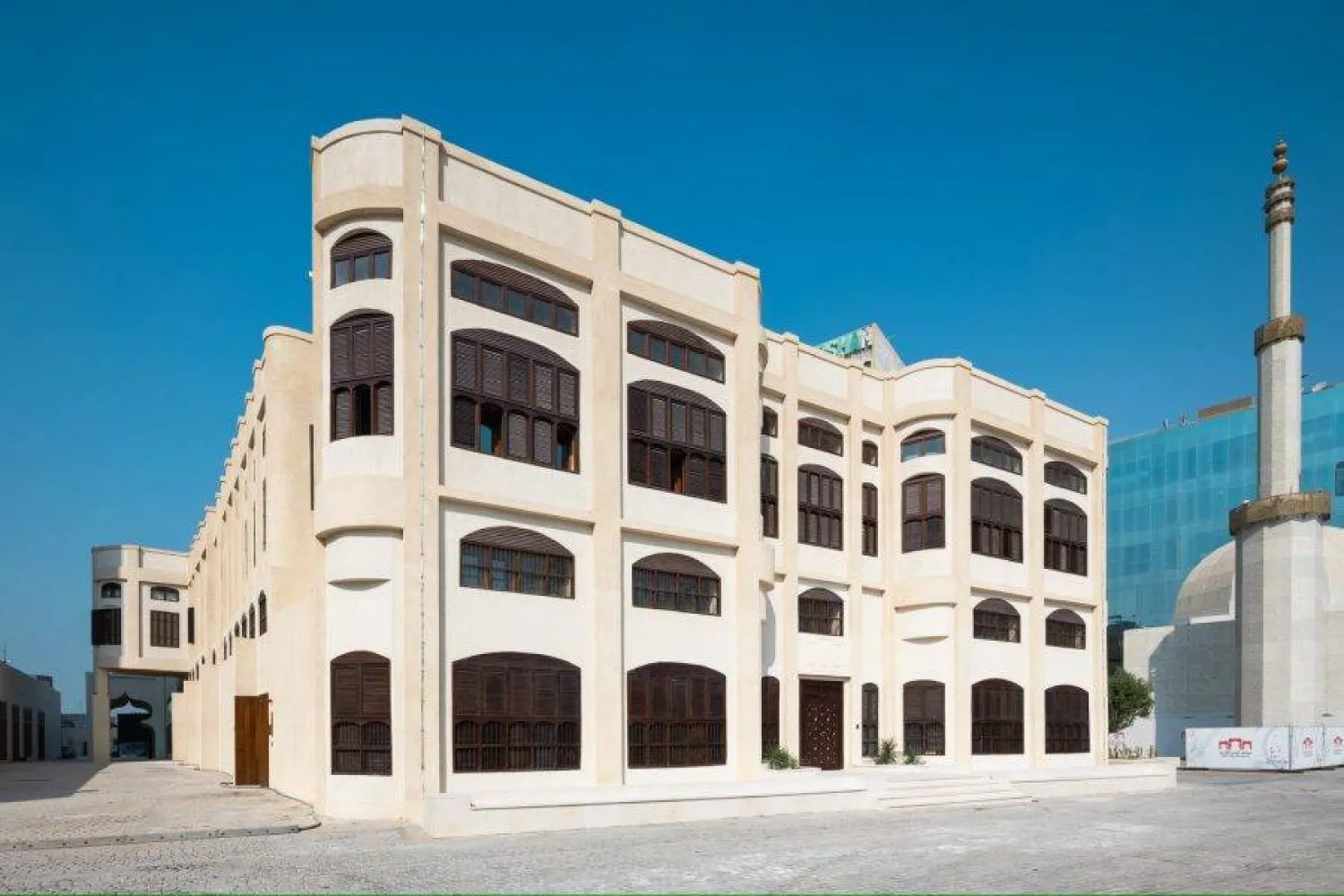
The Louvre museum in Abu Dhabi. Reuters
TT

Louvre Abu Dhabi Reveals Jury Panel, Shortlisted Artists for Art Here 2024 and Richard Mille Art Prize

The Louvre museum in Abu Dhabi. Reuters

Louvre Abu Dhabi and Swiss watchmaking brand Richard Mille have announced the jury and shortlisted artists for the fourth edition of the much-anticipated annual exhibition and competition, Art Here 2024 and the Richard Mille Art Prize, Emirates News Agency (WAM) reported Thursday.

The jury for this year’s edition, now expanded to include North Africa alongside the GCC, comprises distinguished members from diverse backgrounds in the cultural world, each bringing a unique perspective to the selection process, WAM said.

Returning to the jury are Sheikh Zayed bin Sultan bin Khalifa Al Nahyan, Adviser to the Ministry of Foreign Affairs (MoFA), Founder and Chairman of the satellite art platform ‘UAE Unlimited’, a prominent patron and collector of the arts and a board member of the British Museum and Centre Pompidou for the acquisition of Middle Eastern Art, in addition to Guilhem André, Scientific Curatorial and Collection Management Director at Louvre Abu Dhabi, a seasoned museum professional, and art historian.

New jury members include Simon Njami, independent curator, lecturer, art critic and novelist; Nujoom Alghanem, a renowned Emirati poet, artist and multi-award-winning film director; and Maya Allison, Founding Director of the Art Gallery and Chief Curator at New York University Abu Dhabi.

This year, Louvre Abu Dhabi and guest curator, Simon Njami, invited artists to respond to the theme Awakenings. The shortlisted artists are tasked with translating the concept of openness into visual forms. Openness signifies beginnings where possibilities are available at any given moment and implies the choices and decisions that lead to the direction one chooses to follow. The shortlisted artists will produce sculptures or audiovisual installations that address questions of today and the near future. Produced artworks will be showcased at the museum from September 20 to December 15.

Director of Louvre Abu Dhabi Manuel Rabaté said the collaboration with Richard Mille for the fourth year “enables the museum to continuously innovate and present new, creative themes, such as Awakenings, inviting artists to engage in and translate the concept of openness into visual forms.”

“Notably, for the first time, our open call extended to North Africa, underscoring our dedication to expanding to new geographies, and we are happy to produce and display the artworks of five shortlisted artists. This initiative reaffirms our commitment to enriching the region’s cultural ecosystem and our mission to narrate stories from diverse cultures around the globe.”

This year's edition has attracted submissions from a wide array of talent residing across the UAE, GCC, North Africa, and beyond. Works by five exceptional artists from the UAE, Tunisia and Egypt, have been shortlisted from 230 total submissions to be featured in the 2024 Art Here exhibition, each bringing unique perspectives and artistic practices. These artists' works will be showcased at Louvre Abu Dhabi from September 20, each competing for the prestigious Richard Mille Art Prize and its accompanying $60,000 cash award, WAM said.



Jazan Festival 2026 Kicks Off Thursday with Grand Parade

his year’s festival offers an unprecedented experience that brings together the charm of the region’s unique geographic diversity - SPA
TT

Jazan Festival 2026 Kicks Off Thursday with Grand Parade

his year’s festival offers an unprecedented experience that brings together the charm of the region’s unique geographic diversity - SPA

The Jazan Festival 2026 will launch on Thursday in a carnival anticipated by thousands of visitors from within the region and beyond.

The festival will open with a grand celebratory parade starting at 3:45 p.m. along the Jazan city waterfront, signaling the start of an entertainment and cultural season that will extend for several months, according to SPA.

This year’s festival offers an unprecedented experience that brings together the charm of the region’s unique geographic diversity, from its towering green mountains and golden beaches to its picturesque islands, alongside the authenticity of its rich heritage, complemented by modern touches in entertainment programs designed to meet the aspirations of all age groups.

Performing arts inspired by local folklore will add an authentic dimension, while moving installations will flow in harmonious rhythm.

Completing the visual spectacle, integrated light and sound shows will create an enchanting atmosphere before the festivities conclude with a dazzling fireworks display lighting up the Jazan sky in vibrant colors.


UNESCO Chair in Translating Cultures Hosts Lectures on Safeguarding Intangible Cultural Heritage

The program was presented as an advanced knowledge initiative that combined theoretical perspectives with practical application - SPA
TT

UNESCO Chair in Translating Cultures Hosts Lectures on Safeguarding Intangible Cultural Heritage

The program was presented as an advanced knowledge initiative that combined theoretical perspectives with practical application - SPA

The United Nations Educational, Scientific and Cultural Organization (UNESCO) Chair in Translating Cultures at the King Faisal Center for Research and Islamic Studies (KFCRIS), with support from the Literature, Publishing, and Translation Commission, organized a training course and a series of specialized lectures on the translation and safeguarding of intangible cultural heritage, SPA reported.

The program was presented as an advanced knowledge initiative that combined theoretical perspectives with practical application, opening space for in-depth discussion of the challenges of translating intangible heritage as a living, evolving form of culture closely tied to its cultural, social, and performative contexts.

The course and lectures adopted a comprehensive approach that views translation as a cultural tool for preserving oral memory and building bridges between local specificity and the global sphere.

This approach was reflected through applied models, field experiences, and contemporary conceptual frameworks.


Ancient Egyptian Pharaoh’s Boat Is Being Reassembled in Public at Grand Egyptian Museum

People walk next to King Khufu's boat gem, also known as the Solar Boat, as work to restore the second solar boat has started with wooden planks part of the 1,650-piece structure being installed on a metal frame through Egyptian-Japanese cooperation with two Japanese universities, marking the start of preparations for the second boat's public display at the Grand Egyptian Museum (GEM), near the Giza Pyramid Complex, in Giza, Egypt, December 23, 2025.
TT

Ancient Egyptian Pharaoh’s Boat Is Being Reassembled in Public at Grand Egyptian Museum

People walk next to King Khufu's boat gem, also known as the Solar Boat, as work to restore the second solar boat has started with wooden planks part of the 1,650-piece structure being installed on a metal frame through Egyptian-Japanese cooperation with two Japanese universities, marking the start of preparations for the second boat's public display at the Grand Egyptian Museum (GEM), near the Giza Pyramid Complex, in Giza, Egypt, December 23, 2025.

A boat belonging to an Egyptian pharaoh is being assembled in full view at the Grand Egyptian Museum’s exhibition hall.

Staff began piecing together the cedarwood boat, one of two that were found that belong to King Khufu, Tuesday morning as dozens of visitors watched.

The assembly of the 42-meter (137-foot) -long vessel, which sits next to its already-assembled twin that has been on display, is expected to take around four years, according to Issa Zeidan, head of restoration at the Grand Egyptian Museum. It contains 1,650 wooden pieces.

King Khufu ruled ancient Egypt more than 4,500 years ago and built the Great Pyramid of Giza.

“You’re witnessing today one of the most important restoration projects in the 21st century,” said Tourism and Antiquities Minister Sherif Fathy, who attended the event.

The $1 billion museum, also known as GEM, was touted as the world’s largest when it was lavishly inaugurated last month. It's home to nearly 50,000 artifacts, including the collection of treasures from the tomb of the famed King Tutankhamun, which was discovered in 1922. The museum, located near the pyramids at the edge of Cairo, is expected to boost Egypt’s tourism revenues and help bolster its economy.

The boat was one of two discovered in 1954, opposite the southern side of the Great Pyramid. The excavation of its wooden parts began in 2014, according to the museum’s website.

The exact purpose of the boats remains unclear, but experts believe they were either used to transport King Khufu’s body during his funeral or were meant to be used for his afterlife journey with the sun god Ra, according to the museum.