Bibliotheca Alexandrina Hosts Seminar on ‘Antiquities in Contemporary Arabic Literature’, Saudi Arabia as a Model

The Bibliotheca Alexandrina organized on Wednesday a seminar titled “Antiquities in Contemporary Arabic Literature: The Kingdom of Saudi Arabia as a Model”.
TT

Bibliotheca Alexandrina Hosts Seminar on ‘Antiquities in Contemporary Arabic Literature’, Saudi Arabia as a Model

The Bibliotheca Alexandrina organized on Wednesday a seminar titled “Antiquities in Contemporary Arabic Literature: The Kingdom of Saudi Arabia as a Model”.

The Bibliotheca Alexandrina organized on Wednesday, as part of its international book fair, a seminar titled “Antiquities in Contemporary Arabic Literature: The Kingdom of Saudi Arabia as a Model”.
The seminar featured Saudi poet Ibrahim Al-Juraifani and Egyptian archaeologist and Director of the Antiquities Museum at the Bibliotheca Alexandrina Dr. Hussein Abdel Basir, the Saudi Press Agency said.
During the seminar, Dr. Abdel Basir emphasized the importance of preserving antiquities and documenting archaeological sites in the Arab world, praising Saudi Arabia's comprehensive progress in tourism, culture, museums, and antiquities.
He noted that poetry collections incorporating antiquities in their verses represent a significant addition to the worlds of poetry, literature, and antiquities in the Arab world.
Al-Juraifani indicated that the Kingdom pays great attention to antiquities, noting that the Saudi Vision 2030 makes antiquities a key focus for documenting and recording sites through international organizations.


Head of France's Versailles Palace Takes over Louvre

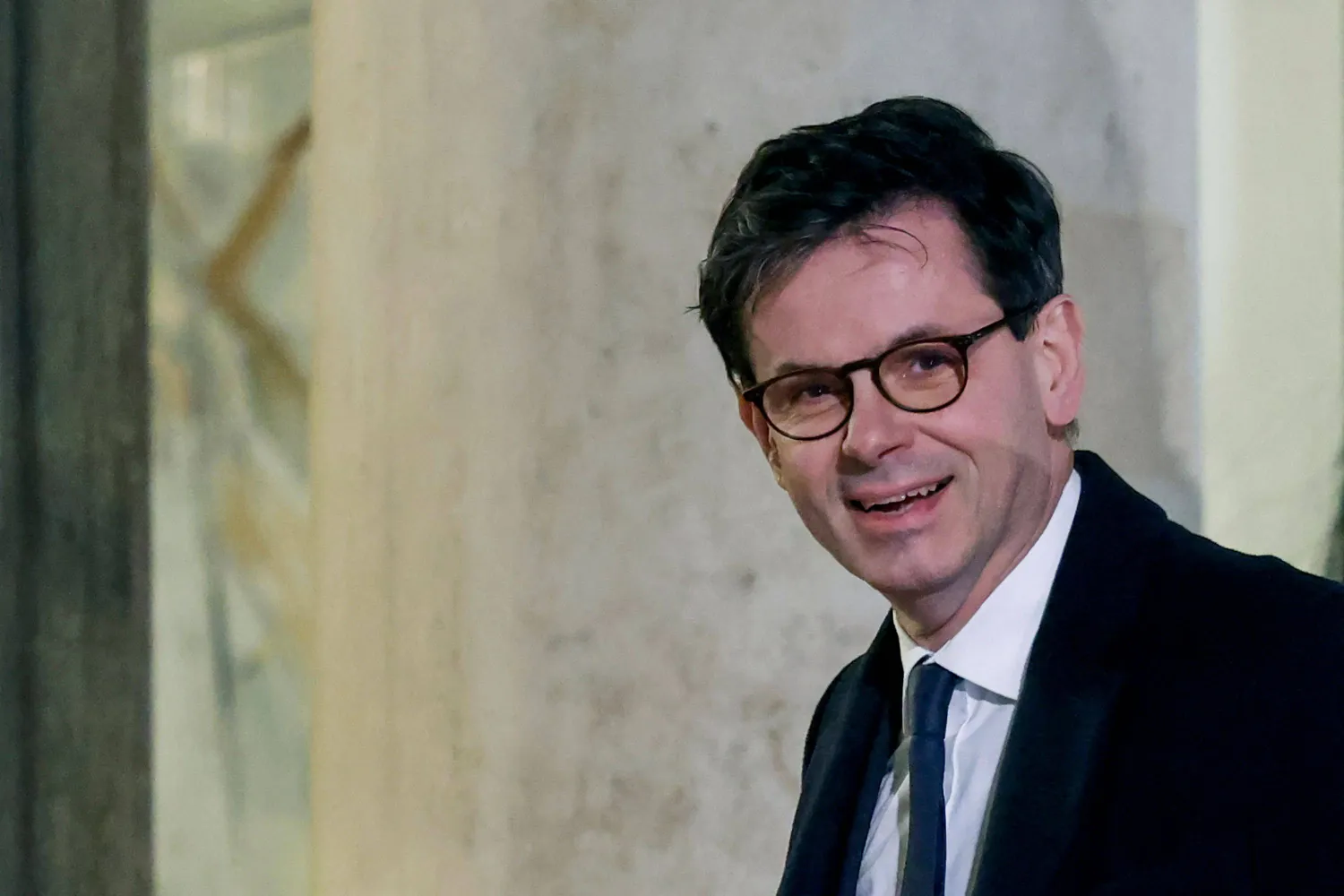
(FILES) President of Chateau de Versailles Christophe Leribault arrives at the Elysee Palace, in Paris on February 27, 2024. (Photo by Ludovic MARIN / AFP)
TT

Head of France's Versailles Palace Takes over Louvre

(FILES) President of Chateau de Versailles Christophe Leribault arrives at the Elysee Palace, in Paris on February 27, 2024. (Photo by Ludovic MARIN / AFP)

French President Emmanuel Macron has appointed Christophe Leribault, the ⁠current head of the ⁠Versailles Palace, as ⁠director of the Louvre museum in Paris, the French government spokesperson said ⁠on ⁠Wednesday. 

The appointment came following the resignation of Laurence des Cars after a $100-million robbery at the museum last year.

Leribault, 62, is an art historian and museum director specializing in 18th century art. He has led major Paris institutions, including the Petit Palais, and the Musee d'Orsay.

In 2024, he was appointed president of the Palace of Versailles, one of the most visited tourist sites.

On Tuesday, des Cars sent her resignation to Macron, which was accepted, following a string of scandals including the brazen theft of French crown jewels valued at $100 million in October.

Des Cars was appointed as director of the Louvre Museum in 2021. She had been under rising pressure since the October robbery, which is currently the subject of an inquiry.

Four suspects are in police custody, including the two suspected thieves, but the eight of the stolen items have not been found.

The Louvre, a former royal palace and home to some of the world's most iconic pieces of art, including Leonardo Da Vinci's "Mona Lisa", receives around nine million visitors a year.

Since the theft the museum has taken several emergency measures.

Separately, Annick Lemoine, who heads the Petit Palais, will take over as director of the Musee d'Orsay, according to the official journal published on Wednesday.


One Million Works Catalogued in Art UK Database

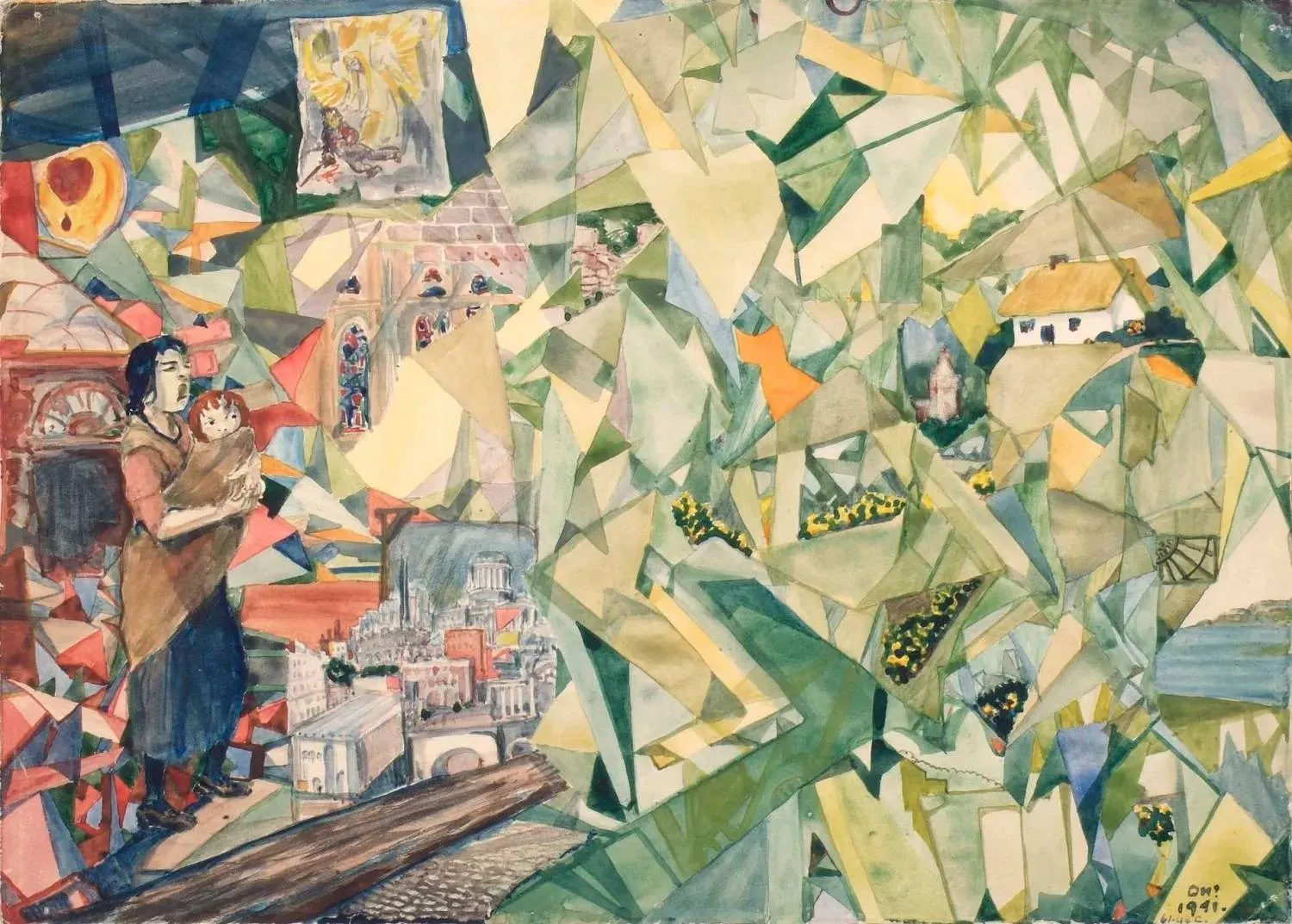
Osborne Henry Mavor’s “Let Eric Remember” from Aberdeen Art Gallery. (Aberdeen archives, gallery & museums/Art UK)
TT

One Million Works Catalogued in Art UK Database

Osborne Henry Mavor’s “Let Eric Remember” from Aberdeen Art Gallery. (Aberdeen archives, gallery & museums/Art UK)

From a bronze Rodin sculpture of Eve outside a Nando’s in Harlow to more than 6,000 artworks by JMW Turner, to a crumpled-up piece of A4 paper owned by Manchester Art Gallery, the UK’s public art collection is a wonderful and varied thing.

It is huge, as demonstrated by the charity Art UK, which has announced it has reached a million artworks on its database and appointed a new chair who said: “We’ve only scratched the surface,” according to The Guardian.

Ben Terrett, a former director of design for the UK government, has been announced as the new chair of a charity that is celebrating its 10th anniversary.

Art UK began with a mission to digitally catalogue the UK’s paintings. Over the years that has been expanded to include drawings, watercolors, ceramics, sculptures, stained glass, banners, architectural drawings and street murals.

It is a huge, encyclopedic, fun resource, which lends itself to going down any number of rabbit holes. Type in the word “mosquito”, for example, and you discover 53 listings, from large technical drawings of actual mosquitoes, to paintings of de Havilland Mosquito planes from the second world war, to a sculpture in a North Yorkshire forest celebrating the Women’s Timber Corps – lumberjills – who felled and sawed the wood used to make the planes.

Or search Martin Creed, the artist who won the Turner prize for a work where the lights in a room go on and off, and you find 24 of his works in public collections, including his crumpled-up ball of paper in Manchester.

The database is an incredible resource that should be so much better known, Terrett said. “It’s a great thing,” he said. “It is one of those ideas that you’re really glad it exists because if it didn’t, you’d think somebody should do that.

“One of my jobs as chair is to help raise that profile, because probably not enough people hear about it. It’s digitizing all the public artworks in the UK and there’s a really obvious side to that, which is the Tate and places like that,” he added.

“But there’s loads of other places like hospitals and council buildings ... places like that are public and have incredible artworks in them that people don’t get to see or don’t know exist,” he noted.

The database, Terrett said, shines light on just how many artworks are never seen because they are in storage.

Terrett, who was made a CBE by the king last week, led the design team that launched gov.uk and is the CEO and co-founder of the consultancy Public Digital.

He said his childhood experiences had fed his passion for widening access to the arts and design.

“I grew up in a small village in Wiltshire,” he said. “There weren’t museums, there weren’t art galleries and getting access to that kind of stuff was really difficult. I went to a comprehensive school with a great art teacher and a great art department, but you very much had to push yourself to find out more about this stuff.”

He believes it is even harder for children today: “Creative education in state schools has been decimated.”

There is also evidence that interacting with the database encourages people to visit galleries in person.

Recent additions to the database, which helped it towards the million figure, include a 1951 stencil by Henri Matisse at the University of Lancaster; a Gwen John flower painting at National Museum Cardiff; a Venice canal painting by Mary Hagarty at the Victoria Art Gallery in Bath; and a portrait titled “Reverie” by David Foggie at the University of Dundee.

The board of Art UK said it was looking forward to Terrett’s fresh thinking and insights to help it “reach new audiences, embrace new technologies and creative opportunities, build its income base, its international profile and its following.”

Terrett said he remained convinced the internet was a force for good. “It’s hard to believe that these days. It’s hard to hold on to that belief. But it still is. I think in the world it’s still a net positive. And this is just a really nice example of where the internet really is doing good,” he added.



Louvre Museum’s Director Resigns in Wake of Jewels Heist in Paris

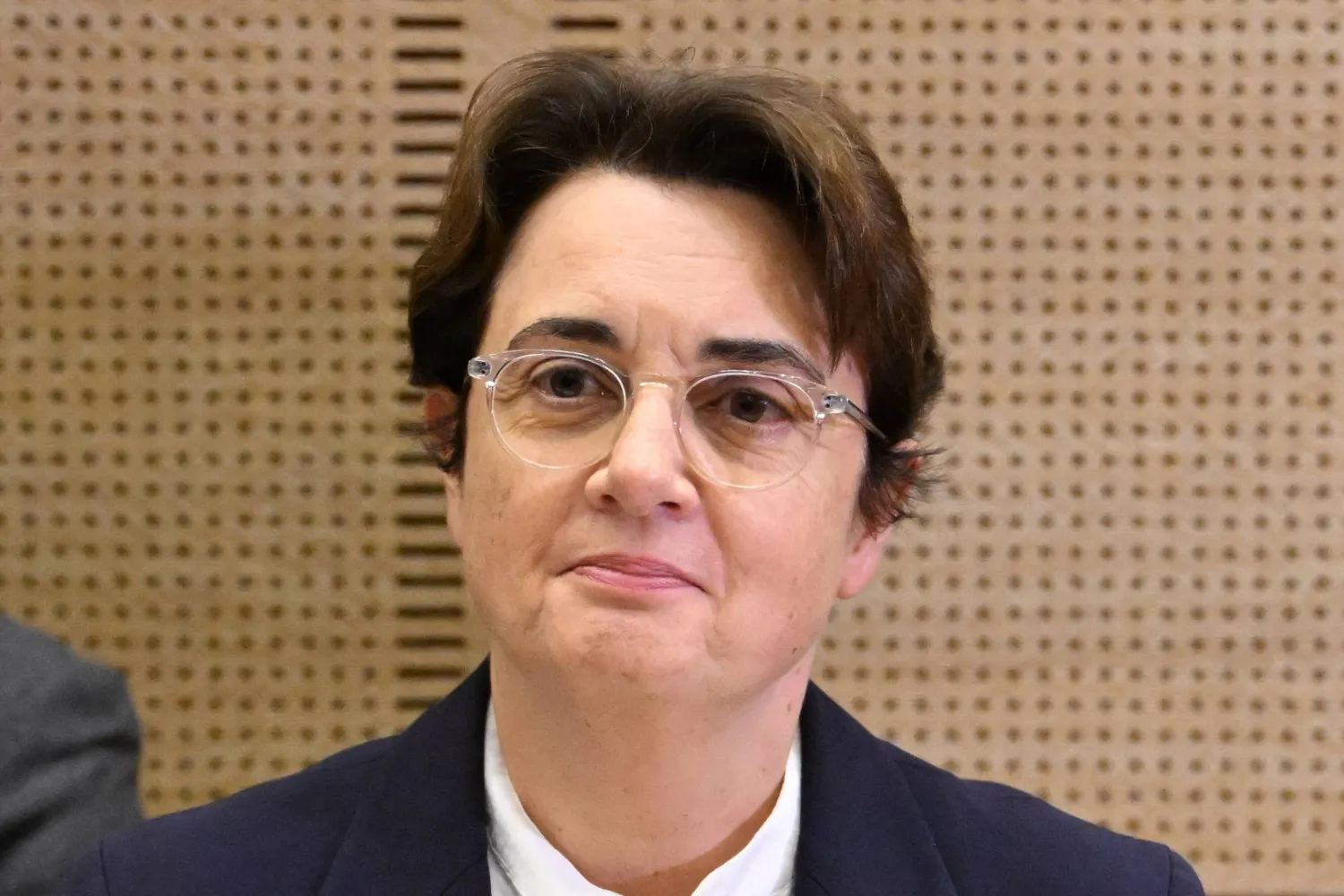
Laurence des Cars, director of Le Louvre museum, poses before a hearing at the Culture commission of the Senate, three days after historic jewels were stolen in a daring daylight heist, Oct. 22, 2025 in Paris. (AP)
TT

Louvre Museum’s Director Resigns in Wake of Jewels Heist in Paris

Laurence des Cars, director of Le Louvre museum, poses before a hearing at the Culture commission of the Senate, three days after historic jewels were stolen in a daring daylight heist, Oct. 22, 2025 in Paris. (AP)

The director of the Louvre Museum who had been under fire since the stunning and embarrassing heist of the French Crown jewels in October has stepped down from the position, French President Emmanuel Macron ’s office said Tuesday.

The office said in a statement that Macron accepted the resignation of Laurence des Cars, and that he praised the move as “an act of responsibility at a time when the world’s largest museum needs calm and a strong new impetus to carry out major projects involving security upgrades, modernization” and other initiatives.

Thieves took less than eight minutes in October to steal 88 million euros ($102 million) worth of crown jewels in a weekend heist at the world’s most visited museum, shocking the world.

Des Cars was named director of the Louvre, one of the museum world's most prestigious posts, in 2021.

She had offered to resign on the day of the robbery but was refused by the culture minister.

“I saw a tragic, brutal, violent reality for the Louvre, and as the person in charge, after all the hard work done by the teams that day — it felt right to offer my resignation,” she said in November.

Macron thanked des Cars for “her work and commitment” and said he wanted to give her a new mission focused on cooperation among major museums, the statement said.

It didn't say if she accepted.