


One Million Works Catalogued in Art UK Database

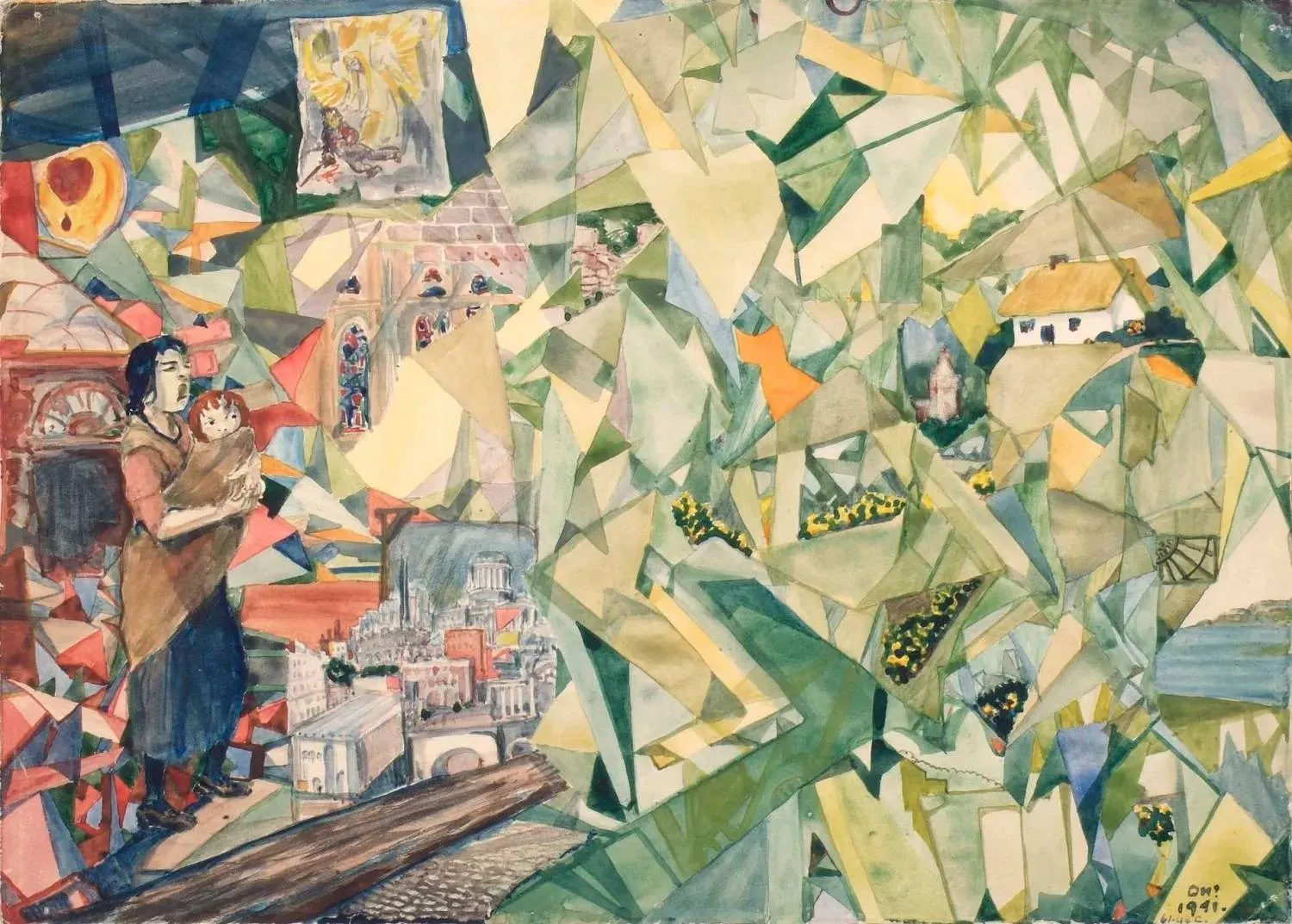
Osborne Henry Mavor’s “Let Eric Remember” from Aberdeen Art Gallery. (Aberdeen archives, gallery & museums/Art UK)
TT

One Million Works Catalogued in Art UK Database

Osborne Henry Mavor’s “Let Eric Remember” from Aberdeen Art Gallery. (Aberdeen archives, gallery & museums/Art UK)

From a bronze Rodin sculpture of Eve outside a Nando’s in Harlow to more than 6,000 artworks by JMW Turner, to a crumpled-up piece of A4 paper owned by Manchester Art Gallery, the UK’s public art collection is a wonderful and varied thing.

It is huge, as demonstrated by the charity Art UK, which has announced it has reached a million artworks on its database and appointed a new chair who said: “We’ve only scratched the surface,” according to The Guardian.

Ben Terrett, a former director of design for the UK government, has been announced as the new chair of a charity that is celebrating its 10th anniversary.

Art UK began with a mission to digitally catalogue the UK’s paintings. Over the years that has been expanded to include drawings, watercolors, ceramics, sculptures, stained glass, banners, architectural drawings and street murals.

It is a huge, encyclopedic, fun resource, which lends itself to going down any number of rabbit holes. Type in the word “mosquito”, for example, and you discover 53 listings, from large technical drawings of actual mosquitoes, to paintings of de Havilland Mosquito planes from the second world war, to a sculpture in a North Yorkshire forest celebrating the Women’s Timber Corps – lumberjills – who felled and sawed the wood used to make the planes.

Or search Martin Creed, the artist who won the Turner prize for a work where the lights in a room go on and off, and you find 24 of his works in public collections, including his crumpled-up ball of paper in Manchester.

The database is an incredible resource that should be so much better known, Terrett said. “It’s a great thing,” he said. “It is one of those ideas that you’re really glad it exists because if it didn’t, you’d think somebody should do that.

“One of my jobs as chair is to help raise that profile, because probably not enough people hear about it. It’s digitizing all the public artworks in the UK and there’s a really obvious side to that, which is the Tate and places like that,” he added.

“But there’s loads of other places like hospitals and council buildings ... places like that are public and have incredible artworks in them that people don’t get to see or don’t know exist,” he noted.

The database, Terrett said, shines light on just how many artworks are never seen because they are in storage.

Terrett, who was made a CBE by the king last week, led the design team that launched gov.uk and is the CEO and co-founder of the consultancy Public Digital.

He said his childhood experiences had fed his passion for widening access to the arts and design.

“I grew up in a small village in Wiltshire,” he said. “There weren’t museums, there weren’t art galleries and getting access to that kind of stuff was really difficult. I went to a comprehensive school with a great art teacher and a great art department, but you very much had to push yourself to find out more about this stuff.”

He believes it is even harder for children today: “Creative education in state schools has been decimated.”

There is also evidence that interacting with the database encourages people to visit galleries in person.

Recent additions to the database, which helped it towards the million figure, include a 1951 stencil by Henri Matisse at the University of Lancaster; a Gwen John flower painting at National Museum Cardiff; a Venice canal painting by Mary Hagarty at the Victoria Art Gallery in Bath; and a portrait titled “Reverie” by David Foggie at the University of Dundee.

The board of Art UK said it was looking forward to Terrett’s fresh thinking and insights to help it “reach new audiences, embrace new technologies and creative opportunities, build its income base, its international profile and its following.”

Terrett said he remained convinced the internet was a force for good. “It’s hard to believe that these days. It’s hard to hold on to that belief. But it still is. I think in the world it’s still a net positive. And this is just a really nice example of where the internet really is doing good,” he added.



Red Sea Fund Launches Second Round to Support Film Projects in Production Stage

File photo of the fifth day of the Red Sea International Film Festival - SPA
TT

Red Sea Fund Launches Second Round to Support Film Projects in Production Stage

File photo of the fifth day of the Red Sea International Film Festival - SPA

The Red Sea Fund, affiliated with the Red Sea Film Foundation, announced the opening of applications to support film projects in the production stage within the second round of this year’s support program, which will continue until March 21, as part of its efforts to enhance the cinema industry and empower innovators in the region, SPA reported.

The round aims to support promising cinematic voices from the Kingdom and the Arab world, as well as filmmakers from Africa and Asia, through financial grants that help complete film projects and present their creative narratives globally, with a special focus on projects ready to enter production and begin filming.


Prince Mohammed bin Salman Project Restores Historic Al-Jami' Mosque in Tabuk Region

The renovation utilized modern technologies to restore the mosque's original identity - SPA
TT

Prince Mohammed bin Salman Project Restores Historic Al-Jami' Mosque in Tabuk Region

The renovation utilized modern technologies to restore the mosque's original identity - SPA

The Prince Mohammed bin Salman Project for the Development of Historical Mosques has completed the restoration of Al-Jami' Mosque in Duba, Tabuk Region, as part of its mission to preserve the Kingdom's architectural heritage under Vision 2030.

As one of Duba’s oldest landmarks, the mosque is deeply intertwined with the city’s maritime history, traditionally serving as a central meeting point for sailors. Throughout its history, the mosque underwent several construction phases, including significant contributions by King Abdulaziz and King Fahd, before its selection for the current national development project, SPA reported.

The renovation utilized modern technologies to restore the mosque's original identity, increasing its area to 972.23 square meters and its capacity to 779 worshippers. The architectural style is inspired by traditional Red Sea heritage, incorporating natural materials like stone, mud, and wood for intricate mashrabiyas.

Executed by specialized Saudi firms, the project balances traditional standards with sustainability to rehabilitate the site for worship while highlighting its cultural significance. By restoring such landmarks, the project ensures the preservation of the Kingdom’s diverse architectural and social memory for future generations.


Leading Portraiture Competition Celebrates Saudi Heritage Through Art

Throughout its history, the award has emphasized themes rooted in Saudi heritage and national initiatives - SPA
TT

Leading Portraiture Competition Celebrates Saudi Heritage Through Art

Throughout its history, the award has emphasized themes rooted in Saudi heritage and national initiatives - SPA

The Dia Aziz Dia Award for Portrait, hosted by the Saudi Arabian Society for Culture and Arts in Jeddah, is a leading platform for portraiture and the only competition of its kind in the Middle East. It fosters national identity through contemporary art, connecting veteran and emerging artists.

Throughout its history, the award has emphasized themes rooted in Saudi heritage and national initiatives, including Saudi women, the Arabian horse, the Saudi Green Initiative, and King Abdulaziz.

These themes highlight art's role in reflecting social transformations and contributing to the cultural goals of Saudi Vision 2030, SPA reported.

The current ninth edition, with a theme focused on King Salman, invited artists to depict the leadership and humanity of the Custodian of the Two Holy Mosques. This edition attracted significant participation, with 787 submissions from 42 cities, including international entries.

Of these, 61 works were shortlisted for the final competition, with prizes totaling SAR170,000 awarded to three main winners and seven incentive recipients.