Saudi Arabia Designates 2025 as the Year of Handicrafts to Celebrate Its Vibrant Cultural Heritage

The year dedicated to preserving and documenting traditional Saudi handicrafts and strengthening their international presence (Ministry of Culture)
TT

Saudi Arabia Designates 2025 as the Year of Handicrafts to Celebrate Its Vibrant Cultural Heritage

The year dedicated to preserving and documenting traditional Saudi handicrafts and strengthening their international presence (Ministry of Culture)

Handicrafts have long held a special place in Saudi Arabia’s cultural fabric, representing a prosperous heritage passed down through generations. Rooted in the creativity and skill of Saudi artisans, these traditional crafts symbolize the nation’s ingenuity and resilience while highlighting its diverse cultural identity.
Throughout 2025, the Saudi Ministry of Culture will organize an array of events, exhibitions, educational programs, and exciting competitions under the banner of the "Year of Handicrafts." These activities aim to emphasize the cultural and historical significance of handicrafts while supporting their relevance in modern life, said the Saudi Press Agency on Wednesday.
By highlighting artisanry across various sectors, the initiative seeks to foster appreciation for traditional arts and encourage their continued practice and preservation.
Handicrafts, including palm weaving, metalwork, and pottery, serve as enduring symbols of Saudi culture, blending tradition with modernity. These crafts are not only an artistic expression but also a reflection of the Kingdom’s history, values, and adaptability. By celebrating these art forms, the Year of Handicrafts aims to inspire new generations to engage with their heritage and highlight the talent of Saudi artisans to local and global audiences.
The initiative also seeks to empower artisans by enhancing opportunities for their crafts in contemporary markets and strengthening their connection with the global community. Through partnerships across the public, private, and non-profit sectors, the Year of Handicrafts will cultivate sustainable practices, foster innovation, and contribute to cultural dialogue.
As a testament to the Ministry of Culture’s commitment to safeguarding Saudi Arabia’s heritage, the Year of Handicrafts provides a platform to celebrate the stories, skills, and traditions that form the foundation of the Kingdom’s cultural identity.



Tomb More Than 1,000 Years Old Found in Panama

This handout picture released by Panama’s Ministry of Culture shows an archaeologist working inside a pre-Hispanic tomb approximately 1,200 years old, discovered at the El Cano Archaeological Park in Cocle, Panama, on February 20, 2026. (Handout / Panama’s Ministry of Culture / AFP)
TT

Tomb More Than 1,000 Years Old Found in Panama

This handout picture released by Panama’s Ministry of Culture shows an archaeologist working inside a pre-Hispanic tomb approximately 1,200 years old, discovered at the El Cano Archaeological Park in Cocle, Panama, on February 20, 2026. (Handout / Panama’s Ministry of Culture / AFP)

Archaeologists have discovered a tomb more than a thousand years old in Panama containing human remains alongside gold and ceramic artifacts, the lead researcher told AFP on Friday.

The discovery was made at the El Cano site in the Nata district about 200 kilometers (124 miles) southwest of Panama City.

Scientists and archaeologists have already unearthed other remains of pre-Hispanic cultures in the region that has been excavated for two decades.

The skeletal remains were found surrounded by gold objects and pottery decorated with traditional motifs, pointing to these being "high-ranking" individuals, archaeologist Julia Mayo told AFP, adding that the tomb was built between 800 and 1000 AD.

"The individual with the gold was the one with the highest social status in the group," she said.

That body was found with two bracelets, two earrings, and pectoral jewelry that featured bats and crocodiles, she added.

The El Cano archaeological site is linked to the societies that inhabited the central provinces of Panama between the 8th and 11th centuries.

"This is where they buried their dead for 200 years," said Mayo.

Nine other tombs "similar" to the one found on Friday had already been found at the site, she added.

Panama's Ministry of Culture said the discovery was "of great importance for Panamanian archaeology and the study of pre-Hispanic societies of the Central American isthmus," referring to the land that connects North and South America.

According to experts, these excavations demonstrate that death did not represent an end for these societies, but a transition to another phase where social status remained important.


When in Rome: Budapest Pizzeria Offers Time-Travel Twist with Ancient Rome-Inspired Pie

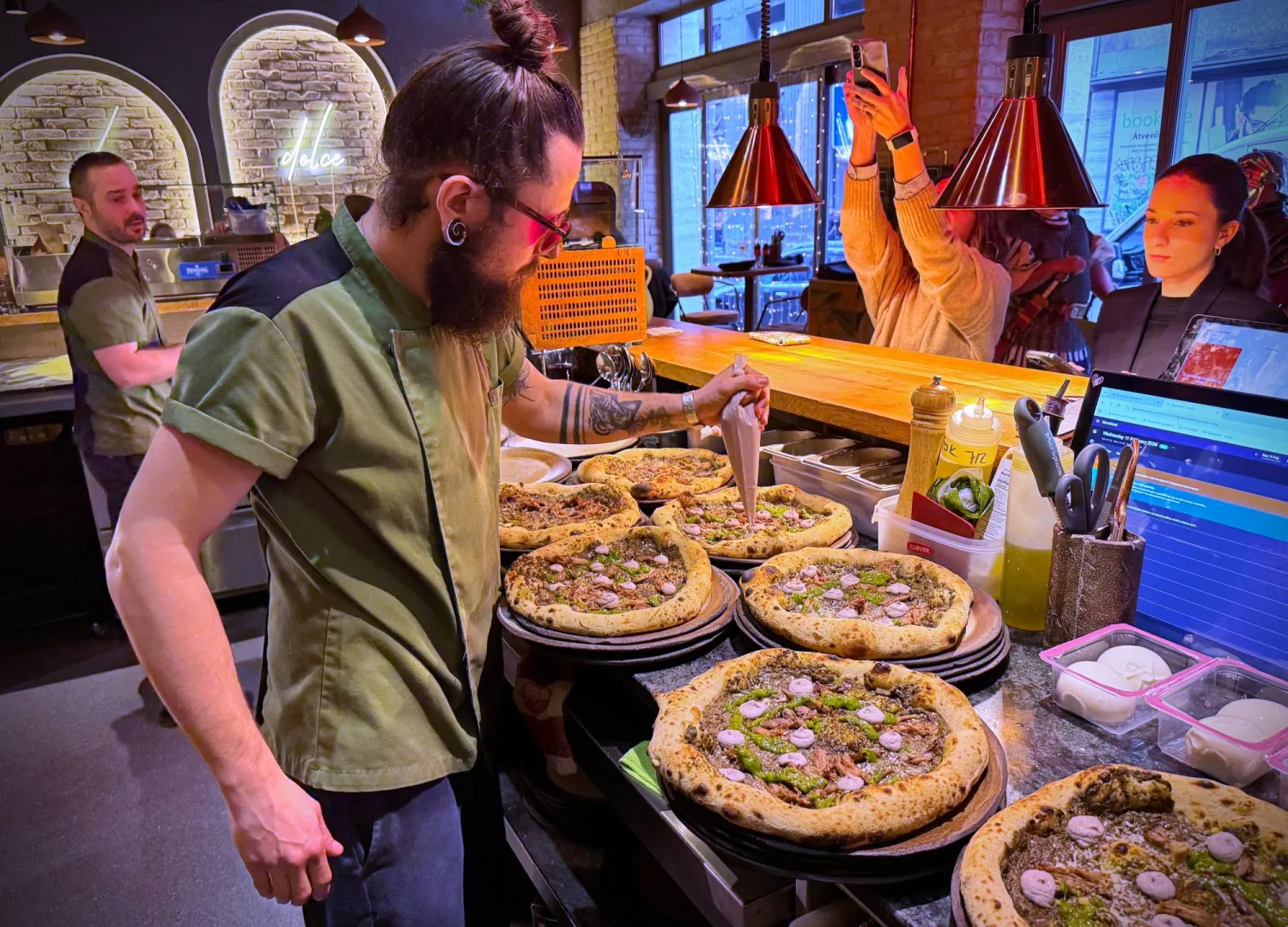
László Bárdossy, head chef of the Neverland Pizzeria adds topping on the restaurant's Roman-era pizza in Budapest, Hungary, on Feb. 11, 2026. (AP)
TT

When in Rome: Budapest Pizzeria Offers Time-Travel Twist with Ancient Rome-Inspired Pie

László Bárdossy, head chef of the Neverland Pizzeria adds topping on the restaurant's Roman-era pizza in Budapest, Hungary, on Feb. 11, 2026. (AP)

In Hungary’s capital, a city best known for its goulash, a pizzeria is inviting diners to travel back two millennia to a time before tomatoes, mozzarella or even the word “pizza” were known in Europe.

At Neverland Pizzeria in central Budapest, founder Josep Zara and his team have created a limited-edition pie using only ingredients that would have been available in ancient Rome, long before what we know today as pizza ever existed.

“Curiosity drove us to ask what pizza might have been like long ago,” Zara said. “We went all the way back to the Roman Empire and wondered whether they even ate pizza at the time.”

Strictly speaking, they did not. Tomatoes arrived in Europe centuries later from the Americas, and mozzarella was as yet unknown. Some histories have it that the discovery of mozzarella led directly to the invention of pizza in Naples in the 1700s.

But Romans did eat oven-baked flatbreads topped with herbs, cheeses and sauces, the direct ancestors of modern pizza, which were often sold in ancient Roman snack bars called thermopolia.

In 2023, archaeologists uncovered a fresco in Pompeii depicting a focaccia-like flatbread topped with what appear to be pomegranate seeds, dates, spices and a pesto-like spread. The image made headlines around the world, and sparked Zara’s imagination.

“That made me very curious about what kind of flavor this food might have had,” he said. “That’s where we got the idea to create a pizza that people might have eaten in the Roman Empire, using only ingredients that were in wide use at the time.”

Zara began researching Roman culinary history, consulting a historian in Germany as well as the ancient cookbook De re coquinaria, thought to have been authored around the 5th century. Following his research, he compiled a list of historically documented ingredients to present to the pizzeria's head chef.

“We sat down to imagine what we might be able to make using these ingredients, and without using things like tomatoes and mozzarella,” Zara said. “We had to exclude all ingredients that originated from America.”

Head chef László Bárdossy said the constraints forced the team into months of experimentation, and a few false starts.

“We had to discard a couple ideas,” Bárdossy said. “The fact that there wasn’t infrastructure like a water system at the time of the Romans made things difficult for us, since more than 80% of pizza dough is water. We had to come up with something that would have worked before running water.”

The solution: helping the dough rise using fermented spinach juice. Ancient grains such as einkorn and spelt, widely cultivated in Roman times, formed the base, and the dough ended up slightly more dense than that of most modern pizzas.

The finished pie is topped with ingredients associated with Roman aristocratic cuisine, including epityrum, an olive paste, garum, a fermented fish sauce ubiquitous in Roman cooking, confit duck leg, toasted pine nuts, ricotta and a grape reduction.

“Our creation can be called a modern pizza from the perspective that we tried to make it comprehensible for everyone,” Bárdossy said. “Although we wouldn’t use all its ingredients for everyday dishes. There is a narrow niche that thinks this is delicious and is curious about it, while most people want more conventional pizza, so it’s not for everyday eating. It’s something special.”

For Zara, the project reflects Neverland Pizzeria’s broader philosophy.

“We’ve always liked coming up with new and interesting things, but tradition is also very important for us, and we thought that these two things together suit us,” he said.

However, he added, there is a modern boundary the restaurant will not cross.

“We do a lot of experimentation with our pizzas. But of course, we definitely do not use pineapple,” he said.


Jeddah's Red Sea Museum Announces Ramadan Program 

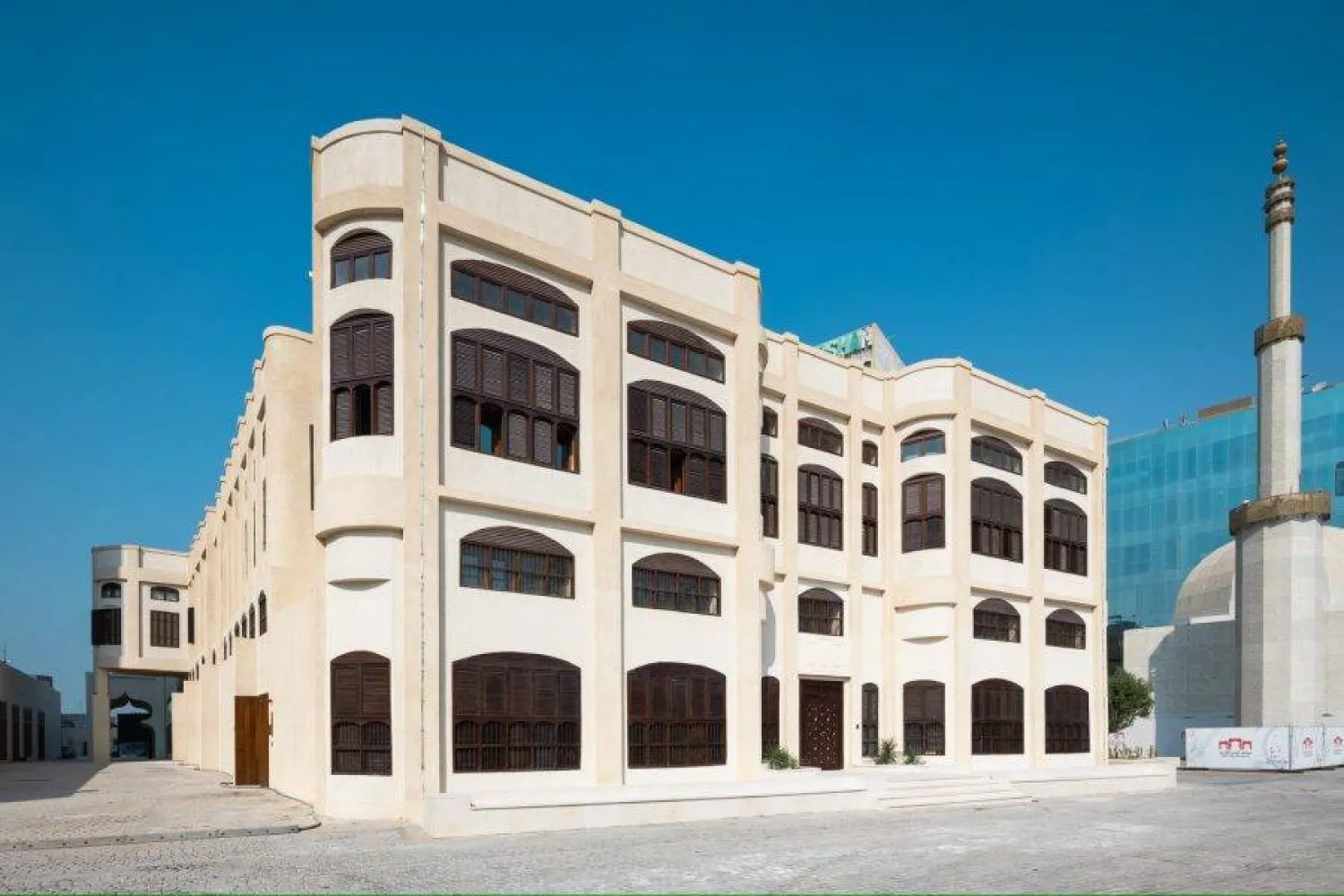
The Red Sea Museum. (Red Sea Museum)
TT

Jeddah's Red Sea Museum Announces Ramadan Program 

The Red Sea Museum. (Red Sea Museum)

Jeddah's Red Sea Museum announced on Thursday a curated program of creative and cultural activities for the holy month of Ramadan, running from February 22 to March 14.

Led by local artists, artisans, and cultural practitioners, the museum's Ramadan program includes contemplative workshops, storytelling sessions, outdoor community gatherings, and musical performances that honor the spirit of reflection, creativity, and connection.

The series of engaging sessions creates space for visitors to explore traditional crafts, contemporary storytelling, and cultural heritage through hands-on experiences blending creativity and reflection.

Curated for families, artists, and visitors of all backgrounds, the program runs alongside "Sunken Treasures: The Maritime Heritage of the Red Sea," the museum's major temporary exhibition opening on February 25, which explores how archaeological discoveries reveal centuries of trade, navigation, and human connection across the Red Sea.

In celebration of Founding Day on February 22, the "Inspirational Threads: Makkah & Madinah" contemplative embroidery workshop invites participants to engage with archival black-and-white photographs of the Red Sea, Makkah, and Madinah. Through basic embroidery techniques, participants can embellish these images with Islamic geometric and symbolic motifs, adding layers of color, texture, and meaning while reflecting on devotion, memory, and connection.

The "Radiance in Pieces: Mosaic Lantern" hands-on workshop on February 24 explores the tradition of Islamic mosaic art through the creation of illuminated lanterns inspired by Red Sea heritage. Children and families will learn how small, colorful pieces come together to form meaningful geometric designs, blending creativity, cultural heritage, and reflection.

The opening evening of "Sunken Treasures: The Maritime Heritage of the Red Sea" on February 25 features a panel discussion with archaeologists, scientists, and historians exploring the maritime heritage of the Red Sea.

The "One Big Table - Ramadan Gathering" on March 5 brings everyone together in a shared space where families, friends, and neighbors celebrate the spirit of Ramadan.

On March 7, the "From Sand to Porcelain" painting workshop invites participants to paint calligraphy on fine porcelain using natural sand collected from Jeddah to add subtle texture and depth. While learning basic porcelain painting techniques, participants will engage in a reflective, hands-on experience that encourages mindful creation, resulting in a personal keepsake that embodies devotion, place, and the spirit of Ramadan.

In the spirit of International Women's Day on March 8, the "Ramadan Spirit: Thread & Needle" hands-on punch needling workshop explores Ramadan iconography through traditional symbols, including the crescent, star, and lantern. Participants will create textured textile pieces while learning basic punch needle techniques, celebrating both the holy month and the creative contributions of women to traditional textile arts.

On March 14, the "Spirit of Ramadan and the Tale of Jabir Al-Khawatir" storytelling session for children and families explores Ramadan as a season of compassion and healing, reminding people that the spirit of the holy month lives in small acts of care and human connection.