


Antiquities Smuggling Surges After Fall of Syria’s Assad

Children play, with one raising the V sign, at the ancient city of Palmyra, Syria, Saturday, Jan. 25, 2025. (AP Photo/Khalil Hamra)
TT

Antiquities Smuggling Surges After Fall of Syria’s Assad

Children play, with one raising the V sign, at the ancient city of Palmyra, Syria, Saturday, Jan. 25, 2025. (AP Photo/Khalil Hamra)

The collapse of a once-feared security apparatus, coupled with widespread poverty, has triggered a gold rush in Syria where experts say social media has emerged as a key hub for the sale of stolen antiquities.

Located in the heart of the fertile crescent where settled civilization first emerged, Syria is awash with mosaics, statues and artifacts that fetch top dollar from collectors in the west and the site of looting since 2012, The Guardian reported on Sunday.

According to the Antiquities Trafficking and Heritage Anthropology Research Project (ATHAR), which investigates antiquities black markets online, nearly a third of the 1,500 Syrian cases it has documented since 2012 have occurred since December alone.

It said that much of the looting is being carried out by individuals desperate for cash, hoping to find ancient coins or antiquities they can sell quickly.

In Damascus, shops selling metal detectors have proliferated while ads on social media show users discovering hidden treasure with models such as the XTREM Hunter, which retails for just over $2,000.

They come by night. Armed with pickaxes, shovels and jackhammers, looters disturb the dead. Under the cover of darkness, men exhume graves buried more than 2,000 years ago in Syria’s ancient city of Palmyra, searching for treasure.

“These different layers are important, when people mix them together, it will be impossible for archaeologists to understand what they’re looking at,” said Mohammed al-Fares, a resident of Palmyra and an activist with the NGO Heritage for Peace, as he stood in the remains of an ancient crypt exhumed by looters.

By day, the destruction caused by grave robbers is apparent. Three-meter-deep holes mar the landscape of Palmyra, where ancient burial crypts lure people with the promise of funerary gold and ancient artifacts that fetch thousands of dollars.

Al-Fares picked up a shattered piece of pottery that tomb raiders had left behind and placed it next to the rusted tailfin of a mortar bomb.

Palmyra, which dates back to the third century BC, suffered heavy damage during the period of ISIS control, when militants blew up parts of the ancient site in 2015, deeming its ruins apostate idols.

Palmyra is not the only ancient site under threat. Experts and officials say the looting and trafficking of Syria’s antiquities has surged to unprecedented levels since the opposition overthrew former Syrian president Bashar al-Assad in December, putting the country’s heritage further at risk.

“When the [Assad] regime fell, we saw a huge spike on the ground. It was a complete breakdown of any constraints that might have existed in the regime periods that controlled looting,” said Amr al-Azm, a professor of Middle East history and anthropology at Shawnee State University in Ohio and co-director of the ATHAR project.

For her part, Katie Paul, a co-director of the ATHAR project and the director of Tech Transparency Project, said: “The last three to four months has been the biggest flood of antiquities trafficking I have ever seen, from any country, ever.”

“This is the fastest we’ve ever seen artifacts being sold. Before for example, a mosaic being sold out of Raqqa took a year. Now, mosaics are being sold in two weeks,” said Paul.

Paul, along with Azm, tracks the route of trafficked Middle Eastern antiquities online and has created a database of more than 26,000 screenshots, videos and pictures documenting trafficked antiquities dating back to 2012.

The report said that Syria’s new government has urged looters to stop, offering finder’s fees to those who turn in antiquities rather than sell them, and threatening offenders with up to 15 years in prison.

But preoccupied with rebuilding a shattered country and struggling to assert control, Damascus has few resources to protect its archaeological heritage.

In 2020, Facebook banned the sale of historical antiquities on its platform and said it would remove any related content. However, according to Paul, the policy is rarely enforced despite continued sales on the platform being well documented.

“Trafficking of cultural property during conflict is a crime, here you have Facebook acting as a vehicle for the crime. Facebook knows this is an issue,” said Paul.

She added that she was tracking dozens of antiquities trading groups on Facebook that have more than 100,000 members, the largest of which has approximately 900,000 members.

A representative from Meta, the parent company of Facebook, declined to respond to the Guardian’s request for a comment.

The Facebook groups are used as a gateway for traffickers, connecting low-level looters in Syria to criminal networks that smuggle the artifacts out of the country into neighboring Jordan and Türkiye.

From there, the pieces are shipped around the world to create fake bills of sale and provenance so they can be laundered into the grey market of antiquities.

After 10 to 15 years they make their way into legal auction houses, where collectors and museums, primarily located in the US and Europe, snap them up.


Diriyah Art Futures to Launch 'Of the Earth: Earthly Technologies to Computational Biologies' Exhibition 

Diriyah Art Futures to Launch 'Of the Earth: Earthly Technologies to Computational Biologies' Exhibition 
TT

Diriyah Art Futures to Launch 'Of the Earth: Earthly Technologies to Computational Biologies' Exhibition 

Diriyah Art Futures to Launch 'Of the Earth: Earthly Technologies to Computational Biologies' Exhibition 

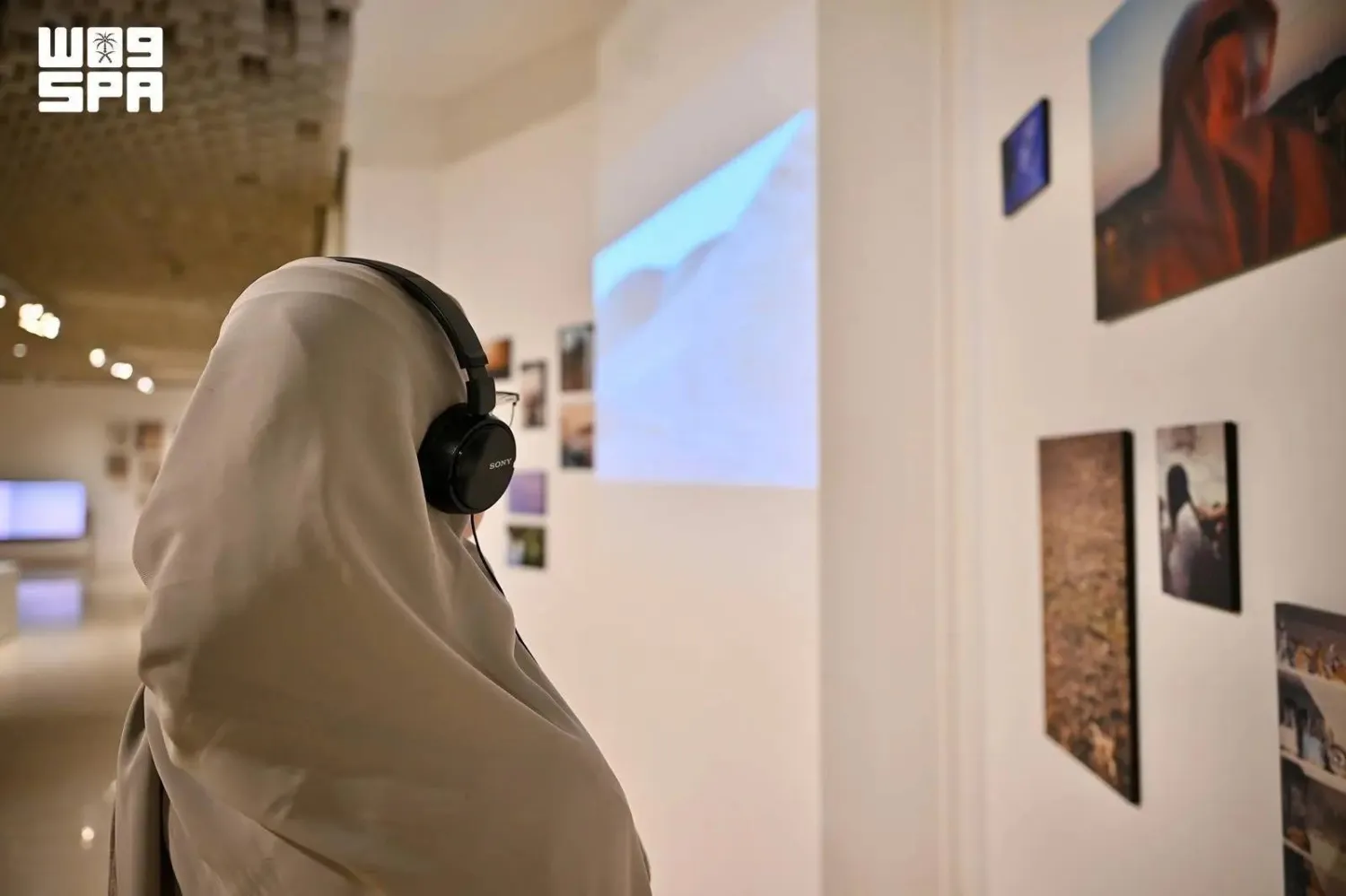
Diriyah Art Futures (DAF) announced on Wednesday the opening date of its fourth major exhibition, titled "Of the Earth: Earthly Technologies to Computational Biologies."

The exhibition will run in Diriyah from January 14 to May 16.

Curated by DAF’s Director of Exhibitions Irini Papadimitriou, the exhibition is organized into four thematic areas. It examines how technology is often viewed as a tool for controlling nature, while also addressing the environmental impact of digital systems on a planet with finite resources. The artworks will showcase how these technologies are constructed from the earth's own materials.

The collaborations between art, technology, and science provide creative ways to address urgent issues and challenge technological power structures. They propose pathways toward caring ecosystems, reimagining technology shaped by interspecies, collective, and planetary intelligence that serves more than just human needs.

A public program featuring panel discussions, practical workshops, and masterclasses will accompany the exhibition.


France's Louvre Museum Remains Shut as Workers Extend Strike

FILED - 07 December 2018, France, Paris: A View of the inner courtyard with the glass pyramid of the Louvre Museum in Paris. Photo: Christian Böhmer/dpa
TT

France's Louvre Museum Remains Shut as Workers Extend Strike

FILED - 07 December 2018, France, Paris: A View of the inner courtyard with the glass pyramid of the Louvre Museum in Paris. Photo: Christian Böhmer/dpa

Staff at France's Louvre museum in Paris on Wednesday unanimously voted in favor of extending a strike over pay and working conditions that began on Monday, leaving the world's most visited museum closed until further notice.

The museum is routinely closed on Tuesdays.

The strike comes after a spectacular jewel heist in October, as well as recent infrastructure problems, including a water leak that damaged ancient books, which have exposed glaring security gaps and revealed the museum's deteriorating state.

Unions have said that staff at the Louvre are overworked and mismanaged, and they are calling for more hiring, pay increases and a redirection of spending.

Louvre director Laurence des Cars, who has faced intense criticism since burglars in October made off with crown jewels worth 88 million euros ($103.14 million), is due to answer questions from the French Senate on Wednesday afternoon. 

Des Cars has acknowledged an “institutional failure” following the heist but has come under renewed scrutiny after admitting she only learned of a critical 2019 security audit after the robbery.

France’s Court of Auditors and a separate administrative inquiry have since criticized delays in implementing a long-promised security overhaul.

The Culture Ministry announced emergency anti-intrusion measures last month and assigned Philippe Jost, who oversaw the Notre Dame restoration, to help reorganize the museum. The move was widely seen as a sign of mounting pressure on Louvre leadership.


New Rome Metro Stations Showcase Ancient Treasures After Years of Delays

People examine artifacts on display during the inauguration of the Colosseo Fori Imperiali stop on Metro Line C in Rome, Italy, 16 December 2025. (EPA)
TT

New Rome Metro Stations Showcase Ancient Treasures After Years of Delays

People examine artifacts on display during the inauguration of the Colosseo Fori Imperiali stop on Metro Line C in Rome, Italy, 16 December 2025. (EPA)

After years of delays and spiraling costs, Rome inaugurated two new metro stations on Tuesday, including one by the Colosseum, showcasing archaeological discoveries that might become tourist attractions in their own right.

The driverless Metro C line now stretches from the Italian capital's eastern suburbs to Porta Metronia and the Colosseum, extending its reach into the historic city center.

Future plans will take it even deeper under Rome's baroque heart, beneath the river Tiber and onto the Vatican, though the next stop at Piazza Venezia is not expected to open before 2032.

Excavations for the new stations revealed remarkable finds, which slowed work as archaeologists painstakingly preserved layers of ancient Rome they hadn't known were there.

At Porta Metronia, drilling rigs uncovered a military barracks dating back 2,000 years, as well as a residential house, complete with frescoed rooms and mosaics, which are preserved in a museum within the station.

During the Colosseum excavations, workers discovered 28 ancient wells and hundreds of everyday artifacts, including hairpins, oil lamps, irrigation pipes, knives, and statues, many of which are on show.

"These two stations will travel around the world," Transport Minister Matteo Salvini said on Tuesday, predicting they would soon flood social media.

"Beyond serving commuters and Romans, anyone who comes here from Italy or from abroad will stop in these stations. They might take the metro even if they don't need it, just to enjoy the ride," he added.

LONG DELAYS, COST HIKES

Rome's Metro C was meant to link the city's two main Basilicas by the year 2000. Instead, the line only reached the imposing San Giovanni Basilica in 2018, and the Vatican station near St. Peter's Basilica won't be ready for at least another decade.

The initial plan to build 24 stations to the Colosseum was priced at 2.23 billion euros ($2.63 billion), but costs have surged past 3 billion euros, and the entire line could exceed 6 billion by the time the final seven stations are completed.

Engineers say Rome is among the most challenging cities in the world for metro construction, due to buried archaeological sites that require safeguarding and concerns that vibrations could damage the heritage above ground.

At the next stop, at Piazza Venezia, a construction team is digging an 85-meter deep (280 feet) ring around the site which will be filled with reinforced concrete to protect the six underground floors of the station that are being dug out.

Rome Mayor Roberto Gualtieri said it was worth the effort.

"Without these major works, we would never have discovered the barracks at Porta Metronia, we would never have found these wells, and today we would have known far less about our extraordinary past," he said.

Metro C is intended to carry 600,000 passengers a day, easing Rome's notorious traffic and speeding tourists between major landmarks. At present it carries 41,000 daily, but the new openings should see numbers climb.