


From Studio…Picasso’s Life, Works Displayed in Dublin’s National Gallery

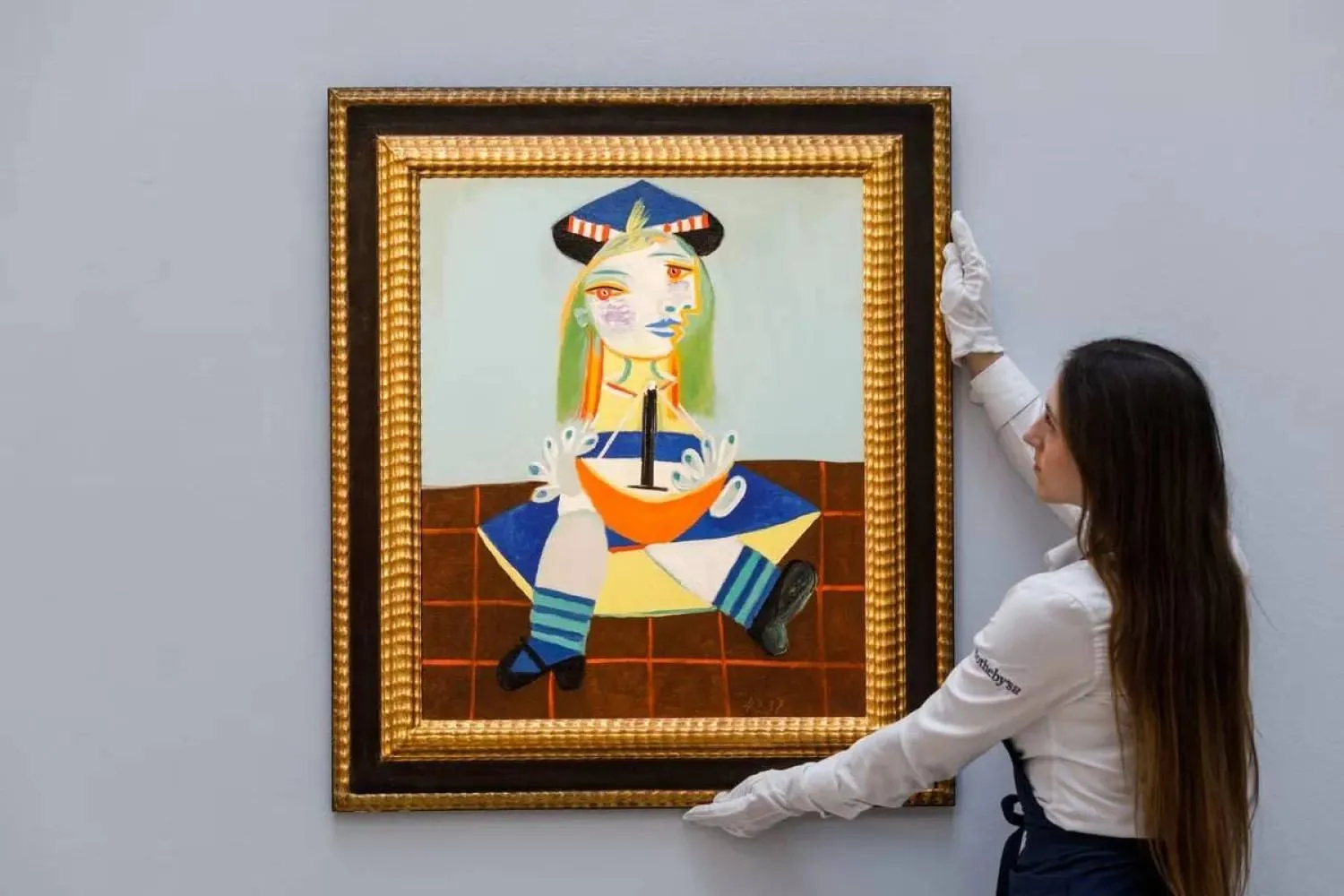
‘Fillette au Bateau’ (Girl on a Boat), a portrait by Pablo Picasso of his daughter Maya, sold for more than £18m at auction in March 2023 (Musée National Picasso-Paris/Succession Picasso/DACS, London 2025/GrandPalaisRmn/Mathieu Rabeau) 
TT

From Studio…Picasso’s Life, Works Displayed in Dublin’s National Gallery

‘Fillette au Bateau’ (Girl on a Boat), a portrait by Pablo Picasso of his daughter Maya, sold for more than £18m at auction in March 2023 (Musée National Picasso-Paris/Succession Picasso/DACS, London 2025/GrandPalaisRmn/Mathieu Rabeau) 

Pablo Picasso is coming to the National Gallery. Not the National Gallery that overlooks Trafalgar Square, but the one in Ireland, housed behind a 19th-century neo-classical façade on Merrion Square in the center of Georgian Dublin.

The National Gallery of Ireland hasn’t, as London’s previously did, limited itself to art before the 20th century, and this autumn will host the major new exhibition, Picasso: From the Studio, in partnership with the Musée Picasso in Paris, according to The Independent.

The show will be packed with remarkable works from the single most transformative artist of the 20th century.

However, Picasso was also among the most troubling artists of the 20th century – particularly for his attitude to women.

The charges begin with the painter’s treatment of Fernande Olivier, the first live-in lover in Paris, whom he locked up in their squalid studio apartment.

Then Olga Khokhlova, the ballerina wife Picasso subjected to many indignities, among them his affair with the teenager Marie-Thérèse Walter – his junior by 28 years.

There’s Walter’s successor as muse and bedfellow, the artist Dora Maar, whom he struck on occasion, and Françoise Gilot, the mistress Picasso couldn’t forgive for writing a book about their relationship, to the extent of disinheriting their children.

The Dublin team do not deny there are problems. “Picasso was a tricky person all round,” said co-curator Janet McLean. “His relationships with women were difficult, and sometimes with his children and grandchildren, men and his friends. He would often take what he needed, and then he would move on.”

There is no record of Picasso visiting Dublin, but the new show is a compelling reason to visit a city that, for most Britons, is only a ferry or one-hour flight away across the Irish Sea.



Qassim's Monday Market Retains Heritage Role as Economic and Cultural Hub

The Monday market in the governorate of Uyun Al-Jiwa. (SPA)
TT

Qassim's Monday Market Retains Heritage Role as Economic and Cultural Hub

The Monday market in the governorate of Uyun Al-Jiwa. (SPA)

The Monday market in the governorate of Uyun Al-Jiwa, north of Qassim Region, stands as one of the oldest traditional weekly markets, enduring through changing times while maintaining its role as a vibrant economic and cultural hub.

The market draws a growing number of visitors from across Qassim and beyond, supported by the governorate’s strategic location.

During a field tour, the Saudi Press Agency observed lively activity throughout the market, with stalls displaying a diverse range of products. These include agricultural goods such as almonds and dried figs; animal products like ghee and milk, for which the region is renowned; as well as handicrafts and natural items such as henna and sidr.

Visitors noted that the market has retained its authentic character, continuing to serve as a vital source of income for small vendors and families working in the cottage industry, reinforcing its role as a key platform for preserving traditional culture while supporting the local rural economy.


Heritage Commission Revives Al-Nasb Heritage District as Abha Cultural Tourism Destination

The district’s significance lies in its unique architectural composition - SPA
TT

Heritage Commission Revives Al-Nasb Heritage District as Abha Cultural Tourism Destination

The district’s significance lies in its unique architectural composition - SPA

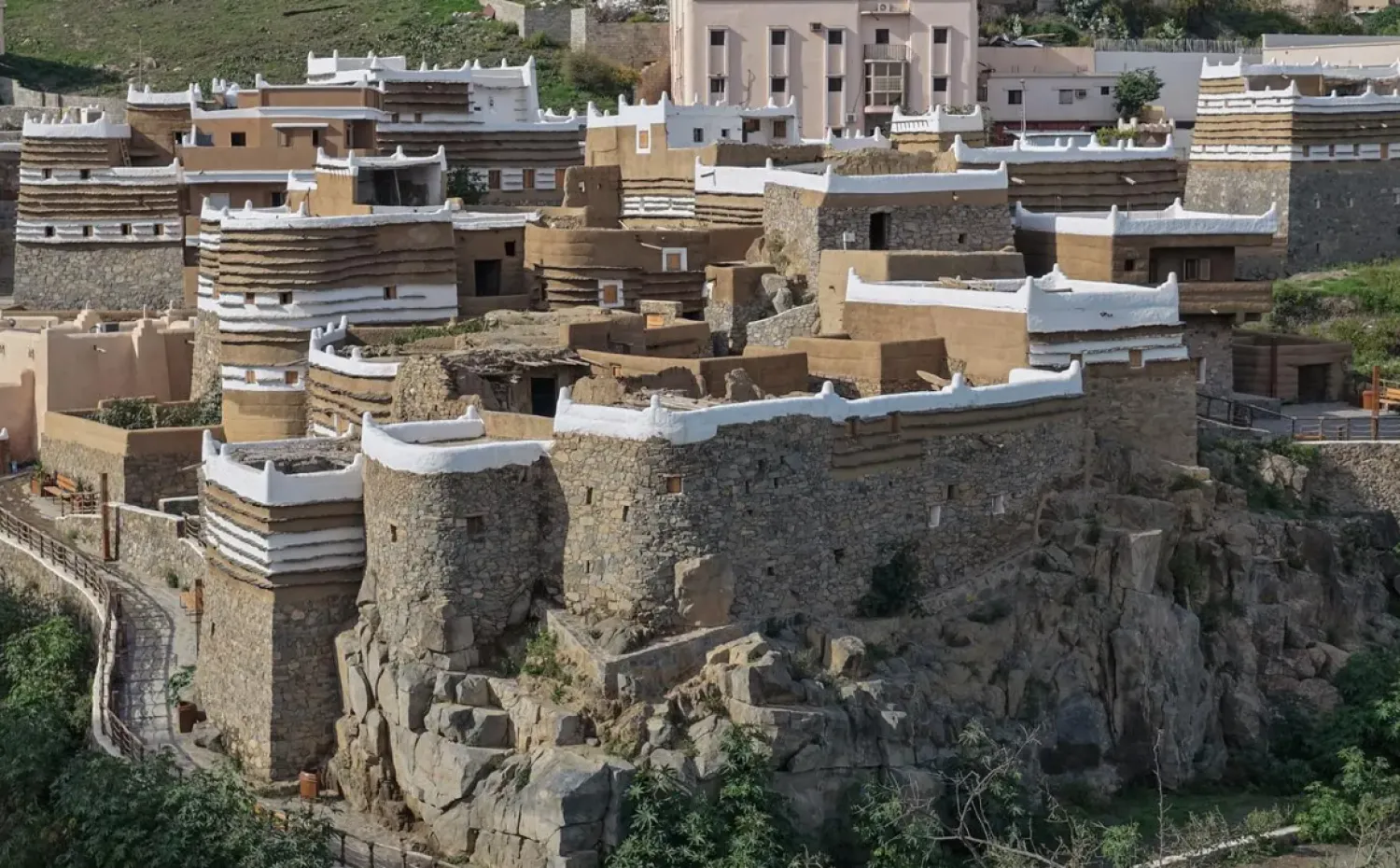
Al-Nasb Heritage District in Abha is one of the most prominent living examples of traditional architecture in Aseer Region, preserving its long history and architectural details that embody people’s connection to their local environment and document the social and cultural patterns that have shaped the identity of the place across generations.

The district’s significance lies in its unique architectural composition, where mud and stone buildings stand side by side in visual harmony. They were built using local materials such as stone, clay, and juniper trunks, while the narrow alleyways and closely set buildings give the district a cohesive social character that reflects the spirit of past communities in the region and the close relationship between people and place.

The Heritage Commission has revived the district through an integrated restoration and rehabilitation project aimed at preserving its original elements and enhancing its sustainability, as part of national efforts to protect urban heritage and highlight it as a cultural and tourism asset, SPA reported.

The site is also distinguished by its natural setting, as the district overlooks the banks of Abha Valley and surrounding farms, giving it a distinctive visual and aesthetic dimension. Its narrow passageways and closely set buildings illustrate a traditional urban pattern that strengthens ties among residents and captures the nature of social life in that era.

The district is now a growing destination for culture and tourism in Abha, attracting visitors and heritage enthusiasts who come to explore the details of authentic architecture and learn about the traditional ways of life that have shaped Aseer Region’s identity across generations. The project helps raise awareness of the importance of preserving archaeological sites as a key pillar in forming national memory.

The project is part of the Kingdom’s efforts to protect and effectively manage cultural heritage, in line with the targets of Saudi Vision 2030, which gives special attention to the cultural sector. It seeks to turn heritage sites into vibrant spaces that support cultural tourism and sustainable development while reconnecting society with its historical roots.


Saudi Heritage Commission Enforces Strict Penalties Against Antiquities Violators

The fines varied according to the nature and circumstances of each violation
TT

Saudi Heritage Commission Enforces Strict Penalties Against Antiquities Violators

The fines varied according to the nature and circumstances of each violation

The Saudi Heritage Commission announced financial fines against 11 violators for dealing in portable antiquities without obtaining the required regulatory licenses, as part of its ongoing efforts to protect cultural heritage in the Kingdom and enhance compliance with regulations governing the sector.

The commission clarified that the violations involved displaying and selling antiquities on online platforms without registering or documenting them with the Heritage Commission or obtaining the necessary licenses, in explicit violation of the provisions of the Law of Antiquities, Museums and Urban Heritage.

The fines varied according to the nature and circumstances of each violation, reaching up to SAR15,000 in some cases.

The commission reaffirmed its commitment to monitoring violations related to heritage sites and collections across the Kingdom and taking the necessary legal and regulatory actions against all those proven to have contravened the regulations.

The Heritage Commission called on all citizens and residents to report any violations or non-compliant practices related to heritage sites or collections through its social media channels, by visiting its branches across the Kingdom, through the Archaeological Site Reporting platform, or by contacting the unified security operations center at 911.
