
ICCROM Forum in Sharjah Concludes with Call to Empower Women, Youth in Safeguarding Heritage

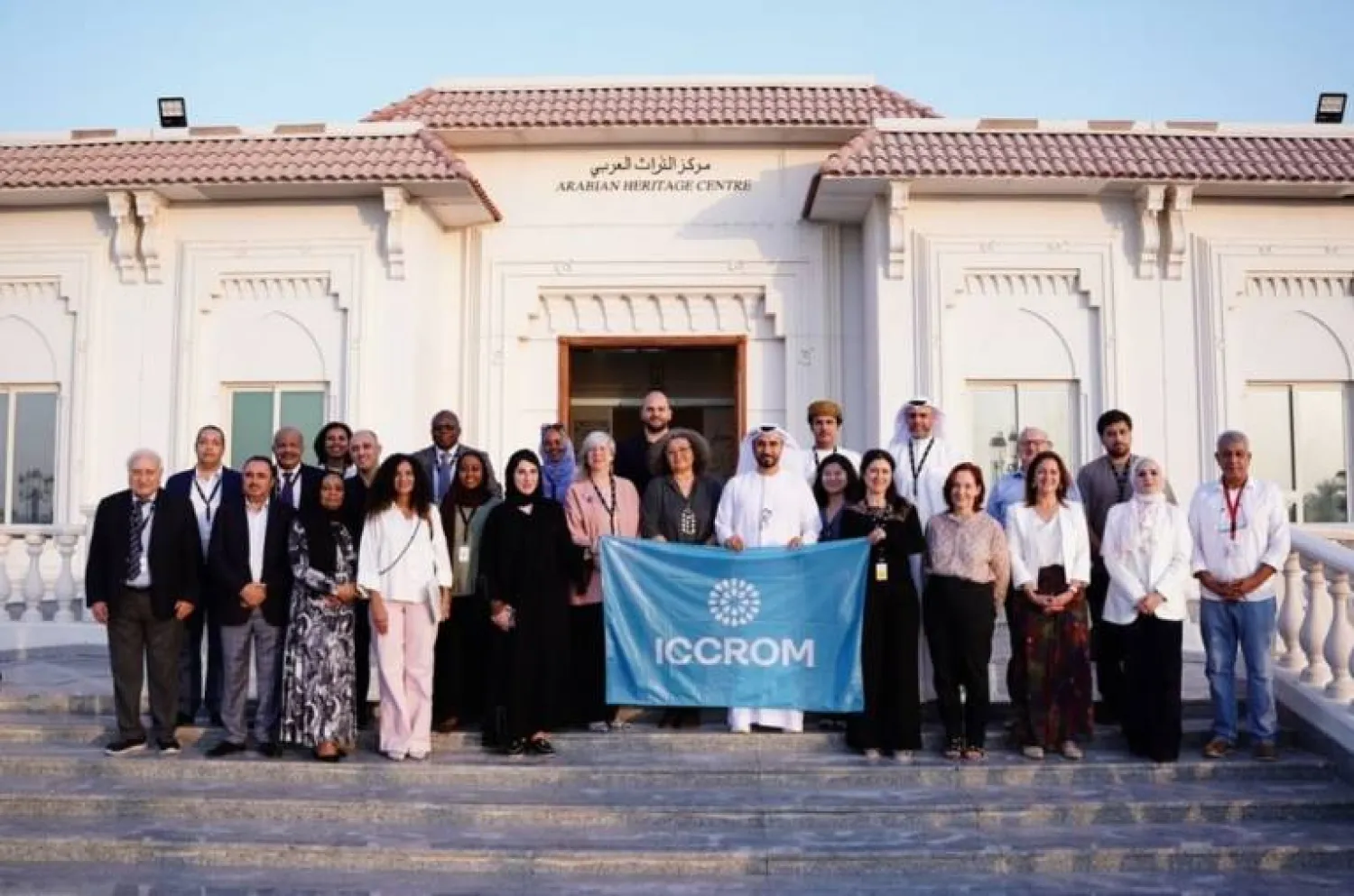
Organized by ICCROM through its Regional Center in Sharjah, the Forum brought together cultural officials, experts, academics, and practitioners. WAM
TT

ICCROM Forum in Sharjah Concludes with Call to Empower Women, Youth in Safeguarding Heritage

Organized by ICCROM through its Regional Center in Sharjah, the Forum brought together cultural officials, experts, academics, and practitioners. WAM

The 5th Arab Forum for Cultural Heritage concluded in Sharjah last week after three days of dialogue, knowledge-sharing, and strategic planning to strengthen cultural heritage protection in the Arab region.

Organized by ICCROM through its Regional Center in Sharjah, the Forum brought together cultural officials, experts, academics, and practitioners to exchange experiences, showcase innovative projects, and chart collaborative pathways for the future.

In the closing session, participants adopted a set of key recommendations, which focused on empowering youth and women as central actors in heritage protection.

They highlighted the need to integrate heritage topics into curricula at all educational levels and develop vocational training programs for youth and women in conservation, documentation, and cultural entrepreneurship, as well as in media and communication, fields essential for strengthening heritage discourse and public engagement.

The recommendations also stressed the role of non-formal education, museums, and libraries in promoting a deeper community awareness of heritage, and called for initiatives targeting children and youth to reinforce intergenerational connections through cultural values.

On empowerment and inclusivity, the recommendations stressed the importance of ensuring equal opportunities for women and youth in participation, leadership, and decision-making.

They urged greater documentation of women’s professional contributions to heritage preservation, the integration of marginalized groups and displaced communities into heritage policies, and the positioning of heritage as a tool for peacebuilding and social cohesion. Intergenerational dialogue initiatives and the establishment of youth platforms were also encouraged to enhance participation and knowledge exchange.

The Forum further recommended supporting youth- and women-led initiatives through seed grants and strengthening skills in marketing and cultural innovation to transform heritage into a sustainable economic resource, while encouraging storytelling and creativity in promotion strategies.

The role of media and social platforms in advocacy for heritage issues was underscored, calling for greater youth and women's participation in national and international events to highlight identity and belonging.

Regarding documentation and digital innovation, participants urged the establishment of unified regional archives and digital repositories, the ethical and thoughtful use of modern technologies such as artificial intelligence (AI) and spatial documentation, the preparation of regular reports on the state of heritage, and the documentation of emerging cultural initiatives. They stressed the need to bridge the expertise of tech-savvy youth with that of heritage professionals to foster innovation and develop practical digital tools.

Looking to partnerships and future policies, the recommendations called for developing inclusive cultural policies that foster community engagement and align heritage with the Sustainable Development Goals (SDGs), while adopting sustainable financing mechanisms and contingency plans tailored to the Arab region in times of conflict and crises.

They further emphasized the importance of strengthening Arab and regional cooperation through the exchange of expertise, expanding partnerships with international organizations and the private sector, and recognizing and rewarding community initiatives to ensure their long-term continuity.

For future Forums, participants recommended greater involvement of universities and institutes, the creation of a dedicated digital archive for the Forum alongside youth-oriented content such as podcasts, and organizing deeper sessions for problem-solving and creative solutions.

They also proposed inviting diverse sectors beyond the heritage field, including the private sector and investors, to support initiatives financially. Finally, participants suggested launching a youth award and financially-supported women-led initiatives to enhance sustainability, reflecting the Forum’s commitment to consolidating the role of heritage in both the present and the future.

Saudi Arabia: Ship of Tolerance Initiative Promotes Cultural Dialogue in Jeddah

The Royal Institute of Traditional Arts (Wrth) will offer traditional craft workshops throughout Ramadan. SPA
TT

Saudi Arabia: Ship of Tolerance Initiative Promotes Cultural Dialogue in Jeddah

The Royal Institute of Traditional Arts (Wrth) will offer traditional craft workshops throughout Ramadan. SPA

The Saudi Ministry of Culture, in collaboration with the "Lenobadir" volunteer and community partnership program and the Athr Foundation, has launched the Ship of Tolerance initiative in Historic Jeddah during Ramadan.

The initiative aims to enhance shared human values through arts, and promote tolerance and coexistence among children and families. It provides an educational and cultural experience aligned with the area’s unique character as a UNESCO World Heritage site.

As part of this global art project, children will create artworks that represent acceptance and dialogue.

The Royal Institute of Traditional Arts (Wrth) will offer traditional craft workshops throughout Ramadan, linking the initiative's values with local heritage and enriching visitors' connection to the region's identity.

This effort supports cultural programs with educational and social dimensions in Historic Jeddah, activating local sites for experiences that combine art, crafts, and community participation. It aligns with the National Strategy for Culture under Saudi Vision 2030, focusing on heritage preservation and expanding culture's impact on daily life.


Oscar Contender ‘Hamnet’ Boosts Tourism at Shakespeare Heritage Sites 

A view of Shakespeare’s Birthplace, William Shakespeare's childhood home, in Stratford-upon-Avon, Britain, February 9, 2026. (Reuters)
TT

Oscar Contender ‘Hamnet’ Boosts Tourism at Shakespeare Heritage Sites 

A view of Shakespeare’s Birthplace, William Shakespeare's childhood home, in Stratford-upon-Avon, Britain, February 9, 2026. (Reuters)

On a cloudy winter's day, visitors stream into what was once William Shakespeare's childhood home in Stratford-upon-Avon and the nearby Anne Hathaway's cottage, family residence of the bard's wife.

Hathaway's cottage is one of the settings for the BAFTA and Oscar best film contender "Hamnet", and the movie's success is drawing a new wave of tourists to Shakespeare sites in the town in central England.

Shakespeare's Birthplace is the house the young William once lived in and where his father worked as a glove maker, while Hathaway's cottage is where he would have visited his future wife early in their relationship.

Typically, around 250,000 visitors, from the UK, Europe, the United States, China and elsewhere, walk through the locations each year, according to the Shakespeare Birthplace Trust. ‌The charity looks after ‌Shakespeare heritage sites, which also include Shakespeare's New Place, the site of ‌the ⁠Stratford home where the ⁠bard died in 1616.

Visitors are flocking in this year thanks to "Hamnet", the film based on Maggie O'Farrell's 2020 novel, which gives a fictional account of the relationship between Shakespeare and Hathaway, also known as Agnes, and the death of their 11-year-old son Hamnet in 1596.

"Visitor numbers have increased by about 15 to 20% across all sites since the film was released back in January. I think that will only continue as we go throughout the year," Richard Patterson, chief operating officer for the Shakespeare Birthplace Trust, said.

"They particularly want ⁠to look (at) Anne Hathaway's cottage and the specifics around how the family ‌engaged in the spaces and the landscape in and around ‌the cottage... you can see why he would have been inspired."

NEW ACCESS TO SHAKESPEARE

"Hamnet" has 11 nominations at ‌Sunday's British BAFTA awards, including best film and leading actress for Jessie Buckley, who plays Agnes. It ‌also has eight Oscar nominations, with Buckley seen as the frontrunner to win best actress.

"Hamnet" is set in Stratford-upon-Avon and London although it was not filmed in Stratford.

It sees Paul Mescal's young Shakespeare fall for Agnes while teaching Latin to pay off his father's debts. The drama, seen mainly through Agnes' eyes, focuses on their ‌life together and grief over Hamnet's death, leading Shakespeare to write "Hamlet".

"Shakespeare... is notoriously enigmatic. He writes about humanity, about feeling, about emotion, about conflict, ⁠but where do we understand ⁠who he is in that story?" said Charlotte Scott, a professor of Shakespeare studies and interim director of collections, learning and research at the Shakespeare Birthplace Trust.

"And that's driven people creative and otherwise for hundreds and hundreds of years. Where is Shakespeare's heart? And this is what the film I think has so beautifully opened up."

Little is known about how the couple met. Shakespeare was 18 and Hathaway 26 when they married in 1582. Daughter Susanna arrived in 1583 and twins Judith and Hamnet in 1585.

The film acknowledges the names Hamnet and Hamlet were interchangeable back then. While grief is a dominant theme, audiences also see Shakespeare in love and as a father.

"A lot of people will see this film not necessarily having... had any kind of relationship with Shakespeare," Scott said.

"So people will come to this film, I hope, and find a new way of accessing Shakespeare that is about creativity, that is about understanding storytelling as a constant process of regeneration, but also crucially, looking at it from that kind of emotive angle."


Culture Ministry Continues Preparations in Historic Jeddah to Welcome Visitors during Ramadan 

Historic Jeddah has emerged as a leading cultural tourism destination during Ramadan. (SPA)
TT

Culture Ministry Continues Preparations in Historic Jeddah to Welcome Visitors during Ramadan 

Historic Jeddah has emerged as a leading cultural tourism destination during Ramadan. (SPA)

The Saudi Ministry of Culture is continuing its efforts to revitalize Historic Jeddah in preparation for welcoming visitors during the holy month of Ramadan, offering cultural programs, events, and heritage experiences that reflect the authenticity of the past.

The district has emerged as a leading cultural tourism destination at this time of year as part of the “The Heart of Ramadan” campaign launched by the Saudi Tourism Authority.

Visitors are provided the opportunity to explore the district’s attractions, including archaeological sites located within the geographical boundaries of the UNESCO World Heritage-listed area, which represent a central component of the Kingdom’s urban and cultural heritage.

The area also features museums that serve as gateways to understanding the city’s rich heritage and cultural development, in addition to traditional markets that narrate historical stories through locally made products and Ramadan specialties that reflect authentic traditions.

These initiatives are part of the ministry’s ongoing efforts to revitalize Historic Jeddah in line with the objectives of Saudi Vision 2030 and aiming to transform it into a vibrant hub for arts, culture, and the creative economy, while preserving its tangible and intangible heritage.