


Met Museum’s First Egypt Show in Over a Decade Brings Ancient Gods and Goddesses to Life

Met Museum’s First Egypt Show in Over a Decade Brings Ancient Gods and Goddesses to Life
TT

Met Museum’s First Egypt Show in Over a Decade Brings Ancient Gods and Goddesses to Life

Met Museum’s First Egypt Show in Over a Decade Brings Ancient Gods and Goddesses to Life

The powerful gods of ancient Egypt are having a get-together on Manhattan’s Upper East Side.

That would be at the Metropolitan Museum of Art. It’s been more than a decade since the museum’s last big Egypt show, so “Divine Egypt” — a lavish exploration of how ancient Egyptians depicted their gods — is a major event, as evidenced by the crowds packing the show since its Oct. 12 opening.

After all, few things excite the museum-going public like ancient Egypt, notes Diana Craig Patch, the Met’s curator of Egyptian art.

“It’s the first ancient culture that you learn in school,” says Patch. “Pyramids, mummies, the great tomb of Tutankhamun ... they’re in our popular culture, books, films and now video games.”

But Patch hopes visitors will learn something deeper from “Divine Egypt,” which explores how the gods were portrayed by Egyptians both royal and common, and not only in temples where only kings or priests could go, but in daily worship by ordinary people.

Ancient Egyptian civilization lasted some 3,000 years; the show, which runs into January, covers all periods and features over 200 objects, from huge limestone statues to tiny golden figurines. It includes 140 works from the Met’s collection, as well as others lent by museums across the globe.

“The divine landscape of ancient Egypt is full of gods — actually 1,500 if you count all of them,” said Patch, leading The Associated Press on a tour last week. The show focuses on 25 main deities.

Even pared down to 25, the research was daunting. The material and the textual information in Egyptology is fragmentary. What's more, the Egyptians kept bringing in new gods, or giving established gods new roles. “And so that makes it a very complex, but fascinating landscape,” Patch says.

One aim is to show visitors that all of these images concern “how ancient Egyptians related to their world. Those gods were how they solved problems of life, death, and meaning — problems that we’re still trying to solve today.”
Some highlights:

Opening greetings from Amun-Re and a king named Tut You’d think that the boy king Tutankhamun, aka King Tut, would be the star of any party, given the astounding riches from his tomb the world has come to know. But in a sculpture that first greets visitors, from the Louvre in Paris, the solar god Amun-Re sits on a throne, presenting the much smaller pharaoh beneath his knees — or rather, protecting him — with hands resting on the small shoulders. The god is identified by his feathered crown, curled beard, divine kilt and jewelry — and is definitely the main attraction. Amun-Re was worshipped at the Karnak temple complex; the presence of Re in his name links him closely to the sun.

Expressing the divine: Horus and Hathor The first of five galleries, “Expressing the Divine” focuses on two main deities, the god Horus and goddess Hathor.

Horus is always represented as a falcon with a double crown, which signifies he is the king of Egypt and linked to the living king. But Hathor, who represents fertility, music and defense, among other things, takes many forms, including a cow, an emblem, a lion-headed figure or a cobra. In one statue here, she wears cow horns and a sun disc.

“So these are two main ways gods are represented: sometimes with lots of roles, sometimes with only one,” Patch says.

Ruling the cosmos: the sun god Re This gallery looks at the all-important Re, whose domains are the sun, creation, life and rebirth. Re often merges form with other deities. “Re rules the world — he's the source of light and warmth,” Patch says.

He's presented in this room as a giant scarab beetle. “That's his morning aspect,” Patch says. “He's seen as a beetle who takes the sun out from the underworld and pushes it up into the sky.”

Also here is a vivid painted relief of the goddess Maat, from the Valley of the Kings in Thebes (modern Luxor). She embodies truth, justice and social and political order. Patch notes: “The best way we translate it today is rightness. She stands for the world in rightness, the way it should work.”

Creating the world: multiple mythologies of creation This gallery explores five myths surrounding the creation of the world and its inhabitants.

“This is one of the things that I hope people begin to take away: that Egyptians had multiple ways of dealing with things,” Patch says of the competing myths. “I find that fascinating. They overlapped.”

She's standing beside a huge statue of the god Min in limestone — a headless representation of a hard-to-define god associated with vegetation, agricultural fertility and minerals.

Coping with life: a statuette in solid gold Only kings and priests could access state temples to worship their gods. What were regular folks to do?

Patch explains: “At festivals, the god came out of the temple on a sacred barque (sailing vessel), and people could commune with that image in the streets, and ask him or her questions.”

In this room, curators have arranged a set of objects as if on a barque. At the top and center: a gleaming, solid gold statuette of Amun, which the Met purchased in 1926 from the collection of Lord Carnarvon, who was involved in the 1922 discovery of Tut’s tomb.

Overcoming death: the gods of the afterlife Some of the most striking art connected to Egyptian gods is about death and the afterlife. “Overcoming death is something that kings and non-royals alike had to deal with,” says Patch.

The gods in this section include Anubis, who embalms the deceased and leads them to the afterlife; Isis and Nephthys, the sisters of Osiris, who mourn and protect the dead; and Osiris, judge and ruler of the afterlife.

This gallery houses the show’s signature object: a stunning statuette, on loan from the Louvre, depicting the triad of Osiris, Isis and Horus. Made of gold inlaid with lapis lazuli, it shows the shrouded Osiris, falcon-headed Horus, and Isis in a sun disc and horns. The gold represents the skin of the gods, the lapis their hair.

Although this last section is about overcoming death, “I think you will have seen that most of the exhibition is about life,” Patch notes. “And that is what all of these deities were about. Even in overcoming death, it was about living forever.”


Saudi Arabia: Ship of Tolerance Initiative Promotes Cultural Dialogue in Jeddah

The Royal Institute of Traditional Arts (Wrth) will offer traditional craft workshops throughout Ramadan. SPA
TT

Saudi Arabia: Ship of Tolerance Initiative Promotes Cultural Dialogue in Jeddah

The Royal Institute of Traditional Arts (Wrth) will offer traditional craft workshops throughout Ramadan. SPA

The Saudi Ministry of Culture, in collaboration with the "Lenobadir" volunteer and community partnership program and the Athr Foundation, has launched the Ship of Tolerance initiative in Historic Jeddah during Ramadan.

The initiative aims to enhance shared human values through arts, and promote tolerance and coexistence among children and families. It provides an educational and cultural experience aligned with the area’s unique character as a UNESCO World Heritage site.

As part of this global art project, children will create artworks that represent acceptance and dialogue.

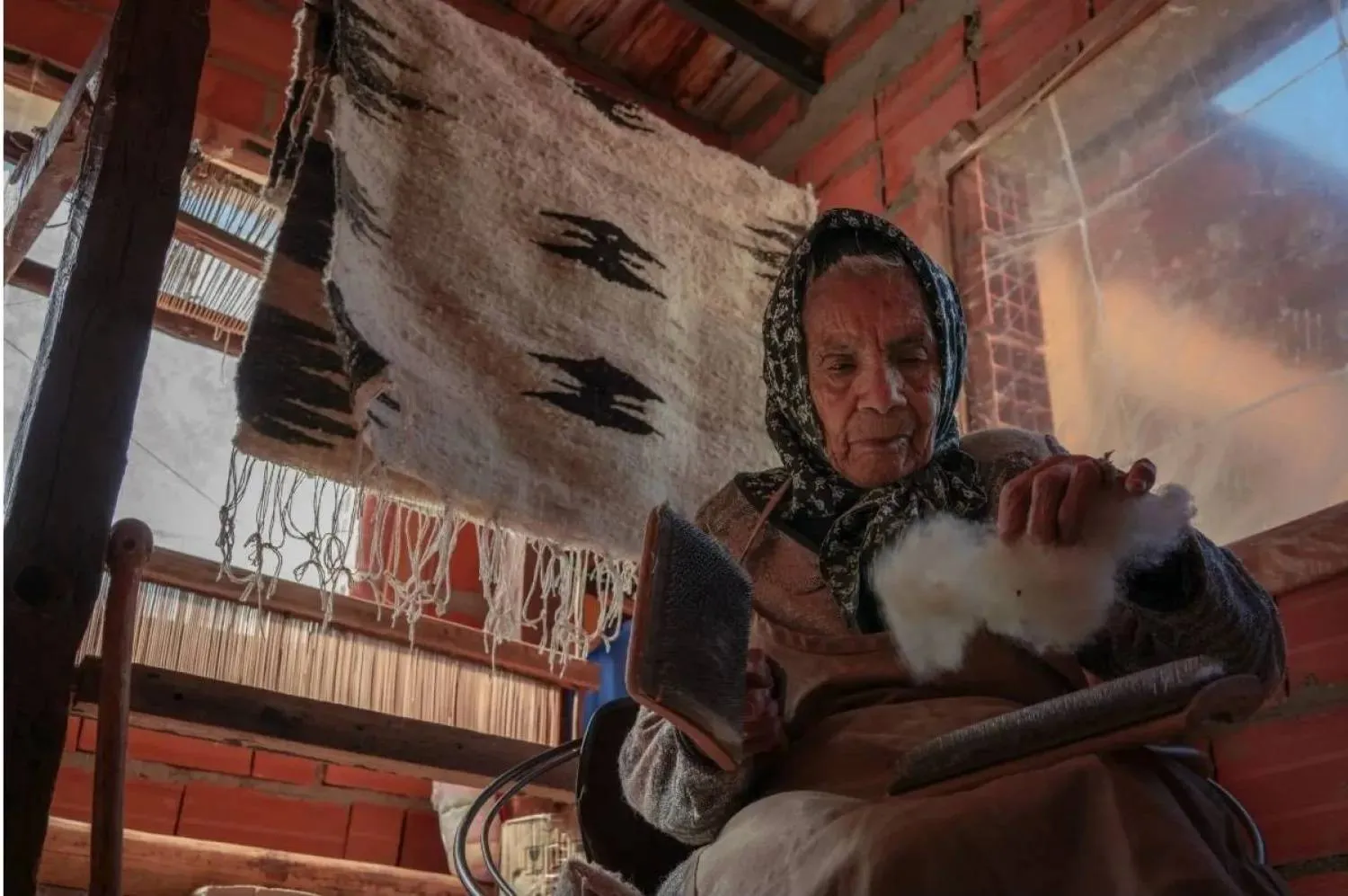
The Royal Institute of Traditional Arts (Wrth) will offer traditional craft workshops throughout Ramadan, linking the initiative's values with local heritage and enriching visitors' connection to the region's identity.

This effort supports cultural programs with educational and social dimensions in Historic Jeddah, activating local sites for experiences that combine art, crafts, and community participation. It aligns with the National Strategy for Culture under Saudi Vision 2030, focusing on heritage preservation and expanding culture's impact on daily life.


Oscar Contender ‘Hamnet’ Boosts Tourism at Shakespeare Heritage Sites 

A view of Shakespeare’s Birthplace, William Shakespeare's childhood home, in Stratford-upon-Avon, Britain, February 9, 2026. (Reuters)
TT

Oscar Contender ‘Hamnet’ Boosts Tourism at Shakespeare Heritage Sites 

A view of Shakespeare’s Birthplace, William Shakespeare's childhood home, in Stratford-upon-Avon, Britain, February 9, 2026. (Reuters)

On a cloudy winter's day, visitors stream into what was once William Shakespeare's childhood home in Stratford-upon-Avon and the nearby Anne Hathaway's cottage, family residence of the bard's wife.

Hathaway's cottage is one of the settings for the BAFTA and Oscar best film contender "Hamnet", and the movie's success is drawing a new wave of tourists to Shakespeare sites in the town in central England.

Shakespeare's Birthplace is the house the young William once lived in and where his father worked as a glove maker, while Hathaway's cottage is where he would have visited his future wife early in their relationship.

Typically, around 250,000 visitors, from the UK, Europe, the United States, China and elsewhere, walk through the locations each year, according to the Shakespeare Birthplace Trust. ‌The charity looks after ‌Shakespeare heritage sites, which also include Shakespeare's New Place, the site of ‌the ⁠Stratford home where the ⁠bard died in 1616.

Visitors are flocking in this year thanks to "Hamnet", the film based on Maggie O'Farrell's 2020 novel, which gives a fictional account of the relationship between Shakespeare and Hathaway, also known as Agnes, and the death of their 11-year-old son Hamnet in 1596.

"Visitor numbers have increased by about 15 to 20% across all sites since the film was released back in January. I think that will only continue as we go throughout the year," Richard Patterson, chief operating officer for the Shakespeare Birthplace Trust, said.

"They particularly want ⁠to look (at) Anne Hathaway's cottage and the specifics around how the family ‌engaged in the spaces and the landscape in and around ‌the cottage... you can see why he would have been inspired."

NEW ACCESS TO SHAKESPEARE

"Hamnet" has 11 nominations at ‌Sunday's British BAFTA awards, including best film and leading actress for Jessie Buckley, who plays Agnes. It ‌also has eight Oscar nominations, with Buckley seen as the frontrunner to win best actress.

"Hamnet" is set in Stratford-upon-Avon and London although it was not filmed in Stratford.

It sees Paul Mescal's young Shakespeare fall for Agnes while teaching Latin to pay off his father's debts. The drama, seen mainly through Agnes' eyes, focuses on their ‌life together and grief over Hamnet's death, leading Shakespeare to write "Hamlet".

"Shakespeare... is notoriously enigmatic. He writes about humanity, about feeling, about emotion, about conflict, ⁠but where do we understand ⁠who he is in that story?" said Charlotte Scott, a professor of Shakespeare studies and interim director of collections, learning and research at the Shakespeare Birthplace Trust.

"And that's driven people creative and otherwise for hundreds and hundreds of years. Where is Shakespeare's heart? And this is what the film I think has so beautifully opened up."

Little is known about how the couple met. Shakespeare was 18 and Hathaway 26 when they married in 1582. Daughter Susanna arrived in 1583 and twins Judith and Hamnet in 1585.

The film acknowledges the names Hamnet and Hamlet were interchangeable back then. While grief is a dominant theme, audiences also see Shakespeare in love and as a father.

"A lot of people will see this film not necessarily having... had any kind of relationship with Shakespeare," Scott said.

"So people will come to this film, I hope, and find a new way of accessing Shakespeare that is about creativity, that is about understanding storytelling as a constant process of regeneration, but also crucially, looking at it from that kind of emotive angle."


Culture Ministry Continues Preparations in Historic Jeddah to Welcome Visitors during Ramadan 

Historic Jeddah has emerged as a leading cultural tourism destination during Ramadan. (SPA)
TT

Culture Ministry Continues Preparations in Historic Jeddah to Welcome Visitors during Ramadan 

Historic Jeddah has emerged as a leading cultural tourism destination during Ramadan. (SPA)

The Saudi Ministry of Culture is continuing its efforts to revitalize Historic Jeddah in preparation for welcoming visitors during the holy month of Ramadan, offering cultural programs, events, and heritage experiences that reflect the authenticity of the past.

The district has emerged as a leading cultural tourism destination at this time of year as part of the “The Heart of Ramadan” campaign launched by the Saudi Tourism Authority.

Visitors are provided the opportunity to explore the district’s attractions, including archaeological sites located within the geographical boundaries of the UNESCO World Heritage-listed area, which represent a central component of the Kingdom’s urban and cultural heritage.

The area also features museums that serve as gateways to understanding the city’s rich heritage and cultural development, in addition to traditional markets that narrate historical stories through locally made products and Ramadan specialties that reflect authentic traditions.

These initiatives are part of the ministry’s ongoing efforts to revitalize Historic Jeddah in line with the objectives of Saudi Vision 2030 and aiming to transform it into a vibrant hub for arts, culture, and the creative economy, while preserving its tangible and intangible heritage.