

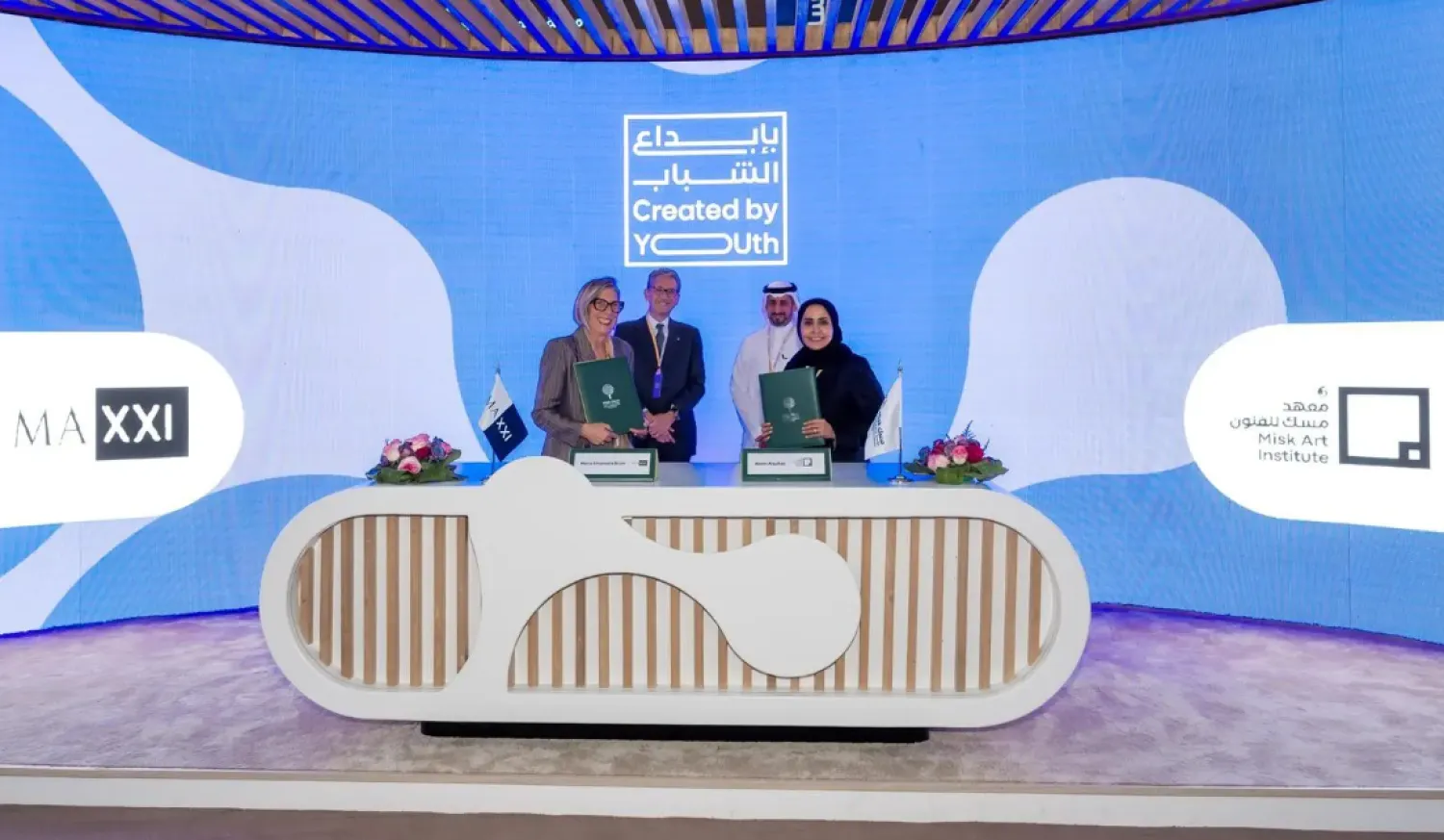

Misk Art Institute Signs Strategic Partnerships at Misk Global Forum 2025 in Riyadh

The agreements include a partnership with MAXXI Museum in Rome to provide Saudi professionals with direct exposure to international museum practices, complemented by expert-led masterclasses delivered as part of Misk Art Institute programs - SPA
TT

Misk Art Institute Signs Strategic Partnerships at Misk Global Forum 2025 in Riyadh

The agreements include a partnership with MAXXI Museum in Rome to provide Saudi professionals with direct exposure to international museum practices, complemented by expert-led masterclasses delivered as part of Misk Art Institute programs - SPA

Misk Art Institute, a subsidiary of the Mohammed bin Salman Foundation “Misk,” has announced three strategic partnerships to drive cultural engagement and academic exchange.

The agreements were signed during the Misk Global Forum 2025 (MGF25) held in Riyadh on November 19–20 under the theme “Created By Youth”.

The collaborations will support Misk Art Institute’s mission to enrich artists’ creative journeys and advance Saudi Arabia’s arts and culture ecosystem, according to a press release, SPA reported.

The agreements include a partnership with MAXXI Museum in Rome to provide Saudi professionals with direct exposure to international museum practices, complemented by expert-led masterclasses delivered as part of Misk Art Institute programs.

Additionally, two memoranda of understanding were signed with Jeddah University and Taibah University to enable student development initiatives, academic exchange, and enriched cultural engagement.

Misk Art Institute continues to advance its mission to enhance the creative sector by developing artist-led initiatives, empowering talent, and strengthening cultural collaboration. The agreements reflect a shared vision to provide opportunities for artists and creatives and reinforce Saudi Arabia’s growing reputation as a regional hub for creativity and cultural dialogue.

CEO of Misk Art Institute Reem Alsultan stated: “These partnerships consolidate Misk Art Institute’s role as an enabler of the national creative infrastructure and a trusted platform for the development of arts in the Kingdom. By connecting the arts with other sectors, including education, we’re building pathways for creativity to empower the next generation of creatives and advance cultural engagement.

These partnerships support our goal of facilitating artist journeys through unlocking access to resources and visibility, encouraging innovation, and expanding the national creative landscape. Each of them adds value to a growing ecosystem where artists and institutions work together, supporting a more vibrant creative future.”

Misk Art Institute continues to expand its influence as a leading cultural institution connecting artists, organizations, investors, and the broader community to build a sustainable creative landscape. Through year-round programs, including art exhibitions, training and development pathways, and residency opportunities, it supports artists to participate more fully in shaping the cultural scene and elevating artistic expression in Saudi Arabia and beyond.


Najran Sees Growing Interest in Heritage and Archaeological Artifact Collection

These collections also include artifacts illustrating stages of the modern Saudi state, serving as educational platforms that bridge the past and present - SPA
TT

Najran Sees Growing Interest in Heritage and Archaeological Artifact Collection

These collections also include artifacts illustrating stages of the modern Saudi state, serving as educational platforms that bridge the past and present - SPA

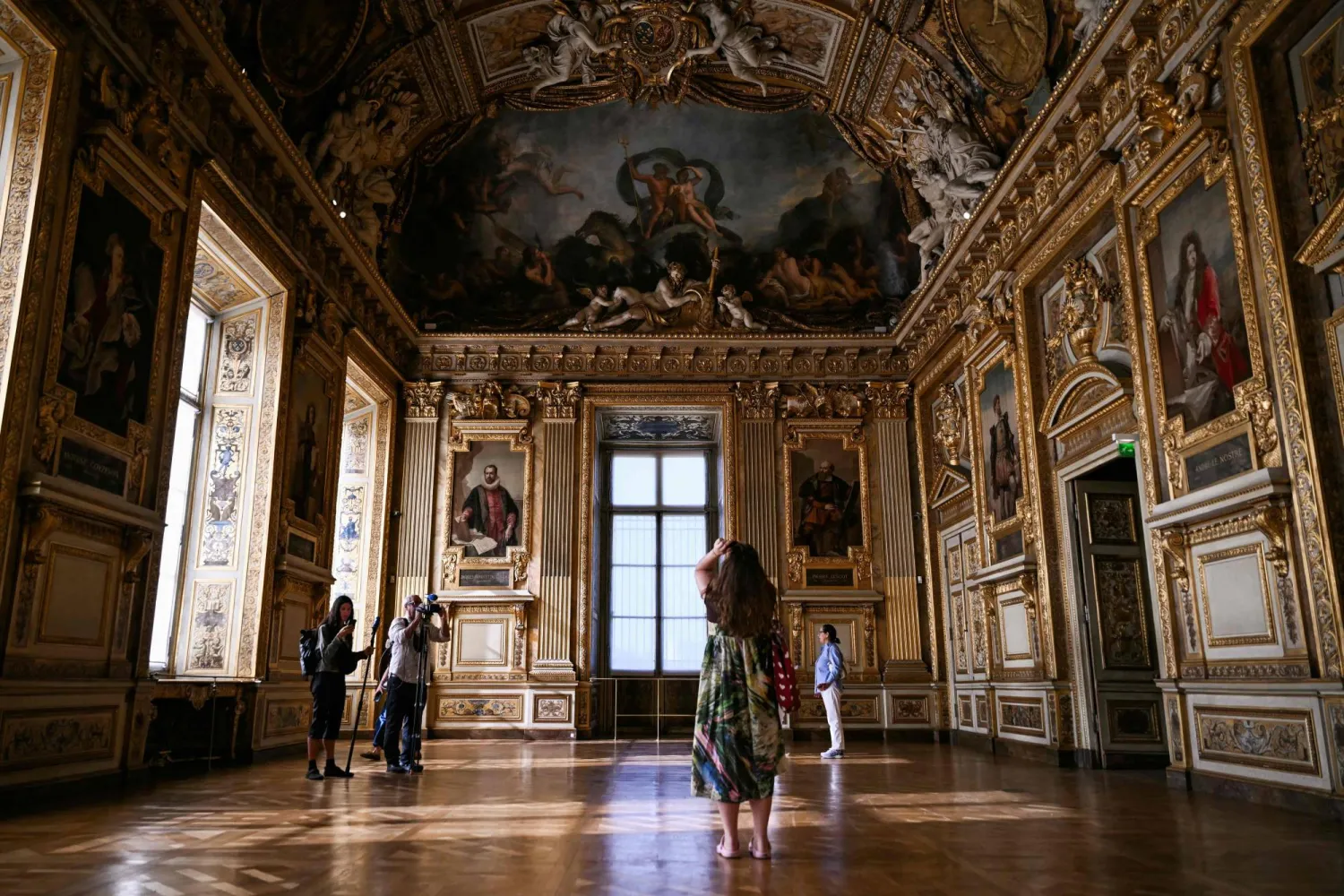
Najran Region has witnessed growing enthusiasm among community members and heritage enthusiasts for collecting traditional and archaeological artifacts that document historical eras linked to the region’s civilization and the lives of previous generations, contributing to reconnecting society with its roots and raising awareness of the importance of preserving tangible heritage as an essential part of cultural identity.

Heritage enthusiasts play a significant role in preserving Najran’s cultural legacy by establishing private museums that display archaeological items, traditional tools, clothing, photographs, and historical collections reflecting daily life and customs, SPA reported.

These collections also include artifacts illustrating stages of the modern Saudi state, serving as educational platforms that bridge the past and present.

The hobby of collecting heritage items in Najran ranges from gathering everyday tools such as pottery and agricultural equipment to traditional clothing, jewelry, weapons, books, and manuscripts. Motivations vary between personal documentation, preserving family memory, and academic research aimed at understanding historical social and economic practices.

Local markets and seasonal exhibitions, along with digital platforms, have contributed to expanding this hobby, enabling knowledge exchange and increasing awareness of preservation methods and historical value. Community initiatives and workshops further support proper documentation and conservation, ensuring that this passion complements heritage preservation while adhering to scientific and legal standards.


Why is Fadak Known as the 'City of Walls and Fortresses'?

Located 250 kilometers southwest of Hail, this historic village boasts a legacy as rich as its soil - SPA
TT

Why is Fadak Known as the 'City of Walls and Fortresses'?

Located 250 kilometers southwest of Hail, this historic village boasts a legacy as rich as its soil - SPA

Encircled by a massive, seven-kilometer wall of rugged black lava stone, the ancient village of Fadak, known today as Al-Hait, earned its title as the "City of Walls and Fortresses." Guarded by north and south gates, the village is flanked by ancient castles and robust fortifications that still dominate the landscape, SPA reported.

Located 250 kilometers southwest of Hail, this historic village boasts a legacy as rich as its soil. While known in antiquity as Fadak, its modern name, "Hait Al-Nakhl" (The Palm Wall), captures its lush topography—defined by sprawling palm groves, fertile land, and abundant water.

According to the Encyclopedia of the Kingdom of Saudi Arabia, published by the King Abdulaziz Public Library, Al-Hait is one of the oldest urban centers in Hail Region.

According to SPA, the name Fadak echoes through antiquity, recorded among the cities conquered by Babylonian King Nabonidus in the sixth century BC, and frequently cited in classical chronicles and early geographical dictionaries.

Bridging the pre-Islamic and Islamic eras, the site remains an archaeological treasure. From early rock inscriptions and crumbling fortresses to ancient stone wells and traditional farms, these enduring artifacts stand as a living testament to Fadak’s rich cultural heritage and continuous human settlement.


Dragon Boat Festival Links Modern China to Traditions More Than 2,000 Years Old

Competitors take part in the Aberdeen Dragon Boat Race to celebrate the Dragon Boat Festival in Hong Kong, Friday, June 19, 2026. (AP Photo/Chan Long Hei)
TT

Dragon Boat Festival Links Modern China to Traditions More Than 2,000 Years Old

Competitors take part in the Aberdeen Dragon Boat Race to celebrate the Dragon Boat Festival in Hong Kong, Friday, June 19, 2026. (AP Photo/Chan Long Hei)

The Dragon Boat Festival was celebrated Friday across mainland China, Hong Kong and Taiwan with colorful boat races, lion dances and other festivities.

The more than 2,000-year-old holiday is best known for its sporting events, but its origins are rooted in Chinese history and ancient beliefs about health, protection and harmony with nature.

“The Dragon Boat Festival is probably the richest and most diverse of all traditional Chinese festivals,” said Tsinghua University’s history professor Liu Xiaofeng. “Across different regions, people developed a wide variety of traditions based on ideas connected to the summer solstice and the balance of yin and yang.”

The festival is widely associated with the ancient poet Qu Yuan, who according to legend drowned himself more than 2,000 years ago. The tradition of dragon boat races was born from the story that people raced out in boats to search for the poet and threw rice into the river so fish would not eat his body.

A three-day race in Beijing features men’s, women’s and mixed dragon boat races over distances of 100, 200 and 500 meters. Teams from Beijing, Tianjin, Hebei, Shanxi and Guangdong will compete throughout the holiday weekend.

Guided by the thunderous beat of their drummers, crews pulled their paddles through the water in unison, each boat surging toward the finish line as spectators cheered them on.

Others watched the races at home as they enjoyed a traditional sticky rice treat known as “zongzi” with their families.

Beijing’s 2026 celebrations will continue through June 21 at the capital’s Grand Canal.

“The competition helped strengthen our team spirit,” said Li Maoshan, a participant in Friday’s races. “It also gave us an opportunity to demonstrate the spirit of perseverance and hard work.”

Participants in Hong Kong’s dragon boat races on Friday wore costumes including a cartoon version of Chinese Taoist deity Ne Zha.
