


Naively Brilliant: Serbia's World-famous Village Painters

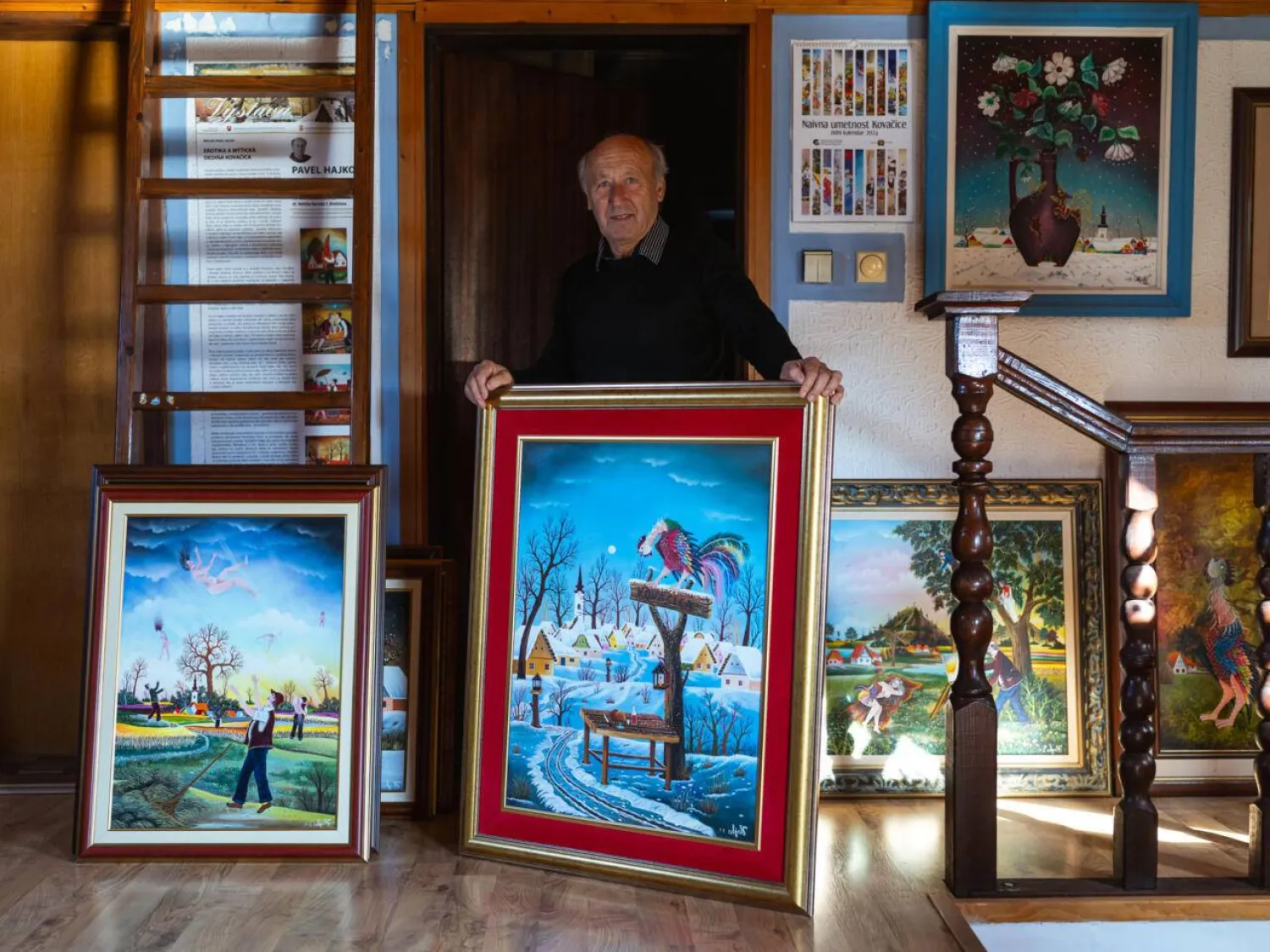
Painter Pavel Hajko poses with his work at his home studio northern Serbia. Andrej ISAKOVIC / AFP
TT

Naively Brilliant: Serbia's World-famous Village Painters

Painter Pavel Hajko poses with his work at his home studio northern Serbia. Andrej ISAKOVIC / AFP

Pavel Hajko never tires of painting roosters. Inside his home studio in Kovacica -- a sleepy town in northern Serbia famous for its style of naive art -- the brightly colored creatures cover the walls.

"From the beginning, even in elementary school, I painted only roosters," the 73-year-old artist told AFP, as he worked on an unfinished canvas in the afternoon light.

Outside, a cockerel obligingly crowed.

Hajko and his fellow artists have become world-famous for their childlike renderings of the traditional village life of the Slovak minority in the flatlands of the Banat region, north of the Danube.

"In naive painting, everything is done as you learn. It's not a school where the color has to be this or that... we can put any color," Hajko said.

The naive painting movement of self-taught artists first emerged in the 1930s, depicting everything from harvests to the traditional dress of the region.

Last year UNESCO recognized the Kovacica painters on its list of Intangible Cultural Heritage of Humanity, a milestone for a movement shaped by unschooled artists.

Preserving identity

In the leafy center of town, Pavel Babka runs a gallery showing the art, which he said is key to preserving the traditions of the ethnic Slovaks who settled in the Vojvodina region more than two centuries ago.

"I think the Slovak minority preserves its identity in this way, by painting what the previous generation did," Babka said.

The style quickly spread to other Slovak communities, and the first major exhibitions of work began in the 1950s.

But Babka said its beginnings lie in the folk art of the region, from the decoration of everyday objects to the murals in homes, mostly painted by women.

A key figure in the foundation of the style is Zuzana Chalupova, who Babka credits with giving naive painting its bold colors.

"Today, more women paint than men. And what women paint is more authentic than men," he said.

Across the walls of his gallery, Babka traces the symbols and signature "handwriting" of each artist through the decades.

"They paint life here, but they have not forgotten where they come from," he said.

The curator sees a discernible style through the early days of peasant painters in the Austro-Hungarian empire through the movement's boom in 1970s Yugoslavia, and even in today's crop of artists.

"The youngest generation paints according to the stories of their grandparents," he said.

'There must be sincerity'

But with UNESCO's recognition comes a new challenge -- the over-commercialization of the art form, driven by tourists' tastes rather than authenticity.

"When we say Kovacica, it should evoke Kovacica," Babka said.

Since founding his gallery 35 years ago, he has helped promote the movement, and now urges painters to preserve their style and keep the region's Slovak culture at its core.

"There must be sincerity and no deception."

The Slovak minority accounted for less than one percent of Serbia's population in the 2022 census, with the vast majority living in the multiethnic northern Vojvodina region.

A 2024 study found the community has declined over the last three decades, partly due to its ageing population and migration to Slovakia.

Global recognition

For art historian Elenka Djuris, this makes preserving the paintings of the unique culture "tied to the area of Kovacica" all the more critical.

"In this way, we actually ensure the longevity of our identity, traditions and customs, especially in this time when traditions and customs are truly being lost, everything is becoming globalized," the 36-year-old academic said.

But Djuris hopes that global recognition of the movement's value will also spur renewed efforts to preserve it at home.

"Unfortunately, it often takes someone from outside to show us the wealth we have, and then we realize that our culture is truly valuable and worthy of attention."




Najran: Saudi Arabia’s Southern Tourist and Cultural Gem

Najran is an exceptional tourist destination, where stunning landscapes meet a rich historical heritage. (SPA)
TT

Najran: Saudi Arabia’s Southern Tourist and Cultural Gem

Najran is an exceptional tourist destination, where stunning landscapes meet a rich historical heritage. (SPA)

Najran is an exceptional tourist destination, where stunning landscapes meet a rich historical heritage. Visitors can experience towering mountains, vast plains, and enchanting deserts that leave a lasting impression.

The region has undergone significant development to enhance its urban landscape and quality of life. Approximately 25 projects, valued at over SAR711 million, have been completed or are underway, including stormwater drainage improvements and upgraded infrastructure, said the Saudi Press Agency.

These initiatives are part of a broader plan to strengthen road networks and improve the city’s readiness to meet environmental and service challenges, in line with Saudi Vision 2030.

Najran is home to numerous archaeological sites that reflect its storied past. The historic city of Al-Ukhdood, dating back to the 4th and 5th centuries AD, serves today as a living, open-air museum attracting visitors from across the Kingdom and abroad.

The Hima Cultural Area, a UNESCO World Heritage Site, features over 5,500 rock carvings spanning different historical periods, offering valuable insights into the wildlife and culture of the Arabian Peninsula.

Najran also stands out as one of Saudi Arabia’s most important agricultural areas, with its unique climate allowing year-round cultivation of high-quality fruits and vegetables across more than 5,000 farms covering 27,000 hectares.

Its strategic location, natural resources, and advanced infrastructure make it a prime investment destination in southern Saudi Arabia. The region hosts around 90 factories and is rich in mineral resources, including gold, copper, iron, and copper-zinc reserves spanning over 70 square kilometers.

Foreign tourists have praised Najran for its seamless blend of history and natural beauty, noting that every corner tells the story of this ancient land and reflects a rich cultural heritage, making it a destination truly worth exploring.


Holy Quran Museum in Makkah Preserves, Showcases Rare Manuscripts

 The Museum of the Holy Quran is located in the Hira Cultural District of Makkah - File Photo/ SPA
The Museum of the Holy Quran is located in the Hira Cultural District of Makkah - File Photo/ SPA
TT

Holy Quran Museum in Makkah Preserves, Showcases Rare Manuscripts

 The Museum of the Holy Quran is located in the Hira Cultural District of Makkah - File Photo/ SPA
The Museum of the Holy Quran is located in the Hira Cultural District of Makkah - File Photo/ SPA

The Holy Quran Museum in the Hira Cultural District in Makkah continues to play a leading role in preserving and exhibiting rare copies of the Holy Quran, standing as a cultural landmark that reflects the revered status of the Quran in the conscience of the Islamic nation and documents the care devoted to it across different historical eras, SPA reported.

Through its collections, the museum highlights the value of Quranic endowments, which formed one of the most significant features of Islamic civilization and contributed to safeguarding Quran manuscripts, disseminating them, facilitating their recitation, and supporting their service in mosques and centers of learning.

The museum houses one endowed copy of the Holy Quran printed in 30 pages, endowed by Prince Abdulaziz bin Mishaal bin Abdulaziz.

This initiative reflects a deep connection to the Holy Quran and embodies the continuity of the charitable endowment tradition dedicated to serving and caring for the Holy Quran.

The display of this manuscript aligns with the museum’s mission to introduce visitors to the history of the Holy Quran, highlight the efforts of individuals and institutions to preserve and serve it, and raise awareness of the cultural and humanitarian significance of Quranic endowments.

The museum offers a comprehensive cultural and knowledge-based experience that connects visitors to the history and stature of the Holy Quran, starting from Makkah, the birthplace of revelation and the direction of prayer for Muslims.


Saudi Arabia: Craft Exhibition at Kidana Track in Makkah Draws over 32,000 Visitors

As part of the Year of Handicrafts 2025 and the Makkah winter season activities, the exhibition featured around 20 artisans. SPA
TT

Saudi Arabia: Craft Exhibition at Kidana Track in Makkah Draws over 32,000 Visitors

As part of the Year of Handicrafts 2025 and the Makkah winter season activities, the exhibition featured around 20 artisans. SPA

Kidana Development Company concluded its craft exhibition, held in cooperation with the Makkah Chamber at Kidana Track in Muzdalifah from December 17 to 20, where traditional crafts highlighting the authenticity of Saudi identity drew 32,362 visitors.

As part of the Year of Handicrafts 2025 and the Makkah winter season activities, the exhibition featured around 20 artisans showcasing handmade products such as embroidery, knitting, carving, and pottery.

It aimed to reinforce Saudi identity and promote traditional crafts as vital to cultural heritage, fostering values among community members and future generations.

The Kidana Track serves as a comprehensive destination for Makkah residents and visitors, offering various facilities, walking paths, seating areas, and community events promoting sustainability.