


Beyond Pizza and Pasta: Italy’s Culinary Heritage Awaits UNESCO Nod 

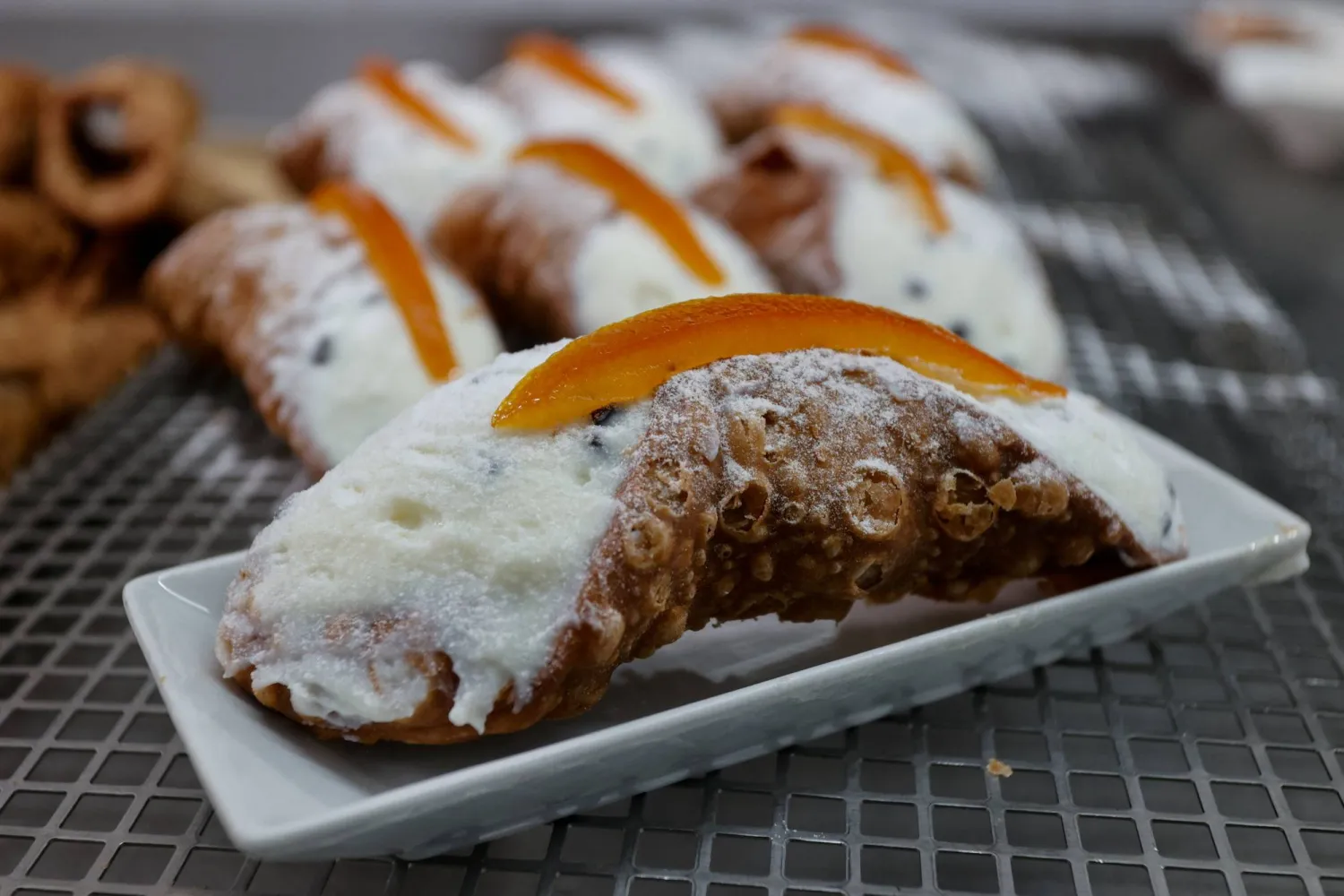
Sicilian cannoli are served at Pasticceria Cappello as Italian cuisine awaits a crucial UNESCO decision that could recognize it as an Intangible Cultural Heritage of Humanity in Palermo, Italy, December 5, 2025. (Reuters)
TT

Beyond Pizza and Pasta: Italy’s Culinary Heritage Awaits UNESCO Nod 

Sicilian cannoli are served at Pasticceria Cappello as Italian cuisine awaits a crucial UNESCO decision that could recognize it as an Intangible Cultural Heritage of Humanity in Palermo, Italy, December 5, 2025. (Reuters)

Italian cooking, already celebrated around the world, is poised for a new accolade: formal recognition as a cultural treasure from the United Nations' cultural agency, UNESCO.

A preliminary UNESCO assessment has cleared Italian cuisine to be added to UNESCO's "Intangible Cultural Heritage" lists and a final decision is expected on Wednesday.

Launched in March 2023 by Italy’s agriculture and culture ministries, the bid casts Italian cuisine - from pasta and pizza to risotto and cannoli - as a social ritual that binds families and communities together.

"There is no single Italian cuisine, but a mosaic of local expressive diversities," the government said.

From Lombardy's ossobuco - braised veal shanks with gremolata, to Puglia's orecchiette con cime di rapa - ear-shaped pasta with turnip greens, each region showcases Italian biodiversity and creativity, it said.

CULTURAL AND ECONOMIC FOOTPRINT

Prime Minister Giorgia Meloni has championed the effort, calling Italian food a symbol of "culture, identity, tradition and strength."

Industry groups estimate UNESCO recognition could boost tourism by up to 8% in two years, adding 18 million overnight stays. Italian cuisine also connects 59 million residents with up to 85 million people of Italian descent worldwide.

Globally, the Italian food service market hit 251 billion euros ($293 billion) in 2024, or 19% of the global restaurant market, Deloitte said. But imitation products abroad cost Italy an estimated 120 billion euros annually.

CRITICISM AND DEBATE

Not everyone in Italy supports the bid to join UNESCO lists, which already feature almost 800 items including Italian opera singing and truffle hunting.

Alberto Grandi, a food historian, called the UNESCO candidacy "just a marketing operation" in an interview with website Mantovauno last month.

In his 2024 book "La cucina italiana non esiste" ("Italian cuisine doesn't exist"), Grandi argued that many dishes considered traditional, including pasta alla carbonara, are relatively modern inventions influenced by foreign cultures.

Grandi's remarks have sparked a backlash from farmers' association Coldiretti, which called his claims "surreal attacks on national culinary tradition."

'THE ART OF CARING'

For restaurateurs like Luigina Pantalone, owner of Rome's historic Da Sabatino, a UNESCO nod from Wednesday's meeting in India would be a source of pride.

"Authentic Italian cuisine needs to be protected," she said, recalling childhood days washing dishes with her brothers and proudly noting that she is the fourth generation of her family to run the restaurant.

Three-Michelin-star chef Massimo Bottura summed it up: "Italian cuisine is an ancient, daily, sacred ritual – the art of caring and loving without saying a word."




Qasr Al-Shariah Mosque: An Architectural and Cultural Landmark

The Qasr Al-Shariah Mosque in Al-Haytham, Al-Kharj Governorate.(SPA)
TT

Qasr Al-Shariah Mosque: An Architectural and Cultural Landmark

The Qasr Al-Shariah Mosque in Al-Haytham, Al-Kharj Governorate.(SPA)

The Prince Mohammed bin Salman Project for Development of Historical Mosques focuses on preserving and restoring historical mosques across Saudi Arabia while enhancing their architectural integrity and highlighting their cultural and religious significance. The initiative aligns with Saudi Vision 2030 goals.

The Qasr Al-Shariah Mosque in Al-Haytham, Al-Kharj Governorate, exemplifies this effort. Closely tied to the governorate's history, it has served as a center for worship and community gatherings for decades, the Saudi Press Agency reported Sunday.

Built in 1338 AH during the reign of King Abdulaziz bin Abdulrahman, the mosque features traditional Najdi architecture, constructed from mud and stone with a roof made of tamarisk wood and palm fronds. Historically, it hosted Quranic classes and religious lessons.

Originally covering 314 square meters and accommodating around 90 worshippers, the mosque has been renovated to expand its area to 371 square meters and increase capacity to 150 worshippers, with the addition of essential facilities.

The project blends traditional building practices with modern techniques to ensure sustainability while preserving each mosque’s architectural identity. It also engages local heritage specialists under the supervision of Saudi engineers to achieve four key objectives: rehabilitating mosques for worship, restoring architectural authenticity, showcasing the Kingdom's civilizational heritage, and enhancing the cultural significance of historical mosques for future generations.


Royal Order Issued on Establishment of Riyadh University of Arts

Custodian of the Two Holy Mosques King Salman bin Abdulaziz. SPA
TT

Royal Order Issued on Establishment of Riyadh University of Arts

Custodian of the Two Holy Mosques King Salman bin Abdulaziz. SPA

A royal order has been issued approving the establishment of the Riyadh University of Arts, an independent educational institution headquartered in Riyadh under the supervision of the Ministry of Culture.

With legal personality and financial and administrative autonomy, the university is dedicated to specialized education in culture and the arts, aiming to cultivate national talent across creative disciplines through advanced academic programs aligned with global best practices and the objectives of Saudi Vision 2030.

The royal order authorizes the Minister of Culture to exercise the powers of the Board of Trustees until it is formally established, ensuring the swift completion of organizational procedures to begin operations.

To enhance its academic mission, the university will seek partnerships with prestigious international institutions to exchange expertise and develop high-level educational programs.

This initiative underscores the leadership's commitment to bolstering the Kingdom’s position as a regional cultural hub and fostering the growth of its creative industries.


Riyadh’s Markets Thrive as Men Prepare Traditional Attire for Eid Al-Fitr

Riyadh’s markets are experiencing a significant surge in activity - SPA
TT

Riyadh’s Markets Thrive as Men Prepare Traditional Attire for Eid Al-Fitr

Riyadh’s markets are experiencing a significant surge in activity - SPA

In preparation for Eid Al-Fitr, Riyadh’s markets are experiencing a significant surge in activity as men follow the Prophetic tradition of adorning themselves for the holiday, creating high demand for new thobes, bishts, and high-quality perfumes such as oud oil and incense, while tailoring shops and specialty retailers work at peak capacity to meet the community’s needs before the Eid morning celebrations, SPA reported.

The classic white thobe remains the most popular choice for Eid morning, often paired with a shemagh and a white bisht to symbolize cultural identity and elegance.

Beyond appearance, these preparations reflect deep-rooted social and religious values, emphasizing gratitude, family visits, and the strengthening of communal ties.