Riyadh’s Markets Thrive as Men Prepare Traditional Attire for Eid Al-Fitr

Riyadh’s markets are experiencing a significant surge in activity - SPA
TT

Riyadh’s Markets Thrive as Men Prepare Traditional Attire for Eid Al-Fitr

Riyadh’s markets are experiencing a significant surge in activity - SPA

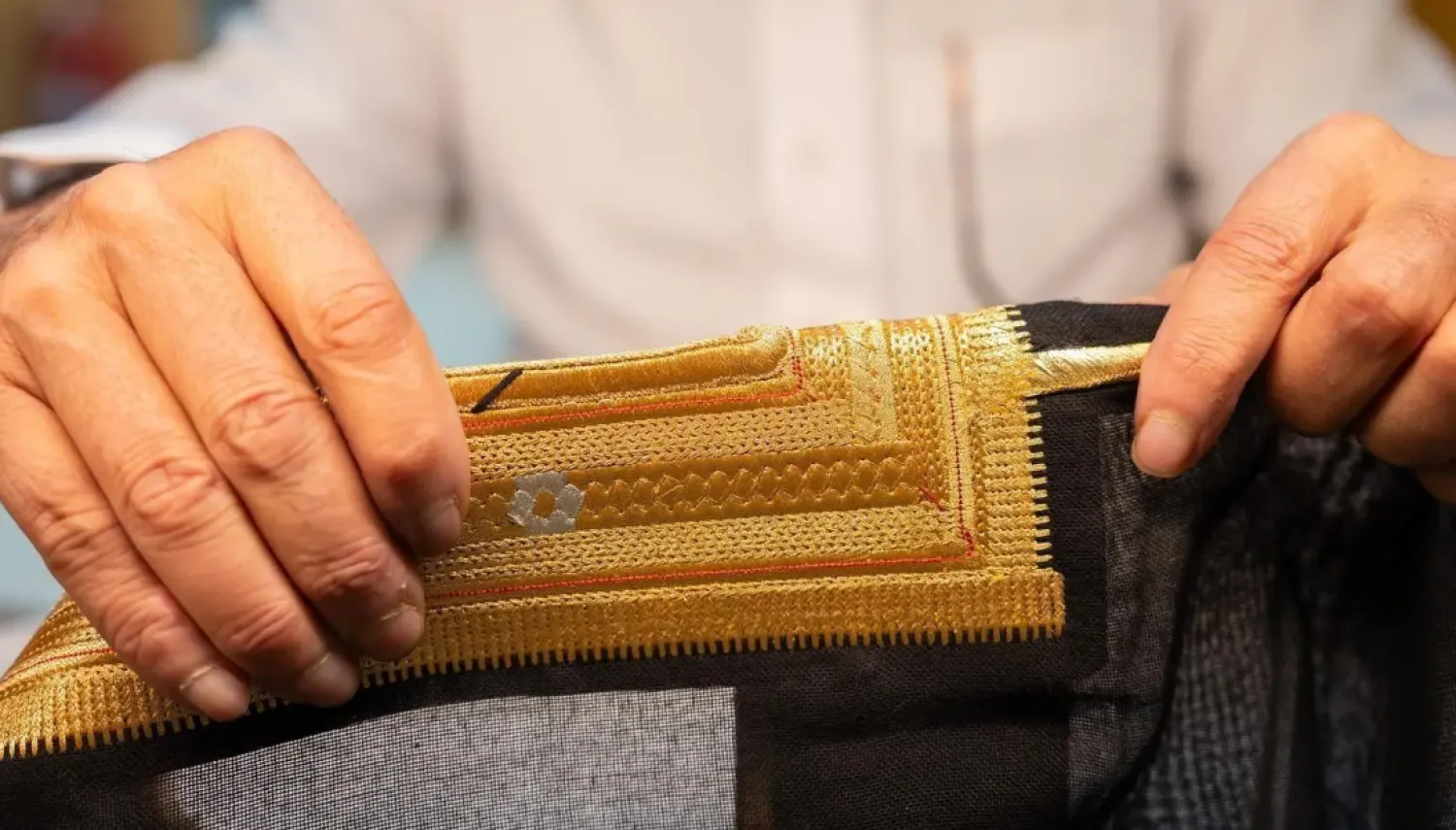
In preparation for Eid Al-Fitr, Riyadh’s markets are experiencing a significant surge in activity as men follow the Prophetic tradition of adorning themselves for the holiday, creating high demand for new thobes, bishts, and high-quality perfumes such as oud oil and incense, while tailoring shops and specialty retailers work at peak capacity to meet the community’s needs before the Eid morning celebrations, SPA reported.

The classic white thobe remains the most popular choice for Eid morning, often paired with a shemagh and a white bisht to symbolize cultural identity and elegance.

Beyond appearance, these preparations reflect deep-rooted social and religious values, emphasizing gratitude, family visits, and the strengthening of communal ties.


Prince Mohammed bin Salman Project Restores Al-Fuwaihi Mosque in Sakaka

The restoration expanded the mosque’s area from 72.33 to 93.98 square meters - SPA
TT

Prince Mohammed bin Salman Project Restores Al-Fuwaihi Mosque in Sakaka

The restoration expanded the mosque’s area from 72.33 to 93.98 square meters - SPA

As part of the Prince Mohammed bin Salman Project for the Development of Historical Mosques, Al-Fuwaihi Mosque in Sakaka, originally built in 1380 AH (1960) and commissioned by Shaman Al-Fuwaihi, has undergone a comprehensive restoration to preserve its architectural and cultural identity while serving as a vital link to the urban and social history of Al-Jouf Region, SPA reported.

The restoration expanded the mosque’s area from 72.33 to 93.98 square meters, yet maintained its original capacity of 28 worshippers.

Supervised by Saudi engineers and executed by specialized heritage firms, the project successfully balanced traditional standards with modern technology.

This initiative aligns with Vision 2030 by rehabilitating historic sites for prayer, highlighting the Kingdom’s cultural heritage, and ensuring the long-term sustainability of these religious landmarks.


Iran Says Museums and Historic Sites Damaged in War

FILED - 10 March 2026, Iran, Tehran: A member of the Iranian Red Crescent Society (IRCS) rescue teams works at the site of a building damaged in a US-Israeli airstrike in Resalat Square. Photo: -/ZUMA Press Wire/dpa
TT

Iran Says Museums and Historic Sites Damaged in War

FILED - 10 March 2026, Iran, Tehran: A member of the Iranian Red Crescent Society (IRCS) rescue teams works at the site of a building damaged in a US-Israeli airstrike in Resalat Square. Photo: -/ZUMA Press Wire/dpa

Iran's cultural heritage and tourism ministry said Saturday at least 56 museums and historic sites across the country have been damaged, as the Middle East war entered its 15th day.

In Tehran, US-Israeli strikes damaged the UNESCO-listed Golestan Palace in the early days of the conflict, local media reported.

The palace complex is one of the oldest sites in the Iranian capital and once served as the residence of the Qajar dynasty.

The ministry said Tehran has recorded the highest number of damaged monuments, with 19 suffering varying levels of harm.

The vast Naghsh-e Jahan Square, a 17th-century architectural jewel in the heart of the central Iranian city of Isfahan, has also been damaged.

In the port of Siraf, in Bushehr province, several houses were hit in the historic quarter, home to many century-old buildings.

UNESCO, the UN's culture agency, told AFP on Friday it was concerned about hundreds of historic sites in Iran, Israel and Lebanon that have been damaged or threatened by the war.


Ukraine's 'Origami Deer' Sculpture Rescued from Frontline Tours Europe

Ukrainian artist Zhanna Kadyrova (R) and Ukrainian curator of the 'Security Guarantees' project Leonid Marushchak pose in front of the 'Origami Deer' sculpture in Prague on March 12, 2026. (Photo by Michal Cizek / AFP)
TT

Ukraine's 'Origami Deer' Sculpture Rescued from Frontline Tours Europe

Ukrainian artist Zhanna Kadyrova (R) and Ukrainian curator of the 'Security Guarantees' project Leonid Marushchak pose in front of the 'Origami Deer' sculpture in Prague on March 12, 2026. (Photo by Michal Cizek / AFP)

An "Origami Deer" statue rescued from a Ukrainian city destroyed and occupied by Moscow's army is touring six European countries before featuring at the 61st Venice Biennale, which has sparked outrage over the inclusion of Russian artists.

Ukrainian artist Zhanna Kadyrova created the concrete work with her colleague Denys Ruban in 2019 for a park in the eastern city of Pokrovsk to replace a Soviet-era military plane displayed there.

In 2024, Kadyrova and historian Leonid Marushchak removed the deer, shaped like a paper origami, as Russian troops closed in and then occupied Pokrovsk.

The sculpture will be the main feature of the Ukrainian pavilion, named Security Guarantees, at the Venice Biennale.

It will feature alongside Russian exhibits at the event that started in 1895 and comprises festivals, art and architecture exhibitions running from May 9 to November 22.

The decision to invite Russian artists, banned from the 2022 and 2024 editions after Moscow's full-scale invasion of Ukraine, has sparked international uproar with the European Union threatening to cut funding for the Biennale.

"It's very important for us to see how the entire world reacts to the situation, supporting us and opposing Russia's participation," Marushchak told AFP.

"If the Russians want to show their culture, they might as well organize a biennale in Pokrovsk which they have destroyed," he added.

En route to Venice, the deer has been exhibited in Warsaw, Vienna and Prague and will continue on to Berlin, Brussels and Paris.

Displaced from its pedestal, the deer symbolizes "millions of Ukrainians who have lost their home" and moved abroad, Kadyrova told AFP during a stopover in Prague.

The resemblance to paper origami refers to the Budapest Memorandum of 1994 which saw Ukraine yielding its nuclear arsenal to Russia in exchange for security guarantees that did not materialize.

"So it's no more than paper," Kadyrova said.

Marushchak has been evacuating works of art from eastern Ukraine since the war started.

He has saved scores of objects, often taking huge risk with his team, to protect them from looting or theft.

One of the most dramatic rescue operations involved a 700-year-old stone lion statue evacuated from a museum in Bakhmut in 2023, just before the Russian army took the city, as Marushchak's car was hit by a shell on the way out.

"Other evacuations were difficult in that we didn't succeed as much as we wanted because the front line was too close and the danger was too big," Marushchak told AFP.

The Venice Biennale typically attracts more than 600,000 visitors to pavilions set up by participating countries.

Kadyrova said the Ukrainian team was not planning any protest over Russia's participation as "it's up to politicians".

"But I hope that some community will gather to pressure the Biennale, pressure Italy, and I hope that it will not happen."