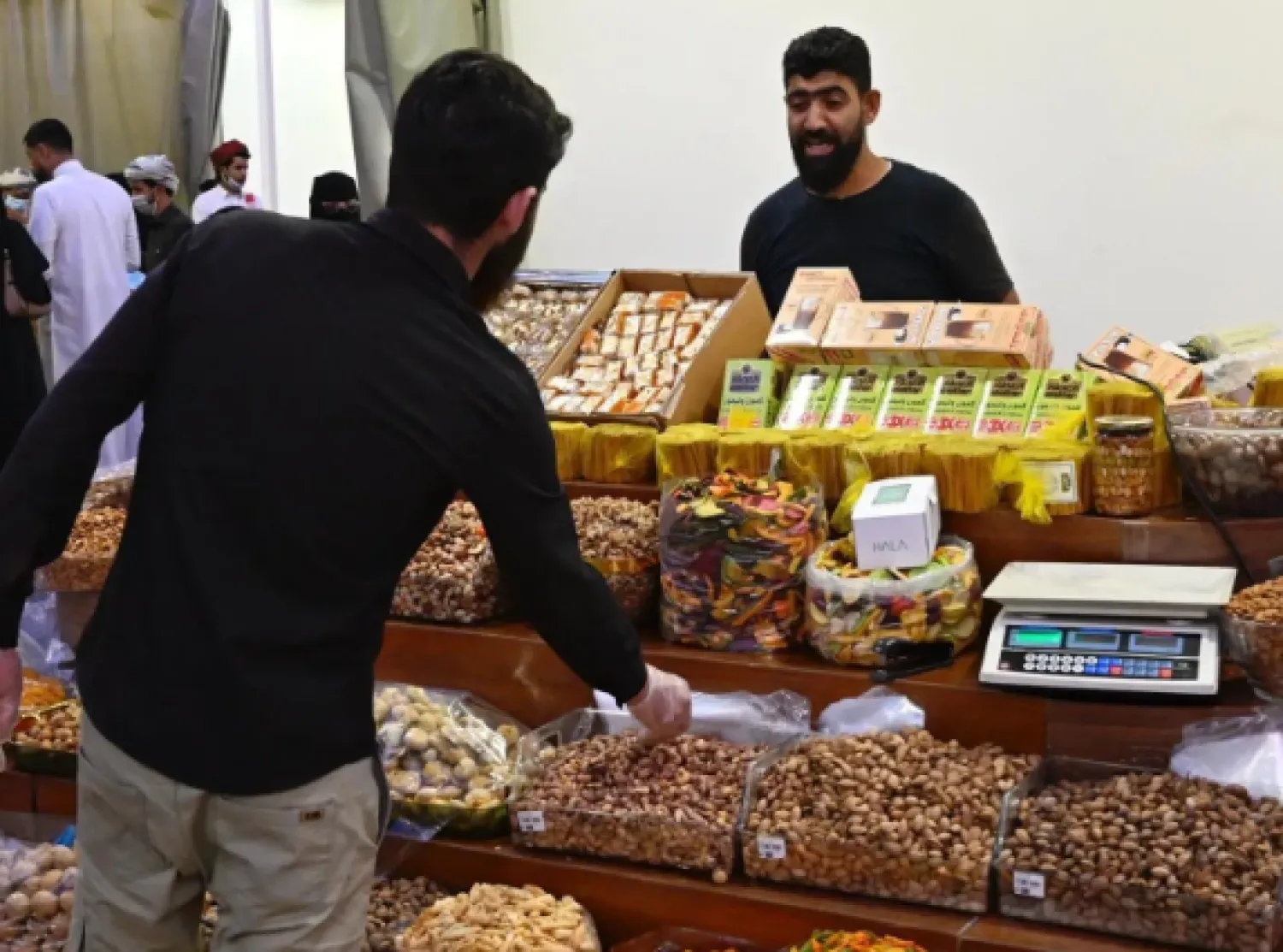
Levant Pavilion at Makkah Global Village Showcases Rich Cultural Heritage

The pavilion also presents interactive showcases highlighting the region’s history and civilizational legacy, blending entertainment with knowledge - SPA
TT

Levant Pavilion at Makkah Global Village Showcases Rich Cultural Heritage

The pavilion also presents interactive showcases highlighting the region’s history and civilizational legacy, blending entertainment with knowledge - SPA

The Levant pavilion at the Global Village, part of the Makkah winter events, is offering an integrated experience that reflects the depth of Levantine civilization and the richness of its cultural, artistic, and social heritage.

The pavilion takes visitors on a rich journey through authentic customs and traditions, featuring live performances and scenes that recreate details of traditional Levantine life, alongside displays of folk costumes and traditional handicrafts that express the region’s identity and historical continuity, SPA reported.

It also includes a diverse collection of handmade products, traditional accessories, and artistic pieces, set within an atmosphere that evokes the spirit of old marketplaces.

The pavilion also presents interactive showcases highlighting the region’s history and civilizational legacy, blending entertainment with knowledge.

The pavilion is part of the village’s vision to enhance cultural exchange and highlight the civilizations of different peoples, in line with the objectives of the Makkah winter events to offer diverse tourism and cultural content that enriches visitors’ experiences and reflects Makkah’s status as a destination that blends authenticity and culture.


Jazan Culture House Highlights the Role of Translation in Promoting Saudi Literature Globally

The meeting reviewed the state of Saudi literary translation, past and present, highlighting the challenges facing translators and publishers - SPA
TT

Jazan Culture House Highlights the Role of Translation in Promoting Saudi Literature Globally

The meeting reviewed the state of Saudi literary translation, past and present, highlighting the challenges facing translators and publishers - SPA

The Cultural House in Jazan held a cultural meeting yesterday evening titled “The Importance of Translating Saudi Literature.” Participants discussed the role of translation in introducing Saudi literature to local and international audiences, and its impact on strengthening its presence and highlighting the richness and diversity of Saudi creative expression, SPA reported.

The meeting reviewed the state of Saudi literary translation, past and present, highlighting the challenges facing translators and publishers.

Speakers emphasized the importance of adhering to professional and ethical standards when translating literary works into other languages.

The discussion also underscored the role of translation in enabling local literature to reach a global readership, thereby fostering cultural exchange and showcasing the Kingdom’s literary identity on the international stage.

This meeting is part of a series of cultural programs designed to enrich the literary scene, raise awareness of translation-related issues, and create platforms for dialogue among intellectuals and those interested in cultural affairs.


Royal Commission for AlUla Discovers Rare Fossils Dating Back 465 Million Years

The fossils date to the Middle Ordovician period - SPA
TT

Royal Commission for AlUla Discovers Rare Fossils Dating Back 465 Million Years

The fossils date to the Middle Ordovician period - SPA

The Royal Commission for AlUla (RCU) has announced the documentation and international publication of a scientific discovery of rare horseshoe crab fossils dating back approximately 465 million years, as part of a peer-reviewed study published in Gondwana Research, a leading international journal specialising in geological sciences.

This unique fossil discovery has been published globally for the first time, reinforcing AlUla’s position as a world-class center for geological and scientific research related to Earth’s history and biodiversity. The fossils were discovered in AlGharameel Nature Reserve in AlUla, adding a significant scientific dimension to the understanding of the region’s natural history, SPA reported.

The fossils date to the Middle Ordovician period, approximately 485–444 million years ago, making them among the oldest known horseshoe crab fossils worldwide. They are distinguished by their exceptionally large size compared to other specimens from the same period. All fossils were found preserved upside down, a mode of preservation not previously recorded, alongside trace fossils indicating attempts by the organisms to return to their natural position. This provides rare evidence of ancient behavioural patterns and enables their interpretation in light of contemporary biological knowledge, supporting advanced scientific research.

According to SPA, geological stratigraphic analysis indicated the recurrence of intense seasonal storms during that period, suggesting that these organisms congregated in shallow coastal environments affected by such events, which contributed to their preservation within sedimentary deposits.

These findings offer a clear picture of AlUla’s ancient coastal environment and add a new scientific perspective to understanding its geological and environmental history. They also highlight the commission’s capacity to provide accurate data that supports scientific research and innovation in the study of AlUla’s natural heritage.

The discovery also represents a previously unclassified species, investigated through two research phases in collaboration with a team led by Dr Russell Bicknell, an academic at Flinders University in Adelaide. The second phase, scheduled for the first half of 2026, will include the collection of additional samples and further study of the new species in preparation for its formal scientific classification. The fossil specimens have been preserved within RCU’s museum collections to support future research and public engagement.

The findings reflect the Royal Commission for AlUla’s commitment to advancing scientific transformation, strengthening AlUla’s position as a global destination for scientific discovery and geological research, enabling international partnerships, and developing research and educational programmes related to natural heritage.


Contemporary Art Museum in AlUla and Centre Pompidou Announce ‘Arduna’ Exhibition This February

The exhibition will feature more than 80 significant artworks by artists from Saudi Arabia, the Middle East and North Africa, and around the world. (SPA)
TT

Contemporary Art Museum in AlUla and Centre Pompidou Announce ‘Arduna’ Exhibition This February

The exhibition will feature more than 80 significant artworks by artists from Saudi Arabia, the Middle East and North Africa, and around the world. (SPA)

The exhibition Arduna will welcome visitors to the fifth edition of the AlUla Arts Festival from February 1 to April 15.

Presented by Arts AlUla and organized through a joint curatorial collaboration with Centre Pompidou, with the support of the French Agency for AlUla Development (AFALULA), the exhibition features more than 80 significant artworks by artists from Saudi Arabia, the Middle East and North Africa, and around the world.

Arduna offers visitors an early insight into the artistic vision of the Contemporary Art Museum in AlUla, envisioned as a global institution drawing inspiration from AlUla’s location and heritage as an ancient cultural oasis.

The exhibition is based on works drawn from a growing collection of the Royal Commission for AlUla, alongside important pieces from the collection of the Musée National d’Art Moderne at Centre Pompidou. The exhibition is overseen by co-curator Candida Pestana, with associate curator Ftoon AlThaedi from the Royal Commission for AlUla, and curator Anna Hiddleston with associate curator Noémie Fillon from Centre Pompidou.

As an oasis located along the ancient Incense Trade Routes that connected India and the Arabian Gulf with the Levant and Europe, AlUla served as a safe haven for passing traders, offering protection and tranquility. It was a place where merchants entrusted their goods during their absence, and a space for rest, contemplation, and reflection - a living green garden set within the vast desert.

The exhibition takes the image of the garden as its starting point, drawing inspiration from the site of AlUla to explore how modern and contemporary artists examine the evolving relationship between humanity, nature, and the land.

Featuring more than 80 artworks across multiple disciplines, the exhibition brings together pioneers of modern art such as Pablo Picasso, David Hockney, Joan Mitchell, and Wassily Kandinsky, alongside leading contemporary artists including Saudi artists Ayman Zedani and Manal AlDowayan, as well as artists from the Arab world such as Imran Qureshi, Samia Halaby, and Etel Adnan.

The exhibition is divided into six chapters that explore the multiple manifestations of nature - real and imagined - through a journey that moves from gardens and orchards to deserts and their cosmic reflections.

Through the presentation of impactful and inspiring artworks, the exhibition highlights key global challenges, including the Anthropocene era, the threat of climate change, human displacement, and expanding urbanization.

As artists seek to unpack humanity’s complex and often strained relationship with the environment, the exhibition may be seen as an invitation to reimagine new ways of coexistence among all forms of life.

Arduna also presents a selection of newly commissioned artworks by the Contemporary Art Museum in AlUla, developed through close engagement with the region’s unique natural environment and rich cultural contexts. These include new works by Saudi artist Ayman Zedani and Lebanese artist Tarek Atoui, produced as part of the AlUla Artists Residency Program.

The exhibition further highlights new works that collectively reflect the museum’s central role in fostering artistic practices rooted in dynamic interaction between artists, curators, and local communities, contributing to the development of AlUla’s distinctive creative identity.

Director of Arts and Creative Industries at the Royal Commission for AlUla Hamad Alhomiedan stated that Arduna represents a pivotal moment in the journey of the AlUla Arts Festival and embodies Arts AlUla’s aspiration to position itself at the heart of global discussions on art, culture, and the environment.

He noted that the exhibition brings together exceptional works from Saudi Arabia, the region, and the world, engaging audiences through themes that reflect the collective relationship with nature and land.

Arduna presents bold artistic propositions and offers artists meaningful opportunities to engage with AlUla’s unique heritage and breathtaking landscapes, he added, describing the exhibition as an open celebration of creativity and a foundational step toward establishing AlUla as a sustainable hub for cultural innovation and artistic excellence.

President of Centre Pompidou Laurent Le Bon said the exhibition represents an important step in the partnership with the Royal Commission for AlUla, allowing the public to experience the first outcomes of Centre Pompidou’s strategic advisory role for the forthcoming Contemporary Art Museum in AlUla.

He underlined the shared mission of promoting cultural heritage and fostering long-term cross-cultural dialogue, expressing his anticipation of welcoming visitors, particularly young audiences, to explore this unique exhibition and the diverse artistic landscapes of Saudi Arabia, France, and beyond.

Arduna, which serves as a preparatory step toward the opening of the Contemporary Art Museum in AlUla, will be staged in the museum’s experimental pre-opening gallery spaces and will be accessible through ticketed entry.