
Top Prosecutor: Louvre Heist Probe Still Aims to Recover Jewelry

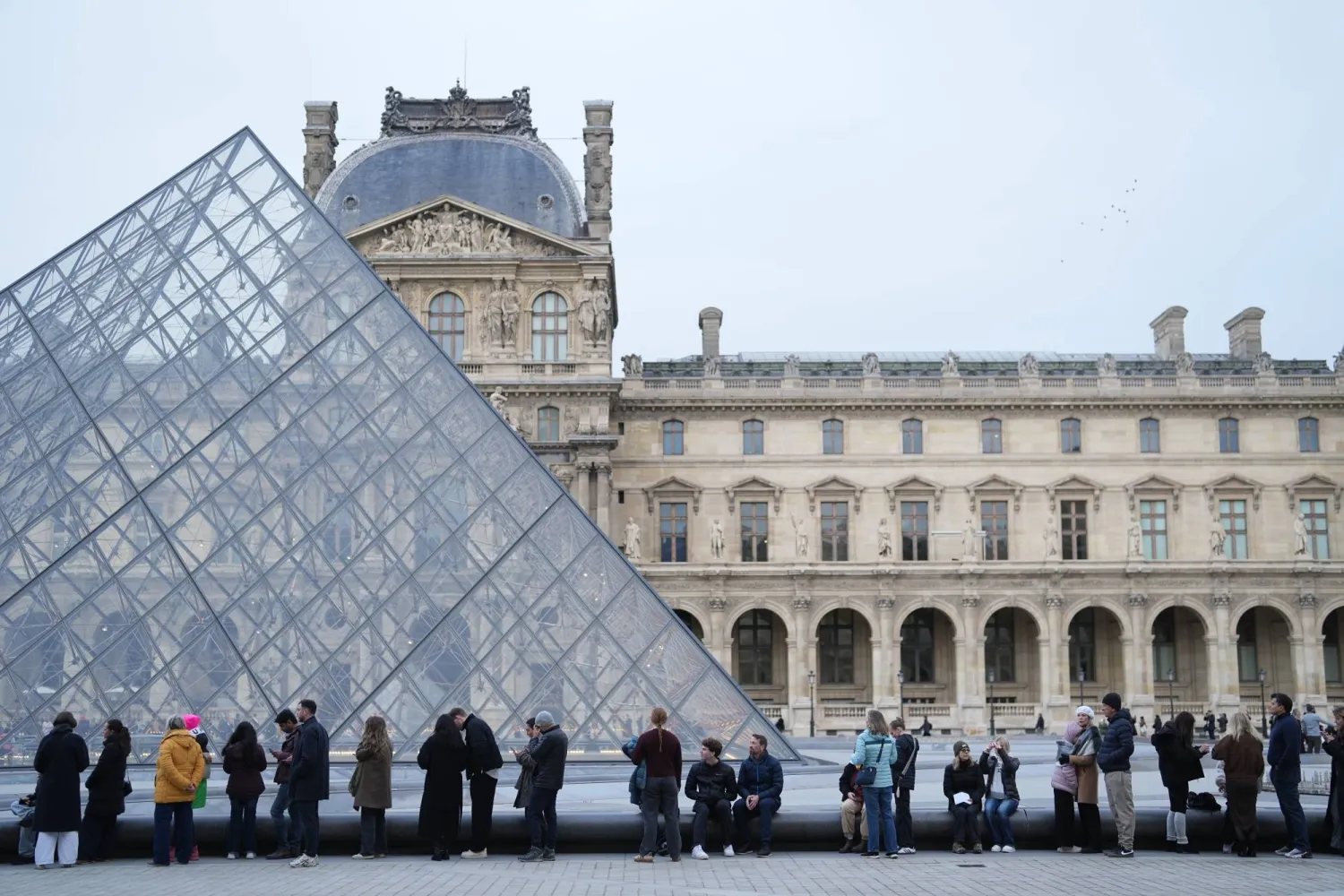
FILE - People wait for the Louvre museum to open, Thursday, Dec. 18, 2025 in Paris. (AP Photo/Thibault Camus, File)
TT

Top Prosecutor: Louvre Heist Probe Still Aims to Recover Jewelry

FILE - People wait for the Louvre museum to open, Thursday, Dec. 18, 2025 in Paris. (AP Photo/Thibault Camus, File)

French investigators remain determined to find the imperial jewels stolen from the Louvre in October, a prosecutor has told AFP.

Police believe they have arrested all four thieves who carried out the brazen October 19 robbery, making off with jewelry worth an estimated $102 million from the world-famous museum.

"The interrogations have not produced any new investigative elements," top Paris prosecutor Laure Beccuau said this week, three months after the broad-daylight heist.

But the case remains a top priority, she underlined.

"Our main objective is still to recover the jewelry," she said.

That Sunday morning in October, thieves parked a mover's truck with an extendable ladder below the Louvre's Apollo Gallery housing the French crown jewels.

Two of the thieves climbed up the ladder, broke a window and used angle grinders to cut glass display booths containing the treasures, while the other two waited below, investigators say.

The four then fled on high-powered motor scooters, dropping a diamond-and-emerald crown in their hurry.

But eight other items of jewelry -- including an emerald-and-diamond necklace that Napoleon I gave his second wife, Empress Marie-Louise -- remain at large.

Beccuau said investigators were keeping an open mind as to where the loot might be.

"We don't have any signals indicating that the jewelry is likely to have crossed the border," she said, though she added: "Anything is possible."

Detectives benefitted from contacts with "intermediaries in the art world, including internationally" as they pursued their probe.

"They have ways of receiving warning signals about networks of receivers of stolen goods, including abroad," Beccuau said.

As for anyone coming forward to hand over the jewels, that would be considered to be "active repentance, which could be taken into consideration" later during a trial, she said.

A fifth suspect, a 38-year-old woman who is the partner of one of the men, has been charged with being an accomplice but was released under judicial supervision pending a trial.

Investigators still had no idea if someone had ordered the theft.

"We refuse to have any preconceived notions about what might have led the individuals concerned to commit this theft," the prosecutor said.

But she said detectives and investigating magistrates were resolute.

"We haven't said our last word. It will take as long as it takes," she said.


Prince Mohammed bin Salman Project Restores Historic Al-Qalaah Mosque in Riyadh Region

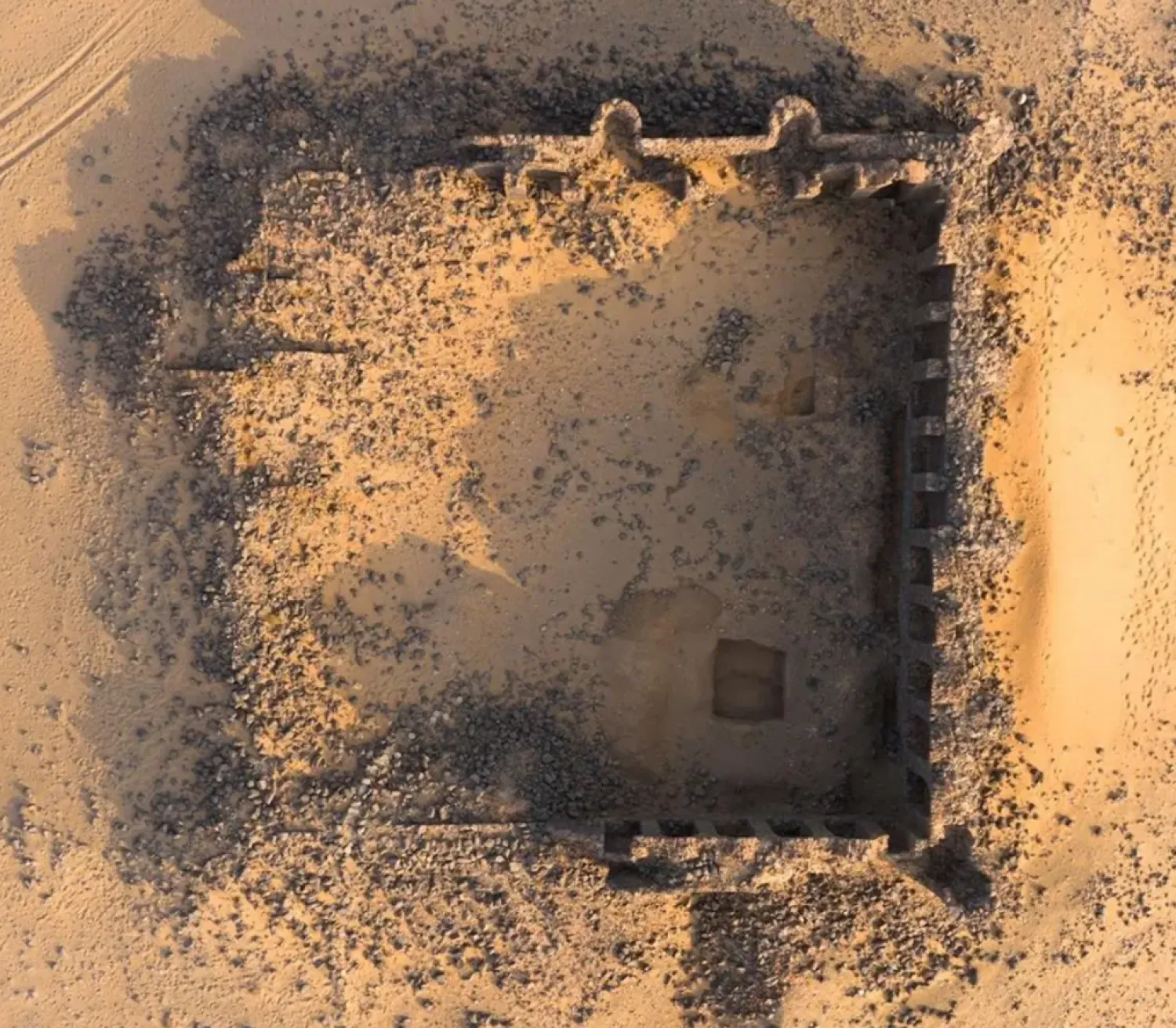
The mosque is a prime example of traditional Najdi architecture - SPA
TT

Prince Mohammed bin Salman Project Restores Historic Al-Qalaah Mosque in Riyadh Region

The mosque is a prime example of traditional Najdi architecture - SPA

The Prince Mohammed bin Salman Project for the Development of Historical Mosques continues its mission to preserve the Kingdom’s architectural heritage by restoring Al-Qalaah Mosque in Hawtat Bani Tamim, Riyadh Region. Built in 1250 AH (1834 CE), this historic landmark is situated within the fortress of Second Saudi State founder Imam Turki bin Abdullah.

The mosque is a prime example of traditional Najdi architecture, featuring stone foundations, mud walls constructed using molded brick techniques, and a roof of tamarisk trunks and palm fronds supported by stone-bead cylindrical columns, SPA reported.

Through the current renovation, the mosque’s area has expanded from 608.68 to 625.78 square meters while maintaining a capacity for 180 worshippers. Executed by specialized Saudi firms under expert engineering supervision, the project balances traditional standards with modern sustainability to ensure the mosque remains a living testament to Islamic and national history.

This initiative aligns with Vision 2030 objectives to rehabilitate historical sites for worship, highlight cultural heritage, and preserve the Kingdom’s authentic architectural identity for future generations.


UNESCO Fears for Fate of Historical Sites during Iran War

Debris at the historical monument Golestan Palace after it was damaged in an Israeli and US strike, amid the US-Israeli conflict with Iran, in Tehran, Iran, March 3, 2026. Majid Asgaripour/WANA (West Asia News Agency) via REUTERS/File Photo
TT

UNESCO Fears for Fate of Historical Sites during Iran War

Debris at the historical monument Golestan Palace after it was damaged in an Israeli and US strike, amid the US-Israeli conflict with Iran, in Tehran, Iran, March 3, 2026. Majid Asgaripour/WANA (West Asia News Agency) via REUTERS/File Photo

UNESCO said it is deeply concerned about the fate of world heritage sites in Iran and across the region, after Tehran's Golestan palace, often compared to Versailles, and a historic mosque and palace in Isfahan were damaged in the war.

The United Nations' cultural agency on Wednesday urged all parties to protect the region's outstanding cultural sites, saying four of Iran's 29 world heritage sites had been damaged since the start of the US and Israeli war with Iran.

"UNESCO is deeply concerned by the first impact that the hostilities are already having on many world heritage sites," Lazare Eloundou Assomo, director of the World Heritage Centre, told Reuters, adding he was also concerned for sites in Israel, Lebanon and across the Middle East.

Tehran's Golestan palace, damaged in US–Israeli strikes, is testimony to the grandeur of Iran's civilization in the 19th century, he said.

The palace was chosen as the Persian royal residence and seat of power by the Qajar family and shows the introduction of European styles in Persian arts, according to the UNESCO website. The last Shah of Iran, Mohammad Reza Pahlavi, held a coronation ceremony there in 1969.

"We sometimes even compare it with the Versailles Palace in France, for instance, and it has suffered, unfortunately, some damage. We don't know the extent for the moment. But clearly, with the images that we have been able to receive, we can confirm ... it has been affected," Eloundou Assomo said.

Photos of the interior of the palace have shown piles of smashed glass and shards of wood on the floor, and shattered woodwork.

Isfahan was one of Central Asia's most important cities and a key point on the Silk Road trading route. Its Masjed-e Jame (Jameh Mosque) is more than 1,000 years old and shows the development of Islamic art through 12 centuries.

Buildings close to the buffer zone of the prehistoric sites of the Khorramabad Valley have also been damaged, UNESCO said.

UNESCO has shared coordinates of key cultural sites to all parties, Eloundou Assomo said, and was monitoring damage.

"We are calling for the protection of all sites of cultural significance ... everything that tells the history of all the civilisations of the 18 countries in the region," he said.


Coin Used to Pay for Bus Ticket in Leeds Found to Be Phoenician

The coin has been donated to Leeds Museums and Galleries. (Leeds City Council)
TT

Coin Used to Pay for Bus Ticket in Leeds Found to Be Phoenician

The coin has been donated to Leeds Museums and Galleries. (Leeds City Council)

An odd-looking coin used to pay for a bus fare in Leeds in the 1950s has been found to belong to an ancient civilization from more than 2,000 years ago, reported The Independent.

The coin, handed to a local bus driver decades ago, came into the hands of James Edwards, former chief cashier with Leeds City Transport, who gathered fares and counted them at the end of each day.

Since it couldn’t be spent, Edwards took it home and gifted the ancient coin to his young grandson, Peter, who kept it in a small wooden chest for more than 70 years.

Archaeologists from the University of Leeds have now found that it came from the Carthaginians, part of the Phoenician culture, in the Spanish city of Cadiz during the 1st century BC.

“My grandfather would come across coins which were not British and put them to one side, and when I went to his house, he would hand me a few,” the now 77-year-old grandson said.

“It was not long after the war, so I imagine soldiers returned with coins from countries they had been sent to. Neither of us were coin collectors, but we were fascinated by their origin and imagery – to me, they were treasure,” he said.

Peter attempted to uncover the coin’s origin, focusing on a particular inscription.

It bears the face of the god Melqart on one side, resembling the Greek hero Herakles and wearing his famed lionskin headdress.

Experts said it came from what was once a Carthaginian settlement on the Spanish coast.

“The coin always fascinated me because it was hard to decipher where it came from,” Peter said.

“My first thought when I found out its origin was that I would like to return it to an institute where it could be studied by all, and Leeds Museums and Galleries kindly offered to give it a good home,” he said.

The coin has been donated to Leeds Museums and Galleries and is now part of the Leeds Discovery Centre, which includes coins and currency from cultures around the world, spanning thousands of years of history.

“It’s incredible to imagine how this tiny piece of history created by an ancient civilization thousands of years ago has somehow made its way to Leeds and into our collection,” said Salma Arif, Leeds City Council’s executive member for adult social care, active lifestyles and culture.

“Museums like ours are not just about preserving objects, they’re also about telling stories like this one and inspiring visitors to think about the history that’s all around us, sometimes in the most unlikely of places,” Arif said.