


Olympic Visitors to Milan Get a Rare Chance to Glimpse Restoration of a Long-Hidden Leonardo Gem

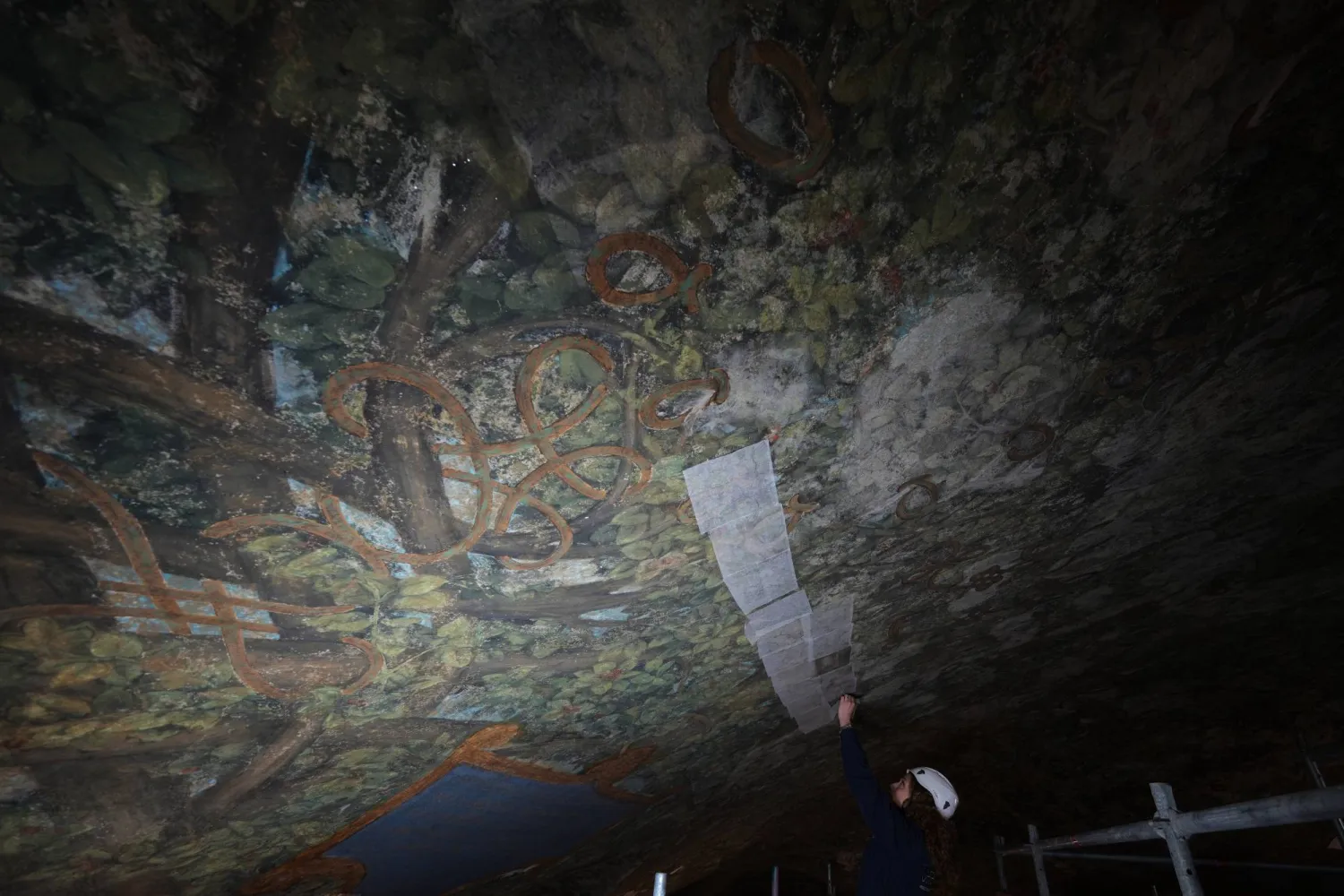
Marina Vece works on restoring the Sala delle Asse, part of the newly created Leonardo da Vinci itineraries inside Milan's Sforza Castle, Italy, Tuesday, Jan. 20, 2026. (AP)
TT

Olympic Visitors to Milan Get a Rare Chance to Glimpse Restoration of a Long-Hidden Leonardo Gem

Marina Vece works on restoring the Sala delle Asse, part of the newly created Leonardo da Vinci itineraries inside Milan's Sforza Castle, Italy, Tuesday, Jan. 20, 2026. (AP)

In honor of the Milan Cortina Olympics, Milan cultural officials are for a brief time only allowing visitors access to a long-hidden wall and ceiling painting by Leonardo da Vinci while restoration work is underway.

The vast painting of a pergola covered with intertwined flowering branches inside Milan’s Sforza Castle is concealed behind a six-meter (nearly 20-foot) towering scaffolding in the Sala delle Asse. Letters establish that Leonardo started the work, but it's one he left unfinished.

“In 1498, he had to flee because the French arrived in Milan, and after that date it was covered over, hidden,” said Luca Tosi, heritage curator at Milan’s landmark Sforza Castle, which is in the same Sempione Park where the Olympic flame will burn during the Feb. 6-22 Winter Games.

In another sign of Leonardo's impact on Milan, the Olympic cauldron itself is inspired by the Renaissance genius' geometric studies, officials announced this week.

Under the French, the castle became a military barracks and the painting, which covers the ceiling and part of the wall, was covered with plaster. The work was only rediscovered early last century, when restorers removed the plaster and filled in color to match Leonardo’s work.

“As a result, Leonardo scholars no longer recognized them as a true Leonardo, but rather as a repainted Leonardo, somewhat a fake, to use a popular term,” Tosi added.

Visitors will be able to climb up the scaffolding and view the restorers at work during a brief window from Feb. 7-March 14, after which it will be closed to the public again for another 18 months to complete the work.

Restorers are using Japanese rice paper with demineralized water to remove salts that have seeped into the walls, gradually cleaning the surface of the painting.

“The hardest part is that Leonardo’s painting is very delicate, there are some liftings, there are more fragile parts and therefore the work must be done centimeter by centimeter, with the utmost attention and care,” Tosi said.

The painting is a study of leaves and plant species that provides yet more evidence of Leonardo’s infamous scientific inquiry, said Tomasso Sacchi, Milan’s top culture official.

“It’s a thrill to know another Leonardo and to experience this extraordinary dedication to various forms of knowledge by this fundamental figure in our history,” Sacchi said.


Saudi Literature, Publishing and Translation Commission Launches Pavilion at London Book Fair

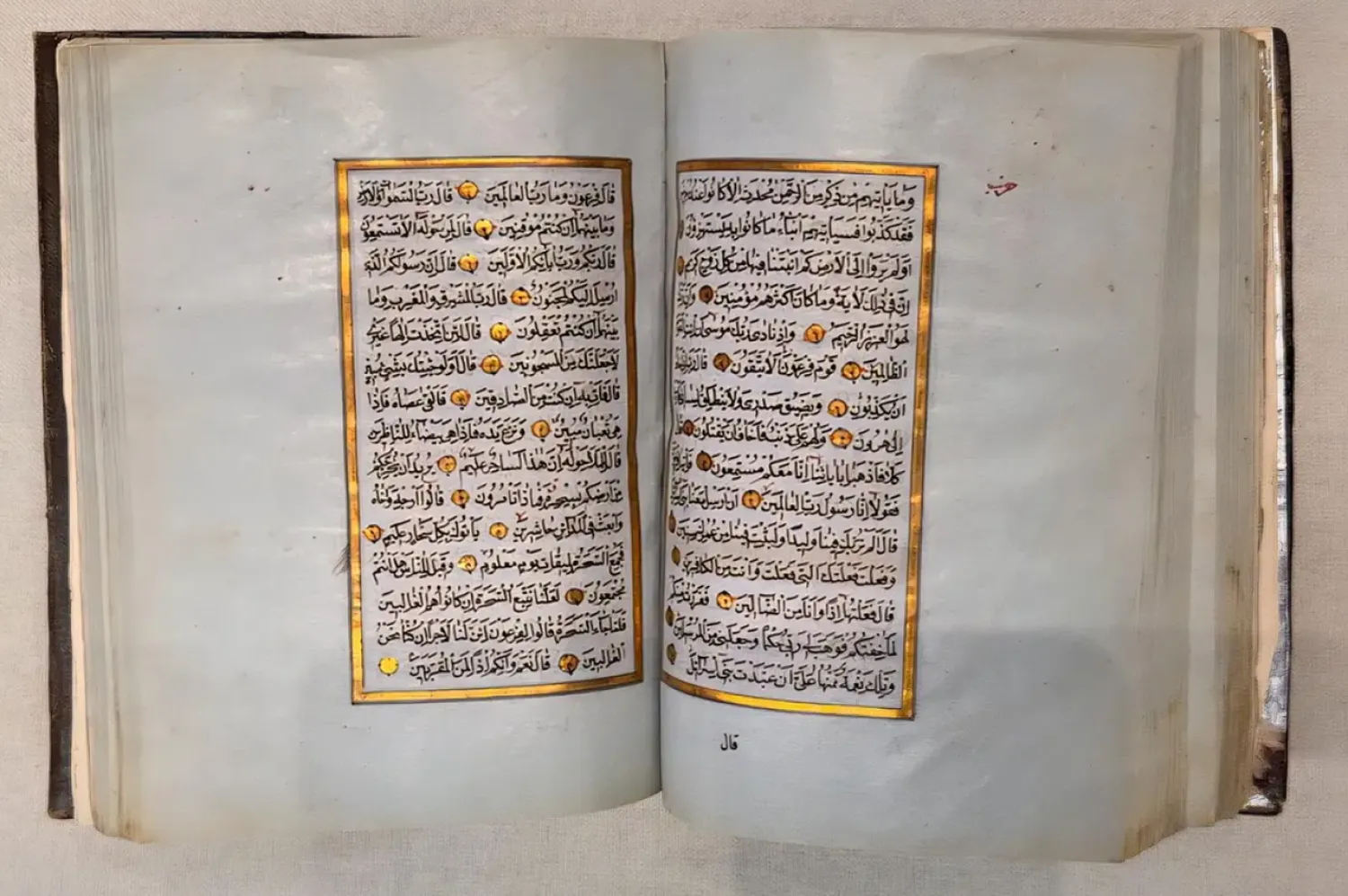
The commission's participation aims to promote Saudi literary and intellectual output while showcasing the rapid development of the literature, publishing, and translation sectors in the Kingdom. (SPA)
TT

Saudi Literature, Publishing and Translation Commission Launches Pavilion at London Book Fair

The commission's participation aims to promote Saudi literary and intellectual output while showcasing the rapid development of the literature, publishing, and translation sectors in the Kingdom. (SPA)

Saudi Arabia’s Literature, Publishing and Translation Commission officially launched the Kingdom’s pavilion at the London Book Fair 2026, held at Olympia London from March 10 to 12. The participation underscores the Kingdom’s growing presence in the global publishing industry and reflects its expanding cultural engagement on the international stage.

Commission Chief Executive Dr. Abdullatif Alwasel said the commission's participation aims to promote Saudi literary and intellectual output while showcasing the rapid development of the literature, publishing, and translation sectors in the Kingdom.

The initiative seeks to highlight the vibrancy and diversity of Saudi Arabia’s cultural landscape, presenting it as a dynamic environment that reflects the richness of the Kingdom’s cultural identity, he stressed.

The commission is working to strengthen the presence of Saudi publishers at major international events while promoting its programs and initiatives in literature, publishing and translation, he added.

Its participation also aims to establish professional and knowledge-based partnerships with leading stakeholders in the global publishing industry, thereby expanding opportunities for collaboration and knowledge exchange, he went on to say.

Alwasel added that the London Book Fair is one of the world’s most important platforms for networking among publishing professionals, facilitating the exchange of expertise in areas such as translation rights, publishing innovation, and content creation.

Such engagement helps boost the global visibility of Saudi cultural production and opens new markets for Saudi literary content. The Kingdom’s pavilion brings together several national institutions representing the cultural and knowledge sectors, reflecting the integrated nature of Saudi Arabia’s cultural development efforts.

Participating entities include the Ministry of Islamic Affairs, Dawah and Guidance; the King Fahd Glorious Quran Printing Complex; the King Abdulaziz Foundation; the King Fahd National Library; the King Abdulaziz Public Library; the King Salman Global Academy for the Arabic Language; Prince Mohammed bin Fahd University; and Nasher Publishing and Distribution Company.

The Kingdom’s participation reflects its ongoing commitment to strengthening its presence at major international book fairs, supporting the publishing industry, and expanding cultural and intellectual cooperation with countries around the world. These efforts align with the objectives of Saudi Vision 2030, which seeks to promote culture as a bridge for civilizational dialogue and human exchange.


Italy Buys Caravaggio Painting for About $35 Million, One of Its Largest Payouts for a Single Work

A visitor looks at the private collection and never previously shown to the public painting "Portrait de Maffeo Barberini" by Italian master Caravaggio at the Gallerie Nazionali di Arte Antica in the Barberini palace in Rome on November 22, 2024. (Alberto Pizzoli / AFP)
TT

Italy Buys Caravaggio Painting for About $35 Million, One of Its Largest Payouts for a Single Work

A visitor looks at the private collection and never previously shown to the public painting "Portrait de Maffeo Barberini" by Italian master Caravaggio at the Gallerie Nazionali di Arte Antica in the Barberini palace in Rome on November 22, 2024. (Alberto Pizzoli / AFP)

Italy has bought a rare portrait by baroque painter Caravaggio for 30 million euros (about $35 million), one of the largest state investments ever for a single artwork, the country’s Culture Ministry said Tuesday.

The portrait, painted around 1598 and attributed to Caravaggio in 1963, depicts Maffeo Barberini, a nobleman who later became Pope Urban VIII.

The painting was acquired from a private collection by the Italian state after over a year of negotiations and will now enter Rome’s Palazzo Barberini permanent collection.

“This is a work of exceptional importance,” Culture Minister Alessandro Giuli said in a statement, noting the painting was a turning point in Caravaggio’s modern rediscovery and its purchase has helped strengthen the presence of his works in Italian public collections.

The new acquisition follows a recent one of Antonello da Messina’s “Ecce Homo,” and is part of Italy’s broader project to strengthen the national cultural heritage, making some art history masterpieces accessible to scholars and the public.

The “Portrait of Monsignor Maffeo Barberini” depicts the future pope in his 30s, dressed as a cleric of the Apostolic Chamber, at a crucial moment in his rise to power.

The work was made famous by art critic Roberto Longhi in his 1963 article “The True ‘Maffeo Barberini’ of Caravaggio,” and has since been widely recognized by critics as a work by Caravaggio, also known as Michelangelo Merisi.

Longhi called the painting “one of the founding moments of modern portraiture,” emphasizing how Caravaggio ushered in a new psychological intensity.

Caravaggio revolutionized painting at the turn of the 17th century by introducing a dramatic use of light that became the cornerstone of the Baroque style. He is currently one of the most studied artists in the world, yet the number of his confirmed works remains extremely limited.

At Palazzo Barberini, the portrait will be displayed alongside Caravaggio’s other works — one of the world’s most important collections — in particular along another of Caravaggio’s masterpieces, “Judith Slaying Holofernes,” also purchased by the Italian state in 1971.


Prince Mohammed bin Salman Project Restores 1,400-Year-Old Jarir Al-Bajali Mosque in Taif

The mosque is historically linked to the companion Jarir ibn Abdullah Al-Bajali, who embraced Islam in 10 AH - SPA
TT

Prince Mohammed bin Salman Project Restores 1,400-Year-Old Jarir Al-Bajali Mosque in Taif

The mosque is historically linked to the companion Jarir ibn Abdullah Al-Bajali, who embraced Islam in 10 AH - SPA

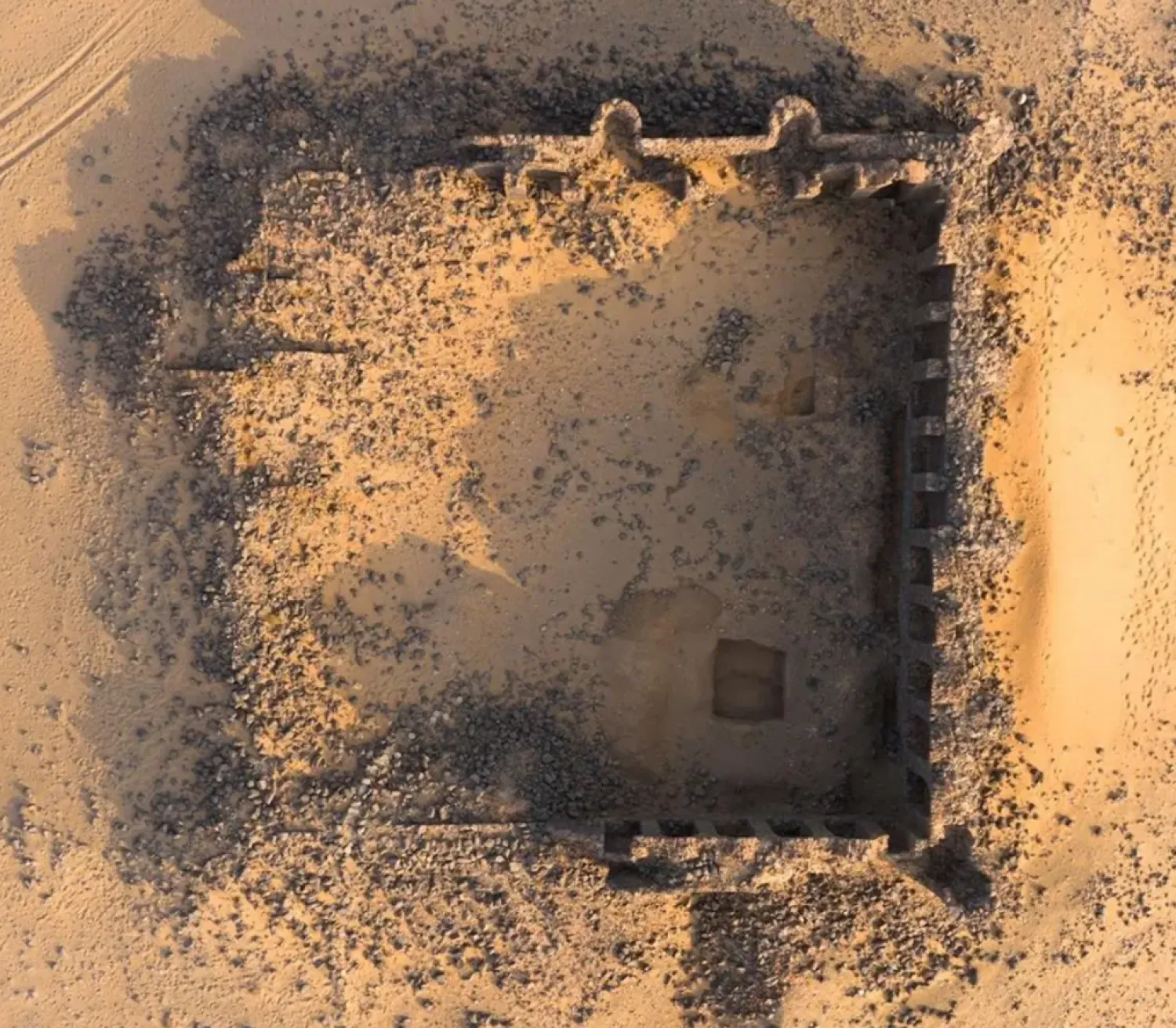
The Prince Mohammed bin Salman Project for the Development of Historical Mosques has completed the restoration of Jarir Al-Bajali Mosque in Taif, preserving a heritage site that dates back more than 1,400 years.

The mosque is historically linked to the companion Jarir ibn Abdullah Al-Bajali, who embraced Islam in 10 AH. The restoration preserved the mosque’s Sarawat architectural style, known for its irregular stone construction and juniper wood roofing. Its capacity has also been expanded to accommodate 135 worshippers, SPA reported.

Covering 350 square meters, the mosque features a unique combination of square stone and modern cylindrical minarets. The project was implemented under the supervision of Saudi engineers and heritage specialists, integrating modern sustainability standards with traditional building techniques.

The initiative aligns with the objectives of Saudi Vision 2030 to preserve the Kingdom’s architectural identity and highlight its deep Islamic heritage for future generations.