


Danish Warship Sunk by Nelson’s British Fleet Discovered After 225 Years

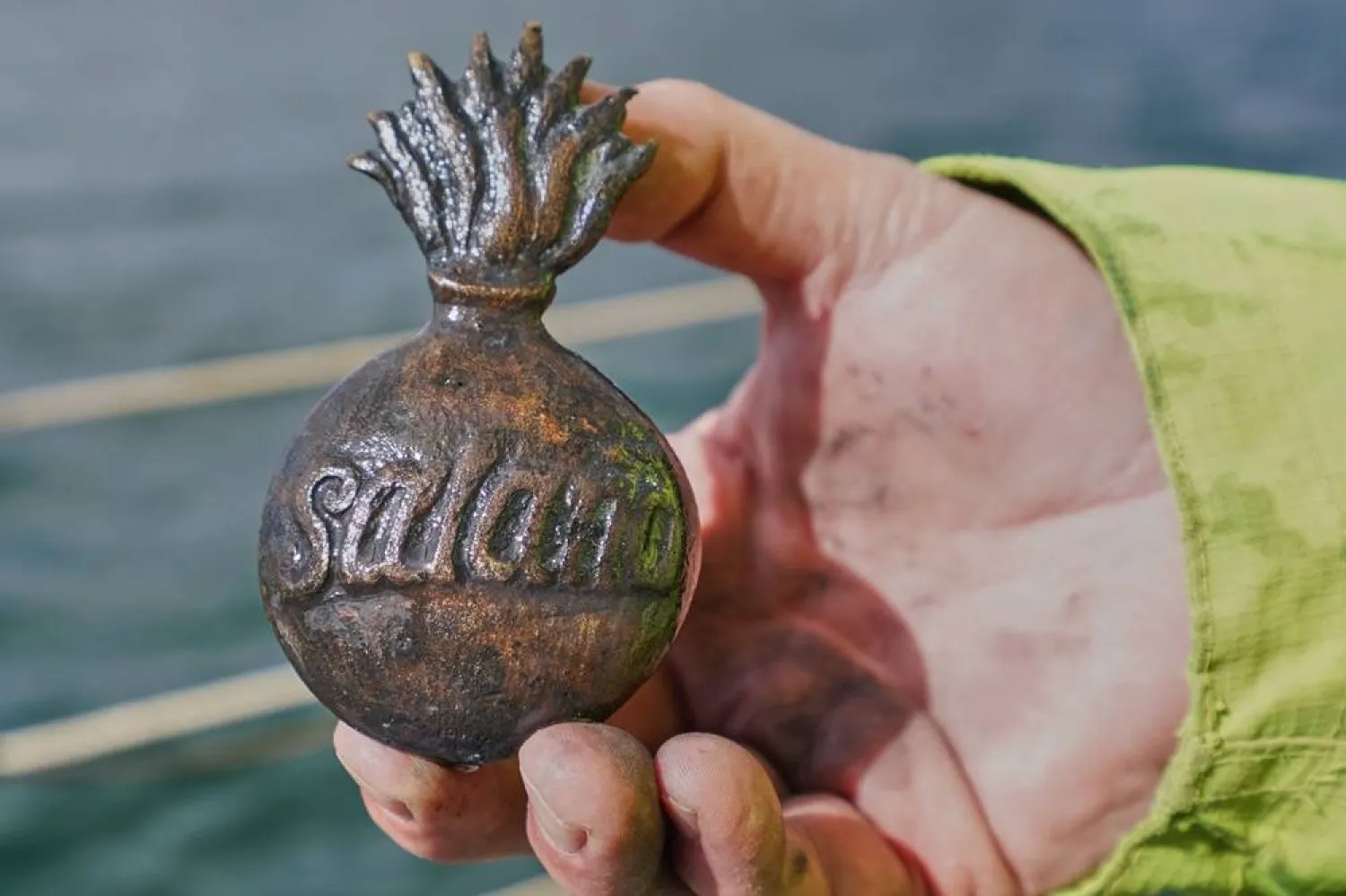
 Morten Johansen, head of maritime archaeology at Denmark's Viking Ship Museum, shows a metal insignia recovered from the wreck of Danish flagship "Dannebroge" that sank during the Battle of Copenhagen in 1801, in Copenhagen, Denmark, Tuesday, March 31, 2026. (AP)
Morten Johansen, head of maritime archaeology at Denmark's Viking Ship Museum, shows a metal insignia recovered from the wreck of Danish flagship "Dannebroge" that sank during the Battle of Copenhagen in 1801, in Copenhagen, Denmark, Tuesday, March 31, 2026. (AP)
TT

Danish Warship Sunk by Nelson’s British Fleet Discovered After 225 Years

 Morten Johansen, head of maritime archaeology at Denmark's Viking Ship Museum, shows a metal insignia recovered from the wreck of Danish flagship "Dannebroge" that sank during the Battle of Copenhagen in 1801, in Copenhagen, Denmark, Tuesday, March 31, 2026. (AP)
Morten Johansen, head of maritime archaeology at Denmark's Viking Ship Museum, shows a metal insignia recovered from the wreck of Danish flagship "Dannebroge" that sank during the Battle of Copenhagen in 1801, in Copenhagen, Denmark, Tuesday, March 31, 2026. (AP)

More than 200 years after being sunk by Adm. Horatio Nelson and the British fleet, a Danish warship has been discovered on the seabed of Copenhagen Harbor by marine archaeologists.

Working in thick sediment and almost zero visibility 15 meters (49 feet) beneath the waves, divers are in a race against time to unearth the 19th-century wreck of the "Dannebroge" before it becomes a construction site in a new housing district being built off the Danish coast.

Denmark’s Viking Ship Museum, which is leading the monthslong underwater excavations, announced its findings on Thursday, 225 years to the day since the Battle of Copenhagen in 1801.

“It’s a big part of the Danish national feeling,” said Morten Johansen, the museum’s head of maritime archaeology.

A great deal has been written about the battle “by very enthusiastic spectators, but we actually don’t know how it was to be onboard a ship being shot to pieces by English warships and some of that story we can probably learn from seeing the wreck,” Johansen said. The Associated Press was the only international outlet given access to the site.

In the Battle of Copenhagen, Nelson and the British fleet attacked and defeated Denmark’s navy as it formed a protective blockade outside the harbor.

Thousands were killed and wounded during the brutal hourslong naval clash, considered one of Nelson’s “great battles.” The intention was to force Denmark out of an alliance of Northern European powers, including Russia, Prussia and Sweden.

At the center of the fighting was the Danish flagship, the Dannebroge, commanded by Commodore Olfert Fischer.

The 48-meter (157-foot) Dannebroge was Nelson’s main target. Cannon fire tore through its upper deck before incendiary shells sparked a fire aboard.

“(It was) a nightmare to be on board one of these ships,” Johansen said. “When a cannonball hits a ship, it’s not the cannonball that does the most damage to the crew, it’s wooden splinters flying everywhere, very much like grenade debris.”

The battle also is believed to have inspired the phrase “to turn a blind eye.” After deciding to ignore a superior’s signal, Nelson, who had lost sight in his right eye, reportedly remarked: “I have only one eye, I have a right to be blind sometimes.”

Nelson eventually offered a truce and a ceasefire was later agreed with Denmark’s Crown Prince Frederik.

The stricken Dannebroge slowly drifted northward and exploded. Records say the sound created a deafening roar across Copenhagen.

Marine archaeologists have discovered two cannons, uniforms, insignia, shoes, bottles and even part of a sailor’s lower jaw, perhaps one of the 19 unaccounted-for crew members who likely lost their lives that day.

The dig site will soon be enveloped by construction work for Lynetteholm, a megaproject to build a new housing district in the middle of Copenhagen Harbor that is expected to be completed by 2070.

Marine archaeologists began surveying the area late last year, targeting a spot thought to match the flagship’s final position.

Experts say the sizes of the wooden parts found match old drawings. Dendrochronological dating, the method of using tree rings to establish the age of wood, match the year the ship was built. They also say the darkened dig site is full of cannonballs, a hazard for divers navigating waters darkened by clouds of silt stirred up from the seabed.

“Sometimes you can’t see anything, and then you really have to just feel your way, look with your fingers instead of with your eyes,” diver and maritime archaeologist Marie Jonsson said.

Chronicled in books and painted on canvases, the 1801 battle is deeply embedded in Denmark’s national story.

Archaeologists hope their discoveries may help reexamine the event that shaped the Scandinavian country and perhaps uncover personal stories of those who went into battle on that day 225 years ago.

“There are bottles, there are ceramics, and even pieces of basketry,” Jonsson said. “You get closer to the people onboard.”


Diriyah Company Awards $490 Million Construction Contract for Iconic Saudi Arabia Museum of Contemporary Art

Diriyah Company Awards $490 Million Construction Contract for Iconic Saudi Arabia Museum of Contemporary Art
TT

Diriyah Company Awards $490 Million Construction Contract for Iconic Saudi Arabia Museum of Contemporary Art

Diriyah Company Awards $490 Million Construction Contract for Iconic Saudi Arabia Museum of Contemporary Art

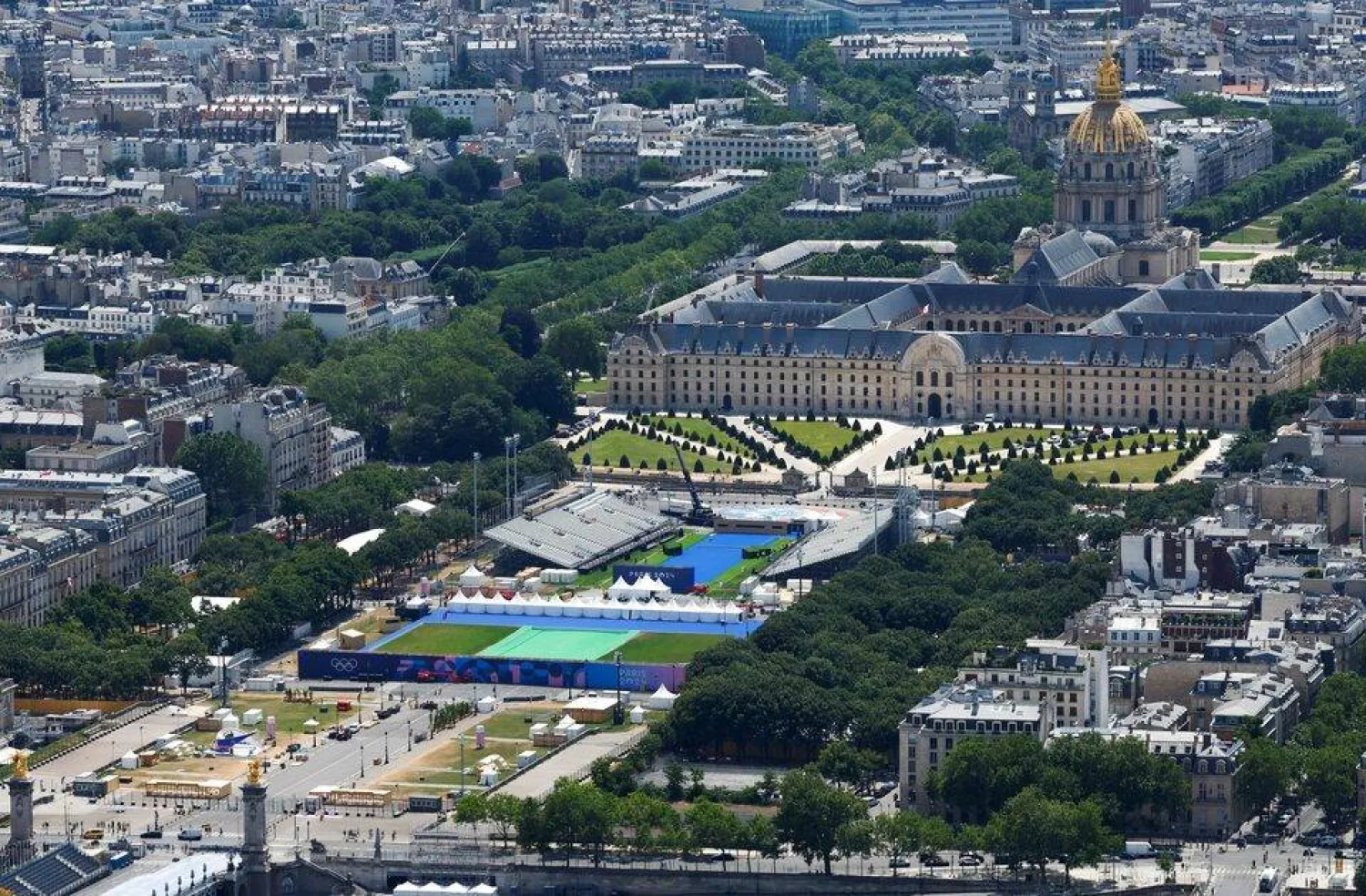
Diriyah Company has awarded a $490 million construction contract for the Saudi Arabia Museum of Contemporary Art (SAMoCA), in Diriyah.

The contract has been awarded to a joint venture between Hassan Allam Construction Saudi L.L.C., and Albawani Company Ltd., reflecting Diriyah Company’s ambition to develop a major cultural destination that attracts visitors and supports long-term growth.

SAMoCA is a flagship project by the Museums Commission. It aims to document, research, exhibit, and champion Saudi modern and contemporary art practices. The museum will serve as a premier center of artistic exploration, deepening understanding and appreciation of Saudi modern and contemporary art, while supporting Saudi artists across generations to imagine and shape the Kingdom’s creative possibilities, SPA reported.

The museum, designed by Godwin Austen Johnson, one of the Gulf’s most established UK-based firms, with multidisciplinary support from Rafaat Miller Consulting, has a gross floor area of 45,252 sqm and a total built-up area of 77,428 sqm. Notably, SAMoCA has recently achieved Mostadam Gold sustainability certification at both the design and construction stages.

The new museum at Diriyah will serve as the flagship home of SAMoCA, while SAMOCA at JAX Center continues to operate as a dynamic exhibition space in Riyadh’s creative district.

Group Chief Executive Officer of Diriyah Company Jerry Inzerillo said: “The Saudi Arabia Museum of Contemporary Art will provide Saudi and international artists with a truly world-class platform – one that invites global voices to engage with the Kingdom as it is today.

This iconic asset will further elevate Diriyah’s reputation as the Kingdom’s capital of culture – and underscores our unwavering commitment to developing a vibrant city that serves our community, and the nation at large.”

Chief Executive Officer of the Museums Commission Eng. Abdullah bin Abdulaziz Al-Hammad added: “The Saudi Arabia Museum of Contemporary Art will be the epicenter of Saudi modern and contemporary art. Set against the historic legacy of Diriyah, it is designed to document and champion generations of Saudi artists, from pioneers to emerging voices, while inviting international dialogue into that story. We are committed to ensuring this dynamic platform remains accessible and inspiring for all.”

Diriyah, the $63.2 billion integrated urban development, has now awarded over $29 billion in construction contracts. Once complete, it will contribute approximately $18.6 billion directly to the Kingdom’s GDP, create more than 180,000 jobs, will be home to an estimated 100,000 people and welcome 50 million annual visits.

It will also include museums, shopping districts, a university, the Diriyah Opera House, the Diriyah Arena, a variety of food and beverage outlets, and nearly 40 world-class resorts and hotels spanning its two main masterplans.


Historic Jeddah Museum Highlights Rare Coral Prayer Beads of the Red Sea

Prayer beads of various types have long been part of the tradition of acquiring Makkah souvenirs and gifts - SPA
TT

Historic Jeddah Museum Highlights Rare Coral Prayer Beads of the Red Sea

Prayer beads of various types have long been part of the tradition of acquiring Makkah souvenirs and gifts - SPA

Yusr prayer beads shine at the Red Sea Museum in Historic Jeddah as one of the top handicraft pieces, combining spiritual depth and aesthetic richness, reflecting the extension of local maritime heritage and its creative transformations.

These beads are traditionally made from “yusr,” a rare type of black coral associated with Red Sea crafts, distinguished by its dark color and polished luster. Some pieces are inlaid with silver or amber, demonstrating the precision of craftsmanship and the continuity of artisanal skill across generations, SPA reported.

These handicrafts draw the attention of visitors in the museum’s halls with their fine details as artistic works inspired by elements of the marine environment and reimagined in contemporary creative forms.

Prayer beads of various types have long been part of the tradition of acquiring Makkah souvenirs and gifts, historically associated with Hajj and Umrah journeys, serving as tokens of affection carried by visitors to their families and friends.

The Red Sea Museum continues to offer an integrated cultural experience through its exhibits that showcase the richness of the Kingdom’s maritime heritage and contribute to promoting cultural dialogue and knowledge exchange.

This is part of ongoing efforts to revive Historic Jeddah and reinforce its status as a global cultural destination, in line with Saudi Vision 2030 objectives, reflecting a national commitment to preserving heritage and enriching the cultural landscape.


Red Sea Museum Hosts Contemporary Art Exhibition to Showcase Marine Biodiversity

The collection features diverse media, including rare black coral crafts and textiles that evoke underwater textures - SPA
TT

Red Sea Museum Hosts Contemporary Art Exhibition to Showcase Marine Biodiversity

The collection features diverse media, including rare black coral crafts and textiles that evoke underwater textures - SPA

The Red Sea Museum in Historic Jeddah is hosting a contemporary artistic exhibition that explores the Red Sea’s marine richness by connecting its geological origins, dating back to the Eocene epoch, with natural history and artistic expression.

Through a series of sculptures and installations, the exhibition showcases the region's vast biodiversity, from microorganisms to large mammals, SPA reported.

The works emphasize the Red Sea’s resilient coral reefs, thriving in warm, high-salinity waters, while delivering powerful environmental messages on the urgency of reef protection and ecological sustainability.

The collection features diverse media, including rare black coral crafts and textiles that evoke underwater textures.

These pieces complement the museum’s permanent collection of over 1,000 artifacts, reinforcing the Kingdom’s commitment to preserving its cultural and environmental heritage through modern, immersive displays.