


Winston Churchill's 'Playful' Paintings Go on Show in London

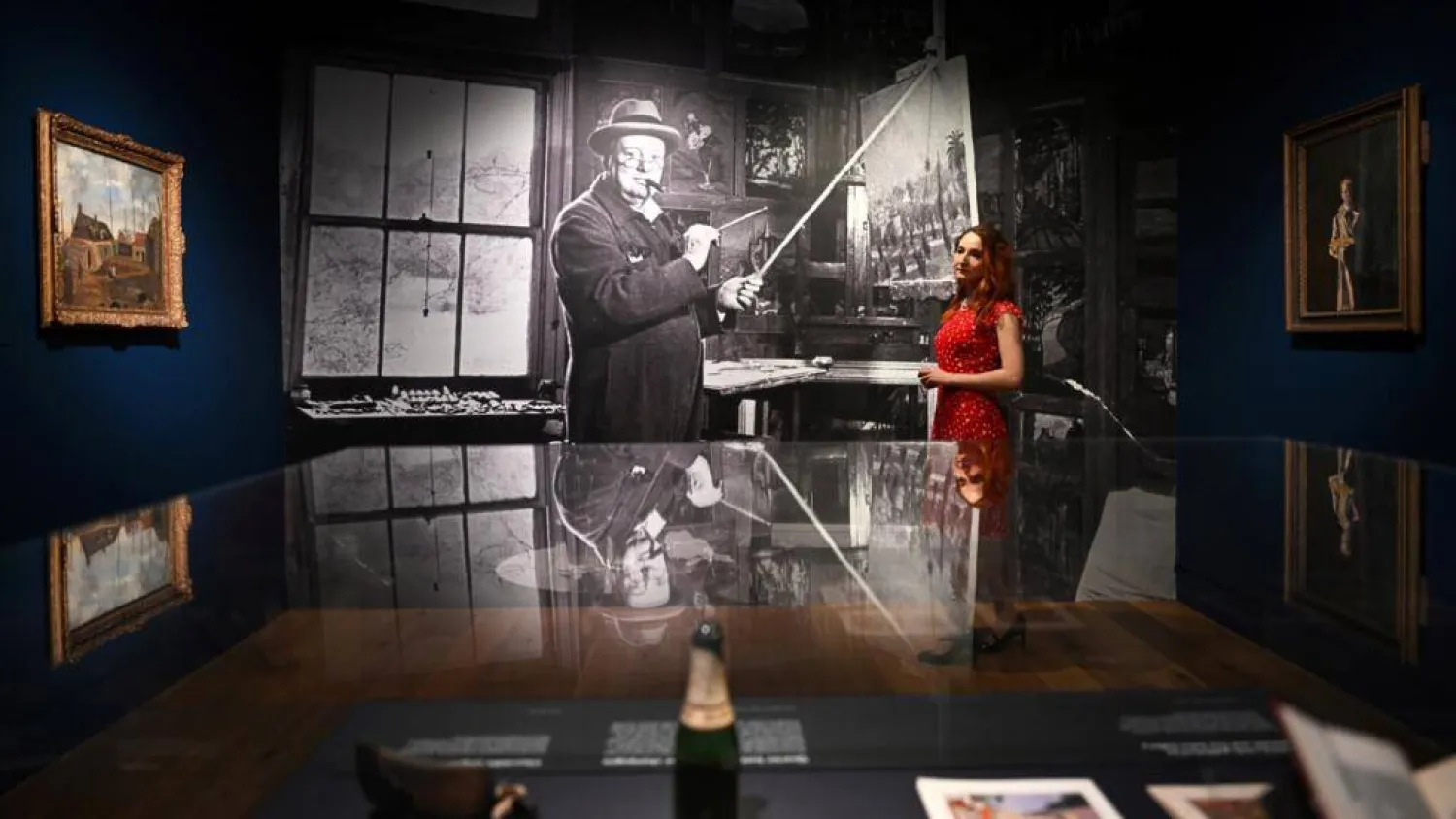
The 'Winston Churchill: The Painter' exhibition opens on Saturday at the Wallace Collection in London. Justin TALLIS / AFP
TT

Winston Churchill's 'Playful' Paintings Go on Show in London

The 'Winston Churchill: The Painter' exhibition opens on Saturday at the Wallace Collection in London. Justin TALLIS / AFP

As Britain's wartime leader, Winston Churchill was known for his stirring speeches, but a new London exhibition explores another side to his creativity -- as a passionate and prolific artist.

The exhibition opening Saturday at the Wallace Collection will be the most significant display of the statesman's paintings for more than 60 years, including over 50 canvases, many of them rarely seen in public.

Churchill first tried painting during World War I after he resigned from the government over the 1915 failed Dardanelles naval attack.

This was a "very difficult time in his life" when "he suddenly finds himself with all this unwanted leisure time", Lucy Davis, co-curator of the exhibition, told AFP.

"And he discovered painting as a way of releasing the stress, the anguish that the situation had caused him."

The museum presents a chronological survey starting with his first paintings, created with advice from renowned artist John Lavery, then canvases painted in the 1920s at Chartwell, the country house where Churchill lived with his family.

Largely self-taught while associating with well-known painters, Churchill quickly became interested in landscape painting and drew inspiration from holidays in the south of France to create brightly colored canvases dominated by blues and ochre.

- 'Loved the light' -

Churchill "saw painting as a spur to travel" and "just loved the light and warmth and atmosphere, which he captures so beautifully", said Davis.

A whole room is dedicated to canvases inspired by trips to Morocco, including "The Tower of the Koutoubia Mosque", the only painting that Churchill did during World War II. A gift to US President Franklin D. Roosevelt, the painting recently belonged to Hollywood star Angelina Jolie.

The exhibition ends with the postwar period when Churchill, defeated in a general election, began painting again and continued until his death in 1965, with some of his works going on display at the Royal Academy.

Churchill had previously shown paintings at various galleries, but always under an assumed name.

As a statesman, Churchill went down in history for his wartime leadership, but as an artist, he had little interest in depicting current world events, the curator stressed.

"He was a wartime leader. He was known for these very stirring wartime speeches. But in these paintings, you really see his joie de vivre, his witty side, his playful side."

One painting at the exhibition is an exception: "The Beach At Walmer", painted in 1938 as fears grew of imminent war.

It shows a sandy beach in southern England with bathers paddling. But in the foreground, a black cannon points at the sea, suggesting a looming threat.



Saudi Heritage Commission Discovers Abbasid-Era Gold Jewelry in Qassim

The Saudi Heritage Commission logo
TT

Saudi Heritage Commission Discovers Abbasid-Era Gold Jewelry in Qassim

The Saudi Heritage Commission logo

Saudi Arabia’s Heritage Commission announced the discovery of a collection of Abbasid-era gold jewelry at the archaeological site of Diriyyah in Qassim Region during the fourth season of excavation and survey work.

The discovery includes 100 gold pieces adorned with floral and geometric motifs, along with architectural remains from the Abbasid period, including stone foundations, mud walls, pottery, and metal tools.

The findings indicate human settlement dating back to the late third century AH and highlight the site’s historical importance along pilgrimage and trade routes.

The discovery reflects the Heritage Commission’s ongoing efforts to document and preserve the Kingdom’s archaeological heritage, supporting cultural development goals aligned with Saudi Vision 2030.


Jeddah’s House of Islamic Arts Marks International Museum Day 2026

The House of Islamic Arts in Jeddah marked International Museum Day 2026 with a special exhibition offering visitors a cultural journey into the past. (SPA)
TT

Jeddah’s House of Islamic Arts Marks International Museum Day 2026

The House of Islamic Arts in Jeddah marked International Museum Day 2026 with a special exhibition offering visitors a cultural journey into the past. (SPA)

The House of Islamic Arts in Jeddah marked International Museum Day 2026 with a special exhibition offering visitors a cultural journey into the past.

The exhibition showcased aspects of traditional life and reflected the atmosphere of old homes through rare collectibles and personal items contributed by collectors and heritage enthusiasts from within the Kingdom and abroad, the Saudi Press Agency reported on Tuesday.

Through several interactive stations, the exhibition highlighted social life inside traditional homes, featuring settings inspired by majlis gatherings, evening social events, home interiors, and offices, alongside collectibles, furniture, and memorabilia associated with daily life and social traditions of the past.

The exhibition included collectibles representing diverse cultures and artistic styles, featuring rare Arab and European pieces, vintage devices, classic furniture, paintings, antiques, and personal household items displayed by their owners as reflections of the memories of people and places.

The exhibition is part of the events celebrating International Museum Day 2026, which aim to highlight the role of museums in preserving heritage and promoting cultural dialogue through interactive experiences that connect generations with their history and shared memory.


Private Museums in Jazan Offer a Window into the Region's Cultural Past

A number of private museum owners in Jazan stressed that these museums are no longer limited to preserving and displaying heritage collections - SPA
TT

Private Museums in Jazan Offer a Window into the Region's Cultural Past

A number of private museum owners in Jazan stressed that these museums are no longer limited to preserving and displaying heritage collections - SPA

Private museums in Jazan Region are reintroducing local memory through a contemporary cultural vision by preserving collections and artifacts documenting features of old life and bringing details of the past closer to new generations while also enhancing tourist attraction and enriching visitors’ knowledge experience.

As the world celebrates International Museum Day, observed on May 18 each year, these museums emerge as cultural spaces combining documentation and exhibition, allowing visitors to move through different eras, from daily life tools that shaped the details of old homes to collections associated with agriculture, the sea, crafts, and travel, reaching heritage artifacts and coins that reveal the depth of the relationship between humans and their environment throughout the ages, SPA reported.

A number of private museum owners in Jazan stressed that these museums are no longer limited to preserving and displaying heritage collections, but also enhance awareness of local heritage and convey details of old life to new generations through methods that are closer and more interactive. They noted that the increasing presence of heritage enthusiasts and visitors has contributed to transforming the museum into a space for learning and discovering the history of the place through its authentic collections.

With growing national interest in preserving cultural heritage and enhancing the presence of licensed museums within the cultural landscape, these destinations have become part of the tourism and knowledge movement in Jazan Region, receiving history enthusiasts, researchers, students, and visitors as windows overlooking a history that is not read in books alone, but seen in objects and collections that remained witnesses to the life of humans and place.