


Egypt Discovers Rare Reservoirs, Buildings at Ancient Aydhab Port in Halaib

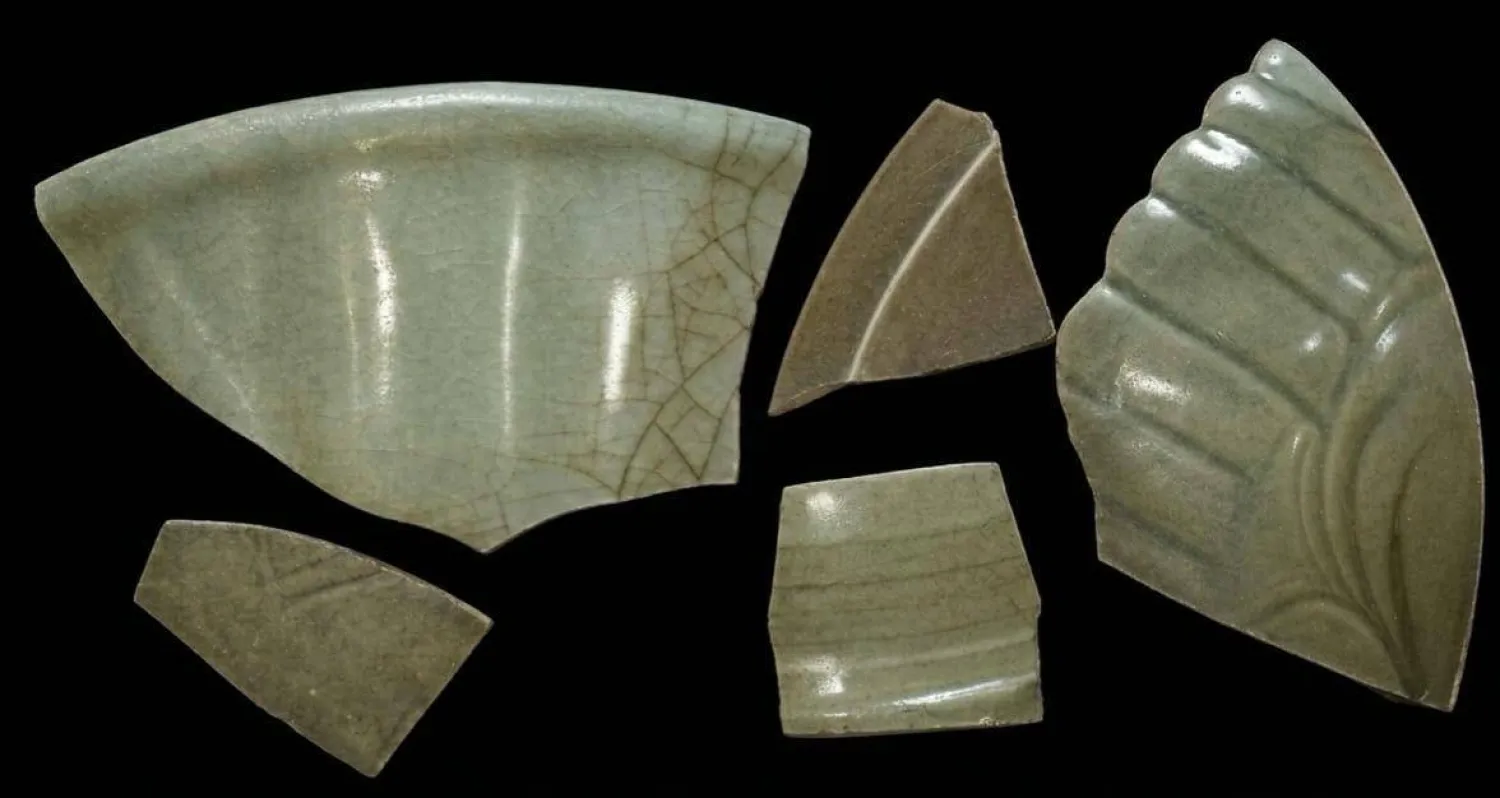
A collection of archaeological finds and fragments of Chinese porcelain (Ministry of Tourism and Antiquities)
TT

Egypt Discovers Rare Reservoirs, Buildings at Ancient Aydhab Port in Halaib

A collection of archaeological finds and fragments of Chinese porcelain (Ministry of Tourism and Antiquities)

Egypt’s Ministry of Tourism and Antiquities announced Thursday the discovery of massive water reservoirs and cisterns, along with rare buildings and service facilities, at the archaeological site of the ancient port of Aydhab on the Red Sea coast in the Halaib region in southern Egypt near the Sudanese border. The port once served as a major transit point for pilgrims.

The discovery was made during excavation work carried out by an Egyptian archaeological mission affiliated with the Supreme Council of Antiquities at the site of the ancient port of Aydhab, which the ministry described as “one of the most prominent and important Egyptian ports during the Islamic period.”
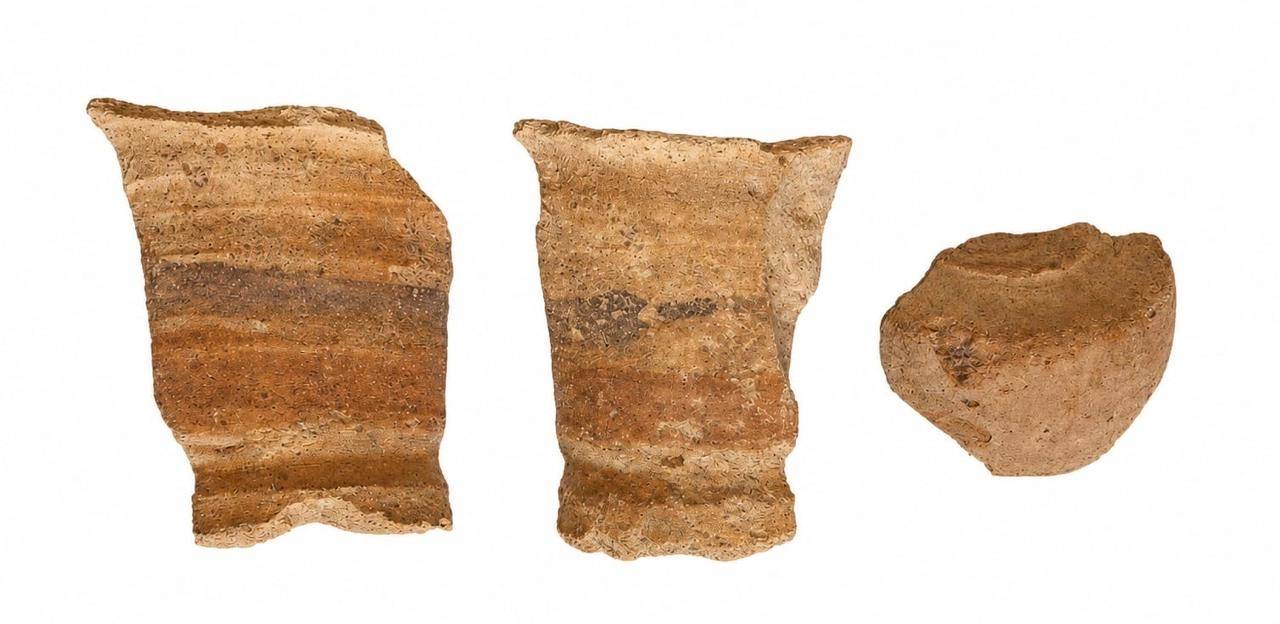
Some of the artifacts discovered at the site (Ministry of Tourism and Antiquities)

Hisham el-Leithy, secretary-general of the Supreme Council of Antiquities, said the discovery highlights an important aspect of the service infrastructure on which the historic port of Aydhab depended. He noted that the water cisterns played a vital role in supporting maritime and trade activity, as well as meeting the needs of pilgrims arriving at the port on their way to the holy lands, according to the ministry’s statement.

Excavation work uncovered a massive main reservoir measuring approximately 15.10 meters in length, 3.15 meters in width and nearly three meters in height. It was constructed using sandstone and local coral stones, then coated with a layer of white lime mortar to insulate the water and prevent leakage. Several additional cisterns were also uncovered in the southern part of the site.

Diaa Zahran, head of the Islamic, Coptic and Jewish Antiquities Sector, said archaeological surveys in the surrounding area also revealed the remains of residential building foundations, watchtowers and service facilities, indicating the existence of an integrated system for managing the port and meeting the needs of pilgrims and merchants who passed through it over many centuries.

The mission also uncovered a collection of artifacts, including pottery fragments dating back to the Fatimid era, some glazed in green, in addition to shards of imported Chinese porcelain. The finds reflect the flourishing commercial activity at the port and the breadth of its maritime trade network with many regions, particularly India, Yemen and East Africa.
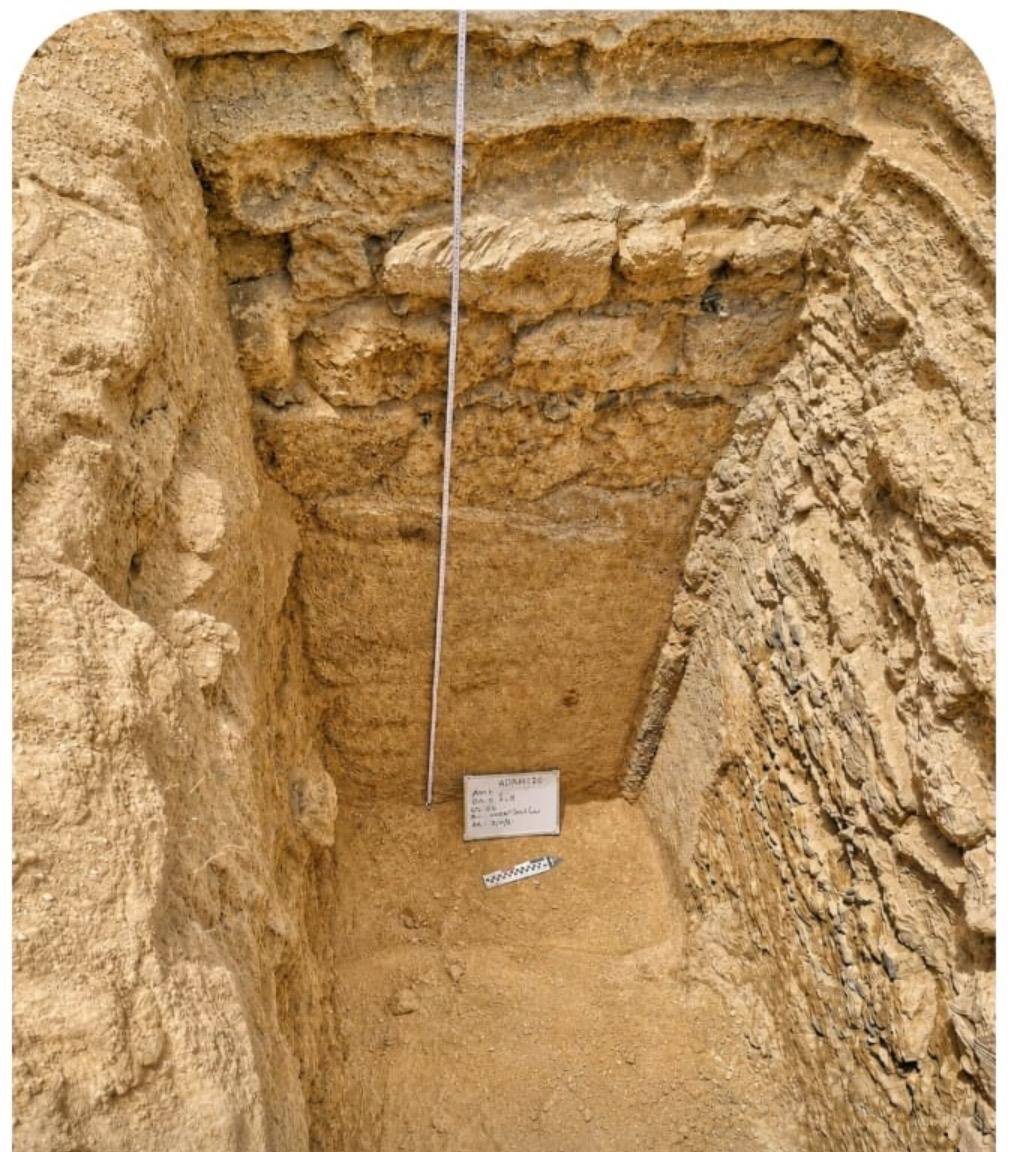
The site includes service buildings used by pilgrims (Ministry of Tourism and Antiquities)

Egyptian Tourism and Antiquities Minister Sherif Fathi described the discovery as “a contribution to highlighting the development witnessed by ancient Egyptian ports and the advanced infrastructure they possessed to serve trade routes and pilgrims.” In a press statement, he said the discovery confirms Egypt’s strategic status as a major civilizational and commercial center throughout history.

Fathi stressed the ministry’s commitment to excavation work and archaeological studies in border and remote areas because of their significant historical and cultural importance.

Historian Bassam el-Shammaa described the discovery as “one of the most important archaeological discoveries of the 21st century,” telling Asharq Al-Awsat that “the importance of archaeological discoveries lies not in their size, but in the extent to which they deepen understanding of history across different periods.”

He said the discovery proves the existence of social and commercial ties linking Asia and Egypt that extended to China and other civilizations. He added that it also carries humanitarian and security dimensions through the discovery of service buildings and water cisterns dedicated to serving pilgrims during that period, as well as watchtowers used to secure the borders.

El-Shammaa proposed organizing tourism trips to Egypt’s ancient ports and making use of archaeological discoveries at several historic ports along the Red Sea and Mediterranean coasts.

The port of Aydhab was among the most prominent Red Sea ports during the Middle Ages, serving as a key station for pilgrims arriving from Egypt and the Maghreb on their way to the holy sites, in addition to playing a central role in maritime trade.


Literature Commission Inaugurates Saudi Pavilion at Beijing International Book Fair 2026

The participation reflects Saudi Arabia's growing presence in the global publishing industry and its efforts to strengthen cultural ties with China. (SPA)
TT

Literature Commission Inaugurates Saudi Pavilion at Beijing International Book Fair 2026

The participation reflects Saudi Arabia's growing presence in the global publishing industry and its efforts to strengthen cultural ties with China. (SPA)

Saudi Arabia’s Literature, Publishing and Translation Commission inaugurated on Wednesday the Kingdom’s pavilion at the Beijing International Book Fair 2026 that runs through June 21, reported the Saudi Press Agency.

The participation reflects Saudi Arabia's growing presence in the global publishing industry and its efforts to strengthen cultural ties with China.

CEO of the commission Dr. Abdullatif Al-Wasel said the pavilion aims to introduce Saudi literary and intellectual production to Asian audiences, highlight developments in the Kingdom's literature, publishing, and translation sectors, and raise awareness of the Saudi cultural scene through an accompanying program featuring panel discussions and poetry evenings with Saudi writers and intellectuals.

The commission also seeks to strengthen the presence of Saudi publishers in international forums and build professional partnerships with stakeholders in China's publishing industry, supporting opportunities for translation exchange and cultural cooperation, he added.


Louvre Museum ‘Running Out of Steam’, Says New Director

This photograph shows visitors, seen from the Sully wing, queuing in the Cour Napoleon by the pyramid designed by Chinese-US architect Ieoh Ming Pei, to enter the Louvre Museum in Paris on November 19, 2025. (AFP)
TT

Louvre Museum ‘Running Out of Steam’, Says New Director

This photograph shows visitors, seen from the Sully wing, queuing in the Cour Napoleon by the pyramid designed by Chinese-US architect Ieoh Ming Pei, to enter the Louvre Museum in Paris on November 19, 2025. (AFP)

The Louvre museum is struggling to find funding to upgrade its ageing facilities, its new director said Wednesday, following a litany of problems that included a brazen $100-million jewellery heist.

"Despite its imposing majesty, despite the daily commitment of its staff, the Louvre is running out of steam," Christophe Leribault told a Senate committee.

"Its equipment and infrastructure are reaching the end of their life cycle."

Leribault, an art historian and museum director specializing in 18th-century art, took the helm in February, after his predecessor stepped down following an embarrassing daylight theft of imperial jewels in October that laid bare severe security failings.

Home to iconic pieces of art including Leonardo da Vinci's "Mona Lisa", the Louvre is the world's most visited museum, receiving around nine million visitors a year.

It is housed in a vast palace in central Paris on the banks of the Seine River, built over centuries by various French monarchs who at times used it as their official residence.

"Building-related emergencies are piling up, and we're facing a wall in terms of investments," Leribault said.

The museum had struggled with repeated strikes causing loss of revenue, a ticket fraud scheme that may have cost the museum 10 million euros ($11.7 million), a water leak, and other maintenance issues.


Monumental Cave Art on Paris’ Oldest Bridge Finally Opens, as the Public Steps and Sniffs Inside

 Visitors walk into the artwork "The Pont Neuf Cave" by French street artist JR on the Pont Neuf bridge, Tuesday, June 16, 2026, in Paris, open to the public from June 15 to 28. (AP)
Visitors walk into the artwork "The Pont Neuf Cave" by French street artist JR on the Pont Neuf bridge, Tuesday, June 16, 2026, in Paris, open to the public from June 15 to 28. (AP)
TT

Monumental Cave Art on Paris’ Oldest Bridge Finally Opens, as the Public Steps and Sniffs Inside

 Visitors walk into the artwork "The Pont Neuf Cave" by French street artist JR on the Pont Neuf bridge, Tuesday, June 16, 2026, in Paris, open to the public from June 15 to 28. (AP)
Visitors walk into the artwork "The Pont Neuf Cave" by French street artist JR on the Pont Neuf bridge, Tuesday, June 16, 2026, in Paris, open to the public from June 15 to 28. (AP)

For weeks, a black mountain loomed over the Seine where Paris’ oldest bridge should have been. On Monday evening, its doors finally opened.

Inside, Paris smells different. The air carries the scent of earth after rain — damp ancient stone, cellar walls, perhaps a trace of smoke.

Visitors step from the bright riverfront into a dark passage lined with glowing photographs of caves, as a low electronic pulse seems to breathe through the walls.

Beneath it all, the old cobblestones of the Pont Neuf rise and fall underfoot.

The Pont Neuf Cavern, a monumental installation by French street artist JR — also known as the French Banksy — is free to enter around the clock through June 28.

Made largely from printed fabric and air, it transforms the 17th-century bridge into an artificial cavern rising 18 meters (59 feet) above the Seine.

“It feels like the city has disappeared,” said Léa Martin, a 22-year-old art student from Lyon on Tuesday. “You know the river is right outside, but for a moment you’re somewhere ancient.”

Paris steps in and sniffs history

The smell is central to the illusion.

Olfactory expert Sarah Bouasse created two shifting scents: drawing on geosmin and isoborneol, compounds associated with the aroma released when rain strikes dry earth.

It changes along the crossing: first wet earth and mineral dampness, then something warmer, smokier and faintly animal.

“Usually I cross here without looking up once,” said Michel Dupré, a 67-year-old retiree, blinking as he emerged into daylight. “Today I felt the stones under my feet. And smelled them too. It makes you walk like a child again.”

A sound installation by Thomas Bangalter, formerly of the French electronic duo Daft Punk, accompanies the work, filling the cavern with low rumbles, echoes and pulses.

Completed in 1607, the Pont Neuf — despite its name, “New Bridge” — is the oldest bridge still standing in Paris.

JR’s installation asks people to experience the familiar crossing through their noses, ears and feet.

It also pays tribute to Christo and Jeanne-Claude, whose 1985 wrapping of the bridge in pale golden fabric drew an estimated 3 million visitors.

Their work covered the Pont Neuf in light.

The dark side JR sends visitors into darkness.

“You enter into the darkness,” he has said, “and emerge into the light on the other side.”

Visitors can also raise their phones to activate an augmented-reality experience developed with tech company Snap.

Digital bats trail light through the cave, passing bodies leave ghostly traces and a dancer materializes in space.

JR has linked the work to Plato’s allegory of the cave, in which prisoners mistake shadows for reality. Today’s cave walls, he argues, are screens and the algorithms that shape what people see. Yet the installation’s strongest effects require no phone.

“It’s completely strange,” said Nadia Benali, 34, smiling beside the artificial cliffs. “Paris needs things that make people stop.”

When the cave closes, its fabric will be reused or recycled.

The mountain will vanish, traffic will return and the Pont Neuf — older than the French Revolution — will emerge into the light once more.