


Six Ancient Comoros Medinas Join UNESCO's Heritage List

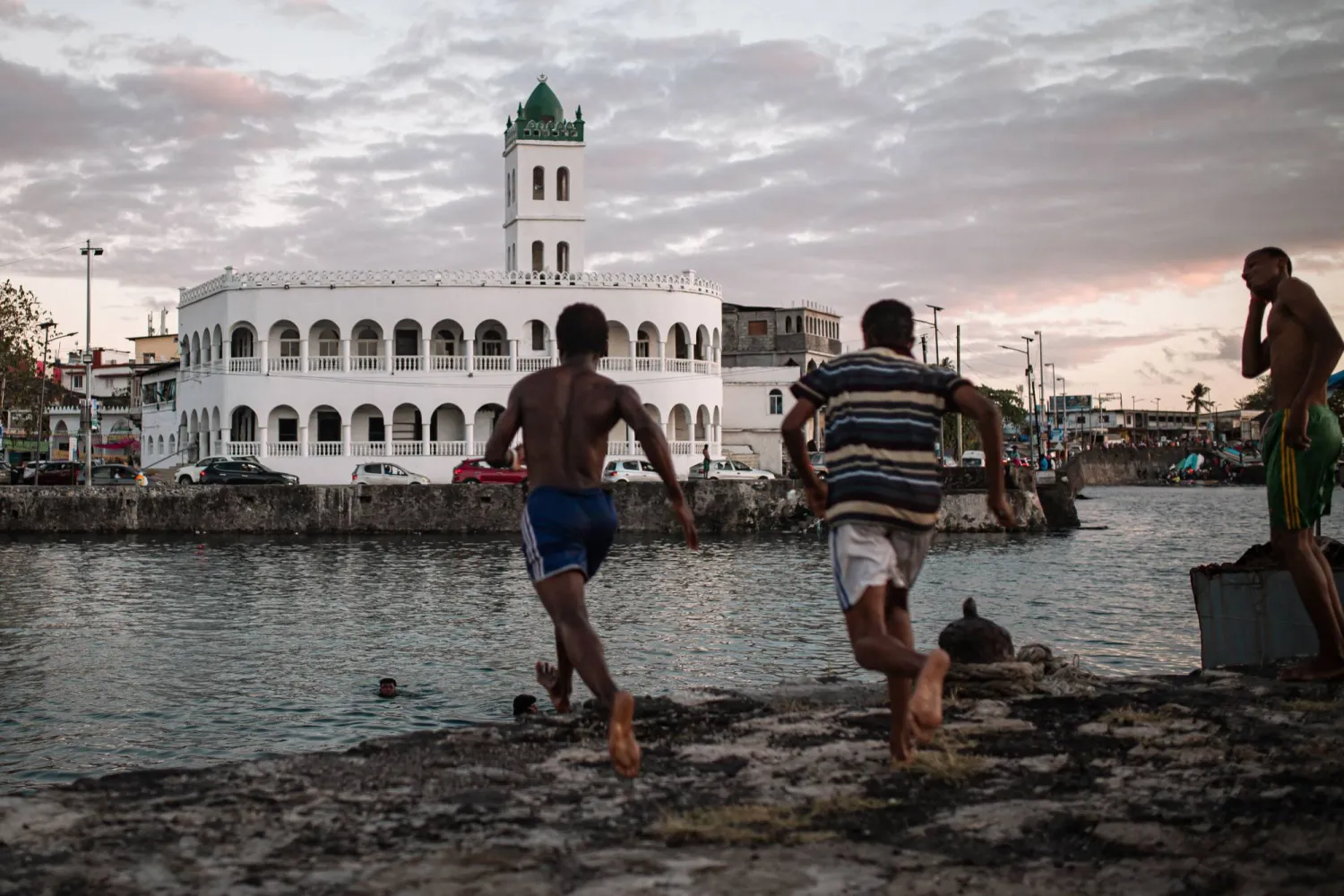
 Children jump in the ocean in the former dhow port of Kalaweni, opposite the Grand Mosque, in Moroni's historic Medina on July 17, 2026. (AFP)
Children jump in the ocean in the former dhow port of Kalaweni, opposite the Grand Mosque, in Moroni's historic Medina on July 17, 2026. (AFP)
TT

Six Ancient Comoros Medinas Join UNESCO's Heritage List

 Children jump in the ocean in the former dhow port of Kalaweni, opposite the Grand Mosque, in Moroni's historic Medina on July 17, 2026. (AFP)
Children jump in the ocean in the former dhow port of Kalaweni, opposite the Grand Mosque, in Moroni's historic Medina on July 17, 2026. (AFP)

UNESCO on Saturday added six centuries-old medinas in the Comoros -- once historic sultanates along Indian Ocean trading routes -- to its World Heritage List, raising hopes for their preservation.

The ancient cities of palaces, mosques, public squares and narrow streets, some dating back to the 12th century, are still occupied today, even though many structures are in serious disrepair.

"This listing is not a finish line but a starting point," said Comoros culture minister Said Mohamed Ali Said, part of a government delegation that travelled to UNESCO's meeting in Busan, South Korea, for the announcement.

It was a moment of "immense national pride", he told AFP.

The medinas are the first sites from the Comoros archipelago to join the UNESCO list, which counts more than 1,200 properties around the world considered to have "outstanding universal value" worth protection.

They "are not just historical sites for us: they are living towns, where people still pray, trade, and celebrate life's great moments exactly as our ancestors did", the minister said.

"This heritage is fragile and, in places, in real danger," he said. "The listing changes things: it places obligations on us, but it also opens doors for us."

The Islamic country, about 300 kilometers (200 miles) off the coast of Africa and home today to around 870,000 people, was for centuries a crossroads of maritime trade between east Africa, the Middle East and Madagascar.

Four of the inscribed medinas are on the main island of Grande Comore and two on the smaller island of Anjouan.
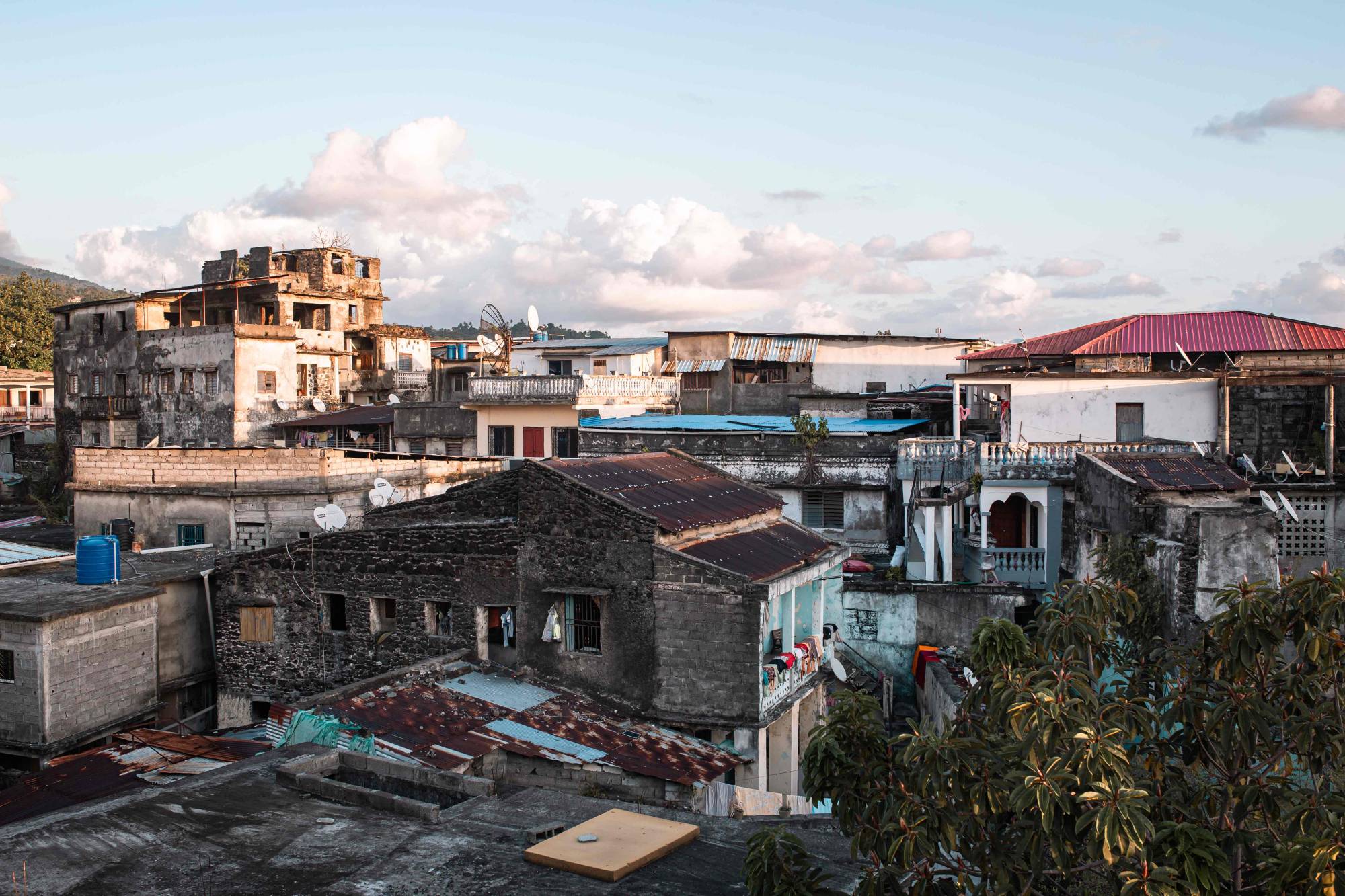
A general view of Moroni's historic Medina on July 18, 2026. (AFP)

- 'Uncontrolled urbanization' -

The 14th-century medina in the capital Moroni includes the emblematic Friday Mosque with its green minaret across from the dhow port. It is surrounded by paved alleyways and multi-storey houses, some with heavy, carved doors.

The small maritime Itsandra medina nearby is considered a cradle of Swahili civilization. Further south, the 12th-century Iconi medina houses the tomb of Prince Said Ibrahim, son of the last Sultan of Grande Comore, Said Ali.

"The Comorian medinas were once home to historic sultanates; unfortunately, uncontrolled urbanization and 'modernization' have altered them," said the heritage promotion office director general, Ania Mohamed Issa.

After the UNESCO inscription, "there will be the development of cultural, historical and architectural tourism, and the preservation of heritage," said Faniya Abbas, of the Medina Wiratha cultural association.

The medinas have preserved their old urban shape, structures and traditions, according to UNESCO's nomination, but the oldest structures "are highly vulnerable, with several cases in serious disrepair".



Palestinian Artist Sliman Mansour Dies at 79

Painter and sculptor Sliman Mansour and his landmark 1973 painting, "Camel of Hardships". (Sliman Mansour on Instagram)
TT

Palestinian Artist Sliman Mansour Dies at 79

Painter and sculptor Sliman Mansour and his landmark 1973 painting, "Camel of Hardships". (Sliman Mansour on Instagram)

Painter and sculptor Sliman Mansour, one of the most prominent names in Palestinian art, has died at the age of 79, his family announced.

Mansour, whose vivid artwork depicted both Palestinian traditions and his people's struggles under Israeli occupation, died on Monday at his home in east Jerusalem, his family said.

"The final chapter has been written. With hearts gripped by sorrow beyond description, we announce that our dear father has left this world," the family said in a statement.

"For the world, he leaves behind a life filled with beauty and memories, and a legacy that will continue through everyone whose lives he touched. As for us, we have lost a father who was the source of our love, our strength and our refuge."

Mansour was born in Birzeit, north of Ramallah, in 1947 and studied art and design in Jerusalem, graduating in 1970.

The Palestinian Culture Ministry mourned Mansour, calling him "one of the most important pillars of contemporary Palestinian visual art, whose career over decades formed part of the Palestinian visual and national memory".

The ministry hailed his landmark 1973 painting, "Camel of Hardships", depicting an elderly Palestinian porter carrying the city of Jerusalem on his back, as "an artistic and national icon", adding that his work served "as witness to Palestinian history and guardian of identity".

Mansour was the recipient of numerous awards, among them the UNESCO-Sharjah Prize for Arab Culture in 2019.


Saudi Arabia Establishes Cultural Center in Paris

Saudi Arabia Establishes Cultural Center in Paris
TT

Saudi Arabia Establishes Cultural Center in Paris

Saudi Arabia Establishes Cultural Center in Paris

The Saudi Ministry of Culture announced on Monday the establishment of a Saudi cultural center in Paris on the sidelines of the visit of Prince Mohammed bin Salman bin Abdulaziz Al Saud, Crown Prince and Prime Minister, to France.

The center will serve as a platform for promoting Saudi culture and highlighting its historical depth and creative diversity through high-quality cultural programs and initiatives involving French practitioners, institutions and the public.

It will support the international presence of Saudi cultural practitioners, strengthen communication between intellectuals and creative professionals in the two countries, and build strategic partnerships between Saudi and French cultural institutions, facilitating the exchange of expertise and implementation of joint cultural initiatives.

The establishment of the center reflects the continued development of Saudi-French relations and underscores the Kingdom's commitment to strengthening its international cultural presence and presenting an authentic cultural image that introduces the world to its rich heritage and contemporary creative output.


Saudi-French Joint Ministerial Committee on AlUla Underlines Commitment to Deepen Partnership

Saudi Minister of Culture and Governor of the Royal Commission for AlUla Prince Badr bin Abdullah bin Farhan (third from left) and French Minister for Europe and Foreign Affairs Jean-Noel Barrot (third from right) during the meeting of the joint Saudi-French Ministerial Committee on AlUla on Monday. (SPA)
TT

Saudi-French Joint Ministerial Committee on AlUla Underlines Commitment to Deepen Partnership

Saudi Minister of Culture and Governor of the Royal Commission for AlUla Prince Badr bin Abdullah bin Farhan (third from left) and French Minister for Europe and Foreign Affairs Jean-Noel Barrot (third from right) during the meeting of the joint Saudi-French Ministerial Committee on AlUla on Monday. (SPA)

The joint Saudi-French Ministerial Committee on AlUla held a meeting in Paris on Monday, chaired by Saudi Minister of Culture and Governor of the Royal Commission for AlUla Prince Badr bin Abdullah bin Farhan and French Minister for Europe and Foreign Affairs Jean-Noel Barrot.

The meeting was attended by Saudi Minister of Foreign Affairs Prince Faisal bin Farhan bin Abdullah, Minister of Investment Fahad Al-Saif, and Chief Executive Officer of the Royal Commission for AlUla Abeer Al-Akel. Also present were French Minister of Culture Catherine Pegard, Minister of Economy, Finance and Industry Roland Lescure, and Chairman of the French Agency for AlUla Development (AFALULA) Jean-Yves Le Drian.

The officials welcomed the signing of an agreement to extend and amend the agreement concluded between the Saudi and French governments on the cultural, environmental, tourism, human, economic, and heritage development of AlUla Governorate.

They reviewed the partnership's achievements and discussed avenues for future cooperation, reflecting the strength of relations between the two countries and affirming AlUla's position as a meeting point of civilizations and a global destination for culture, creativity, and sustainable development.

They underlined their commitment to further deepening the partnership, which has become a global model for international cooperation based on the exchange of mutual benefits and knowledge, contributing to the achievement of comprehensive and sustainable development goals.

The meeting reviewed the scale of joint investments and areas of ongoing cooperation in the sectors of archaeology, arts, culture, sports, hospitality, and human-capital development.

The partnership reflects a shared commitment to sustainable development through strategic projects, such as the AlUla Tram and the Sharaan Resort, designed by Jean Nouvel, as well as investments in renewable energy, water, and mobility, supporting the objectives of Saudi Vision 2030 to attract one million visitors and global investments while preserving AlUla's cultural and natural heritage.