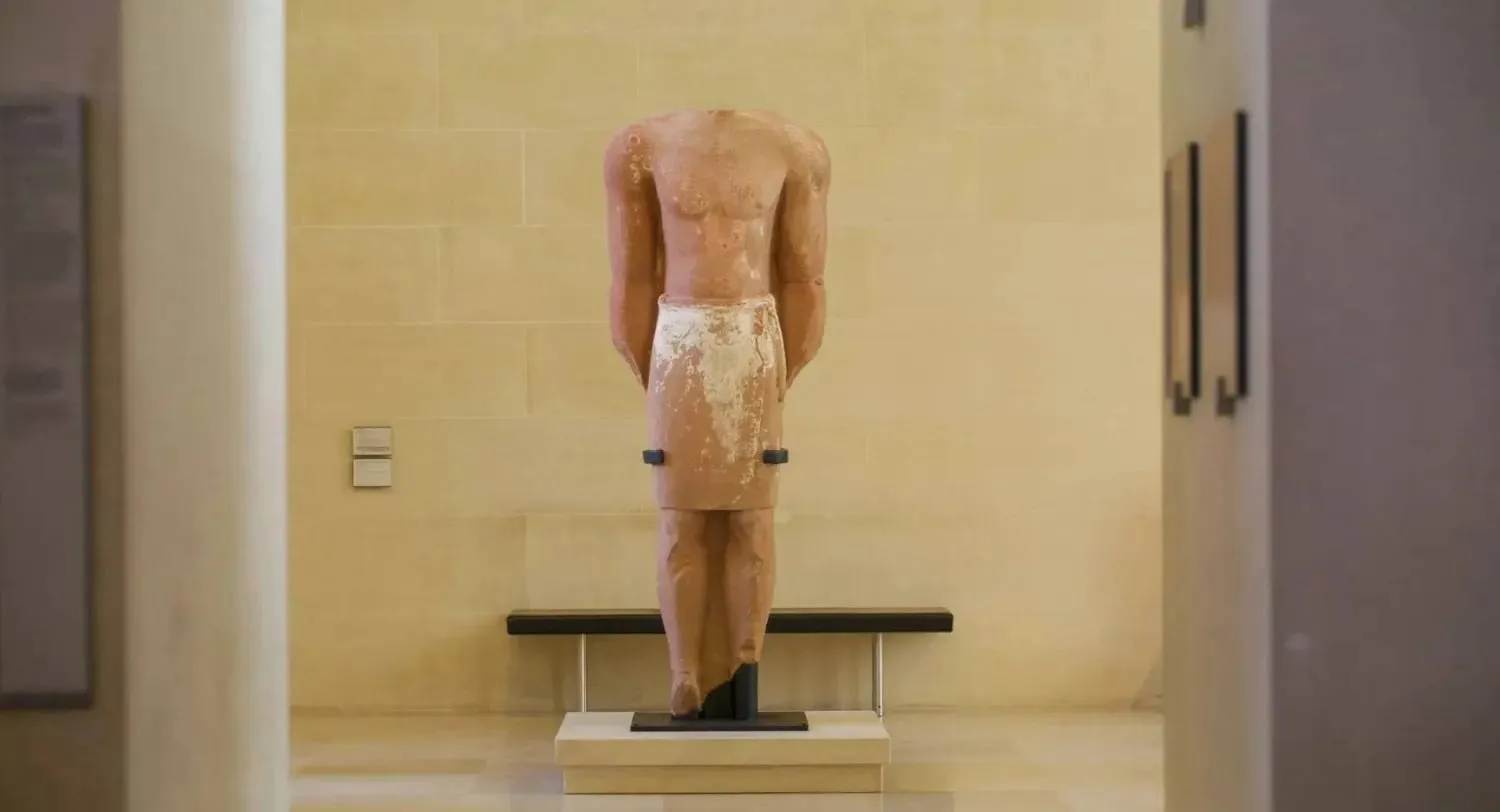

Two Saudi cities, relatively close geographically but rooted in vastly different periods of history, encapsulate thousands of years of human experience.
Khaybar, an oasis set amid black volcanic fields, has preserved the secrets of prehistory, with its enigmatic stone structures and archaeological “mustatils” telling the story of human settlement stretching back to an era before writing was invented.
Not far away in either place or history lies Mahd al-Dhahab, a center of gold and precious-metal mining in the early Islamic period. Its mountains once bustled with mining activity, while the Darb Zubaydah pilgrimage route carried pilgrims and travelers through the region, leaving behind inscriptions and stations reflecting both spiritual life and economic activity.
Between Khaybar’s prehistoric mysteries and Mahd al-Dhahab’s Islamic treasures, which Asharq Al-Awsat explored during a tour of their archaeological sites, successive discoveries announced by Saudi Arabia are revealing the extraordinary depth of human and civilizational history in the Kingdom.
They are helping rewrite the history of the Arabian Peninsula and transforming Saudi Arabia’s landscape into an open-air museum chronicling successive chapters of human existence.
Earliest Human Presence
The succession of archaeological discoveries in Saudi Arabia has continually pushed back the timeline of early human presence in the peninsula, portraying it as an early homeland of humans and a place where communities settled, evolved and contributed to civilization.
According to Saudi Arabia’s Heritage Commission and international archaeological missions, the earliest evidence discovered so far dates to the Lower Paleolithic.
At Shuwayhitiyah, about 30 kilometers north of Sakaka in the northern Al-Jawf region, primitive quartz tools have been found that suggest links with East African sites dating to before the Acheulean period.
At Shu’ayb Dahdah in Najran, southern Saudi Arabia, archaeologists uncovered stone tools and other evidence of ancient human settlement. Primitive implements, cutters, large stone hammers, scrapers and small blades suggest the remains belonged to the Oldowan tradition, an early phase of the Paleolithic.
Evidence of the earliest known architectural settlement in the Arabian Peninsula has meanwhile emerged at Masyoun, northwest of Tabuk, dating to the Pre-Pottery Neolithic.
The Heritage Commission said the site represents the oldest known architectural settlement in the Arabian Peninsula. Finds include stone grinding tools, marble ornaments, human and animal bones, and architectural structures demonstrating a transition from a mobile way of life to permanent settlement and construction.
Layers of Civilization
Saudi Arabia has a rich archaeological record spanning successive civilizations. Discoveries in recent decades have provided scientific evidence of the Arabian Peninsula’s role as a major commercial and cultural hub of the ancient world — a meeting place for peoples and a conduit for art, science and architecture.
Saudi Arabia today has eight properties on UNESCO’s World Heritage List, encompassing archaeological cities, rock art and cultural oases.
About 100 kilometers southeast of Wadi al-Dawasir lies Qaryat al-Faw, the first capital of the Kingdom of Kinda and a UNESCO World Heritage site.
Its strategic location at the intersection of kingdoms and settlements across Arabia allowed Al-Faw to develop from a small caravan stop into an important commercial, religious and urban center. The Arab kings of Kinda made it their capital for eight centuries, from the fourth century BC to the fourth century AD.
Its scientific importance is evident in its sophisticated engineering. Residents developed deep stone water systems to reach groundwater and cultivate oases in an arid environment. Excavations have also revealed striking-colored murals and finely crafted bronze statues, evidence of cultural sophistication and extensive trade.
Pharaonic Inscriptions
Farther north lies Tayma, an oasis containing some of Saudi Arabia’s most significant archaeological remains.
Researchers have uncovered an elephant tusk fossil among a large collection of animal remains near an ancient lake more than 500,000 years old.
Saudi and international missions have also discovered important antiquities, including Pharaonic inscriptions, as well as evidence of prehistoric human activity and ancient palaces that survive to this day.
Tayma witnessed an unusual convergence of Babylonian, Assyrian and Aramaean cultures and ancient Arabian kingdoms such as Lihyan.
Among its most prominent finds are the Tayma Stele, whose original is housed at the Louvre, a basalt monument inscribed in Aramaic documenting the introduction of Babylonian religious practices; inscriptions associated with the Babylonian King Nabonidus; Bir Haddaj; and the palaces of Al-Hamra, Al-Radm and Al-Ablaq.
Not far from Tayma, the rock art of Jubbah and Shuwaymis in Hail forms a record of early human life dating back about 10,000 years.
At Jabal Umm Sinman in Jubbah, 100 kilometers north of Hail, and in the mountains of Shuwaymis, 270 kilometers southwest of the city, researchers encounter one of the Middle East’s most important concentrations of rock art, now listed by UNESCO.
Dating largely to the Neolithic period, the engravings document climatic and environmental changes in Arabia, extinct animals, hunting implements and aspects of the social and religious practices of its ancient inhabitants.
AlUla offers another extraordinary concentration of archaeological heritage. Its mountains preserve inscriptions in numerous languages and scripts, while Jabal Ikmah serves as an open-air “Lihyanite library,” preserving records of peoples and civilizations that flourished and later disappeared.
Its history is embodied particularly in Dadan and Lihyan, kingdoms of the first millennium BC, where the Lion Tombs and Dadanitic and Lihyanitic inscriptions have been uncovered, and Hegra, or Mada’in Salih, the southern capital of the Nabataean Kingdom after Petra and the first Saudi site inscribed on UNESCO’s World Heritage List, in 2008.
Hegra contains more than 100 monumental tombs carved into sandstone, with elaborate architectural facades dating to the first century BC. They demonstrate the Nabataeans’ sophisticated architecture and mastery of water-resource management, as well as their ability to protect tombs and political centers.
Caravan Arteries
In southern Saudi Arabia, the archaeological site of Jurash lies about 15 kilometers from Ahad Rufaydah and 35 kilometers southeast of Abha.
Civilizations uncovered there date to the pre-Christian era, with settlement flourishing from the third century BC to the first century AD and continuing during later periods.
Finds include glassware, stone artifacts, pre-Islamic pottery and a rock relief depicting a lion and bull above a Musnad inscription, symbols associated with the city’s prosperity and strength.
Nearby, the Hima Cultural Area in Najran, about 130 kilometers north of the city, contains one of the world’s major concentrations of rock art and inscriptions and was inscribed on UNESCO’s World Heritage List in 2021.
Hima’s exceptional importance stems from its position on a major route used by commercial and military caravans. Thousands of inscriptions in scripts including Musnad, Thamudic, Nabataean, Kufic and early Arabic form an open archive documenting lifestyles, warfare, religions, economic activity and the development of writing over thousands of years.
Rewriting History
Asharq Al-Awsat contacted the Saudi Heritage Commission about the major archaeological discoveries that have strengthened Saudi Arabia’s place in human history and prompted a reassessment of conventional views about early settlement and the development of ancient societies.
The commission has also announced the discovery and documentation of life-size camel rock art dating back 11,000 to 12,000 years at Jabal Arnan in the Hail region, shedding light on the culture and activities of ancient communities.
Surveys and excavations conducted with Japan’s Kanazawa University have also produced evidence of the oldest known architectural settlement in the Arabian Peninsula.
The commission said the findings reflect early stages of permanent settlement and the beginnings of architecture, providing new material evidence for reassessing the history of the Arabian Peninsula and its role in human movement and settlement.
Continuing surveys and excavations carried out by the Heritage Commission with Saudi and international scientific institutions indicate that Arabia was a center of human settlement and interaction from an early period, rather than merely a corridor for human migrations.
Saudi Arabia on the Global Heritage Map
The growing focus on Neolithic remains and early settlements raises broader questions about Saudi Arabia’s place on the global archaeological map alongside major ancient civilizations such as Pharaonic Egypt and Babylon.
The Heritage Commission says Saudi Arabia has become one of the world’s leading regions for research into prehistory, particularly the Neolithic. Recent discoveries and research programs have highlighted Saudi Arabia’s importance in the study of ancient human migrations, with findings from several archaeological projects published in prominent international scientific journals.
The Kingdom’s archaeological record spans numerous periods and provides important evidence for understanding early human history and the development of settlement, predating some of the better-known ancient civilizations.
Archaeological evidence documented by the Heritage Commission at Tayma in the Tabuk region also points to cultural contacts with neighboring civilizations in Mesopotamia and ancient Egypt, while artifacts and pottery reveal other cultural influences, demonstrating that the peninsula was closely connected to broader civilizational developments.
Expanding Excavations
Archaeological exploration and excavation are expanding across Saudi Arabia.
In 2025, the Heritage Commission conducted fieldwork at 68 archaeological sites across the Kingdom, involving more than 25 international missions from universities, institutes, and archaeological schools around the world.
International projects are also examining stone structures and ancient water systems in cooperation with research centers and universities, while another 75 Saudi missions are working across the Kingdom under scientific programs aimed at expanding archaeological knowledge.
The commission coordinates with international universities and research centers through joint projects and cooperation agreements that define the scope and scientific objectives of the work, promoting the exchange of expertise, knowledge transfer and the use of modern archaeological technologies.
More than 60 male and female students have also participated in field training, helping build national expertise and develop a new generation of Saudi archaeological specialists.
Underwater Archaeology
The Heritage Commission is also continuing underwater archaeological surveys in the Red Sea and Arabian Gulf.
The projects have identified promising sites and evidence that could shed further light on the history of maritime navigation and trade, while studies continue to uncover more.
Investigations have documented shipwrecks and their archaeological contents, providing historical evidence of the importance of maritime trade routes and their role in commercial and economic exchange through the centuries.
The number of registered underwater heritage locations has reached 1,293, with other sites classified as areas of human activity or ancient ports.
Taken together, the findings show that Saudi Arabia’s submerged heritage is no less significant than its archaeological remains on land, providing evidence of maritime routes that rivaled the domestic and international overland trade networks crossing the Arabian Peninsula.