Saudi Cultural Development Fund Partners with AgentX Hackathon in Riyadh

Held in Riyadh in strategic partnership with the Ministry of Communications and Information Technology, the hackathon aims to foster innovation and develop AI-powered technological solutions. SPA
TT

Saudi Cultural Development Fund Partners with AgentX Hackathon in Riyadh

Held in Riyadh in strategic partnership with the Ministry of Communications and Information Technology, the hackathon aims to foster innovation and develop AI-powered technological solutions. SPA

Saudi Arabia’s Cultural Development Fund (CDF) has announced its participation as a partner in the fourth edition of the AgentX AI Hackathon, focused on employment and business solutions.

Held in Riyadh in strategic partnership with the Ministry of Communications and Information Technology, the hackathon aims to foster innovation and develop AI-powered technological solutions to address challenges across various sectors while connecting Saudi talent with career opportunities in artificial intelligence (AI).

As part of its participation, CDF will introduce a dedicated challenge under the Culture and Heritage Track, focusing on developing innovative AI solutions to facilitate access for cultural entrepreneurs and businesses to the specialized talent and technical expertise needed for their projects.

CDF will also provide specialized advisory support to teams participating in the Culture and Heritage and Finance and Business tracks, helping them refine their ideas and turn them into practical, viable solutions.

In addition, CDF will serve on the judging panel, evaluating proposed solutions based on their feasibility, relevance to sector needs, and expected impact.

CDF's participation builds on its ongoing efforts to support the adoption of AI technologies across the cultural sector.

Earlier this year, the fund launched its AI Incentives for Cultural Projects initiative, coinciding with the Year of Artificial Intelligence, to provide non-repayable financial incentives to projects that employ these technologies to develop their operations.

These efforts reflect CDF's role as the cultural sector's primary financial enabler and center of excellence, fostering innovation and promoting the adoption of modern technologies to support the growth and sustainability of cultural projects and contribute to achieving the objectives of the National Culture Strategy, in line with Saudi Vision 2030 targets.


Saudi Cultural Development Fund Partners with AgentX Hackathon in Riyadh

Held in Riyadh in strategic partnership with the Ministry of Communications and Information Technology, the hackathon aims to foster innovation and develop AI-powered technological solutions. SPA
TT

Saudi Cultural Development Fund Partners with AgentX Hackathon in Riyadh

Held in Riyadh in strategic partnership with the Ministry of Communications and Information Technology, the hackathon aims to foster innovation and develop AI-powered technological solutions. SPA

Saudi Arabia’s Cultural Development Fund (CDF) has announced its participation as a partner in the fourth edition of the AgentX AI Hackathon, focused on employment and business solutions.

Held in Riyadh in strategic partnership with the Ministry of Communications and Information Technology, the hackathon aims to foster innovation and develop AI-powered technological solutions to address challenges across various sectors while connecting Saudi talent with career opportunities in artificial intelligence (AI).

As part of its participation, CDF will introduce a dedicated challenge under the Culture and Heritage Track, focusing on developing innovative AI solutions to facilitate access for cultural entrepreneurs and businesses to the specialized talent and technical expertise needed for their projects.

CDF will also provide specialized advisory support to teams participating in the Culture and Heritage and Finance and Business tracks, helping them refine their ideas and turn them into practical, viable solutions.

In addition, CDF will serve on the judging panel, evaluating proposed solutions based on their feasibility, relevance to sector needs, and expected impact.

CDF's participation builds on its ongoing efforts to support the adoption of AI technologies across the cultural sector.

Earlier this year, the fund launched its AI Incentives for Cultural Projects initiative, coinciding with the Year of Artificial Intelligence, to provide non-repayable financial incentives to projects that employ these technologies to develop their operations.

These efforts reflect CDF's role as the cultural sector's primary financial enabler and center of excellence, fostering innovation and promoting the adoption of modern technologies to support the growth and sustainability of cultural projects and contribute to achieving the objectives of the National Culture Strategy, in line with Saudi Vision 2030 targets.


Saudi Theater and Performing Arts Commission Launches Performances Program in Qassim

The performances will continue at Al-Noor Park until November 28 - SPA
TT

Saudi Theater and Performing Arts Commission Launches Performances Program in Qassim

The performances will continue at Al-Noor Park until November 28 - SPA

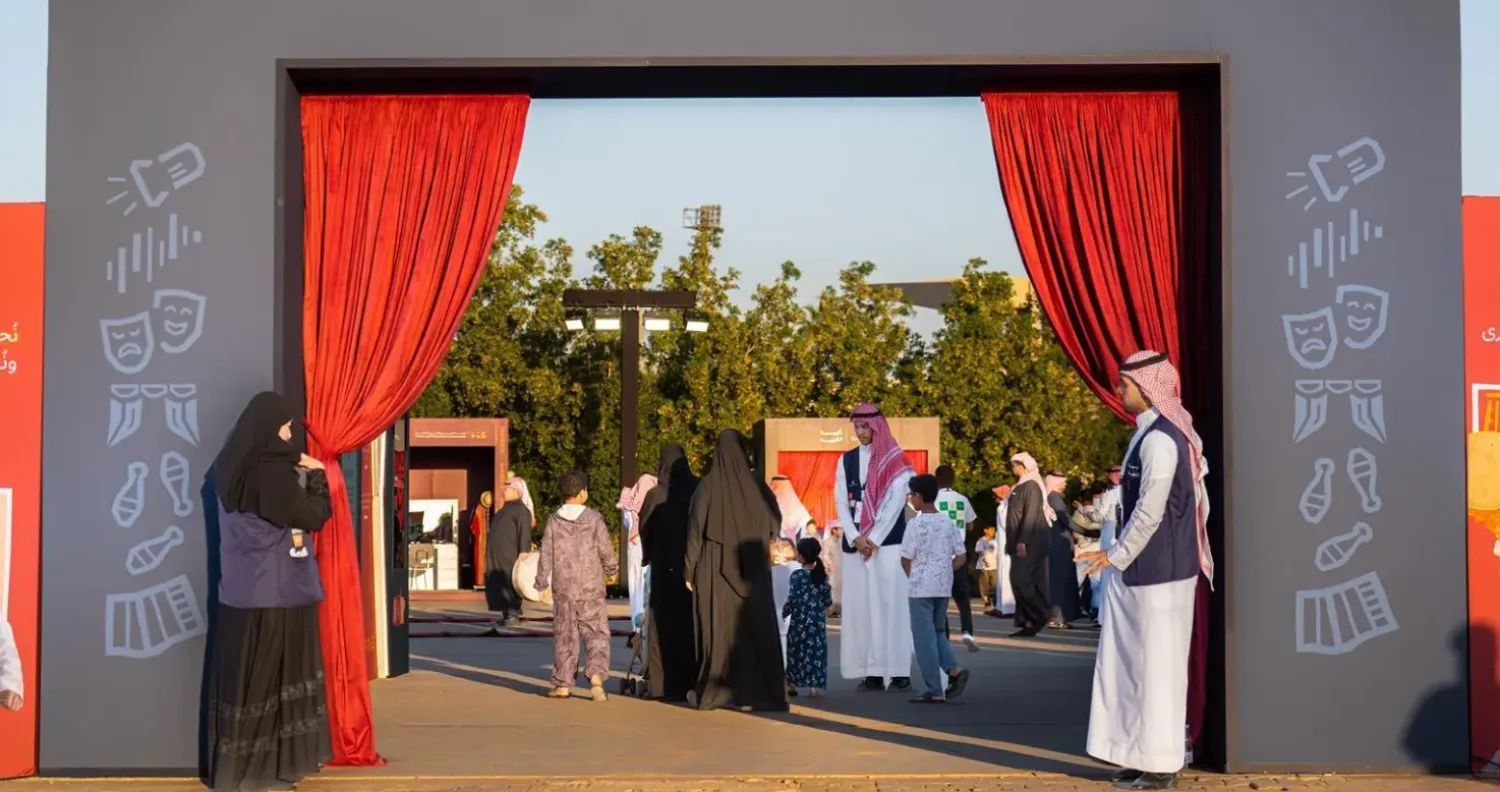
The first nights of the performing arts program, organized by the Saudi Theater and Performing Arts Commission, kicked off on Wednesday, featuring theatrical performances, performing arts, and circus acts, alongside interactive experiences that engage visitors and allow them to explore and participate in various performing arts at Al-Noor Park in Buraidah.

Visitors were welcomed at the park from 4:00 p.m. and were offered a wide array of performances, ranging from circus acts and puppetry to theatrical shows on the main stage, which served as the highlight of the evening’s program, according to SPA.

The performances will continue at Al-Noor Park until November 28.

This is part of a broader tour across the Kingdom to expand the presence of theater and performing arts, strengthen the community’s connection to these disciplines, and enrich the Saudi cultural landscape.


Hagia Sophia's Hidden Tunnels Uncovered

A painting depicting the Hagia Sophia Mosque, 1852 (Victoria and Albert Museum)
TT

Hagia Sophia's Hidden Tunnels Uncovered

A painting depicting the Hagia Sophia Mosque, 1852 (Victoria and Albert Museum)

The architectural complex around and beneath Hagia Sophia never ceases to amaze. Six underground spaces, nine tunnels and almost 3,000 tons of soil are revealing unknown facets of the monument's history, according to euronews.

Galleries, ancient water networks and architectural remains, which may date back to a period earlier than the construction of the present-day basilica in the 6th century, are coming to light during restoration work on the historic monument.

So far, 420 meters of underground tunnels have been cleaned, while the Turkish authorities are considering opening some of them to visitors, offering a new perspective on the history of Byzantine Constantinople.

The scale and importance of the work was presented by the Turkish Minister of Culture and Tourism, Mehmet Nuri Ersoy, who went down into Hagia Sophia's underground installations, accompanied by scientists involved in the restoration program.

The Turkish television network CNN Türk has for the first time shown images of the underground galleries and the work taking place in areas that for centuries remained covered by earth and other materials.

As Mehmet Nuri Ersoy explained, the works went 1.5 meters below the floor level that was covered with mud, revealing traces of an earlier building phase.

This finding is of particular historical interest, as the present-day church of Hagia Sophia was built under Emperor Justinian, between 532 and 537, on the site of older Christian churches.

For the moment, however, no secure dating of the newly uncovered remains has been announced. The assessment that they predate the current church remains a matter for scientific investigation.

In the western garden of Hagia Sophia, six different underground spaces have been identified, which are connected by nine tunnels.

According to the Turkish minister, three of these spaces were most likely underground parts of the old atrium, the courtyard that was linked to the church complex.

Investigations are continuing in other areas, some of which take the form of elongated corridors, between four and 4.8 meters wide.

Of the nine tunnels, seven have already been cleared of backfill, while in the remaining two work is under way to record and document them.

The total length of the cleaned sections reaches 420 meters.

The longest tunnel is 180 meters long and is of particular archaeological interest, as scientists are examining whether it might be connected with the so-called Roman Road of Constantinople.

According to scientists' assessments, the underground tunnels of Hagia Sophia formed part of a broader system for managing the waters of historic Constantinople.

Some sections appear to have served in the distribution of water and the removal of rainwater, functions that were essential for the protection and daily use of such a large architectural complex.

Their discovery makes it possible to study more closely the technical infrastructure developed around Hagia Sophia during the different periods of its history.

At the same time, the works are not limited to cleaning the tunnels. They include repairs to the vaults, stabilization of the masonry and reinforcement of sections that have suffered damage.

Beyond the archaeological and historical significance of the works, the Turkish government is now also examining how some of the underground spaces could be used as accessible areas of Hagia Sophia.

Mehmet Nuri Ersoy announced that a special plan is being prepared for presenting the underground structures, with the protection of the monument and the safety of visitors as key conditions.

Another issue under consideration by specialists is whether the underground network could be used to improve the ventilation of the monument.

According to the technical assessments presented by the minister, the existing underground opening can currently cover only 3.6% of Hagia Sophia's ventilation needs. Future studies will examine whether some of the historic galleries could contribute to a modern system supplying fresh air, without altering their architectural character.

Hagia Sophia, which has dominated the historic core of Constantinople for almost fifteen centuries, continues to be the subject of archaeological and architectural research.

The new investigations are now turning attention to the less familiar parts of the monument, below ground level, where the different building phases and the infrastructure of old Constantinople largely remain out of sight.