Andrea Bocelli on His New Album, Film and 30 Years of Making Music: 'I Like to Think to The Future'

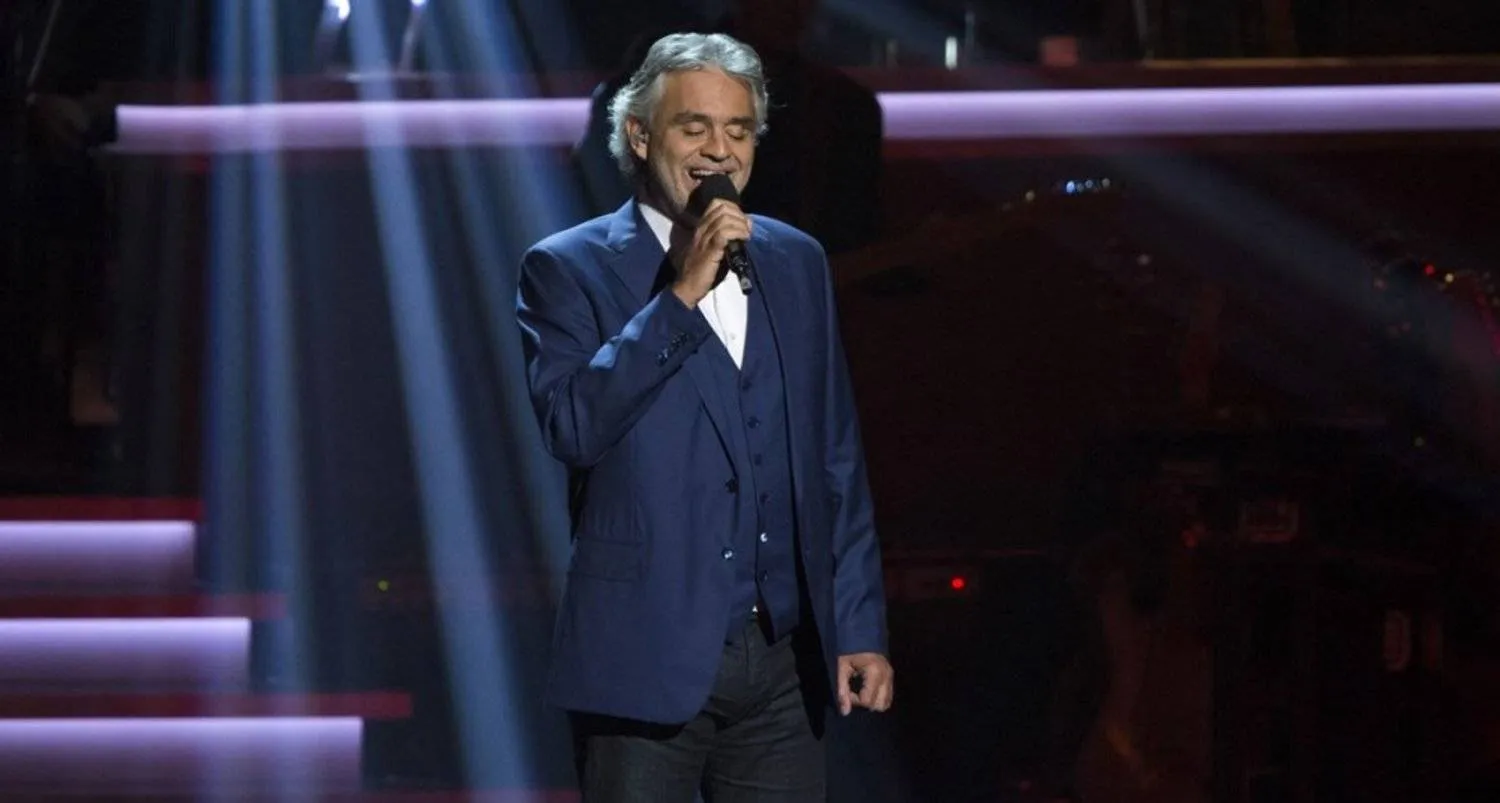
Tenor Andrea Bocelli. (Reuters)
TT

Andrea Bocelli on His New Album, Film and 30 Years of Making Music: 'I Like to Think to The Future'

Tenor Andrea Bocelli. (Reuters)

It's one of the most immediately recognizable voices on the planet: Andrea Bocelli's tenor is beloved across generations, cultures and borders, known to induce tears in as few as three simple words: “Con Te Partirò,” or in its English performance, “Time to Say Goodbye.”
This year, he's celebrating the 30th anniversary of his career with a new compilation album, “Duets,” featuring both previously released and brand-new collaborations of his best-known work — as well as a few surprising contemporary covers — and the release of a new concert film, “Andrea Bocelli 30: The Celebration,” which will arrive in theaters on Friday, The Associated Press said.
So, why duets?
“I've loved voices since when I was a child, and I like very much to share the stage with the best artists and voices. So, this album, there are the best duets that I did in my life,” he told The Associated Press. “From the first, ‘The Prayer’ with Celine Dion, until the last, like ‘Perfect’ with Ed Sheeran and many, many others. And the album has been remastered and remixed. So, I hope the sound can be better."
He says: “The most important thing in voices... is to be recognizable, to give emotion."
Sheeran was an interesting collaboration because when Bocelli first attempted to sing “Perfect," the English singer-songwriter wasn't a fan. “He didn’t like what I did because I sang in a pop style,” he recalls. “He wanted to listen to my voice, like in an operatic style.” So, Sheeran traveled to Bocelli's home in Tuscany, and the song was transformed. “He was right because this song had a huge success.”
When asked if there is anyone he would've loved to add to the “Duets” collection, Bocelli says of course — but “they passed away before I began to sing. For example, I would like very much to sing with Maria Callas or (Renata) Tebaldi or Magda Olivero. Many great, incredible singers. They are not anymore with us, unfortunately.”
Three decades into his career, Bocelli has performed for presidents, popes, and sold-out stadiums across the globe — in addition to having sold nearly 90 million records worldwide, according to a press release. “Reality exceeded my wildest dreams,” he says.
How he reflects on that time should come as no surprise. “I like to sing to the future. Honestly, I don’t like to think with nostalgia to the past," he says. “My first time on stage, for me it is like yesterday. The time is gone so quickly, so fast. And, yeah, now I like to think to the future.”
So, what, then, does he hope becomes his legacy in the next 30 years, 300 years? “In Italy, we have a very famous expression: The people that come after us will judge us,” he says with a translator. “So I can’t force the judge(ment) of the people. But I feel that my audience has a big affection for me, and this is my goal. When somebody in the street comes to me and says (to) me, ‘Thank you for your voice, for your music,’ I think mission is accomplished."
Across “Duets,” Bocelli sings in Italian, English, French and Spanish. “There are many languages, but it’s so difficult. I remember the day I tried to sing in Chinese, only few lines, but it has been so hard for me,” he laughs.
He also performs across genres, working with everyone from Latin superstars like Karol G and Jennifer Lopez to country musicians like Chris Stapleton and Shania Twain. “I would like to try to sing jazz," he says. “But it’s too difficult for me because you must live in an atmosphere, to learn step by step, day by day. I like jazz but it’s too far from the experience of my life.”
There is little he hasn't done across these last three decades, but the ultimate goal now, he says, is steeped in faith. “I have been very lucky and I reached the affection of the people. Now I must try to deserve the affection of the God. It’s more difficult."
But he will continue to perform for those who love him. On Dec. 4, Bocelli's US tour kicks off in San Diego and runs through the month, before commencing again in February and June 2025. The final dates will be held in Napa Valley, California, on June 21 and 22.



S.Korea's Park Chan-wook to Head Cannes Festival Jury

FILE PHOTO: Park Chan-wook attends the 2026 BAFTA Tea Party in Los Angeles, California, US, January 10, 2026. REUTERS/Caroline Brehman/File Photo
TT

S.Korea's Park Chan-wook to Head Cannes Festival Jury

FILE PHOTO: Park Chan-wook attends the 2026 BAFTA Tea Party in Los Angeles, California, US, January 10, 2026. REUTERS/Caroline Brehman/File Photo

South Korean filmmaker Park Chan-wook, the first from his country to head the Cannes film festival jury, will preside over the 79th edition in May, organizers announced Thursday.

A statement named the director behind "Oldboy" (2003) as president of the body that will award the 2026 Palme d'Or.

Last year the award went to Iranian filmmaker Jafar Panahi's "It Was Just an Accident."

The appointment, which organizers called "a first for Korean cinema", came as South Korean culture enjoys global recognition, with Park's films hailed alongside Bong Joon-ho's 2019 Palme d'Or and Oscar best picture winning film "Parasite", the hugely popular television series "Squid Game" and "KPop Demon Hunters" as well as K-pop groups BTS and Blackpink.

"In this age of hatred and division, I believe that the simple act of coming together in a movie theatre to watch a film at the same time... makes it possible to create a moving, universal sense of solidarity," the statement quoted Park, 62, as saying.

According to AFP, the festival praised his genre-blending cinema as "narrative, stylistic (and) moral".

Park has long been credited for inspiring a generation of filmmakers behind the "Korean noir" genre -- movies about bloody crimes, brutal revenge or the criminal underworld, presented with sumptuous cinematography, including Bong.

The director with a strong appetite for vengeance and redemption -- whose violent or erotic films are not afraid to shock -- won a best director award at Cannes four years ago for "Decision to Leave", a romantic thriller.

Park achieved international stature with "Oldboy", which won the Grand Prix at Cannes in 2004.

Based on a cult manga, the second instalment of a dark trilogy about revenge tackled social inequalities -- a hallmark of Korean cinema.

His latest work, "No Other Choice" (2025), is adapted from Donald Westlake's 1997 novel "The Ax" and follows an unemployed man who decides to kill his potential competitors to land a job.

It starred South Korea's top actors -- "Squid Game" star Lee Byung-hun and "Crash Landing on You" actress Son Ye-jin -- in the lead.

The film touched on contemporary anxieties over artificial intelligence, Park has said, reflecting its broader theme of the job market, including the cinema industry.

"Films can be seen as something that do not necessarily provide any great practical help in life -- they might be just two hours of entertainment," Park said at the Busan International Film Festival last year.

"And yet... I pour everything I have into this work, staking my entire life on it."

Having studied philosophy at Sogang University in Seoul, the soft-spoken filmmaker is also known as a great lover of literature, especially Emile Zola and Philip Roth.

His 2009 vampire film "Thirst" was an adaptation of Zola's "Therese Raquin," and his lesbian romance "The Handmaiden" (2016) is based on the novel "Fingersmith" by the British author Sarah Waters.

Park has also worked extensively in television, notably the English-language mini-series "The Little Drummer Girl", adapted from John Le Carre's novel, and last year's HBO series "The Sympathizer" about a North Vietnamese spy.


Phil Collins, Lauryn Hill, INXS, Iron Maiden, Luther Vandross and Shakira Get Rock Hall Nominations

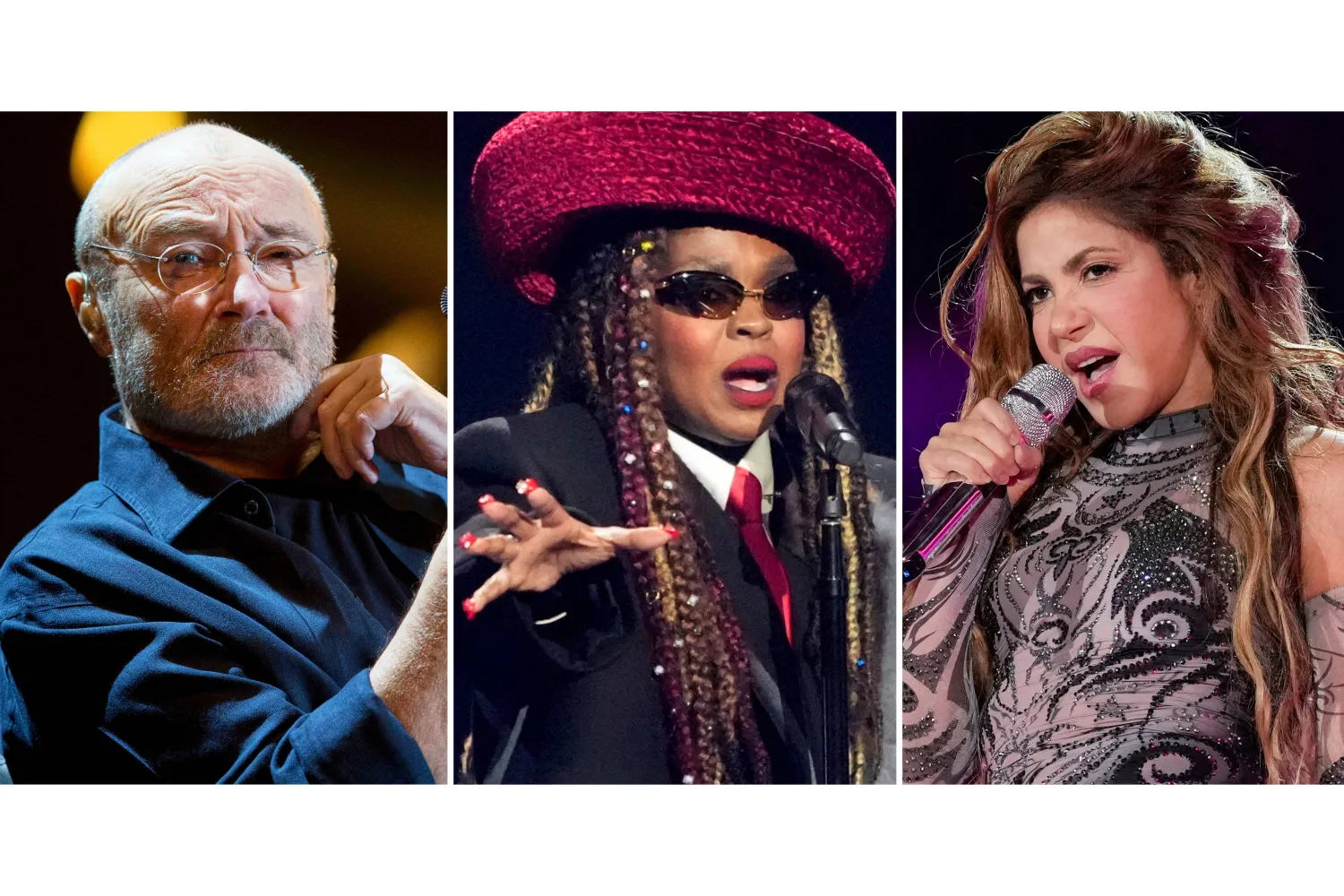
Phil Collins performs at Palacio de los Deportes in Mexico City on March 9, 2018, left, Lauryn Hill performs during the draw for the 2026 soccer World Cup in Washington on Dec. 5, 2025, center, and Shakira performs during the Global Citizen Festival in New York on Sept. 27, 2025. (AP Photo)
TT

Phil Collins, Lauryn Hill, INXS, Iron Maiden, Luther Vandross and Shakira Get Rock Hall Nominations

Phil Collins performs at Palacio de los Deportes in Mexico City on March 9, 2018, left, Lauryn Hill performs during the draw for the 2026 soccer World Cup in Washington on Dec. 5, 2025, center, and Shakira performs during the Global Citizen Festival in New York on Sept. 27, 2025. (AP Photo)

Phil Collins, Mariah Carey, Lauryn Hill, INXS, Iron Maiden, Luther Vandross and Shakira are some of the 2026 nominees for induction into the Rock & Roll Hall of Fame, a wide net that includes rap, metal, R&B, hip-hop, Britpop, blues rock and pop.

The hall revealed the list of 17 performer nominees Wednesday, a list that also includes Melissa Etheridge, Jeff Buckley, Pink, New Edition, Sade and the Wu-Tang Clan, The Associated Press reported.

Billy Idol, Joy Division/New Order return to the nominations after missing induction last year. The list this time also repeats two sets of musical brothers who have had public feuds and recent reunions — The Black Crowes and Oasis.

Collins, with such hits as “In the Air Tonight” and “One More Night,” has earned eight Grammys, including album of the year in 1985 for “No Jacket Required.” Hill's “The Miseducation of Lauryn Hill” made history as the first hip-hop album to win the Grammy for album of the year in 1999.

Carey, nominated in 2024 and 2025, has had 19 No. 1 hits on the Billboard Hot 100, while soul-jazz vocalist Sade, also nominated in 2024, had such soft rock hits as “Smooth Operator” and “The Sweetest Taboo.” The Wu-Tang Clan have been hailed as rap innovators since their game-changing 1993 debut album “Enter the Wu-Tang.”

INXS ruled the late 1980s charts with hits like “Need You Tonight,” “Devil Inside” and “New Sensation.” Two-time Grammy winner Etheridge is best known for her songs “Come to My Window” and “I’m the Only One.” Iron Maiden helped power the new wave of British heavy metal with iconic albums like “The Number of the Beast.”

New Edition had the hits “Cool It Now” and “Candy Girl,” while Shakira has been lauded for her ability to bridge Latin music with rock and pop. Pink has had four No. 1 songs and three No. 1 albums, including “The Truth About Love.”

Ten of the 17 nominees are on the ballot for the first time: Buckley, Collins, Etheridge, Hill, INXS, New Edition, Pink, Shakira, Vandross and Wu-Tang Clan.

Vandross, who sold more than 25 million albums and had the hits “Here and Now” and “Any Love,” died in 2005. Buckley, whose 1994 debut album “Grace” is widely acclaimed, died in 1997.

“This diverse list of talented nominees recognizes the ever-evolving faces and sounds of Rock & Roll and its continued impact on youth culture,” John Sykes, chairman of the Rock & Roll Hall of Fame Foundation, said in a statement.

The 2026 inductees will be revealed in April, along with inductees entering the hall under three special committee categories: Musical influence, musical excellence and the Ahmet Ertegun Non-Performer Award.

Artists must have released their first commercial recording at least 25 years before they’re eligible for induction. Nominees will be voted on by more than 1,200 artists, historians and music industry professionals.

Last year, Cyndi Lauper, Outkast, Bad Company, Chubby Checker, Soundgarden, Joe Cocker, Salt-N-Pepa, The White Stripes, Carol Kaye, Nicky Hopkins, Lenny Waronker, Thom Bell and Warren Zevon all were inducted.


Movie Review: ‘Man on the Run’ Chronicles Paul McCartney’s Post-Beatles Long and Winding Road 

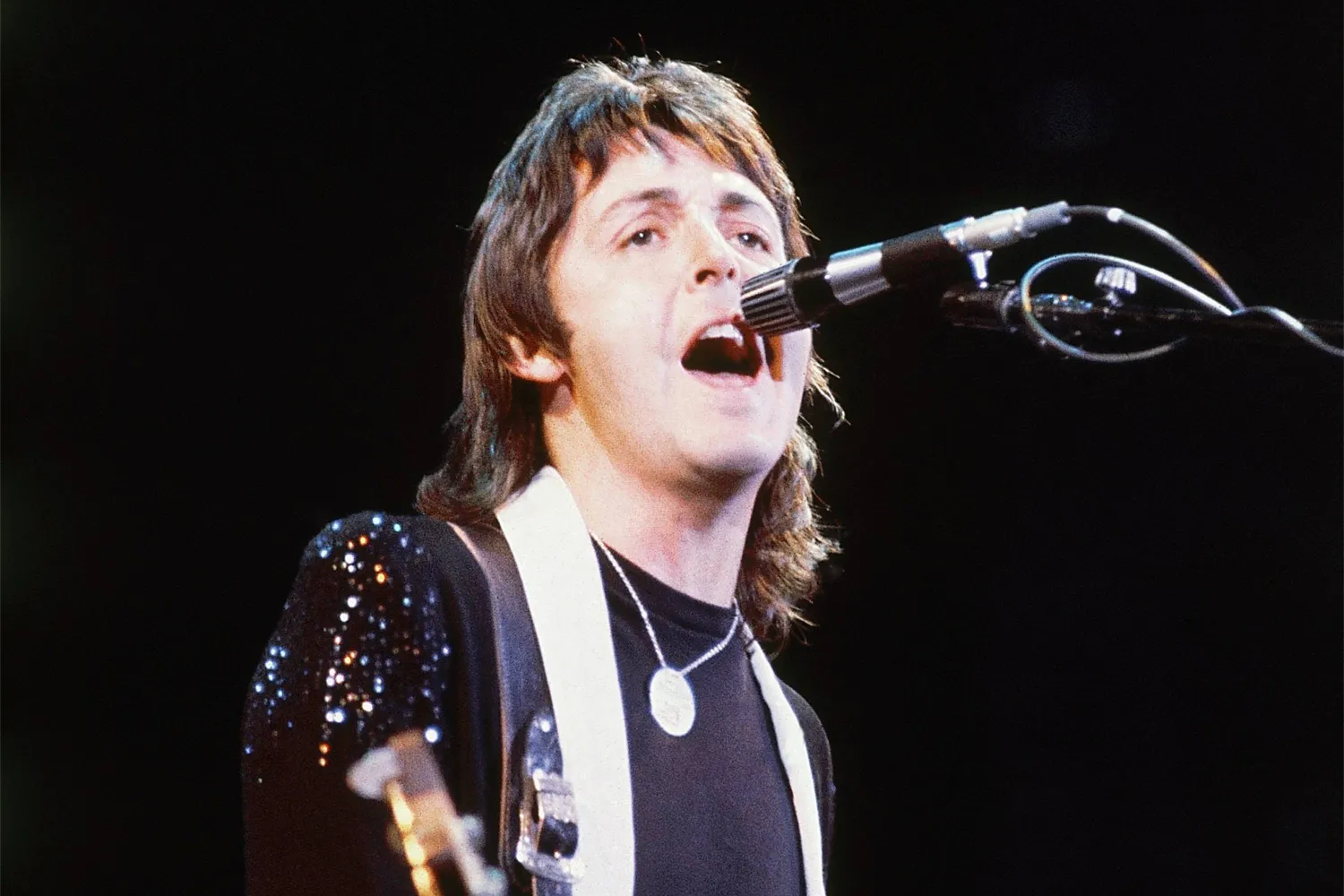
Paul McCartney, of Paul McCartney and Wings, performs at the Nassau Coliseum in Uniondale, NY on May 21, 1976. (AP)
TT

Movie Review: ‘Man on the Run’ Chronicles Paul McCartney’s Post-Beatles Long and Winding Road 

Paul McCartney, of Paul McCartney and Wings, performs at the Nassau Coliseum in Uniondale, NY on May 21, 1976. (AP)

If Peter Jackson’s “The Beatles: Get Back” was the supreme document of the Beatles’ final moments together and of their dissolution, Morgan Neville’s “Man on the Run” is a kind of sequel.

It begins in late 1969, just months after Savile Row rooftop concert. The Beatles have broken up. Paul McCartney has seemingly disappeared. There are even rumors that he’s dead. On a remote farm in Scotland, a confused and distraught McCartney wonders whether he’ll write “another note, ever.”

But the most surprising thing about revisiting this tumultuous, tabloid-ready period of McCartney’s life is a simple fact. When the Beatles broke up, McCartney was 27 years old. To say he had lived a lifetime by then would be an understatement. By just the sheer enormity of their production and colossal cultural impact, you might easily mistakenly put McCartney in middle age by then.

“Man on the Run,” premiering Friday on Prime Video, is the story of everything that came after. McCartney, an executive producer, is never seen sitting for an interview, but his off-camera musings mark the movie, a chronicle of self-renewal. For McCartney, kept boyish by the Beatles, the band's end meant a sudden coming of age.

“I had to look inside myself and find something that wasn’t the Beatles,” McCartney says in the film.

How you feel about McCartney’s post-Beatles career might inform how you feel about “Man on the Run.” For Neville, the celebrated documentary filmmaker of “Won’t You Be My Neighbor,” “Piece by Piece” and “20 Feet From Stardom,” it’s a period that offers no neat narrative, but — quite unlike the mythic Beatles years — something more like the ups and down of life, with regrets and triumphs along the way.

It didn’t get off to a good start. McCartney, blamed for the Beatles breakup, was guilt-ridden. His first records were a disappointment. Singing with Linda McCartney, his wife, wasn’t greeted well. A 1973 TV special that included a rendition of “Mary Had a Little Lamb” was, to put it a mildly, a misjudgment. A curious feature of McCartney’s largely sunny disposition is a nagging self-loathing.

“If I hear someone damning Paul McCartney, I tend to believe them,” he says, referencing the Beatles split.

“Get Back” offered a revelatory window into the group’s dynamics that put many of the old views of McCartney to bed. Comparisons are tough — “Get Back” is one of the greatest docs of the century — but Jackson’s film, drawn largely from footage shot by Michael Lindsay-Hogg, was also incredibly intimate. It captured not only the band’s individual relationships but the songwriting process in real time. (The emergence of “Get Back” from McCartney’s strumming and humming stands as one of the great sequences in documentary film.)

“Man on the Run” lacks that sense of closeness. By keeping the film in archival — the documentary is full of family photos and home movies — and without present-day talking heads, Neville lets us experience McCartney’s post-Beatles years as he did. It comes as a sacrifice, though, to a nearness to McCartney — and to the creation of his solo songs — that might have deepened the film.

The real arc of “Man on the Run” is building toward the creation of McCartney's first post-Beatles band, Wings. It’s in some ways an unlikely centerpiece. In the revolving makeup of the band, Denny Laine was the only permanent member outside Paul and Linda. On the other hand, Wings’ “Band on the Run” is the best album McCartney produced after the Beatles, and the clear culmination of years of struggle. If you needed one, this is your cue to go play “Jet” loud.

It turns out, to no one’s surprise, it’s hard to move on after being in the Beatles — especially for someone like McCartney who believed so sincerely in the band. Like its subject, “Man on the Run” inevitably pales next to films of the Beatles heyday. But it’s a meaningful companion piece about the end of an era and the start of a long and winding road.