


Blake Lively Sues ‘It Ends With Us’ Director Justin Baldoni Alleging Harassment and Smear Campaign

Blake Lively attends the LACMA Art+Film Gala at the Los Angeles County Museum of Art (LACMA) in Los Angeles, California, on November 2, 2024. (AFP)
TT

Blake Lively Sues ‘It Ends With Us’ Director Justin Baldoni Alleging Harassment and Smear Campaign

Blake Lively attends the LACMA Art+Film Gala at the Los Angeles County Museum of Art (LACMA) in Los Angeles, California, on November 2, 2024. (AFP)

Actor Blake Lively sued "It Ends With Us" director Justin Baldoni and several others tied to the romantic drama on Tuesday, alleging harassment and a coordinated campaign to attack her reputation for coming forward about her treatment on the set.

The federal lawsuit was filed in New York just hours after Baldoni and many of the other defendants in Lively's suit sued The New York Times for libel for its story on her allegations, saying the newspaper and the star were the ones conducting a coordinated smear campaign.

The lawsuits are major developments in a story emerging from the surprise hit film that has already made major waves in Hollywood and led to discussions of the treatment of female actors both on sets and in media.

Lively's suit said that Baldoni, the film's production company Wayfarer Studios and others engaged in "a carefully crafted, coordinated, and resourced retaliatory scheme to silence her, and others, from speaking out."

She accuses Baldoni and the studio of embarking on a "multi-tiered plan" to damage her reputation following a meeting in which she and her husband, actor Ryan Reynolds, addressed "repeated sexual harassment and other disturbing behavior" by Baldoni and a producer Jamey Heath, who is also named in both lawsuits.

The plan, the suit said, included a proposal to plant theories on online message boards, engineer a social media campaign and place news stories critical of Lively.

The alleged mistreatment on set included comments from Baldoni on the bodies of Lively and other women on the set.

Baldoni's attorney Bryan Freedman did not immediately respond to a request for comment on Lively's lawsuit. But he previously called the same allegations "completely false, outrageous and intentionally salacious."

Lively's lawsuit comes the same day as the libel lawsuit filed in Los Angeles Superior Court by Baldoni and others against the Times seeking at least $250 million. The Times stood by its reporting and said it plans to "vigorously defend" against the lawsuit.

Others who are defendants in Lively's suit and plaintiffs in the libel suit include Wayfarer and crisis communications expert Melissa Nathan, whose text message was quoted in the headline of the Dec. 21 Times story: "‘We Can Bury Anyone’: Inside a Hollywood Smear Machine."

Written by Megan Twohey, Mike McIntire and Julie Tate, the story was published just after Lively filed a legal complaint with the California Civil Rights Department, a predecessor to her new lawsuit.

The libel lawsuit says the newspaper "relied almost entirely on Lively’s unverified and self-serving narrative, lifting it nearly verbatim while disregarding an abundance of evidence that contradicted her claims and exposed her true motives. But the Times did not care."

A spokesperson for the Times, Danielle Rhoades, said in a statement that "our story was meticulously and responsibly reported."

"It was based on a review of thousands of pages of original documents, including the text messages and emails that we quote accurately and at length in the article. To date, Wayfarer Studios, Mr. Baldoni, the other subjects of the article and their representatives have not pointed to a single error," the statement said.

But Baldoni's lawsuit says that "If the Times truly reviewed the thousands of private communications it claimed to have obtained, its reporters would have seen incontrovertible evidence that it was Lively, not Plaintiffs, who engaged in a calculated smear campaign."

Lively is not a defendant in the libel lawsuit. Her lawyers said in a statement that "Nothing in this lawsuit changes anything about the claims advanced in Ms. Lively’s California Civil Rights Department Complaint, nor her federal complaint, filed earlier today."

The romantic drama "It Ends With Us," an adaptation of Colleen Hoover’s bestselling 2016 novel, was released in August, exceeding box office expectations with a $50 million debut. But the movie’s release was shrouded by speculation over discord between Lively and Baldoni. Baldoni took a backseat in promoting the film while Lively took centerstage along with Reynolds, who was on the press circuit for "Deadpool & Wolverine" at the same time.

Lively came to fame through the 2005 film "The Sisterhood of the Traveling Pants," and bolstered her stardom on the TV series "Gossip Girl" from 2007 to 2012. She has since starred in films including "The Town" and "The Shallows."

Baldoni starred in the TV comedy "Jane the Virgin," directed the 2019 film "Five Feet Apart" and wrote "Man Enough," a book pushing back against traditional notions of masculinity. He responded to concerns that "It Ends With Us" romanticized domestic violence, telling the AP at the time that critics were "absolutely entitled to that opinion."

He was dropped by his agency, WME, immediately after Lively filed her complaint and the Times published its story. The agency represents both Lively and Reynolds.

Baldoni's attorney, Freedman, said in a statement on the libel suit that "the New York Times cowered to the wants and whims of two powerful ‘untouchable’ Hollywood elites."

"In doing so, they pre-determined the outcome of their story, and aided and abetted their own devastating PR smear campaign designed to revitalize Lively’s self-induced floundering public image and counter the organic groundswell of criticism amongst the online public," he added. "The irony is rich."


Disney’s ‘Zootopia 2’ Set to Join $1 Billion Box Office Club

This image released by Disney shows Nick Wilde, voiced by Jason Bateman, left, and Judy Hopps, voiced by Ginnifer Goodwin, in a scene from "Zootopia 2." (Disney via AP)
TT

Disney’s ‘Zootopia 2’ Set to Join $1 Billion Box Office Club

This image released by Disney shows Nick Wilde, voiced by Jason Bateman, left, and Judy Hopps, voiced by Ginnifer Goodwin, in a scene from "Zootopia 2." (Disney via AP)

Walt Disney Animation Studios' "Zootopia 2" is on track to surpass $1 billion at the global box office, the company said on Friday, as the sequel continues its strong run in international markets.

The film, which revisits the bustling animal metropolis of "Zootopia," features returning characters Judy Hopps, a rabbit police officer voiced by Ginnifer Goodwin, and her fox partner Nick Wilde, voiced by Jason Bateman.

The duo embarks on a new adventure that blends humor and social themes, echoing the formula that made the original a hit.

"Zootopia 2" opened strongly over the US Thanksgiving weekend, giving Hollywood a boost at the start of the critical holiday season.

The film's runaway success has been fueled by an extraordinary reception in China, where "Zootopia 2" dominated the box office during its opening weekend, accounting for roughly 95% of all ticket sales nationwide.

The original "Zootopia" also became China's most popular foreign animated film when it was released in 2016.

The performance offers welcome relief for theater operators hoping for packed cinemas through Christmas, traditionally the second-busiest moviegoing period of the year. Global box office receipts have yet to return to the pre-pandemic levels seen in 2019.


Disney to Invest $1 Billion in OpenAI, License Characters for Sora Video Tool

FILE PHOTO: The main gate of entertainment giant Walt Disney Co. is pictured in Burbank, California May 5, 2009. REUTERS/Fred Prouser
TT

Disney to Invest $1 Billion in OpenAI, License Characters for Sora Video Tool

FILE PHOTO: The main gate of entertainment giant Walt Disney Co. is pictured in Burbank, California May 5, 2009. REUTERS/Fred Prouser

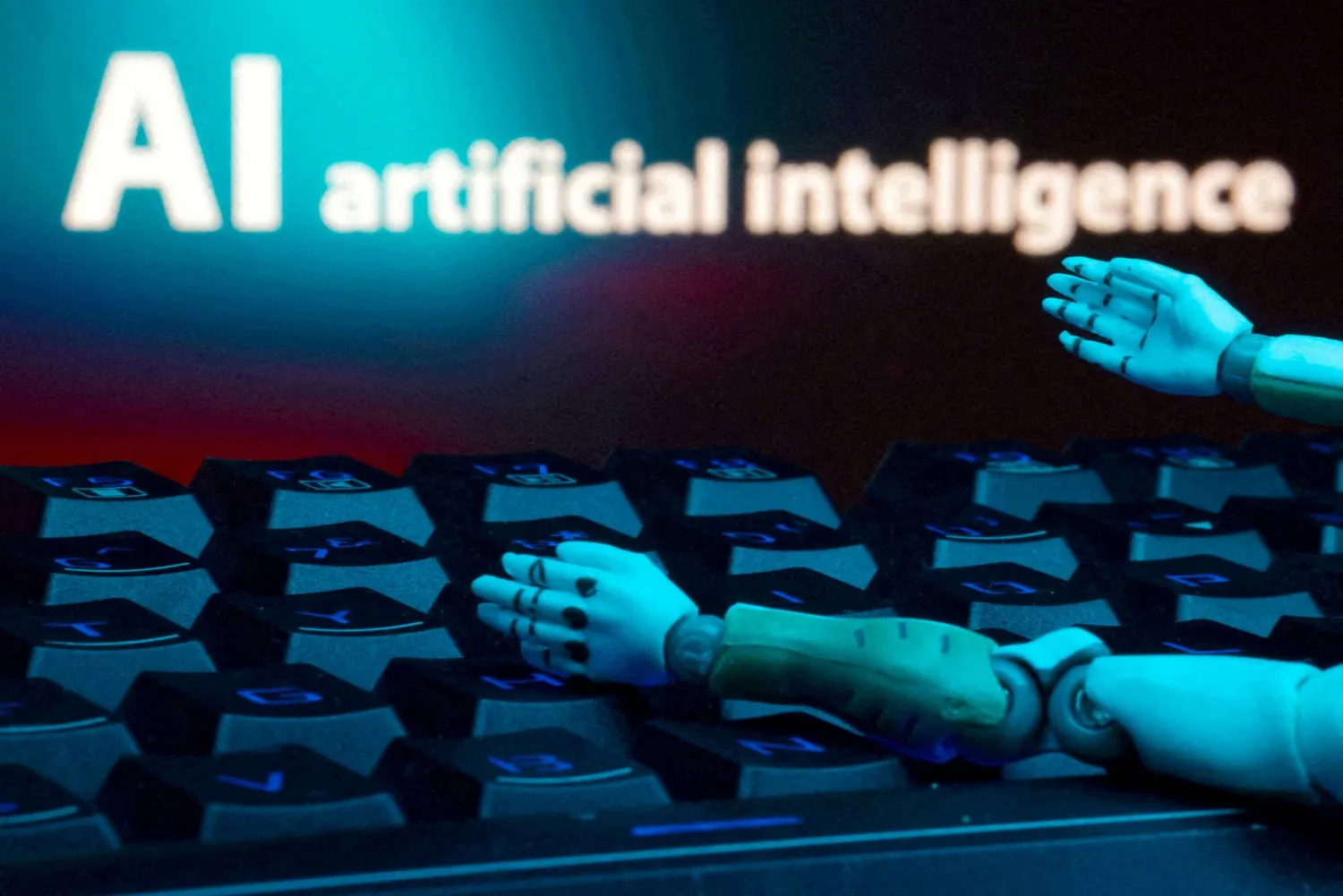
Walt Disney is investing $1 billion in OpenAI and will let the startup use characters from Star Wars, Pixar and Marvel franchises in its Sora AI video generator, a crucial deal that could reshape how Hollywood makes content.

The three-year partnership announced on Thursday is a pivotal step in Hollywood's embrace of generative artificial intelligence, side-stepping the industry's concerns over the impact of AI on creative jobs and intellectual property rights.

As part of the licensing deal, Sora and ChatGPT Images will start generating videos using licensed Disney characters such as Mickey Mouse, Cinderella and Mufasa, from early next year. The agreement excludes any talent likenesses or voices.

"Through this collaboration with OpenAI we will thoughtfully and responsibly extend the reach of our storytelling through generative AI, while respecting and protecting creators and their works," Disney CEO Bob Iger said.

OpenAI has been engaging with Disney and others in Hollywood for the past year in its search for partners, a person with knowledge of the discussions said.
The move marks a major shift in Disney's approach to AI - the company had decided to keep out its characters from the Sora app when OpenAI was in talks with companies regarding the tool's copyright policy.

Disney and Comcast's Universal had in June filed a copyright lawsuit against AI photo generation firm Midjourney for its use of the studios' best-known characters.

As part of the agreement with OpenAI, a selection of the videos by users will be made available for streaming on Disney+, allowing the streaming platform to capitalize on the growing appeal for short-form video content.

The media conglomerate will also receive warrants to purchase additional equity in the ChatGPT maker.

The companies will use OpenAI's models to build new products and customer experiences, including for Disney+ subscribers, while Disney will deploy ChatGPT for its employees, Reuters reported.

The partnership comes months after Hollywood's premier talent agency sharply criticized the same technology Disney is now embracing.

Creative Artists Agency, which represents thousands of actors, directors and music artists, said in October OpenAI was exposing artists to "significant risk" through Sora, questioning whether the AI company believed creative professionals "deserve to be compensated and credited for the work they create".


In Photos, the Details that Illuminated the 2025 Marrakech International Film Festival

An actress holds a Schiaparelli purse while posing for a photo on the red carpet during 22nd Marrakech Film Festival, in Morocco, Tuesday, Dec. 2, 2025. (AP Photo/Mosa’ab Elshamy)
TT

In Photos, the Details that Illuminated the 2025 Marrakech International Film Festival

An actress holds a Schiaparelli purse while posing for a photo on the red carpet during 22nd Marrakech Film Festival, in Morocco, Tuesday, Dec. 2, 2025. (AP Photo/Mosa’ab Elshamy)

The carpet outside the 2025 edition of the Marrakech International Film Festival was unfurled in its usual red, but the stars who walked across it shimmered in every color.

Actors and filmmakers drifted down its length in embroidered velvet robes and delicately cut black lace dresses, amid the sounds of camera shutters and microphones humming.

Some ensembles nodded explicitly to the region: hand-stitched caftans and robes with hems that followed the geometry of North African embroidery, The AP news reported.
Youssra, one of Egypt’s best-known actors, carried a black sequined, pearl-trimmed clutch emblazoned with her name across the front, recognizable to audiences all over the Middle East.

Palestinian filmmaker Annemarie Jacir poses for a photo on the red carpet during the 22nd Marrakech Film Festival, in Morocco, Saturday, Dec. 6, 2025. (AP Photo/Mosa’ab Elshamy)

Others went crisp and relied on an austere palette of black and white to make their statement. And woven through were quiet gestures of political intent. Clutches patterned like keffiyehs, pins worn close to the heart — small but unmistakable signals of solidarity with Palestinians at a festival on the edge of a region in conflict.

This year’s festival — whose guests included jury president Bong Joon Ho, Jafar Panahi and Anya Taylor-Joy — concluded Saturday.

An actress poses for a photo on the red carpet during the 22nd Marrakech Film Festival, in Morocco, Tuesday, Dec. 2, 2025. (AP Photo/Mosa'ab Elshamy)