
Ozzy Osbourne, Who Led Black Sabbath and Became the Godfather of Heavy Metal, Dies at 76 

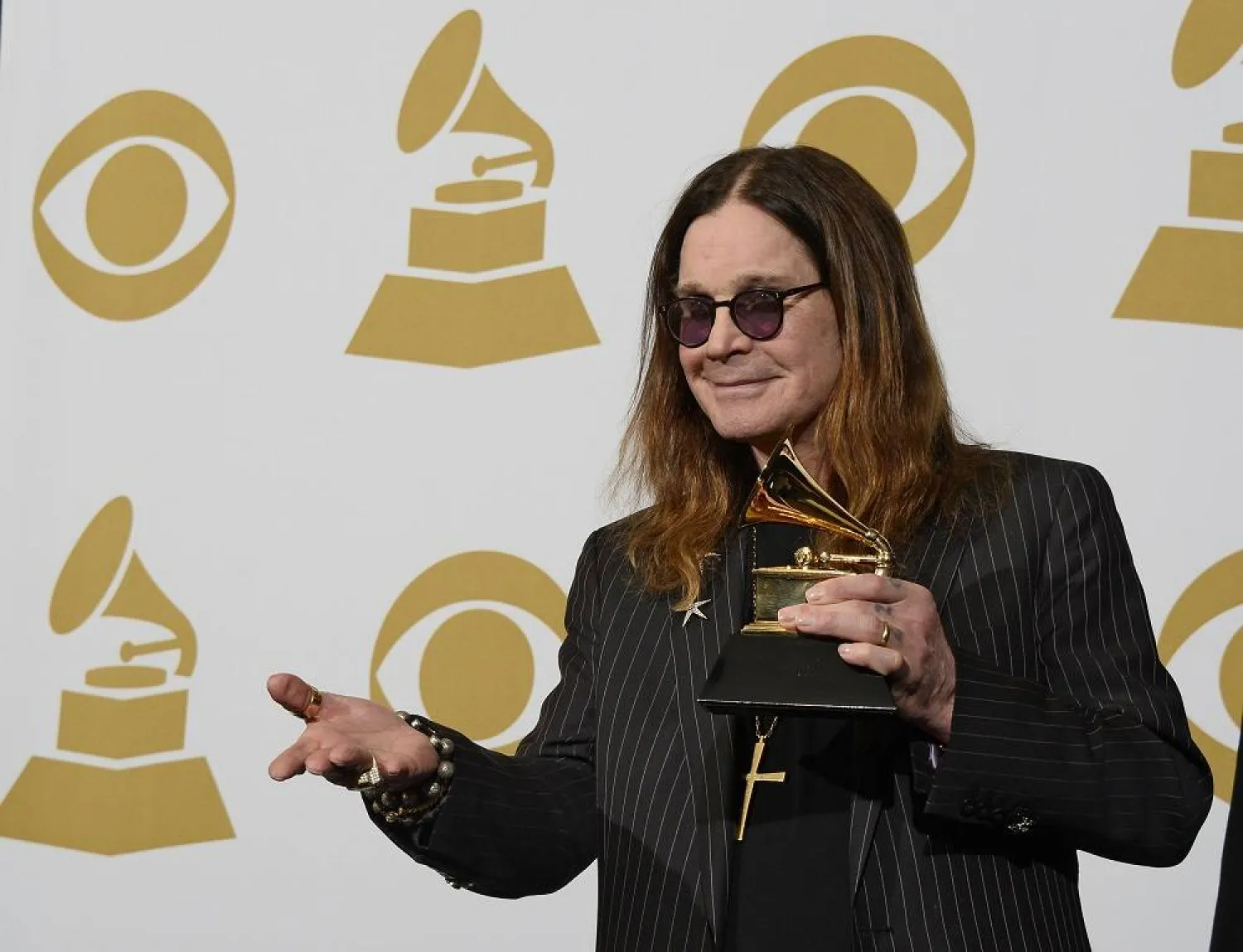
British singer Ozzy Osbourne of Black Sabbath holds up the award for "Best Metal Performance" at the 56th annual Grammy Awards held at the Staples Center in Los Angeles, California, USA, 26 January 2014 (reissued 22 July 2025). (EPA) 
TT

Ozzy Osbourne, Who Led Black Sabbath and Became the Godfather of Heavy Metal, Dies at 76 

British singer Ozzy Osbourne of Black Sabbath holds up the award for "Best Metal Performance" at the 56th annual Grammy Awards held at the Staples Center in Los Angeles, California, USA, 26 January 2014 (reissued 22 July 2025). (EPA) 

Ozzy Osbourne, the gloomy lead singer of the pioneering band Black Sabbath who became the throaty, growling voice — and drug-and-alcohol ravaged id — of heavy metal, died Tuesday, just weeks after his farewell show. He was 76.

"It is with more sadness than mere words can convey that we have to report that our beloved Ozzy Osbourne has passed away this morning. He was with his family and surrounded by love. We ask everyone to respect our family privacy at this time," a family statement from Birmingham, England, said. In 2020, he revealed he had Parkinson’s disease after suffering a fall.

Either clad in black or bare-chested, the singer was often the target of parents’ groups for his imagery and once caused an uproar for biting the head off a bat. Later, he would reveal himself to be a doddering and sweet father on the reality TV show "The Osbournes."

The Big Bang of heavy metal

Black Sabbath’s 1969 self-titled debut LP has been likened to the Big Bang of heavy metal. It came during the height of the Vietnam War and crashed the hippie party, dripping menace and foreboding. The cover of the record was of a spooky figure against a stark landscape. The music was loud, dense and angry, and marked a shift in rock ’n’ roll.

The band’s second album, "Paranoid," included such classic metal tunes as "War Pigs,Iron Man" and "Fairies Wear Boots." The song "Paranoid" only reached No. 61 on the Billboard Hot 100 but became in many ways the band’s signature song. Both albums were voted among the top 10 greatest heavy metal albums of all time by readers of Rolling Stone magazine.

"Black Sabbath are the Beatles of heavy metal. Anybody who’s serious about metal will tell you it all comes down to Sabbath," Dave Navarro of the band Jane’s Addiction wrote in a 2010 tribute in Rolling Stone. "There’s a direct line you can draw back from today’s metal, through Eighties bands like Iron Maiden, back to Sabbath."

Sabbath fired Osbourne in 1979 for his legendary excesses, like showing up late for rehearsals and missing gigs. "We knew we didn’t really have a choice but to sack him because he was just so out of control. But we were all very down about the situation," wrote bassist Terry "Geezer" Butler in his memoir, "Into the Void."

Osbourne reemerged the next year as a solo artist with "Blizzard of Ozz" and the following year’s "Diary of a Madman," both hard rock classics that went multiplatinum and spawned enduring favorites such as "Crazy Train,Goodbye to Romance,Flying High Again" and "You Can’t Kill Rock and Roll." Osbourne was twice inducted to the Rock & Roll Hall of Fame — once with Sabbath in 2006 and again in 2024 as a solo artist.

The original Sabbath lineup reunited for the first time in 20 years in July for what Osbourne said would be his final concert. "Let the madness begin!" he told 42,000 fans in Birmingham.

Metallica, Guns N Roses, Slayer, Tool, Pantera, Gojira, Alice in Chains, Lamb of God, Halestorm, Anthrax, Rival Sons and Mastodon all did sets. Tom Morello, Aerosmith’s Steven Tyler, Billy Corgan, Ronnie Wood, Travis Barker, Sammy Hagar and more made appearances. Actor Jason Momoa was the host for the festivities.

"Black Sabbath: we’d all be different people without them, that’s the truth," said Pantera singer Phil Anselmo. "I know I wouldn’t be up here with a microphone in my hand without Black Sabbath."

Outlandish exploits and a classic look

Osbourne embodied the excesses of metal. His outlandish exploits included relieving himself on the Alamo, snorting a line of ants off a sidewalk and, most memorably, biting the head off the live bat that a fan threw onstage during a 1981 concert. (He said he thought it was rubber.)

Osbourne was sued in 1987 by parents of a 19-year-old teen who died by suicide while listening to his song "Suicide Solution." The lawsuit was dismissed. Osbourne said the song was really about the dangers of alcohol, which caused the death of his friend Bon Scott, lead singer of AC/DC.

Then-Cardinal John J. O’Connor of New York claimed in 1990 that Osbourne’s songs led to demonic possession and even suicide. "You are ignorant about the true meaning of my songs," the singer wrote back. "You have also insulted the intelligence of rock fans all over the world."

Audiences at Osbourne shows could be mooned or spit on by the singer. They would often be hectored to scream along with the song, but Osbourne would usually send the crowds home with their ears ringing and a hearty "God bless!"

He started an annual tour — Ozzfest — in 1996 after he was rejected from the lineup of what was then the top touring music festival, Lollapalooza. Ozzfest has gone on to host such bands as Slipknot, Tool, Megadeth, Rob Zombie, System of a Down, Limp Bizkit and Linkin Park.

Osbourne’s look changed little over his life. He wore his long hair flat, heavy black eye makeup and round glasses, often wearing a cross around his neck. In 2013, he reunited with Black Sabbath for the dour, raw "13," which reached No. 1 on the UK Albums Chart and peaked at No. 86 on the US Billboard 200. In 2019, he had a Top 10 hit when featured on Post Malone’s "Take What You Want," Osbourne’s first song in the Top 10 since 1989.

In 2020, he released the album "Ordinary Man," which had as its title song a duet with Elton John. In 2022, he landed his first career back-to-back No. 1 rock radio singles from his album "Patient Number 9," which featured collaborations with Jeff Beck, Eric Clapton, Mike McCready, Chad Smith, Robert Trujillo and Duff McKagan. It earned four Grammy nominations, winning two. (Osbourne won five Grammys over his lifetime.)

At the Rock & Roll Hall of Fame induction ceremony in 2024, Jack Black called him "greatest frontman in the history of rock 'n' roll" and "the Jack Nicholson of rock." Osbourne thanked his fans, his guitarist Randy Rhoads and his longtime wife, Sharon Osbourne.

The beginnings of Black Sabbath

John Michael Osbourne was raised in the gritty city of Birmingham. Kids in school nicknamed him Ozzy, short for his surname. As a boy, he loved the Four Seasons, Chuck Berry and Little Richard. The Beatles made a huge impression.

"They came from Liverpool, which was approximately 60 miles north of where I come from," he told Billboard. "So all of a sudden it was in my grasp, but I never thought it would be as successful as it became."

In the late 1960s, Osbourne had teamed up with Butler, guitarist Tony Iommi and drummer Bill Ward as the Polka Tulk Blues Band. They decided to rename the band Earth, but found to their dismay there was another band with that name. So they changed the name to the American title of the classic Italian horror movie "I Tre Volti Della Paura," starring Boris Karloff: Black Sabbath.

Once they found their sludgy, ominous groove, the band was productive, putting out their self-titled debut and "Paranoid" in 1970, "Master of Reality" in 1971, "Vol. 4" in 1972 and "Sabbath Bloody Sabbath" in 1973.

The music was all about industrial guitar riffs and disorienting changes in time signatures, along with lyrics that spoke of alienation and doom.

The Guardian newspaper in 2009 said the band "introduced working-class anger, stoner sludge grooves and witchy horror-rock to flower power. Black Sabbath confronted the empty platitudes of the 1960s and, along with Altamont and Charles Manson, almost certainly helped kill off the hippy counterculture."

After Sabbath, Osbourne had an uncanny knack for calling some of the most creative young guitarists to his side. When he went solo, he hired the brilliant innovator Rhoads, who played on two of Osbourne’s finest solo albums, "Blizzard of Ozz" and "Diary of a Madman." Rhoads was killed in a freak plane accident in 1982; Osbourne released the live album "Tribute" in 1987 in his memory.

Osbourne then signed Jake E. Lee, who lent his talents to the platinum albums "Bark at the Moon" and "The Ultimate Sin." Hotshot Zakk Wylde joined Osbourne’s band for "No Rest for the Wicked" and the multiplatinum "No More Tears."

Courting controversy — and wholesomeness

Whomever he was playing with, Osbourne wasn’t likely to back down from controversy. He had the last laugh when the TV evangelist the Rev. Jimmy Swaggart in 1986 lambasted various rock groups and rock magazines as "the new pornography," prompting some retailers to pull Osbourne’s album.

Much later, a whole new Osbourne would be revealed when "The Osbournes," which ran on MTV from 2002-2005, showed this one-time self-proclaimed madman drinking Diet Cokes as he struggled to find the History Channel on his new satellite television or warning his kids not to smoke or drink before they embarked on a night on the town.

Later, he and his son Jack toured America on the travel show "Ozzy & Jack’s World Detour," where the pair visited such places as Mount Rushmore and the Space Center Houston. Osbourne was honored in 2014 with the naming of a bat frog found in the Amazon that makes high-pitched, batlike calls. It was dubbed Dendropsophus ozzyi.

He also met Queen Elizabeth II during her Golden Jubilee weekend. He was standing next to singer-actor Cliff Richard. "She took one look at the two of us, said ‘Oh, so this is what they call variety, is it?’ then cracked up laughing. I honestly thought that Sharon had slipped some acid into my cornflakes that morning," he wrote in "I Am Ozzy."

Thelma Riley and Osbourne married in 1971; Osbourne adopted her son Elliot Kingsley, and they had two more children, Jessica and Louis. Osbourne later met his wife, then Sharon Levy, who became her own celebrity persona, when she was running her father’s Los Angeles office. Her father was Don Arden, a top concert promoter and artist manager. She went to Osbourne’s hotel in Los Angeles to collect money, which Osbourne had spent on drugs.

They married in 1982, had three children — Kelly, Aimee and Jack — and endured periodic separations and reconciliations.

He is survived by Sharon Osbourne and his children.


Manga Productions Announces Its New Project 'Henna' in Collaboration with Bilibili

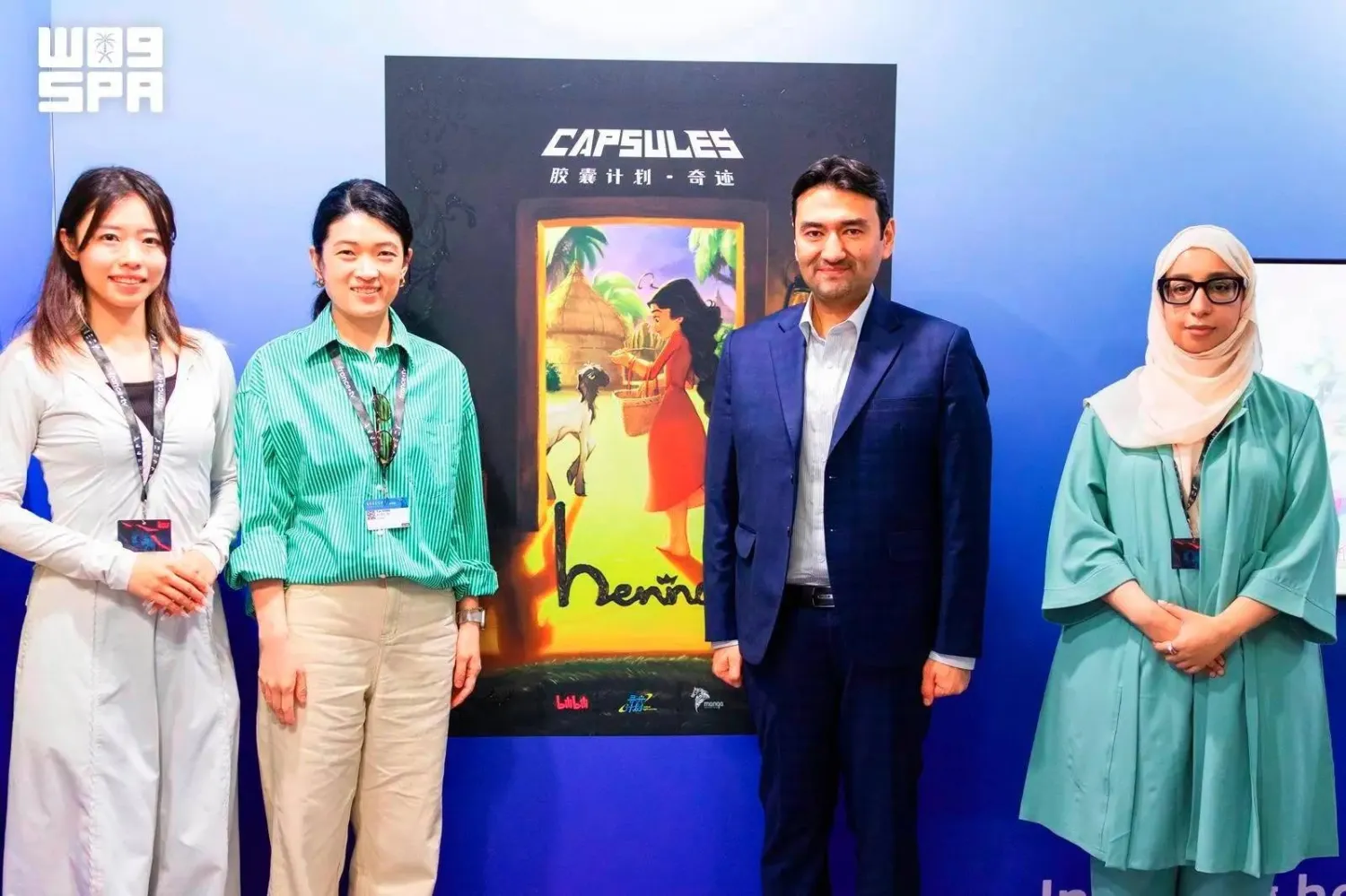
The film tells the story of a young deaf girl, who embarks on a journey to discover her voice and express herself through the art of henna, (SPA)
TT

Manga Productions Announces Its New Project 'Henna' in Collaboration with Bilibili

The film tells the story of a young deaf girl, who embarks on a journey to discover her voice and express herself through the art of henna, (SPA)

Manga Productions, a subsidiary of Mohammed bin Salman Foundation “Misk,” is participating in the Annecy International Animation Film Festival 2026, one of the world’s leading festivals dedicated to animation and creative content, taking place from June 23 to 26 in Annecy, France.

The company is showcasing a selection of its creative projects and productions that reflect Saudi identity and culture, while further strengthening its international presence and building strategic relationships with global partners in the entertainment and content industry, reported the Saudi Press Agency on Wednesday.

During the Annecy International Animation Film Festival, Manga Productions announced its new animated short film project, “Henna”, in collaboration with the Chinese platform Bilibili. The film tells the story of a young deaf girl, who embarks on a journey to discover her voice and express herself through the art of henna, representing the deaf and hard-of-hearing community in a story that reflects the company's commitment to creating culturally rooted, inspiring human stories for global audiences.

“Henna” marks the first co-produced animation project between Bilibili and an Arab company, and is one of the first outcomes of the strategic partnership signed between Manga Productions and Bilibili in August 2025 to strengthen collaboration in content creation, production, and distribution.

This step is part of Manga Productions’ efforts to expand the reach of Saudi content and Arab creativity in international markets, particularly in China, one of the world’s largest and fastest-growing digital entertainment markets. Bilibili is one of China's leading digital platforms, with more than 107 million daily active users, opening new opportunities for Saudi content to reach a broad global audience.

CEO of Manga Productions Dr. Essam Bukhary stated: "Our participation in the Annecy International Animation Film Festival reflects Manga Productions’ commitment to strengthening the global presence of Saudi creative content and building strategic partnerships that contribute to the growth of the animation industry and cultural sector in the Kingdom.”

“We are also proud to announce our new animated short movie, ‘Henna’, in collaboration with the Chinese platform Bilibili. The project reflects our strategy of creating impactful human stories inspired by our local culture and presented through a global perspective, while showcasing the talent and creativity of the Saudi youth in whom we place great confidence and high expectations,” he added.

“Henna” Director Riyadh Al-Dossary said: “‘Henna’ carries a human message that reflects the power of one’s inner voice and self-expression despite challenges. Through this project, we aim to deliver a visually engaging and emotionally authentic experience inspired by our local culture in a language that resonates with global audiences.”

Manga Productions also highlighted the global success of the Saudi-Japanese anime series “Asateer2: Future’s Folktales”, co-produced with Toei Animation and created with the participation of more than 50 Saudi artists, which achieved over 151 million views and 450+ media features across five continents.

Manga Productions also announced the global expansion of the series through multiple languages and platforms, including the Arabic version on Shahid, Japanese version on Lemino, and French version on Anime Digital Network, in addition to the English and Spanish versions.

The Annecy International Animation Film Festival is considered one of the most prominent global platforms bringing together leading animation studios, content creators, distributors, and investors from around the world, contributing to the exchange of expertise, the development of partnerships, and the exploration of the latest trends in the animation industry.

This participation aligns with Manga Productions’ strategy to expand its global impact and reinforce Saudi Arabia’s position as a growing hub for creative industries, in line with Saudi Vision 2030 objectives to support the creative economy and strengthen the Kingdom’s cultural presence internationally.


Angelina Jolie Turns Personal Pain into Performance for ‘Couture’ Film

Actress Angelina Jolie arrives for a special Maleficent Costume Display at Kensington Palace in London in ths file photo taken May 8, 2014. REUTERS/Luke MacGregor/Files
TT

Angelina Jolie Turns Personal Pain into Performance for ‘Couture’ Film

Actress Angelina Jolie arrives for a special Maleficent Costume Display at Kensington Palace in London in ths file photo taken May 8, 2014. REUTERS/Luke MacGregor/Files

Academy Award winner Angelina Jolie faced one of her deepest fears on screen for the French film "Couture" - being diagnosed with cancer.

Based on personal experiences of writer and director Alice Winocour, Jolie plays fictional American filmmaker Maxine Walker, who, while producing a film to accompany a runway show for Paris Fashion Week, discovers she has breast cancer.

Jolie's mother, Marcheline Bertrand, died of breast cancer at the age of 56, and Jolie underwent a double mastectomy in 2013 after discovering she was carrying the same genetic mutation as her mother.

"I thought often of my mother and ⁠how much I ⁠think this film would have been wonderful for her when she was going through this," she told Reuters.

But it wasn't just about her mother; Jolie also got involved to bring Walker’s experience to the world.

"You sit in that chair, and whether it's cancer or anything, whether you're male or female, we've all ⁠had that moment. We've all had that moment where we've gotten some news that has shifted our lives," the “Maria” actor said.

Jolie had to go through a scene where operation lines were placed on her chest by an oncologist.

"It felt a strange moment to have Hollywood in my hospital room," Jolie said.

"Here I am, you know, in my gown, getting my needles, doing all the stuff that I do, but now we are sharing it. And so, it felt very vulnerable,” she added.

Alongside Jolie, the ⁠cast of “Couture” ⁠includes Ada, played by Anyier Anei, who is a model struggling with the fashion industry putting her on a pedestal, and make-up artist Angele, played by Ella Rumpf, who is trying to break out of the fashion scene by becoming a writer.

Jolie hopes that each character’s story will resonate with viewers.

"I think what we found in doing this, and hopefully what the audience will feel, is that we're connected," the 51-year-old said.

"We're connected as human beings, and we all go through something... And it's very necessary to pull us all through being human,” Jolie added.

“Couture” arrives in American movie theaters on Friday.


Clive Davis, Music Industry Starmaker, Dies at 94

Legendary US record producer Clive Davis speaks during the “Recording Academy and Clive Davis' Salute To Industry Icons” pre-Grammy gala at the Beverly Hilton hotel in Beverly Hills, California on January 31, 2026. (AFP)
TT

Clive Davis, Music Industry Starmaker, Dies at 94

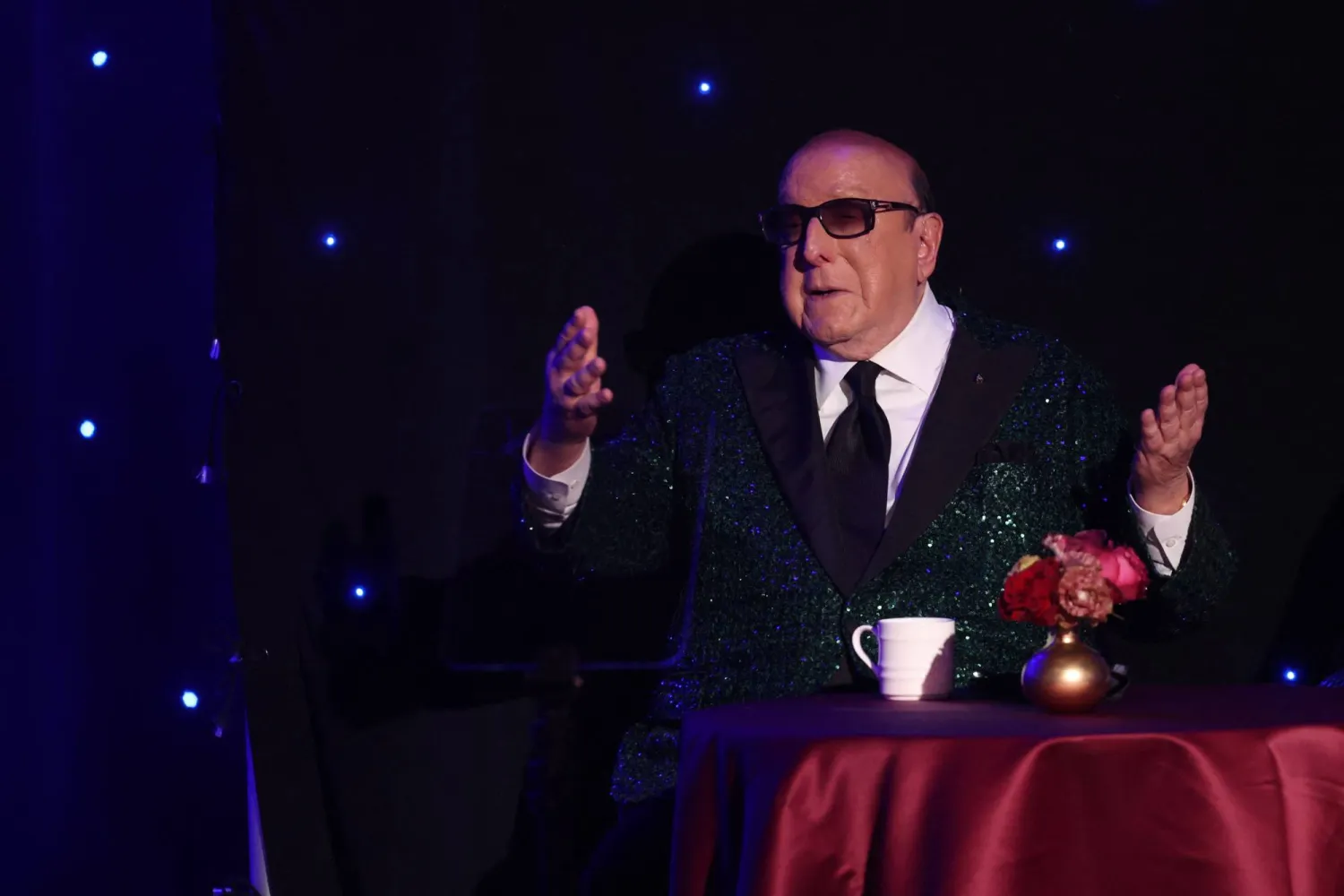
Legendary US record producer Clive Davis speaks during the “Recording Academy and Clive Davis' Salute To Industry Icons” pre-Grammy gala at the Beverly Hilton hotel in Beverly Hills, California on January 31, 2026. (AFP)

Clive Davis, the record company lawyer who became one of the music industry's most powerful figures, launching or resurrecting the careers of such superstars as Janis Joplin, Whitney Houston, Carlos Santana and Alicia Keys, has died, his family confirmed to the New York Times. He was 94.

Earlier this year, Davis was hospitalized following an upper respiratory issue and was released a few days later. He died in his Manhattan apartment, the Times reported. Messages sent to representatives for Davis were not immediately returned Monday.

Unlike other record moguls whose influence waned as they got older, Davis' might only seemed to grow over his career, which spanned more than five decades, various genres and multiple labels. Into his 80s, he was directing the careers of everyone from Barry Manilow to “American Idol” winners Carrie Underwood and Kelly Clarkson.

His success stories were staggering, with Houston a crowning achievement and devastating tragedy: Davis signed her to his Arista record label when she was just a teen and turned her into America's reigning pop princess: She racked up multiple No. 1 hits and became one of the top-selling artists in pop history before drug abuse hobbled her career. She died in a Los Angeles hotel room in 2012 just hours before she was to appear at the annual pre-Grammy Awards gala hosted by Davis, who had been convinced she was turning her life around.

“Maybe I should have been more skeptical,” Davis wrote in his 2013 memoir, “The Soundtrack of My Life,” “but I’ve always been optimistic, and I felt hopeful. It felt like old times.”

He also launched the career of multiplatinum, multiple Grammy winner Keys — and was quick to note other talents he signed, including Joplin and Billy Joel, Blood Sweat & Tears and other “all-timers,” as he so often put it.

“I signed Patti Smith, the great Renaissance woman ... I signed Lou Reed ... I signed the Grateful Dead,” he proudly touted in an interview with The Associated Press in 1999.

But Davis didn't simply have an eye for new talent — he also knew how to keep veterans relevant decades after their first hit. Aretha Franklin, whose legend was made at Atlantic Records, flourished in her later years at Arista Records, as did Luther Vandross, who made his last albums for another Davis label, J Records.

Davis was also responsible for conceiving of the 1999 album “Supernatural,” which paired guitar god Santana with some of the day's hottest talents. The record went on to win a record tying eight Grammys and gave Santana more success than he had ever enjoyed in his decades-long career.

He had middle aged star Rod Stewart trade in his rock hits for standards from “The Great American Songbook.” The album, released in 2003, sold millions and was so successful it spawned four titles in all.

Davis didn’t always make the right choices; he turned down a chance to sign up Meatloaf. And he and his collaborators didn’t always agree. He and producer David Foster fought bitterly over the arrangement for Houston’s all-time hit, a cover of Dolly Parton’s “I Will Always Love You.” Manilow strongly objected to recording “I Write the Songs,” noting that he didn’t even write the song, a Bruce Johnston ballad that became a signature hit for Manilow, who would have similar latter-day success mining the music of the 1950s, 60s and '70s.

“He's just brilliant at picking ideas he thinks the public will connect,” raved Manilow, who had worked with Davis since he was a budding singer at Columbia Records.

Davis also had his struggles. Though he became president of Columbia Records in 1967 after joining the label in 1960 as a lawyer, by 1973 he was gone in a bitter fallout. The label accused him of mismanagement of funds and he was fired. Although Davis says he was later cleared, it wasn't the end of his problems; he later was indicted on tax evasion charges, pleaded guilty to one count and had to pay a $10,000 fine.

However, Davis would declare victory: he says Columbia gave him the money to start Arista Records to resolve the dispute, and the label would become a huge success with artists like country superstars Brooks & Dunn, sassy R&B group TLC, Babyface, Houston, Franklin and others.

The label had huge success with a debut act — Milli Vanilli. But the male pop duo would become the embarrassment of the industry when, after winning a Grammy, it was revealed that they weren't actually singing their songs (Davis blamed the debacle on the label's European division, which he said signed them; the group was later stripped of its best new artist Grammy).

In 1999, as Arista was celebrating its 25th anniversary, Davis faced another crisis: the label's then-parent company, BMG Entertainment, a division of German media conglomerate Bertelsmann, wanted him to retire; most of its executives were eased out by 60, and Davis was in his mid-60s.

In 2000, despite support from his superstar roster, the company ousted him in favor of producer and songwriter Antonio “L.A.” Reid, who would later become chairman of Island/Def Jam.

However, instead of severing its ties with Davis, BMG helped him launch J Records in what BMG has described as the largest record company startup ever created. Vandross was one of his initial artists, along with forgettable acts like the boy-band O-Town.

J Records was a success from the start, though, and only grew in stature with the arrival of a young singer named Keys, a piano-playing singer-songwriter with powerful pipes and dramatic R&B songs. Keys' albums would go on to sell millions and win several Grammys.

His influence grew even more when Davis was tapped for BMG's US division.

He became a key backer of the careers of the winners of “American Idol,” guiding many albums to platinum status. The show's link to Sony BMG came through a deal between Davis and 19 Recordings Unlimited, the label managed by “Idol” creator Simon Fuller.

In 2007, however, Davis disagreed with the direction of Clarkson's “My December,” and she publicly criticized him. The album was a flop, and she later apologized.

In 2008, Sony BMG replaced Davis as chairman and chief executive officer of the BMG label group, giving him the title of chief creative officer.