
Hollywood, Bollywood Groups Lobby Indian Panel to Protect Content from AI Models

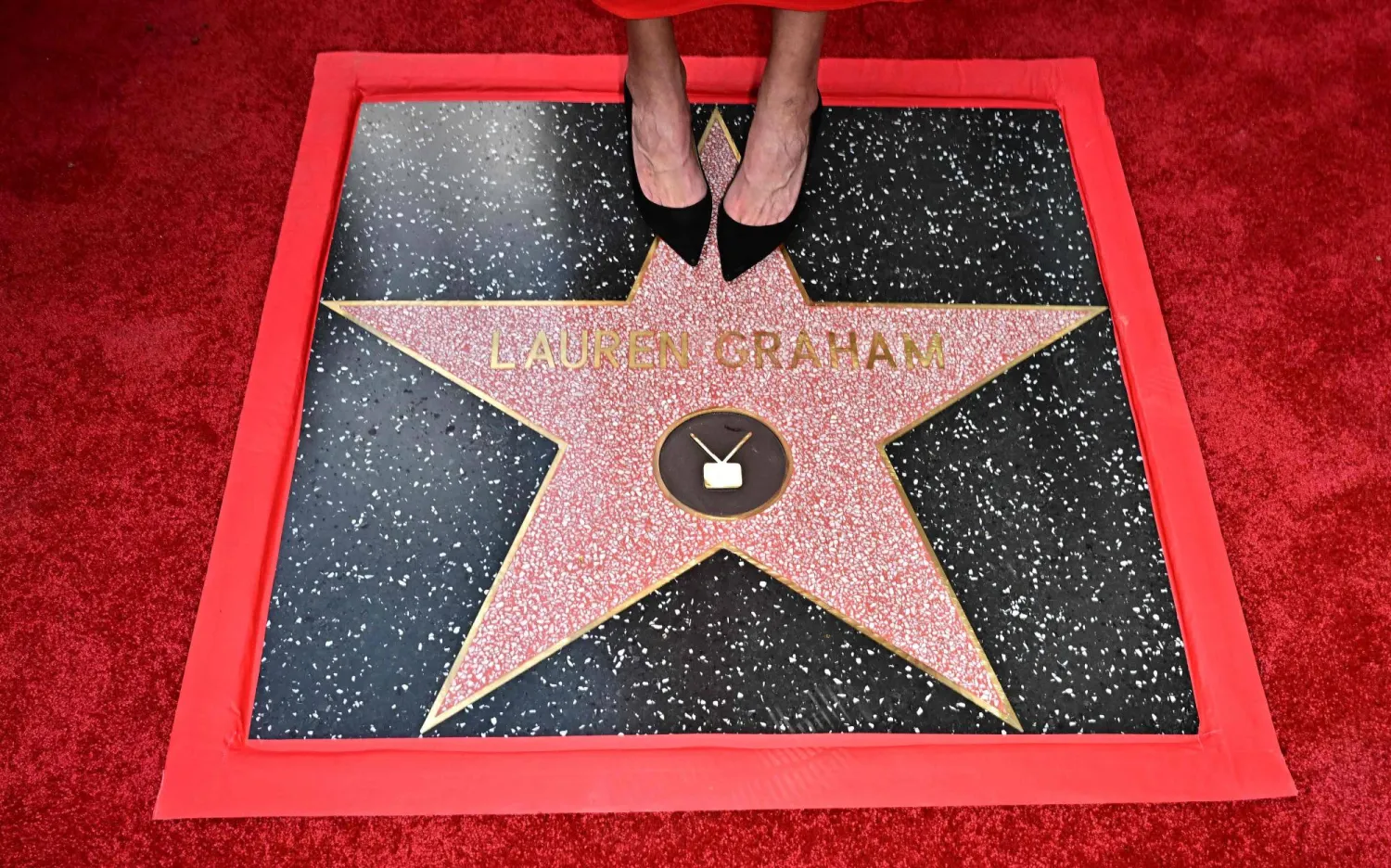
US actress Lauren Graham (detail shoes) stands on her newly unveiled star on the Hollywood Walk of Fame during a ceremony in Hollywood, California, on October 3, 2025. (Photo by Frederic J. BROWN / AFP)
TT

Hollywood, Bollywood Groups Lobby Indian Panel to Protect Content from AI Models

US actress Lauren Graham (detail shoes) stands on her newly unveiled star on the Hollywood Walk of Fame during a ceremony in Hollywood, California, on October 3, 2025. (Photo by Frederic J. BROWN / AFP)

Hollywood and Bollywood groups are lobbying an Indian panel for stricter copyright protection that will prevent artificial intelligence firms from using their intellectual property to train AI models, letters show.

AI companies remain at loggerheads with content owners globally and governments are fast developing regulations that lay down rules for the new technology. While Japan gives broad exemptions to AI firms in using copyrighted content, the European Union has stricter rules that allow content owners to opt-out of such use.

The movie industry is particularly concerned that AI tools could scrape their copyrighted videos, images and clips online - like trailers and promos - and more critically ingest pirated content onto their platforms.

India's current copyright law does not account for use by AI. The government formed a panel this year consisting of lawyers, government officials and industry executives to review if existing copyright law is sufficient to tackle AI-related disputes, and make recommendations.

Motion Picture Association (MPA), which represents Warner Bros, Paramount and Netflix, and the Producers Guild of India have argued India should not tinker with its copyright law and instead promote a licensing regime.

In response to the panel's private inquiry on why India should not allow blanket training exceptions to bolster AI innovation, MPA India Managing Director Uday Singh said in an August 2 letter the move could "undermine the incentive to create new works and erode copyright protection in India."

The Indian guild's CEO Nitin Tej Ahuja told the panel in his letter "licensing copyrighted works is essential for creators' revenue and business sustainability."

MPA declined to comment, while the guild did not respond to Reuters queries on the letters, which are not public.

India's commerce ministry official Himani Pande, who chairs the panel, did not respond to Reuters queries. The panel is finalizing its recommendations which it will present to senior officials in coming weeks, a source with direct knowledge said.

India has one of the world's most vibrant film industries. A Deloitte-MPA study in May said India's film, TV and online content industry generated $13.1 billion in revenues last year, growing 18% each year since 2019. The deliberations come just when a Bollywood couple has gone to court to challenge YouTube's AI policies after their manipulated videos started spreading online.

The film studios' position is in contrast to the Business Software Alliance, which represents AI firms like OpenAI, and which argued in public submissions in July that New Delhi should ensure exceptions to permit lawful AI use. MPA members however remain concerned.

The association has said India should not consider allowing use of content in AI models with an opt-out system as it will put the burden of responsibility on the movie studios, a move that could force them to individually track and block sharing of their work on scores of AI platforms.

Such exceptions "would hinder future investments, development of high-quality local content," MPA India said. In September, Warner sued AI service Midjourney in Los Angeles by saying it brazenly stole the studio's works to generate images and videos of Batman, Superman, Bugs Bunny and other copyrighted characters.

Midjourney maintains the way it trains its AI model amounts to fair use.


‘Scary Movie’ Tops Box Office, Slaying ‘Masters of the Universe’ and Adding to Low-Budget Streak

 (L-R) US actor/producer/writer Shawn Wayans, US actor Anthony Anderson and US actor/producer/writer Marlon Wayans attend Paramount's "Scary Movie" premiere at the Paramount theater in Los Angeles on June 3, 2026. (AFP)
(L-R) US actor/producer/writer Shawn Wayans, US actor Anthony Anderson and US actor/producer/writer Marlon Wayans attend Paramount's "Scary Movie" premiere at the Paramount theater in Los Angeles on June 3, 2026. (AFP)
TT

‘Scary Movie’ Tops Box Office, Slaying ‘Masters of the Universe’ and Adding to Low-Budget Streak

 (L-R) US actor/producer/writer Shawn Wayans, US actor Anthony Anderson and US actor/producer/writer Marlon Wayans attend Paramount's "Scary Movie" premiere at the Paramount theater in Los Angeles on June 3, 2026. (AFP)
(L-R) US actor/producer/writer Shawn Wayans, US actor Anthony Anderson and US actor/producer/writer Marlon Wayans attend Paramount's "Scary Movie" premiere at the Paramount theater in Los Angeles on June 3, 2026. (AFP)

The summer box office is booming — but not because of the usual suspects.

After three weeks of indie horror dominance at the box office, the slasher spoof “Scary Movie” topped ticket sales with $55 million over the weekend, according to studio estimates Sunday, easily besting the far-from-mighty “Masters of the Universe.”

A new order has lately come to movie theaters, which have seen Gen Z ticket buyers flock to the horror hits “Obsession” and “Backrooms,” both made by YouTubers-turned-filmmakers. Those movies have even outshone The Walt Disney Co.’s “Star Wars: The Mandalorian and Grogu.”

This weekend, comedy was the underdog champ. Though the genre has been all but left for dead in theaters, the sixth “Scary Movie” notched a franchise-best $105.5 million global launch. The Wayans brother comedy even outdid its primary satirical target, the “Scream” franchise. Earlier this year, “Scream 7” debuted with $97 million worldwide.

Both franchises are distributed by Paramount Pictures, though Miramax produced the new “Scary Movie.” Co-written by Marlon, Shawn, Keenan and Craig Wayans, the sequel marks the Wayans’ return to the franchise after their departure over creative differences following 2001’s “Scary Movie 2.”

“This is an outstanding opening for a comedy sequel this far into the series,” said David A. Gross, who runs the movie consulting firm FranchiseRe. "It’s a huge bounceback after the last episode crashed in 2013 when Anna Faris and Regina Hall were excluded. The weekend figure is triple the average for the genre.”

Reviews weren’t good (26% fresh on Rotten Tomatoes) and audience scores (a “B” CinemaScore) were so-so. But that didn’t stop the $30-million “Scary Movie” from dominating its much bigger budget competition.

“Masters of the Universe,” a sword and sorcery action adventure based on the 1980s animated series and Mattel toys, failed to revive the dormant franchise. The Amazon MGM release, the second “Masters of the Universe” film following a 1987 movie of the same title, opened with $29.3 million domestically.

“Masters of the Universe,” starring Nicholas Galitzine as He-Man, added $25 million overseas. But for a film that cost nearly $200 million to produce, a much higher launch was needed to make profitability likely.

It’s Mattel Studios’ first release since 2023’s “Barbie.” But after the extraordinary $1.45 billion success of that film, “Masters of the Universe” will be closer to a flop for the toy company.

A24’s “Backrooms,” last weekend’s top release, slid steeply on its second weekend, dropping 68% with $25.9 million. But “Backrooms,” a $10 million movie based on 20-year-old Kane Parson’s YouTube series remains a record-breaking phenomenon. It's now A24’s highest grossing film ever with $212 million worldwide, moving ahead of “Marty Supreme."

In a near tie for third place, Focus Features’ “Obsession” grossed $25.6 million in its fourth weekend. That marked a paltry 7% drop from the previous weekend for 26-year-old Curry Barker’s horror sensation. Not accounting for inflation, no horror movie has ever had a better fourth weekend.

“Obsession,” about a man who wishes his crush returned his affections, was made for less than $1 million. It’s now grossed $152.1 million domestically and $224.8 million worldwide — a record for Focus.

In its third weekend, “The Mandalorian and Grogu” fell all the way to sixth place with $10 million. It was even bested by Fathom Entertainment’s “The Amazing Digital Circus: The Last Act,” a combination of the last two episodes of the animated series. It collected $12.7 million.

A few other movies hit milestones.

Lionsgate’s Michael Jackson biopic “Michael” became the studio’s highest grossing film ever with $898 million globally. That puts it ahead, not accounting for inflation, both the highest grossing entries in the studio’s “Twilight” and “Hunger Games” franchises.

And 2026 got its first billion-dollar movie. “The Super Mario Galaxy Movie” crossed $1 billion worldwide for Universal.

The weekend overall was up a remarkable 63% from the same weekend last year, according to Comscore. Ticket sales on the year are up more than 13%. Next weekend, Steven Spielberg’s “Disclosure Day” debuts.


US Gamers Getting Older as Industry Reports Growth

People play Mario Kart World during a launch event ahead of the midnight release of the Nintendo Switch 2 at the Nintendo New York store on June 4, 2025. (AFP)
TT

US Gamers Getting Older as Industry Reports Growth

People play Mario Kart World during a launch event ahead of the midnight release of the Nintendo Switch 2 at the Nintendo New York store on June 4, 2025. (AFP)

Video games are having a moment in the United States -- but the players are getting older.
The average American video game player is now 37 years old -- up from 29 about two decades ago -- as the industry reports activity climbing back to their highest levels since the pandemic-era boom, a new report reveals.
The findings, from the Entertainment Software Association's annual Essential Facts report, challenge enduring stereotypes about who plays games while underscoring the industry's recovery from a post-pandemic slowdown.
"It mirrors in large part the demographics of the nation," ESA president and chief executive Stanley Pierre-Louis told AFP, noting that more than half of all players in the United States are now 35 or older.
The steadily rising average player age reflects both the aging of a generation that grew up with consoles and a wave of older adults who have since picked up the hobby.
The gender split also defies the stereotypical image of the young male gamer.
Men account for 53 percent of players and women 46 percent, with women actually outnumbering men among Baby Boomers, the ESA said.
Overall, 67 percent of Americans play video games for at least an hour a week -- a figure broad enough to encompass everything from blockbuster console titles to casual mobile games like Wordle.
Revenues -- totaling $60.7 billion in 2025 -- have rebounded to their highest point since 2021, when pandemic lockdowns drove an outsized surge in both players and spending.
After a pullback as restrictions lifted, the industry has returned to growth, Pierre-Louis said.
- Self-regulation -
As lawmakers in the United States and Europe weigh tougher regulations on screen time, age verification and in-game spending, Pierre-Louis argued the US gaming industry's track record of voluntary self-regulation sets it apart.
That voluntary framework, he said, has given the industry credibility with US lawmakers that social media platforms lack.
Those platforms, he noted, "traditionally didn't have the same level of parental tools that video games had" -- a gap that has fueled the regulatory backlash now engulfing companies such as Meta and TikTok.
"Safety is not a competitive issue in our industry -- it's one of collaboration," Pierre-Louis said.
"Being on the ecosystem and staying on the ecosystem means you feel like you're in a trusted environment."
- 'Satisfaction' -
The ESA was founded in 1994 partly in response to congressional concern over violent content in games, and almost immediately established the Entertainment Software Rating Board, which assigns age ratings from E for Everyone to M for Mature for titles sold in North America.
The system also flags details about online interactions and in-game purchases.
Major console platforms including Xbox, PlayStation and Nintendo Switch now offer parental control tools that allow families to restrict what games children can access, cap spending and limit screen time -- capabilities Pierre-Louis said have been refined over decades in direct response to parent and policymaker feedback.
The argument, however, faces increasing pushback in the United States.
The gaming industry is facing growing scrutiny as platforms expand into social media-like features, with ESA member Roblox especially under pressure over child safety issues with regulators and in courts.
Legislative proposals range from mandatory age verification for games with chat features to bills that would impose national safety standards.
For the industry, such legislation should not be necessary.
"It's a matter of how do we get everyone up to speed on what the video game industry has been doing, so that there's satisfaction around the practices and trust and safety mechanisms we have in place," Pierre-Louis said.


Actor Anthony Head, Known for ‘Buffy the Vampire Slayer,’ Has Died at 72

Anthony Head arrives for the European premiere of 'The Iron Lady' on Wednesday, Jan. 4, 2012, in London. (AP)
TT

Actor Anthony Head, Known for ‘Buffy the Vampire Slayer,’ Has Died at 72

Anthony Head arrives for the European premiere of 'The Iron Lady' on Wednesday, Jan. 4, 2012, in London. (AP)

Anthony Head, the suave, smooth-voiced British actor known for roles in "Buffy the Vampire Slayer" and "Ted Lasso," has died, his family said Friday. He was 72.

Head’s daughters, actors Emily and Daisy Head, told the Press Association news agency that the actor passed away due to complications from pneumonia.

The performer became known to British TV audiences in the 1980s as one half of a will-they, won’t-they romantic couple in a series of ads for Nescafe instant coffee.

Head achieved US fame as librarian Rupert Giles, mentor to the title character in the cult-favorite supernatural series "Buffy the Vampire Slayer," which ran from 1997 to 2003.

He most recently played Rupert Mannion, the villainous ex-husband of Hannah Waddingham’s character Rebecca, in "Ted Lasso."

"Our grief is far greater than the hole he has left behind, but we know his legacy will live on, in the shows he was a part of, and in the audiences that love them," his daughters said. "How lucky we are to know we are able to watch him doing what he loved, even when he is no longer with us."