


30 Years on, ‘Tomb Raider’ Reboot Sees Lara Croft Through a ‘Modern Lens’

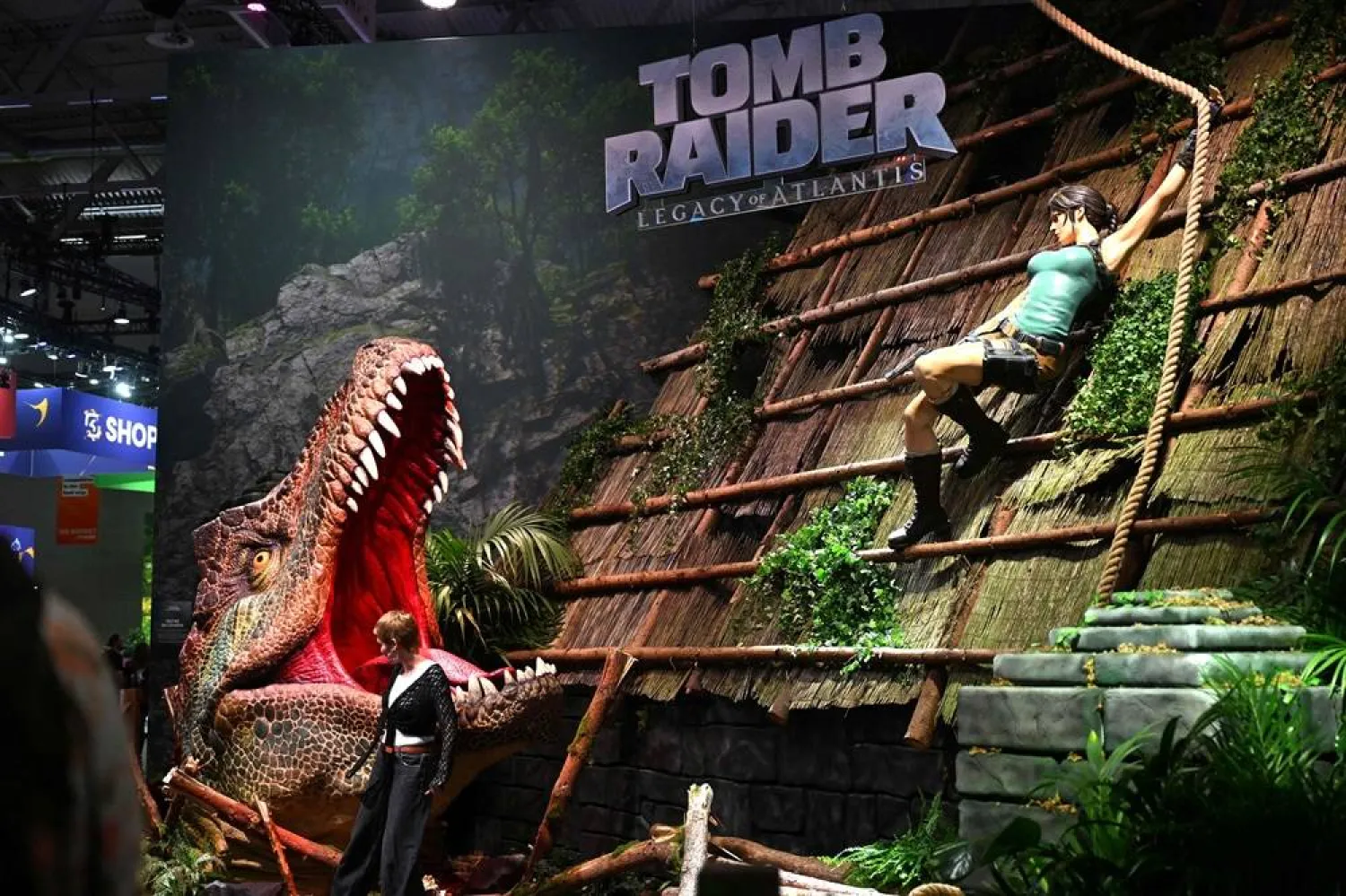
A visitor poses at the "Tomb Raider: Legacy of Atlantis" video game of Crystal Dynamics and Flying Wild Hog during at the Gamescom video games trade fair on the fair grounds in Cologne, western Germany, on August 26, 2026. (AFP)
TT

30 Years on, ‘Tomb Raider’ Reboot Sees Lara Croft Through a ‘Modern Lens’

A visitor poses at the "Tomb Raider: Legacy of Atlantis" video game of Crystal Dynamics and Flying Wild Hog during at the Gamescom video games trade fair on the fair grounds in Cologne, western Germany, on August 26, 2026. (AFP)

Thirty years after bursting onto the video game scene, Lara Croft returns in a new "Tomb Raider" that plays up the pistol-wielding architect's "complicated" character.

Taking on the most famous heroine in video game history is a "tremendous responsibility", Raul Siqueira, director of "Tomb Raider: Legacy of Atlantis", told AFP in an interview at the Gamescom video game convention in Cologne, Germany.

Journalists and influencers were given a preview of the new game -- a remake of the very first "Tomb Raider" -- that is scheduled for release on February 12.

In the 20-minute gameplay sequence, Lara Croft -- still in her famous blue top and brown shorts -- explores an abandoned tomb in Greece, battling panthers and dodging giant swords falling from the ceiling.

The British adventurer makes her acrobatic moves against a background of realistic graphics, complete with her trademark sarcastic quips.

"Lara is a very complicated character with a lot of nuance. So yes, we've adapted and changed some of the lines, but we didn't go as far to change the story," Siqueira said.

Released in November 1996, the first "Tomb Raider" delighted a generation of players with its 3D graphics -- cutting edge at the time -- and its fearless heroine, who came to personify the entire games industry.

- 'Not an object' -

Siqueira, 36, said the first "Tomb Raider" had a big impact on him personally.

"There was a lot of cool elements... the fact that Lara was a different protagonist, the first female protagonist of a game that I had ever played," he said.

Lara may have beaten a path for more female heroines and encouraged young women around the world to pick up a controller, but in the early days the publicity for the game leaned heavily on her shapeliness.

With the market for video games now expanded well beyond the stereotype of adolescent boys, the team behind the new game says this time they are focusing on Lara as a strong character.

"The way we're rebuilding Lara, we're trying to respect the fact that she's female, and we're just trying to make her powerful, not as an object of physical attraction," said the game's art director Arek Tomaszewski.

Eight years after the last instalment "Shadow of the Tomb Raider" and ahead of an all-new entry planned for 2028, "Tomb Raider: Legacy of Atlantis" aims to revisit the original adventure "through a modern lens", Siqueira said.

Published by the video game division of Amazon, the game was developed jointly by US firm Crystal Dynamics and Polish studio Flying Wild Hog, both owned by the Swedish group Embracer.

It took more than three years of work, including a complete rewrite of the script and Croft's dialogue, now voiced by the British actress Alix Wilton Regan.

- Same old Lara -

The new game aims to draw a new audience to discover a title that has felt the passage of time.

Gamers of 2026, accustomed to modern controls and graphics, would find it very difficult to play the original, Tomaszewski said.

Created by the British company Core Design, the "Tomb Raider" series lost its luster as the quality of new editions declined over time.

It was restarted from scratch in 2013 with a new trilogy dubbed "Survivor", chronicling the adventures of a younger, less experienced Lara.

The latest outing continues that story, Siqueira said: "The Lara that we saw in the 'Survivor' trilogy is the Lara in 'Legacy of Atlantis'," he said.

"It's just the beginning of her career as a Tomb Raider was 'Survivor', that's how we show her first adventure's beginning, and this is her much later in life at the top of her game."


Venice Jury Head Maggie Gyllenhaal Questions Lack of Women Directors

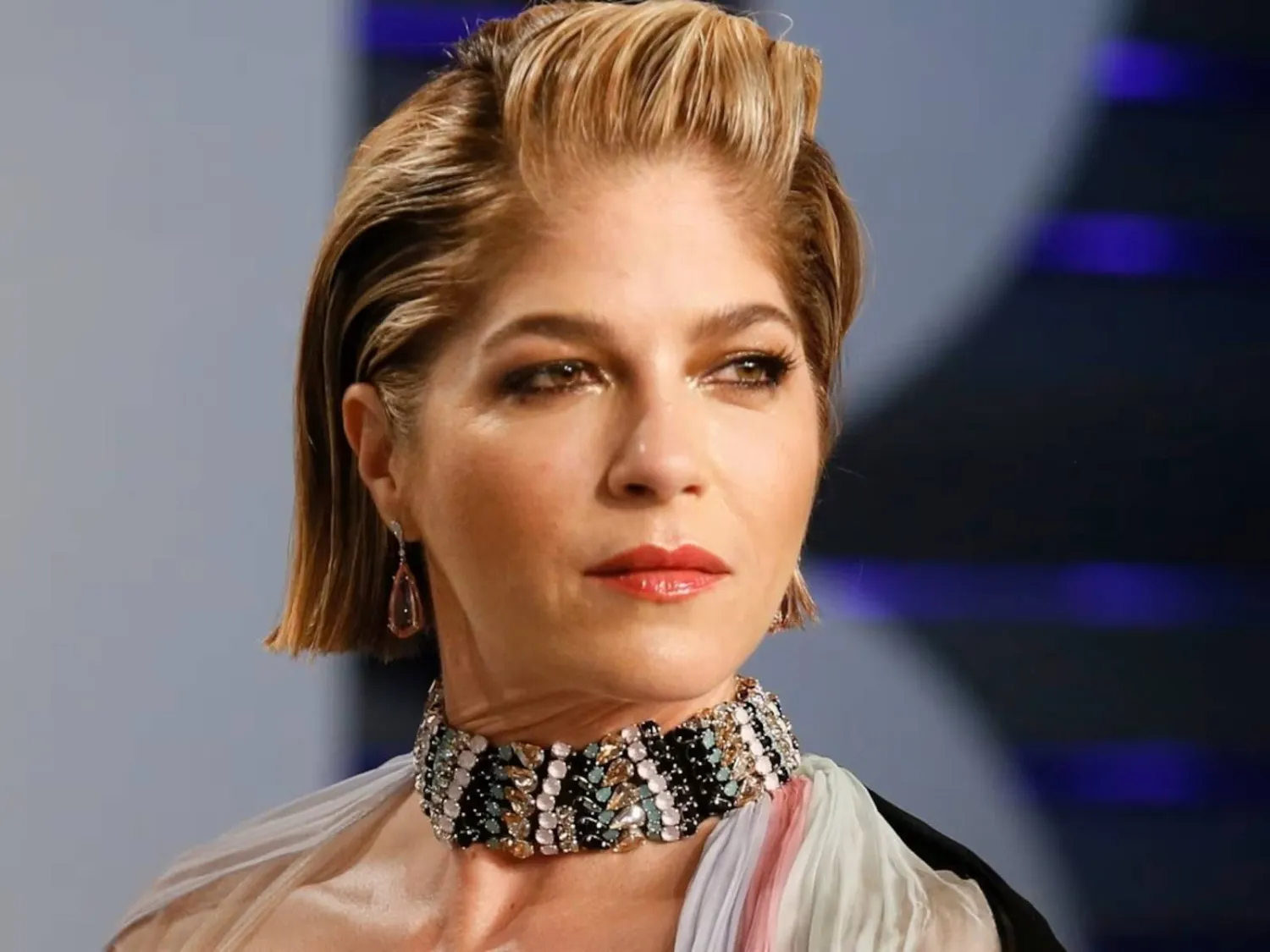
Venezia 83 Competition Jury president Maggie Gyllenhaal poses at the 83rd Venice International Film Festival, in Venice, Italy, September 2, 2026. (Reuters)
TT

Venice Jury Head Maggie Gyllenhaal Questions Lack of Women Directors

Venezia 83 Competition Jury president Maggie Gyllenhaal poses at the 83rd Venice International Film Festival, in Venice, Italy, September 2, 2026. (Reuters)

The head of this year's Venice Film Festival jury Maggie Gyllenhaal questioned Wednesday why only two women directors had been selected for the main competition at the Italian event this year.

"There's a systemic problem," the American actress-turned director told reporters at a press conference on the opening day of the festival, sitting next to Venice supremo Alberto Barbera.

"I do think it's much harder for women to get their films financed. Also, could it be possible that the things that women, having had a different experience of being alive in the world, want to make movies about are not always deemed high art. Who decides what's good? Who decides what's valuable?

"That's also a question I have, and it's a legitimate one," she added.

"Woman Unknown" by Danish-Egyptian director May El-Toukhy was the only woman-directed film in the initial 20-strong field of films competing for the prestigious Golden Lion in Venice's top competition.

The late addition of "NAZA" about Israel's targeting of civilians in Gaza improved the gender balanced slightly -- it is co-directed by a woman, Oscar-winning Israeli filmmaker Rachel Szor.

Barbera said this year's selection had been made "without prejudice".

At a press conference to announce the selection in July, he said that the quality of submissions from women directors "was not enough to put them into the competition" -- which led to a critical open letter from campaign and industry groups in Italy.

Although her remarks appeared to be an implicit criticism of Barbera's choices, Gyllenhaal stressed that her role as head of the jury was also significant.

"I really am walking in with a question as to why there's so few women in the main competition as filmmakers this year. But I think ... asking me to be the head of the main jury competition after the two films that I have made is a very important thing to consider too," she added.


Venice Film Festival Head Stresses AI Potential

Festival Director Alberto Barbera poses at Lido Beach ahead of the 83rd annual Venice International Film Festival, in Venice, Italy, 01 September 2026. (EPA)
TT

Venice Film Festival Head Stresses AI Potential

Festival Director Alberto Barbera poses at Lido Beach ahead of the 83rd annual Venice International Film Festival, in Venice, Italy, 01 September 2026. (EPA)

The Venice Film Festival's artistic director stressed the creative potential of artificial intelligence on Tuesday ahead of the premiere of a documentary made entirely with the technology at the Italian event.

In an AFP interview on the eve of the festival, Alberto Barbera acknowledged the danger but also the capabilities of the emerging technology that has caused panic, as well as excitement across a wide swathe of industries.

"There's both danger and advantage. The fact is that up to now we've seen a great many interventions on artificial intelligence driven by fear, by concern over the negative impact AI might have on the whole of humankind, on professional aspects, on copyright, on artists' image and so on and so forth," he said.

Besides understanding how to control the powerful technology, people need to ask how it can "begin to harness the extraordinary potential of this unprecedented technology," he said.

The technology enables artists and directors "to achieve things that until now were not possible," he added.

The prestigious festival on the Venice Lido has programmed a documentary made entirely with AI -- "Be Brave" from Italian director Francesco Carrozzini, which centers on the founder of jeans brand Diesel, Renzo Rosso.

Barbera called it "a very interesting experience."

In the film's line notes, Carrozzini said that the choice to use AI for his documentary about the fashion "provocateur" made sense.

"It does so through an experimental and provocative encounter with the ultimate frontier of our time: Artificial Intelligence."

The festival, which begins on Wednesday, will also host an international symposium -- with George Clooney on the panel -- to discuss what the technology means for the industry.

Movie industry workers remain on the whole opposed to artificial intelligence, fearful of its potential to kill off jobs for animators, scriptwriters and eventually actors.

The director of the Cannes Film Festival, Thierry Fremaux, came out against AI at this year's festival in May, saying it stood with movie industry personnel whose jobs were at risk.

But the festival also programmed a documentary by Oscar-winning "Traffic" director Steven Soderbergh about John Lennon and Yoko Ono which included some visually jarring AI-generated graphics.

"Lord of the Rings" director Peter Jackson, a special effects specialist, told festival goers there that that he thought AI was "going to destroy the world" but when it came to film, "I don't dislike it at all".


Aaron Sorkin Hits Refresh on Facebook in 'The Social Reckoning'

 This image released by Sony Pictures shows Jeremy Strong as Mark Zuckerberg, in a scene from “The Social Reckoning.” (Leah Gallo/Sony Pictures via AP)
This image released by Sony Pictures shows Jeremy Strong as Mark Zuckerberg, in a scene from “The Social Reckoning.” (Leah Gallo/Sony Pictures via AP)
TT

Aaron Sorkin Hits Refresh on Facebook in 'The Social Reckoning'

 This image released by Sony Pictures shows Jeremy Strong as Mark Zuckerberg, in a scene from “The Social Reckoning.” (Leah Gallo/Sony Pictures via AP)
This image released by Sony Pictures shows Jeremy Strong as Mark Zuckerberg, in a scene from “The Social Reckoning.” (Leah Gallo/Sony Pictures via AP)

When Aaron Sorkin made 2010’s “The Social Network,” he had heard of Facebook, he said at the time, “the way I’ve heard of a carburetor.” Sixteen years later, he has a much deeper idea of what Mark Zuckerberg’s social media empire has become.

“Back then, Facebook was a way to keep in touch with people you went to high school with. It’s something much different now,” Sorkin says. “‘The Social Network’ was about the invention of Facebook. ‘Social Reckoning’ is about what it’s become and, in particular, Facebook’s role in the rise of extremism and divisiveness.”

“The Social Reckoning,” which Sony Pictures will release Oct. 9, is one of the most timely movies arriving in theaters this fall. Last week, Sony debuted the film’s trailer the same day that Meta, Facebook’s parent company, agreed to pay up to $18 billion in penalties over claims its platform endangered children.

“The Social Reckoning” is poised to further scrutinize the social media behemoth at a time when Zuckerberg is under greater pressure than ever over the role Facebook plays in contemporary life and politics.

“When you see this movie, No. 1, I want you to be entertained,” Sorkin said in a recent exclusive interview with The Associated Press while doing the final mix on the film. “No. 2, you should be alarmed when you see the movie. I think people will be.”

Tech moguls are getting their close-up this fall

“The Social Reckoning” is one of several films this fall that will take aim at the tech moguls who have helped remake American life. Alex Gibney will unveil his four-hour documentary on Elon Musk, “Musk,” on Oct. 16. Luca Guadagnino’s “Artificial” dramatizes the saga of Sam Altman, the OpenAI chief executive.

But “The Social Reckoning,” which Sorkin wrote and directed, is sure to cause a stir given not just its subject but the legacy of “The Social Network.” Often cited as among the best American movies of the century, the film — directed by David Fincher and written by Sorkin — did much to examine and mythologize the origins of Facebook. It is, Sorkin acknowledges, a lot to live up to.

“To tell you the truth, I was hesitant,” Sorkin said. “I recognize the shadow that ‘The Social Network’ casts. But I think what’s going to happen is, 10 minutes into the movie, you’ll have forgotten about that and be invested in this.”

For the 65-year-old Sorkin, “The Social Reckoning” isn’t a sequel. It’s centered on the same figure, Zuckerberg, but captures him and his company at a dramatically different stage.

“It’s as if Henry Hill showed up in ‘Casino,’” says Sorkin, alluding to the “Goodfellas” protagonist.

Sorkin began contemplating “The Social Reckoning” around 2019, the same time he wrote an op-ed in The New York Times addressed to Zuckerberg. It alleged Facebook — which had just announced it was no longer going to fact-check political ads — was responsible for “crazy lies pumped into the water supply that corrupt the most important decisions we make together.” Zuckerberg responded by quoting Sorkin’s own dialogue from “The American President” about free speech.

“I read this, and I thought: it’s just impossible that Mark and the people around Mark don’t know the difference between an unpopular opinion and a lie,” Sorkin says. “And that kind of stayed with me.”

Sorkin has since said he blames Facebook for the Capitol riot on Jan. 6, 2021. Eventually, he was coaxed by Sony chief Tom Rothman and agent Ari Emanuel to wade back into one of his most beloved films.

“I said at the beginning I didn’t want to write ‘Jaws 2.’ I didn’t want to return and fail,” says Sorkin. “Then I met Frances Haugen and I met Jeff Horwitz and I started thinking more about it. I realized there was a terrific story and the only reason not to do it is being scared. And that’s just not a good enough reason.”

“The Social Reckoning” stars Mikey Madison as Haugen, a former data scientist at Facebook who became a whistleblower in 2021 and testified before Congress that Facebook was tuning its algorithm to put profit before public safety. Jeremy Allen White plays Wall Street Journal reporter Jeff Horwitz, a former Associated Press journalist. Jeremy Strong, not Jesse Eisenberg, plays Zuckerberg.

Zuckerberg and Meta have yet to say anything publicly about “The Social Reckoning.” The company declined to comment for this article.

In prepping “The Social Network,” Sorkin and producer Scott Rudin reached out to the company in an attempt to gain their cooperation. But after a lunch meeting, Facebook declined to participate — a blessing, Sorkin later realized. The script, Sorkin has said, “was vetted to within an inch of its life by a team of studio lawyers.” A similar process has followed on “The Social Reckoning.”

“I would have been happy to speak to him. I’ve never met Mark. I don’t know him at all,” Sorkin says. “And I don’t pretend to have any insight into how his mind works, only the results of how his mind works, and then I kind of reverse engineer it.”

Jeremy Strong takes over for Jesse Eisenberg

Sorkin initially reached out to Eisenberg about reprising the role of Zuckerberg. Before telling Eisenberg, or anyone else, of his plans, Sorkin spent two years researching and writing the screenplay.

“I didn’t know that Jesse simply did not want to play Mark Zuckerberg ever again,” Sorkin explains. “I talked to him a lot over a three-day weekend. He was clear that he loves ‘The Social Network,’ he loves how it launched his career, and he just doesn’t like being conflated with Mark Zuckerberg. I was just really lucky that Jeremy Strong had said, ‘Hey, listen, if for some reason Jesse doesn’t want to do it.’”

“It’s replacing Joe DiMaggio with Mickey Mantle,” he adds.

Strong’s performance, Sorkin says, “is a sight to see.” While the writer-director was happy to have no direct contact with Zuckerberg, Strong emailed the Facebook co-founder.

“Mark had no greater defender than Jeremy Strong, believe me,” Sorkin says. “Every night I’d get emails from him defending Mark. On the day we were shooting Jeremy’s last scene, as soon as we were done, he ran up to me and for the first time spoke in his own voice. He had only been using Mark’s voice. He came up to me and said, ‘If I had been playing Jeff, I’d have been defending Jeff.’ It was very important to him that I know that he didn’t mean any of that.”

When “The Social Network” came out, it included a postscript note that was meant to be a shock to audiences — that Facebook then had 500 million users. It now has some 3 billion. According to a study by Pew Research, 38% of Americans get their news from Facebook.

“I have a lot of empathy for wanting to build something, wanting to create something,” Sorkin says. “He has the kind of mind that can invent an entirely new social structure — one that he does feel comfortable in because he can sit at his keyboard. And it’s one that a lot of people feel a lot more comfortable in. There’s someone they can be at their keyboard that they can’t in not-digital life.”