Italy's Luxury Groups Set Aside Rivalries to Keep it Local

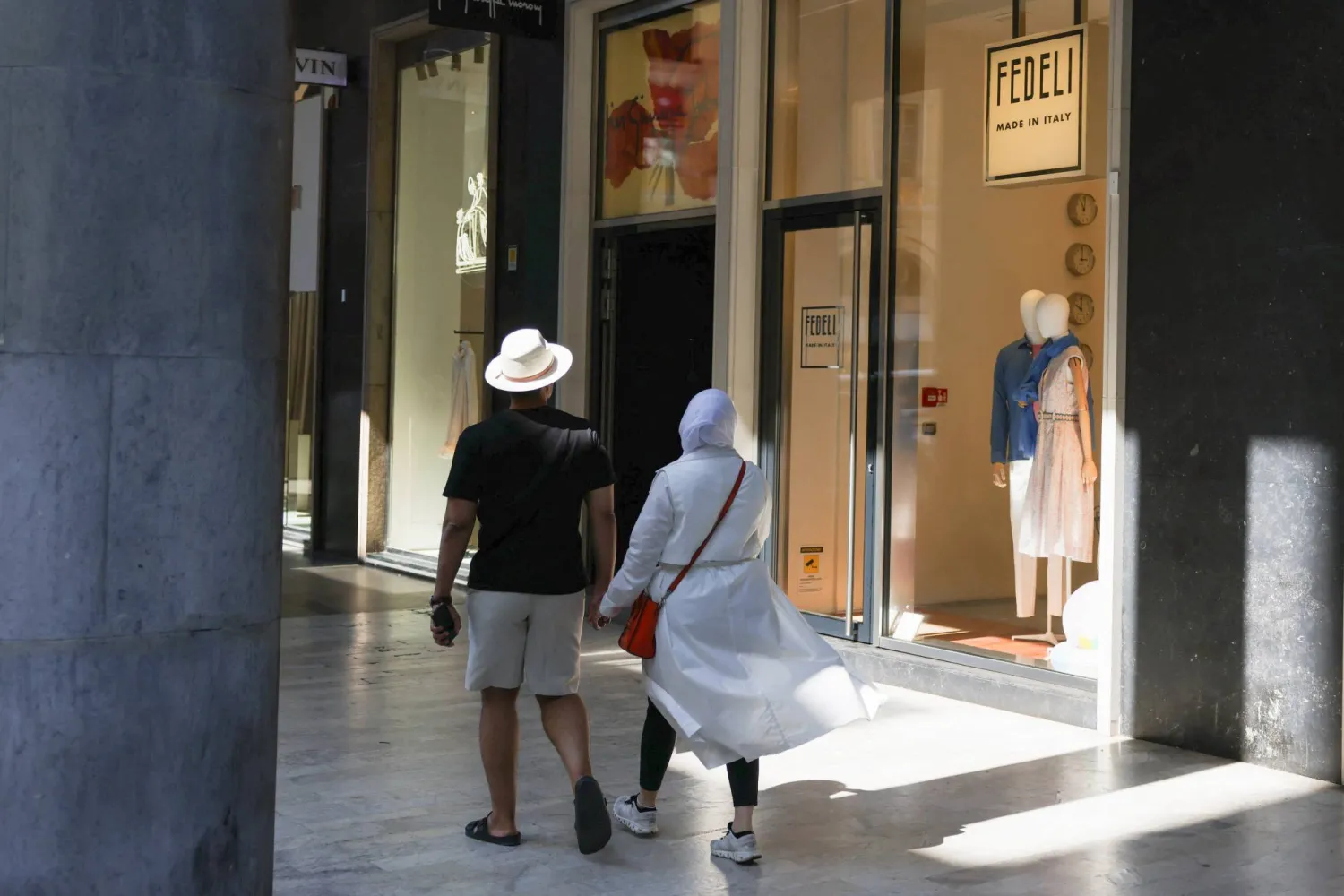
A couple walks by an Italian knitwear brand Fedeli shop in Milan, Italy, June 23, 2023. REUTERS/Claudia Greco
TT

Italy's Luxury Groups Set Aside Rivalries to Keep it Local

A couple walks by an Italian knitwear brand Fedeli shop in Milan, Italy, June 23, 2023. REUTERS/Claudia Greco

Italy's luxury fashion groups, which for decades jealously guarded their independence, have started teaming up to protect their supply chains and the Italian roots of smaller companies, showing a new spirit of collaboration.
Control of the supply chain has become increasingly important for luxury brands, ensuring products get to shops on time and avoiding reputational risks linked to sourcing of raw materials or labor conditions.
Italy's patchwork of specialist artisan workshops and family-owned labels offer particularly rich pickings for larger companies with the cash to cement relationships through investment.
In this spirit, Prada and fellow Italian fashion brand Ermenegildo Zegna in June acquired a minority stake in knitwear company Luigi Fedeli e Figlio, based in Monza, just north of Milan.
The family-owned company, which has a focus on cashmere and jumpers, was founded in 1934 and is distributed in 13 own-brand boutiques and around 400 multi-brand stores worldwide.
Prada and Zegna had previously invested jointly in Filati Biagioli Modesto S.p.A. in 2021, acquiring a majority stake in one of their suppliers, specialized in the production of cashmere and other luxury yarns.
"We invested in Biagioli to relaunch a company that was in crisis, while for Fedeli it's a case of helping the company to grow," Patrizio Bertelli, leading shareholder and chairman of Prada Group, told Reuters.
Bertelli, 77, added that smaller Italian companies have in the last two decades had to juggle the handover from one generation of the family to the next with more complex issues such as expanding in new markets.
"Italian brands have wanted to go it alone for too long, and then suddenly they realize you can't always go it alone and you start to look around," he added.
SMALL MANUFACTURERS APLENTY
Italy is home to thousands of small manufacturers that cover 50-55% of the global production of luxury clothing and leather goods, consultancy Bain calculates.
"Biagioli and Fedeli are two different examples of caring about 'made in Italy' and helping to strengthen the Italian supply chain either directly or indirectly," said Gildo Zegna, 67, chairman and CEO of Ermenegildo Zegna.
"Bertelli and I want to preserve the 'made in Italy' jewels and keep the know-how in the country," Zegna added.
The Italian groups are facing competition from French luxury giants such as LVMH or Gucci-owner Kering, which have also bought suppliers in Italy over the years, especially in the leather industry.
LVMH announced in May it had taken a majority stake in Nuti Ivo Group, an Italian company that has specialized in making leather products since 1955.
Private equity firms have also sensed an investment opportunity and started combining suppliers into larger entities.
Kering managing director Jean-Francois Palus said the luxury group is increasingly looking to bring production in house.
It's an issue of traceability but also of quality, sourcing of materials, shorter lead times to produce goods and get them to the market and competition for specialist artisans among brands, he said.
FORGING CLOSER RELATIONS
There have also been other examples of Franco-Italian cooperation such as a deal whereby Chanel bought a stake in cashmere yarn company Cariaggi Lanificio in partnership with Brunello Cucinelli.
"Italy has not created a (major) luxury hub, but we have entrepreneurs who have the ability to activate the right relationships at the right time," said Stefania Lazzaroni, general manager at Italian luxury industry association Altagamma.
"The approach has changed, (it is) much more collaborative - to face more complex challenges," she said.
Indeed, Prada and Zegna's decision to invest together was born out of a friendship strengthened by recent hard times.
"We got to know each other better during the COVID pandemic, in a difficult moment for the industry, when we needed to support each other," Zegna said, adding that a fundamental role was played by the meetings held at industry body Camera Nazionale della Moda.
Roberto Costa, head of Global Luxury Investment Banking for Citigroup, said closer working ties reflected a more confident and outward approach from Italian brands.
"Italian groups are now more managerialized, more organized and also stronger, which makes them more open to thinking together," he said. But he did not necessarily see big deals in the offing.
"There is a greater ability to talk to each other, but this does not mean that there will necessarily be mergers," he added.
Zegna and Bertelli now sit together on the board of Fedeli and Biagioli, leaving scope for more investments lower down the supply chain.
"If new opportunities arise we will grab them. Whether we do it together or not remains to be seen," Zegna said.



Cartier Owner Richemont Beats Sales Forecasts as China Recovery Continues

The Swiss-based company said sales in its fourth quarter to end-March rose to 5.17 billion euros ($5.80 billion). (AFP)
TT

Cartier Owner Richemont Beats Sales Forecasts as China Recovery Continues

The Swiss-based company said sales in its fourth quarter to end-March rose to 5.17 billion euros ($5.80 billion). (AFP)

Cartier owner Richemont reported sales ahead of market expectations on Thursday, buoyed by strong global demand for jewelry and a continued recovery in greater China, its second-biggest market and a bellwether for the luxury sector.

The Swiss company's shares rose 3% on the reading with investors looking for signs the luxury goods industry can return to stable growth in a year already marked by geopolitical turmoil and the bankruptcy of one of the sector's largest retail groups, Saks Global.

The world's second-largest luxury company, which also owns Van Cleef & Arpels and Buccellati, said sales in its September-to-December third quarter rose to 6.4 billion euros ($7.45 billion), a 4% year-on-year increase in reported currencies.

That beats an analyst consensus of 6.28 billion euros cited by Visible Alpha and represents an ‌11% increase when ‌measured in constant currencies, Reuters said.

Richemont's trading update provides the first clues on demand for ‌luxury ⁠goods going into ‌2026. LVMH is due to report its annual results later this month, followed by Hermes and Gucci-owner Kering in February. Smaller Italian cashmere brand Brunello Cucinelli was the first luxury brand to report quarterly sales this week.

Shares of sector peers, including watch company Swatch and Birkin-bag maker Hermes, rose in early trade following Richemont's results announcement.

CHINESE MARKET CONTINUES GROWTH REBOUND

Richemont highlighted continued improvement in China, Hong Kong and Macau, where its sales rose by 2%. China accounts for just under 20% of the company's sales, according to a Bank Vontobel estimate, ranking second behind the United States.

The greater China performance "mostly led by ⁠solid activity in Hong Kong" was the second quarter in a row that Richemont has reported improved sales in the region, following a 7% rise ‌in the previous three months.

China has been luxury's main growth engine in ‍recent years, but has been struggling with a sticky ‍real estate crisis and a shift in consumer appetite that have weighed on demand for Western brands.

Richemont's reported ‍trends from China "may be regarded as a pivotal moment", RBC analyst Piral Dadhania said in a note, adding that its performance is a positive signal for the wider luxury sector.

Demand in China, where most European houses saw their sales decline heavily last year, is seen as a decisive factor for the luxury industry to return to sustained growth.

"The Chinese consumer holds the key to luxury and is thus the critical sector theme for 2026," Berenberg analyst Nick Anderson said in a recent note to clients.

JEWELLERY UP BUT GOLD PRICES, STRONG FRANC PRESSURE MARGINS

Following two ⁠years of stagnation, analysts are beginning to turn more optimistic on the $400 billion luxury industry, with jewelry seen as a critical growth driver since inflation-wary shoppers view it as an investment rather than a mere treat.

Richemont's jewelry sales were up 14% helped by the launch of novelty items such as bracelets and pendants, which tended to be slightly cheaper and were popular during the gifting season.

"Jewelry is in strong shape, and Richemont dominates it with its brands," Bernstein analysts said.

The company's watchmaking business, which includes the IWC and Jaeger-LeCoultre brands, lifted sales by 7%.

Pressures on Richemont's margins due to record-high gold prices and the strong Swiss franc, however, will likely persist and could impact the group's profit outlook for the next business year if not countered by more price increases, analysts from Deutsche Bank said.

A company spokesperson declined to comment on the bankruptcy of Saks Global, the owner of US department stores Saks Fifth Avenue, Bergdorf Goodman and Neiman Marcus.

Richemont ‌is among the retailer's top unsecured creditors. Saks owes about $3.4 billion to creditors, while claims by the top 30 unsecured creditors are worth a total of $712 million, bankruptcy filings show.


Globes Red Carpet: Chic Black, Elegant Dresses and a Bit of Politics

Ariana Grande is a nominee for her turn as Glinda in 'Wicked: For Good'. Frederic J. Brown / AFP
TT

Globes Red Carpet: Chic Black, Elegant Dresses and a Bit of Politics

Ariana Grande is a nominee for her turn as Glinda in 'Wicked: For Good'. Frederic J. Brown / AFP

Hollywood's top stars hit the red carpet on Sunday for the Golden Globes, the first major event on the road to the Oscars, and they delivered lots of old-school glamour.

Here is a glance at some of the looks seen at the Beverly Hilton Hotel:

Ever-chic black

Selena Gomez is a newlywed and her happiness shows. The best comedy actress nominee for her work on "Only Murders in the Building" radiated joy as she arrived on the arm of her husband Benny Blanco.

She oozed sophistication in a black Chanel column gown with a frothy white feathered strapless neckline, her black bob swept into soft waves.

Gomez was not alone in striking an understated pose, with lots of stars opting for black or dark, wintry hues.

Teyana Taylor, a winner for her searing turn as a leftist revolutionary in hotly-tipped film "One Battle After Another," scorched the carpet in a cut-out backless black Schiaparelli gown with a halter neckline -- and a cheeky crystal bow on her backside.

Ariana Grande ("Wicked: For Good"), who competed with Taylor for the award for best supporting actress, turned heads in a black textured Vivienne Westwood ballgown with an asymmetrical neckline and a bubble silhouette before trailing to the floor.

Her hair was swept into her signature ponytail, and she kept the jewelry simple with a diamond choker.

Amy Madigan, also in their category for her villainous turn in "Weapons," went for a tuxedo look with cropped pants and patent leather boots.

Nominee Jenna Ortega embraced the goth chic of her title character in "Wednesday" in a black high-neck Dilara Findikoglu gown with glittering epaulets and cut-offs that revealed a bit of side boob... and part of her hip bone.

Among the male stars in attendance, Colman Domingo was as usual a standout, wearing head-to-toe black Valentino, with silvery appliques scattered from his left shoulder down his lapel to his waist.

Jennifer Lopez is no stranger to strong fashion statements. Her plunging green Versace gown at the Grammys in 2000 is still a reference for winning the red carpet by adopting the "less is more" rule.

On Sunday, Lopez -- whose turn in "Kiss of the Spider Woman" was overlooked by Globes voters -- wore a figure-hugging sheer gown with bronze patterns snaking over her body, ending in a mermaid fishtail.

Jennifer Lawrence --nominated for best drama actress in a film for "Die My Love" -- got the memo as well, rocking a barely-there sheer nude Givenchy gown with only a smattering of strategically placed flowers.

- Stars slam deadly ICE shooting -

Hollywood never quite has a night out without a bit of politics coming into play.

On Sunday, some of the stars including nominee Mark Ruffalo wore pins with the messages "BE GOOD" -- a reference to Renee Good, the Minneapolis woman who was shot and killed by a federal immigration agent.

Comedian Wanda Sykes wore the same pin on her lapel, while actress Natasha Lyonne, a nominee for her TV show "Poker Face," attached one to her clutch handbag.

The campaign is endorsed by the American Civil Liberties Union (ACLU), one of the country's most prominent civil rights organizations.


UK's Next Edges Up Profit Outlook after Christmas Sales Beat Expectations

FILE PHOTO: Shoppers walk past a NEXT retail store on Oxford Street in London, Britain, December 28, 2025. REUTERS/Isabel Infante/File Photo
TT

UK's Next Edges Up Profit Outlook after Christmas Sales Beat Expectations

FILE PHOTO: Shoppers walk past a NEXT retail store on Oxford Street in London, Britain, December 28, 2025. REUTERS/Isabel Infante/File Photo

British fashion retailer Next on Tuesday reported a better-than-expected 10.6% increase in full-price sales for the nine weeks to December 27 and edged up its annual profit guidance for the fifth time over the last year.

Subdued UK ⁠consumer confidence ahead of Christmas coupled with unseasonably mild weather had left analysts cautious about clothing retailers' festive trading prospects.

However, Next reported a 5.9% increase in UK ⁠sales year-on-year, with international sales up 38.3%.

According to Reuters, the group said it now expected to report a pretax profit of 1.15 billion pounds ($1.56 billion) for its year to January 2026, up from previous guidance of 1.135 billion pounds and the 1.011 billion pounds it made in ⁠2024/25 when it breached the 1 billion pounds mark for the first time.

Next forecast a further 4.5% increase in profit to 1.202 billion pounds for its 2026/27 year, on full-price sales up 4.5%.

Shares in Next have risen 43% over the last year.