


French Designer Threads a Path in London Fashion Week

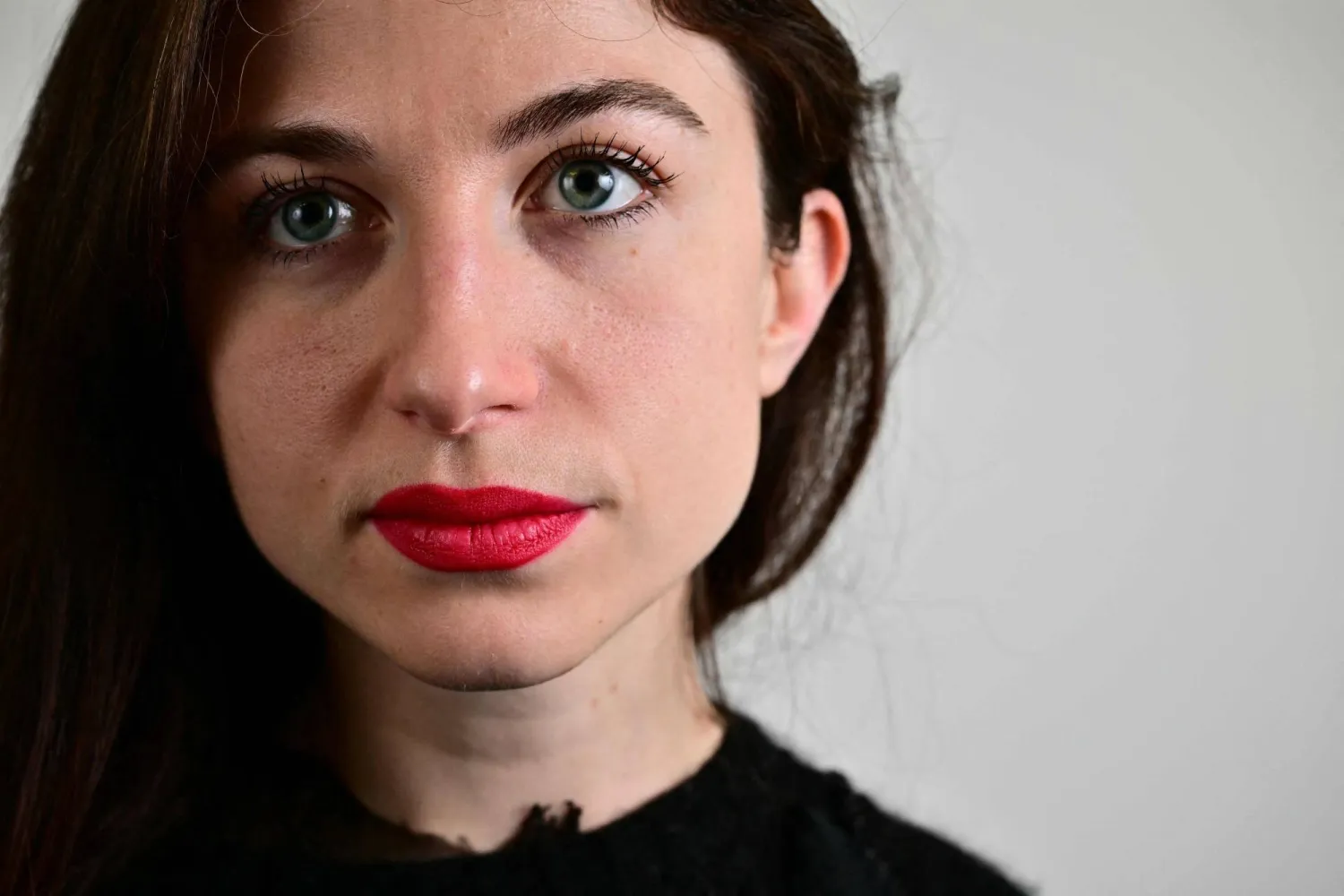
This photo taken on February 6, 2026 shows French fashion designer Pauline Dujancourt posing for a photograph in her studio in south London. (Photo by Ben STANSALL / AFP)
TT

French Designer Threads a Path in London Fashion Week

This photo taken on February 6, 2026 shows French fashion designer Pauline Dujancourt posing for a photograph in her studio in south London. (Photo by Ben STANSALL / AFP)

Just days before her third runway show, French designer Pauline Dujancourt was riding a wave of excitement and nerves.

The 31-year-old admitted she had begun having strange, nightmarish dreams ahead of her big moment at London Fashion Week on Sunday.

The British capital will once again host its Autumn/Winter fashion week from Thursday to Monday, after New York's bonanza and before the catwalk carousel moves to Milan and Paris.

London, known for its raw creative energy and rising talents, is where Dujancourt launched her label in April 2022 after training at the renowned arts and design school Ecole Duperre in Paris, and fashion hub Central Saint Martins in London.

She and her team began work in November on her autumn-winter 2026/27 collection to be unveiled before some 450 guests -- journalists, buyers and VIP clients.

For designers, everything comes down to those few precious minutes on the catwalk. It's no wonder nervousness mixes with the creative buzz.

"I go through every emotion," Dujancourt told AFP with a smile. "Some days I'm super excited, full of ideas, and others I'm like: why did I pick this color, this fabric?"

The questions and worries snowball: "Will everyone be on time? Will there be last-minute hitches on the day?"

In recent weeks, she has been running her daily schedule with military precision.
Dujancourt works year-round with four assistant designers, but the team swells to around 50 people ahead of the show.

And she works with a community of knitters in Lima, Peru, with handknitting -- "something that my grandmother taught me as a child" -- being a hallmark of her garments.

"She was so skillful and so humble about it. And no one really realized how much work it takes and how much technique it takes," she said.

Known for her sensual, airy knitwear, Dujancourt was a finalist for the LVMH Prize, won Elle UK's young talent award, and is supported by the British Fashion Council.

Her clients span the globe from Japan to the United States, France and the UK, with regular requests for wedding dresses.

Her new collection pays tribute to women persecuted during historical witch hunts.

"I really want to celebrate the fact that there are so many women around the world who are working so humbly on domestic skills ... like sewing, hand knitting," she said.

Two weeks before the show, young seamstresses were crocheting floral motifs in mohair and Japanese metallic thread at a south London studio overlooking the Thames river and Big Ben.

Workers were hunched over their desks pouring over designs, with the looks still "in pieces".

Then comes the moment when everything is assembled. "It's the magical stage, when the clothes start to come alive," she said, her blue eyes lighting up her face framed by long dark hair.

Less than a week before the show, fittings begin with an in-house model, followed by the castings to find the right models.

On the eve of the show come final fittings, hair and make-up tests. And finally, on Sunday morning, the full rehearsal.

Show day always brings surprises. At Dujancourt's last catwalk in September, several models arrived extremely late, held up by another show.

"They turned up still wearing the other show's make-up. We had to dress them and redo everything ... I nearly died," she recalled.

What is her worst nightmare? A model tripping or garments ripping in front of the cameras.

"I once dreamt I'd forgotten to get dressed before coming out to greet the audience -- that would be a bit embarrassing," she joked.

Around 25 outfits will strut the catwalk on Sunday, a moment that "goes by in a flash".
Afterwards comes the crash.

"We barely see it happening ... because we are backstage in the madness and the chaos of it," she said.

But then it's finished "and there's a bit of baby blues afterwards," as she comes down off the adrenaline rush.

Dujancourt heads to Paris after London Fashion Week to meet buyers, before work begins again for her next show, in September.

Kering Seeks to 'Reignite Desirability' with Gucci Reset

(FILES) This illustrative photograph shows screens displaying the logo of the French company Kering, listed on the CAC 40, the main stock market index of the Paris Stock Exchange, in Toulouse on March 31, 2026. (Photo by Lionel BONAVENTURE / AFP)
TT

Kering Seeks to 'Reignite Desirability' with Gucci Reset

(FILES) This illustrative photograph shows screens displaying the logo of the French company Kering, listed on the CAC 40, the main stock market index of the Paris Stock Exchange, in Toulouse on March 31, 2026. (Photo by Lionel BONAVENTURE / AFP)

French luxury group Kering vowed Thursday to "reignite desirability" of its flagging Gucci label, once the jet set's most coveted brand, as it seeks to turn around its financial performance.

The giant Paris-based fashion conglomerate, which also owns Yves Saint Laurent and Bottega Veneta, chose Florence, the birthplace of its flagship double-G brand, to unveil its turnaround plans to investors.

Kering plans a "structural reset" to be completed by the end of the year that will make it more efficient in order to improve margins and restore financial discipline to its brands, AFP quoted the company as saying.

Kering promises to offer "the agility of a challenger, a renewed focus on desirability and a stronger commitment to execution," Chief Executive Luca de Meo said in a statement.

Whether Kering's new plan -- called ReconKering -- will be enough to revive the struggling Gucci brand is yet to be seen, especially given the tough selling environment facing the entire luxury sector amid geopolitical tensions and more cautious consumer spending.

Long the bright spot in Kering's portfolio and the darling of the fashion set before the Covid pandemic, sales of Gucci have since slumped by over a third to six billion euros last year.

While Gucci accounted for two-thirds of Kering's sales in 2019, that share fell to under 40 percent in 2025, pointing to its lackluster reception by luxury shoppers.

Profitability also sagged over this period.

Last year, Kering brought in Georgian Gen Z streetwear favorite Demna as Gucci's new artistic director while poaching De Meo from Renault, where he revitalized the automaker's lineup and financial performance.

Kering said it will go about "reigniting desirability by refocusing the brand around what makes it unmistakably Gucci, with clear creative direction, disciplined codes and a revitalized heritage with true cultural impact."

Sales in Gucci's first quarter declined by 14 percent to 1.35 billion euros, hit by shrinking demand in its key market of China and a cautious consumer environment due to the war in the Middle East.

Shares of Kering fell nearly two percent on the Paris stock exchange, underscoring investor's tepid response to the turnaround plans.

Kering gave few clues as to how exactly it would right the ship at Gucci, which enjoyed its headiest days under designer Tom Ford in the 1990s, who turned the leather goods brand into a fashion powerhouse beloved of the jetset.

"Gucci has had all sorts of issues. It's had issues on distribution. It's had issues on product. It's had issues on pricing," said Flavio Cereda, a luxury sector specialist at GAM, an investment firm, ahead of the investor day.

"Do people care about Gucci today? I don't think they do. Can people care about Gucci in six months' time? It's perfectly possible. We just don't know."

Kering said a new group platform will consolidate key functions such as purchasing, logistics, research and development and quality control for all its brands.

That will allow each brand within the portfolio to operate with more "power, speed and efficiency", Kering said.

For the group as a whole, Kering envisions doubling its recurring operating margin in the medium term to reach at least 22 percent, while improving its return on capital -- another measure of profitability -- by 20 percent, helped by more controlled inventory and selective investments.

By the end of 2028, Kering said, the group "will be in a phase of renewed, sustainable growth."


Kering Shares Slide After Gucci Sales Disappoint

A logo of fashion house Gucci is seen outside a shop in Paris, France, April 15, 2024. (Reuters)
TT

Kering Shares Slide After Gucci Sales Disappoint

A logo of fashion house Gucci is seen outside a shop in Paris, France, April 15, 2024. (Reuters)

Kering shares plunged as much as 10% on Wednesday after first-quarter sales at its Italian flagship brand Gucci dropped more than expected, underlining the challenges in reviving the brand's appeal.

Gucci sales fell 8%, the 11th straight quarterly decline, as the Iran war weighed on spending by Middle Eastern shoppers and curtailed international travel.

Shares ‌were down ‌8.5% to 255 euros at ‌0827 ⁠GMT and on ⁠track for their steepest daily decline in more than a year.

The result came days before Kering CEO Luca de Meo is due to unveil his strategic plan to turn around the 33-billion-euro ($39 ⁠billion) group's fortunes.

"While guidance was ‌confirmed, the timeline ‌for a Gucci turnaround remains uncertain and likely ‌gradual, against a challenging macro backdrop and ‌ongoing geopolitical tensions," Citi analysts wrote.

Like larger peers LVMH and Hermes, Kering is facing deteriorating demand from customers impacted by the conflict in the ‌Middle East.

Kering said it had seen strong demand for Gucci ⁠products ⁠in North America, but JPMorgan analysts said this was likely a trend for all luxury brands, rather than just Gucci, and pointed to double-digit declines in all other regions.

"This suggests, in our view, that the turnaround will take a lot longer, and much more work, than the bulls would hope for," they said.

Kering shares are down around 7% so far in 2026.


Texas Attorney General Probes Lululemon over Potential 'Forever Chemicals'

FILE PHOTO: A Lululemon sign is seen at a shopping mall in San Diego, California, US, November, 23, 2022.  REUTERS/Mike Blake//File Photo
FILE PHOTO: A Lululemon sign is seen at a shopping mall in San Diego, California, US, November, 23, 2022. REUTERS/Mike Blake//File Photo
TT

Texas Attorney General Probes Lululemon over Potential 'Forever Chemicals'

FILE PHOTO: A Lululemon sign is seen at a shopping mall in San Diego, California, US, November, 23, 2022.  REUTERS/Mike Blake//File Photo
FILE PHOTO: A Lululemon sign is seen at a shopping mall in San Diego, California, US, November, 23, 2022. REUTERS/Mike Blake//File Photo

Texas Attorney General Ken Paxton has launched an investigation into athleisure brand Lululemon over the potential presence of "forever chemicals" in its activewear, he said on Monday in a post on social-media platform X.

The probe will examine whether Lululemon's athletic apparel contains PFAS, which the brand's health-conscious customers would not expect based on its marketing, Paxton said. PFAS, or per- and polyfluoroalkyl substances, are a group of widely used materials called "forever chemicals" because they do ⁠not break down easily ⁠in nature.

"Lululemon does not use PFAS in its products," a company spokesperson said, adding it phased out the substance in fiscal 2023, after limited use in durable water repellent products.

According to Reuters, Attorney General Paxton said emerging research and consumer concerns have raised ⁠questions about whether certain synthetic materials in the apparel could be linked to endocrine disruption, infertility, cancer and other health risks.

PFAS are associated with harmful health effects in humans and animals, according to the US Environmental Protection Agency.

The Office of the Attorney General will examine Lululemon's testing protocols, restricted substances list and supply chain practices against state safety standards.

"If Lululemon has violated Texas law, it will be ⁠held accountable," Paxton ⁠said in his post.

The company spokesperson said they are aware of the inquiry and are cooperating.

Earlier this year, the company had to pull its "Get Low" workout collection from its website following user complaints, only resuming online sales after addressing the issues.

Lululemon, which appointed a former chief of jeans maker Levi Strauss to the board last month, has forecast weak annual results amid tepid demand and an ongoing proxy fight with its founder.