Paris Couture: Jennifer Lopez Shimmies, Elie Saab Shimmers, and Valentino's Piccioli Finds His Mojo

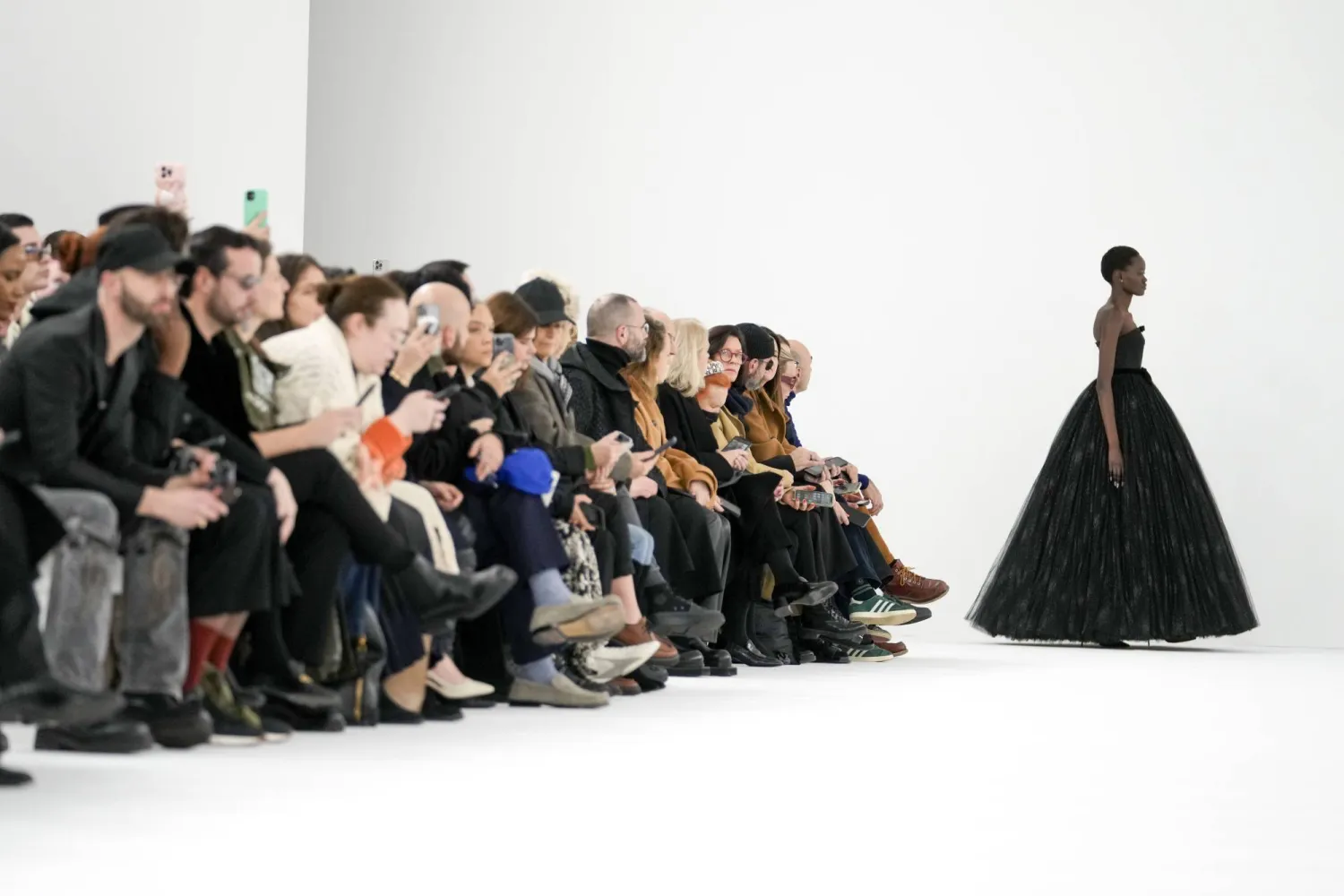
A model wears a creation for Viktor&Rolf as part of the Haute Couture Spring-Summer 2024 collection presented in Paris, Wednesday, Jan. 24, 2024. (AP Photo/Thibault Camus)
TT

Paris Couture: Jennifer Lopez Shimmies, Elie Saab Shimmers, and Valentino's Piccioli Finds His Mojo

A model wears a creation for Viktor&Rolf as part of the Haute Couture Spring-Summer 2024 collection presented in Paris, Wednesday, Jan. 24, 2024. (AP Photo/Thibault Camus)

As the Paris spring couture shows entered their third day, Jennifer Lopez ensured that the power of runway designs was matched by the power of a VIP audience. The singer and actress energized the Palais de Tokyo, arriving at the last minute for Elie Saab's show amid pandemonium. She and other fashion insiders witnessed a silken display of the Lebanese designer’s work evoking the complexity of North African medinas.
Haute couture — the Paris fashion industry’s ideas factory — is the age-old tradition of producing exorbitantly priced, made-to-measure garments for the world’s richest women.
Here are highlights of Wednesday's displays — including Valentino, whose designer Pierpaolo Piccioli found his voice:
ARABESQUE MOTIFS OF SPRING With an embellished floral cape and daring décolleté, Lopez marveled — and occasionally shimmied— from the Saab front row as vibrant beats accompanied the shimmering ode to Marrakech.
This season, Saab did not reinvent the wheel, nor did he intend to. This was classic couture — in sandstone tulle, sky-like lilac, blush cloud pink and dappled pastels — with arabesque motifs on golden foliage. Floor-sweeping chiffon and crepe gowns had a timeless feel, without a nod to seasonal trends.
Guests snapped photos as a giant blush full skirt in the shape of an upside-down tulip swept by, covered with hundreds of delicately embroidered three-dimensional flowers.
Elsewhere, the collection wove in playful elements like a fusion of traditional kimono techniques with the draped elegance found in classic Arab clothing.
As the grand finale gown made its entrance, the line between showstopper and spectacle blurred. The breathtaking bridal gown, with an embroidered train stretching meters long, captivated all. But in a telling sign of today’s couture landscape, it was uncertain whether the camera-wielding guests were more enthralled by the exquisite craftsmanship — or just Lopez's reaction to it.
VALENTINO: PICCIOLI TRIUMPHS WITH LUXURIOUS WHIMSY The masterful blend of subtle color blocking, whimsical elements, and — very slight — minimalism in Valentino’s Spring Couture marked a crowning moment for designer Pierpaolo Piccioli’s evolving vision of the storied house.
The dusk event, buzzing with excitement and attended by luminaries like Jennifer Lopez and Kylie Jenner, set to the haunting soprano of Madame Butterfly in the Place Vendome, marked a milestone in Piccioli’s journey of redefining Valentino’s classic couture.
Piccioli infused the collection in the gilded halls with a more disco-oriented vibe. He used silver embellished paillettes on capes and disco tops, which gleamed like river fish — and sparkled alongside the venue's crystal chandeliers. Eye-popping color such as dazzling mustard and acid green amidst more conventional hues was a light color blocking underlining his penchant for ludic contrast.
Sublime touches, like diaphanous feathers, could easily have drifted into the realm of the old-school. Yet, Piccioli transformed them into spiky, textural fans, lending them a modern edge and subtle kink. That kink repeated as visible breasts, sheer lingerie, and a gold-baubled brown leather trench coat, reminiscent of luxury bondage gear.
It’s a difficult balancing act for Piccioli — or any designer, for that matter, leading a heritage house with such history as Valentino — to free himself of the creative shackles of the house codes, without throwing the maison's spirit under the bus. This spring, Piccioli found his sweet spot.
VIKTOR & ROLF'S DARING DECONSTRUCTION Dutch designers Viktor Horsting and Rolf Snoeren again defied convention, presenting a concoction that blended the historic with a deconstructed edge. They literally cut up couture garments.
A standout piece was a large black coat, anachronistically merging elements of the 1600s and 1900s. Its prominent Elizabethan-like collar brought an almost theatrical quality.
The collection ventured further into the realm of abstract deconstruction. The same black coat reappeared but this time transformed — sections snipped away, edges clawed off as if by a wild animal with a distaste for luxury. The aggressive alteration was symbolic, representing a rebellion against tradition and perhaps a commentary on the fleeting nature of fashion itself.
There were moments where the collection evoked the fearsome elegance of Maleficent with its dark, powerful aesthetic. Other pieces hinted at the tragedy of Miss Havisham from Charles Dickens’ “Great Expectations,” particularly the gowns with panels burnt away to reveal gleaming black jeweled underlays. The garments, reminiscent of Havisham’s burnt wedding dress, seemed to speak of beauty marred by time and neglect, yet still enduring.
By slashing and deconstructing traditional designs, Viktor & Rolf infused them with a new vibrancy, challenging viewers to see clothes from a different perspective.
NAKAZATO’S ‘BLOOD WEDDING’ In a display that could be described as a theatrical “blood wedding,” Yuima Nakazato’s latest couture show intentionally left an eerie feeling. A model, a swan-like apparition, waded through a lake of blood-colored liquid, her diaphanous gown absorbing the vibrant hue and trailing a crimson path down the runway. This was high couture drama.
Nakazato, known for his boundary-pushing creativity, delved into the darker realms of fashion for spring. A model adorned with armor-like neck clasps, tears streaming from his eyes, sported a ruched devore gown that fused the high-priestly with a warrioresque Middle Earth aesthetic.
Ethereal silhouettes met sustainable innovation, with garments crafted from textile waste, embodying Nakazato’s commitment to eco-conscious fashion. Traditional Japanese techniques were evident in kimono-inspired draping.
Nature-inspired color palettes were often abandoned for darker hues, reflecting a mood of otherworldly charm. The showpiece — a coarse knit web-like top embellished with metal coins — echoed Nakazato’s flair for sculptural jewelry and other dramatic accessories. Paired with a deconstructed, paneled check jacket, it evoked samurai armor, a nod to both traditional craftsmanship and avant-garde aesthetics.



Demna in the Spotlight at Milan Fashion Week as Industry Seeks Creative Reset

The logo of fashion house Gucci is seen outside a store in Cannes, France, May 16, 2024. (Reuters)
TT

Demna in the Spotlight at Milan Fashion Week as Industry Seeks Creative Reset

The logo of fashion house Gucci is seen outside a store in Cannes, France, May 16, 2024. (Reuters)

Milan ‌Fashion Week opens on Tuesday, setting the stage for a slate of creative director debuts from Demna's first runway show for Gucci to Maria Grazia Chiuri's initial collection at Fendi.

The Milan womenswear collections, which follow fashion weeks in New York and London, and ahead of Paris, come as the sector is showing some timid signs of recovery.

While practical wool coats and cashmere sweater dresses featured in New York, industry watchers expect some bold creations in the Milan autumn/winter collections as new designers seek to stamp their mark.

One of the most closely watched will be Georgian designer Demna, hired in July to reinvigorate Gucci after sales at the Italian fashion house fell 22% last ‌year.

Demna, who spent ‌a decade at Balenciaga, sketched out a collection for Kering-owned ‌Gucci, ⁠called "La Famiglia", in a ⁠lookbook on Instagram last September. He stages his first full-scale runway show for the brand on Friday.

Designers across luxury fashion face mounting pressure to deliver fresh visions while keeping a tight focus on sales as the industry is still trying to pull out of a prolonged downturn.

"This season we are expecting bold creative resets. The anticipation around new creative directions makes this edition particularly charged, with houses redefining their codes under intense ⁠global scrutiny," said Tiffany Hsu, chief buying and group fashion ‌venture officer at luxury e-commerce platform Mytheresa.

"We are ‌looking for collections that feel culturally sharp, emotionally resonant, and commercially intelligent in equal measure", she ‌added.

BALANCING HERITAGE AND CREATIVITY

Chiuri's first collection for LVMH’s Fendi on Wednesday, following her ‌departure from Dior last year, is expected to draw close scrutiny.

On Thursday, Belgian designer Meryll Rogge will present her first show for Marni, owned by Italian fashion group OTB.

A sharp increase in prices of luxury goods post-pandemic, which was not matched by an equal effort ‌in creativity, has alienated some customers, whom brands are now struggling to win back.

"All of them (brands) are thinking more commercially - they're ⁠all trying to ⁠get revenue to grow. But ultimately what is defining for all of these businesses is the brand and the heritage, which has to be supported by creativity in the product. So it needs to be a careful balance between the two," said Emily Cooledge, head of luxury research at Rothschild & Co Redburn in London.

Francesco Fiorese, partner at consultancy firm Simon Kucher, said consumers want more understated quality.

"Consumers' fatigue with omnipresent logos and purely aesthetic 'status symbols' (sold at very high prices) is leading to a search for authenticity and craftsmanship," he said.

Milan Fashion Week will also feature shows by Dolce & Gabbana, Giorgio Armani, Ferragamo and Tod's.

It follows the Milan Cortina Winter Games, which have put Italy’s fashion capital in the global spotlight and offered brands a chance to appeal to affluent visitors arriving for the competitions.


Japan's Traditional Kimonos Are Being Repurposed in Creative Ways

Designer Tomoko Ohkata, left, and her assistant Koki Unami hold Ohkata's designs made from old kimono, in Tokyo, on Jan. 15, 2026. (AP Photo/Yuri Kageyama)
TT

Japan's Traditional Kimonos Are Being Repurposed in Creative Ways

Designer Tomoko Ohkata, left, and her assistant Koki Unami hold Ohkata's designs made from old kimono, in Tokyo, on Jan. 15, 2026. (AP Photo/Yuri Kageyama)

The kimono, that elaborate, delicate wrap-around garment worn by geisha and samurai from centuries back, is getting a vibrant remake, appreciated these days for a virtue that’s more relevant than ever: sustainability.

A genuine silk kimono, which literally means “worn thing,” lasts a hundred years or more. In a Japanese family, it’s handed down over generations like heirloom jewelry, artworks and military medals.

It never goes out of style.

The design of the kimono and accompanying “obi” sash has remained basically the same since the 17th century Edo period depicted in Akira Kurosawa samurai movies.

But today, some people are taking a different creative approach, refashioning the traditional kimono, and also taking apart and resewing them as jackets, dresses and pants.

“I noticed that a lot of beautiful kimono is just sleeping in people’s closets. That’s such a waste,” said Mari Kubo, who heads a kimono-remake business called K’Forward, pronounced “K dash forward.”

Hers is among a recent surge in such services, which also turn old kimono into tote bags and dolls.

The most popular among Kubo’s products are “tomesode,” a type of formal kimono that is black with colorful, embroidered flowers, birds or foliage at the bottom, The Associated Press reported.

She also creates matching sets, or what she calls “set-ups.” A tomesode is turned into a jacket with its long, flowing sleeves intact, and its intricate patterns placed at the center in the back. She then takes a kimono with a matching pattern to create a skirt or pants to go with the top. Sometimes, an obi is used at the collar to add a pop of color.

Kubo said many of her customers are young people who want to enjoy a kimono without the fuss.

A remade kimono at K’Forward can cost as much as 160,000 yen ($1,000) for a “furisode,” a colorful kimono with long sleeves meant for young unmarried women, while a black tomesode goes for about 25,000 yen ($160).

What Tomoko Ohkata loves most about the products she designs using old kimonos is that she doesn’t have to live with a guilty conscience, and instead feels she is helping solve an ecological problem.

“I feel the answer was right there, being handed down from our ancestors,” she said.

Recycling venues in Japan get thousands of old kimonos a day as people find them stashed away in closets by parents and grandparents. These days, Japanese generally wear kimonos just for special occasions like weddings. Many women prefer to wear a Western-style white wedding dress rather than the kimono, or they wear both.

Many of Ohkata’s clientele are people who have found a kimono at home and want to give it new life. They care about the story behind the kimono, she added.

Her small store in downtown Tokyo displays various dolls, including a figure of an emperor paired with his wife, who are traditionally brought out for display in Japanese homes for the Girls’ Day festival every March 3. Her dolls, however, are exquisitely dressed in recycled kimonos, tailored in tiny sizes to fit the dolls. They sell for 245,000 yen ($1,600) a pair.

The original old-style kimono is also getting rediscovered.

“Unlike the dress, you can arrange it,” says Nao Shimizu, who heads a school in Japan’s ancient capital of Kyoto that teaches people how to wear a kimono and how to carry oneself while wearing it.

“In half a year, you can learn how to do it all by yourself,” she said, briskly demonstrating several ways to tie the obi to express different moods, from playful to understated.

Besides its durability, said Shimizu, that versatility also makes the kimono sustainable.

Younger Japanese are taking a more relaxed view, wearing a kimono with boots, for instance, she laughed. Traditionally, kimono is worn with sandals called “zori.”

Although it requires some skill to put on a kimono in the traditional way, one can take lessons from teachers like Shimizu, like learning a musical instrument. Professional help is also available at beauty parlors, hotels and some shops.

Most Japanese might wear a kimono just a few times in their lives. But wearing one is a memorable experience.

Sumie Kaneko, a singer who plays the traditional Japanese instruments koto and shamisen, often performs wearing flashy dresses made of recycled kimonos. The idea of sustainability is deeply rooted in Japanese culture, she says, noting that the ivory and animal hide used in her musical instruments are now hard to obtain.

She calls it “the recycling of life.”

“The performer breathes new life into them,” says the New York-based Kaneko.
“In the same way, a past moment — and those patterns and colors that were once loved — can come back to life.”


Scottish Fashion Seeks New Talent for Homespun Crafts 

Members of staff work at the Alex Begg mill in Ayr, southwest Scotland, on January 15, 2026. (AFP)
TT

Scottish Fashion Seeks New Talent for Homespun Crafts 

Members of staff work at the Alex Begg mill in Ayr, southwest Scotland, on January 15, 2026. (AFP)

Far from the glamor of fashion weeks in Paris, Milan and London, a nondescript cashmere mill on Scotland's western coast that supplies luxury labels hopes local training programs can attract new talent.

"It's a dying trade," 61-year-old Maria Wade said of her job as a "greasy mender" at Alex Begg, a semi-rural mill that has been based in Ayr in southwest Scotland for more than a century.

The weaving mill supplies cashmere to prestigious fashion brands, which cannot be named for confidentiality reasons, as well as its own luxury label, Begg x Co.

"You don't get many people mending raw cashmere," said Wade, whose role is to meticulously inspect and darn any defects in the fabric by hand, before it is washed, cut and shipped around the world.

Famed for its luxury tweeds, wools and cashmeres, Scotland's textile industry has seen a sharp decline in recent decades as high manufacturing costs struggle to compete with cheap production abroad, and an ageing workforce retires, taking traditional manufacturing skills with them.

When technical transformation director Lorna Dempsey joined Alex Begg more than 25 years ago, the average age was "quite old", she told AFP, "about 50-plus".

Since then, the company has made a "conscious effort to try and recruit younger people" and brought the average age down to around 40.

It's no easy task in the run-down former mining town, with those interested in fashion careers looking to places such as Glasgow, around an hour's drive away, or even further afield.

"We don't have a lot of skills within the Ayrshire area, so it's very difficult for us to try and find skilled staff," said Dempsey.

The rise of fast fashion has made it harder to find young people with manufacturing know-how.

"A lot of our operations are definitely a skill from the past," said Dempsey, adding that people don't learn how to "darn their socks anymore."

- 'On my doorstep' -

The mill's partnership with the King's Foundation -- a charity founded by King Charles III and headquartered in the nearby Dumfries House estate -- has helped turn things around.

The foundation runs programs aimed at addressing "a skills gap within the UK textile industry".

Trainees learn about production lines, supply chains, working with different materials and sustainable design -- skills that employers say are often not covered in fashion school.

They are then given work experience at Scottish mills such as Alex Begg, and some like Emma Hyslop manage to secure a job.

Sat behind a fringing machine at the mill, Hyslop, 28, deftly ran a dark cashmere fabric destined for a Spanish luxury brand through its frame, twisting the ends of the cloth into fringes.

After getting a fashion design diploma at a Glasgow college, Hyslop did a six-week course with the King's Foundation, through which she discovered the luxury mill in her backyard.

"I had no idea about the place beforehand, and it's on my doorstep," said Hyslop, from south Ayrshire.

"We're actually quite a hidden gem," said Dempsey.

"So it's our job, our legacy, to keep bringing people through our manufacturing businesses, and keep bringing the skills alive again."

- Heritage skills -

The mill currently has four apprentices and is hoping to add more this year.

Dempsey also gives talks to local primary school children with the King's Foundation.

It is an issue close to the king's heart, with the British monarch attending Thursday's opening of London Fashion Week and meeting apprentices "supporting heritage skills and sustainability" -- including students on King's Foundation programs.

Nicole Christie founded her own sustainable women's luxury brand, Ellipsis, after completing a textile program at Dumfries House in 2020.

Entering luxury fashion in Scotland is "difficult", said Christie, with other major brands usually based in London or other European cities.

"At one point, leaving university, I did think that I would have to move down south," said Christie, who instead decided to build her brand in Glasgow.

"I'm really proud that I'm doing it here, and I really hope one day that I'll actually be able to give other people opportunities."