


Paris Fashion Week highlights: Teddies, Kids and a Phone Ban

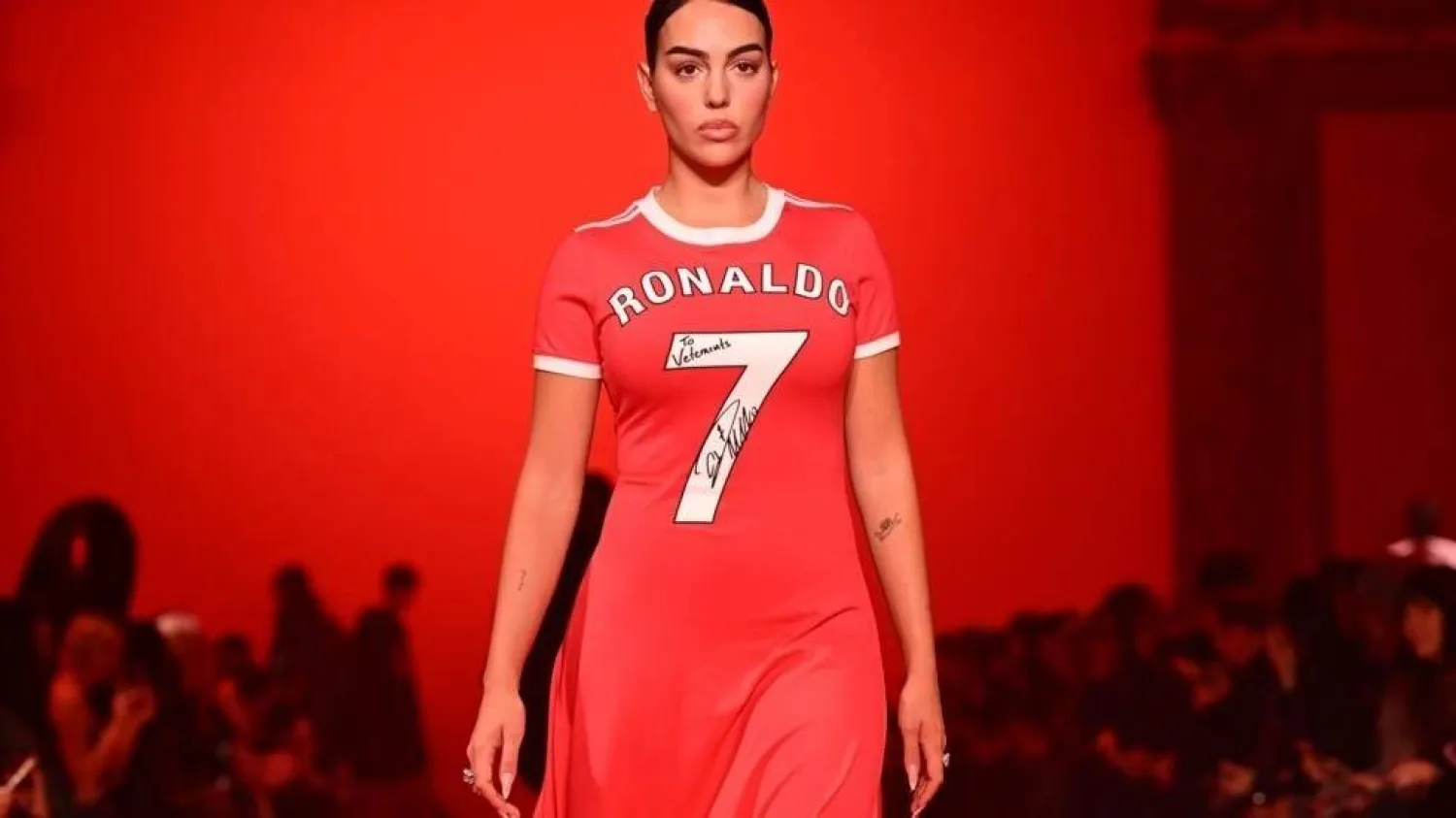
A Ronaldo jersey becomes a dress at Vetements. MIGUEL MEDINA / AFP
TT

Paris Fashion Week highlights: Teddies, Kids and a Phone Ban

A Ronaldo jersey becomes a dress at Vetements. MIGUEL MEDINA / AFP

Paris Fashion Week, which runs until Tuesday, has seen no shortage of eye-catching moments this week. Here are a few highlights.
No phones?!?
OMG! Fashionistas at The Row's show were told they were not allowed to use their beloved phones, meaning entire minutes of their lives would go unrecorded on Instagram.
The label of TV star sisters Ashley and Mary-Kate Olsen instead offered guests a notebook and pencil to record their impressions the old-fashioned way.
Chloe's new mama
There was a rare moment of spontaneity and family love at Chloe, where German designer Chemena Kamali made her debut with a collection that returned to the 1970s heyday of the house.
When Kamali came to take the customary bow at the end of the show, her five-year-old son couldn't resist running onto the catwalk for a hug in front of the ranks of fashion elite. Surprised and delighted, Kamali took him in her arms before quickly passing him back to dad and rushing backstage.
PETA's Beckham protest
PETA (People for the Ethical Treatment of Animals) disrupted Victoria Beckham's show on Friday, with slogans including "Viva Vegan Leather" and "Animals Aren't Fabric" before being bundled quickly off the catwalk.
Teddy Boy
Vetements, the subversive brand launched in 2014, vowed its latest show was the one "you've been waiting for for 10 years", and drew attention with hugely oversized suits and a Ronaldo jersey turned into a dress.
One crazy look was a coat made of teddy bears. Was creative director Guram Gvasalia having a dig at his estranged brother Demna, who quit the brand to work for Balenciaga and had a huge controversy around an ad campaign featuring BDSM teddy bears?
Perhaps, though Vogue pointed out it was a direct copy from Jean-Charles de Castelbajac, who made a similar coat for Madonna.
Highland Sam Smith
British popstar Sam Smith made a surprise appearance on the catwalk for Vivienne Westwood in a very short and rather revealing tartan kilt under a red shawl.
The "Unholy" singer, known for daring red carpet outfits, re-emerged later in a long shredded black coat over a polka-dot top.
Casablanca up in arms
Charaf Tajer's label, which joined Paris Fashion Week last year, has built a lot of hype with its luxury sportswear.
Its second show, named after 90s Bjork hit "Venus as a Boy", introduced more stylish nightwear -- ranging from a blood-red cocktail dress to a semi-sheer rhinestone blouse to a pearl-encrusted mini-dress -- and played with imagery from Ancient Greece including laurels, pottery and sandals.
But in the ring of the Winter Circus, the clothes were almost overshadowed by an incredible troupe of synchronized arm dancers in the background.
DVN's 'audacious everyday'
Known for meticulous craftsmanship, Belgium's Dries Van Noten presented another eclectic collection that spawned a possible new trend tag from WWD: "audacious everyday" has apparently replaced last year's "quiet luxury".
Deconstructed sweaters turned into wraparound shawls, kimono-like coats, big furry shorts and bags -- in a pastel range of pink, aniseed green and butter yellow -- the collection sought a balance between stylish restraint and exciting statement.
Raining on Hermes
It was a rainy week in Paris, and Hermes brought the wet indoors, too, with a curtain of rain pouring down through the middle of the catwalk.
The collection, "midway between equestrianism and motorbikes" according to creative director Nadege Vanhee, offered luxurious ways to keep dry.

Biker-style jackets and tight-fitting coats with wool sleeves. Others featured rocker-style rivets or ostrich feathers, all in a narrow palette of burgundy, green, black and grey.


Frenzy of Fashion Week to Add to Milan’s Olympic Party 

The company's logo is seen at a Prada store in Zurich, Switzerland January 25, 2021. (Reuters)
TT

Frenzy of Fashion Week to Add to Milan’s Olympic Party 

The company's logo is seen at a Prada store in Zurich, Switzerland January 25, 2021. (Reuters)

The fashion set return to Milan this week, bringing back glamor and runway revelry to Italy's northern city that has been wrapped up in Olympics fever.

Hundreds of buyers and media from around the world will descend on the fashion capital beginning Tuesday for Milan Fashion Week Fall/Winter 2026-2027 and its more than 50 catwalk shows from top Italian luxury names like Dolce & Gabbana, Prada and Giorgio Armani.

The upcoming shows, which run through March 2, come during a "moment of extraordinary visibility for Milan", sandwiched between the Milano Cortina 2026 Winter Olympics and the Paralympic Games, Mayor Giuseppe Sala told journalists earlier this month.

Fashion watchers are eagerly awaiting the first collection of veteran Dior and Valentino designer Maria Grazia Chiuri for Fendi, the Rome-based luxury label where she began her career 35 years ago, now owned by French fashion conglomerate LVMH.

And eyes will be on the Gucci runway to see if the debut looks presented by new artistic director Demna Gvasalia, formerly of Balenciaga, are compelling enough to help reverse a protracted sales slump at Kering's flagship brand.

The week's festivities will be a welcome distraction from a myriad of challenges facing the luxury fashion industry, which has struggled against a two-year global slowdown in demand, fueled by high inflation, economic turbulence and geopolitical uncertainty.

A warning from LVMH Chief Executive Bernard Arnault last month that "2026 won't be simple either" points to the difficulty of a sector recovery.

The president of the National Chamber of Italian Fashion, Carla Capasa, told journalists this month that revenue in Italy's fashion industry was estimated to rise in 2026 by a mere 1 percent.

The industry has also seen the recent passing of two designer giants, who enjoyed outsized influence on the world of fashion and exemplified the art of Italian tailoring.

Giorgio Armani, 91, died in September and Valentino Garavani, known just as Valentino, died in January aged 93.

- Green, white, red -

The Olympics opening ceremony paid tribute to Armani, whose Emporio Armani brand has dressed Italy's Olympic athletes since 2012. Willowy models dressed in satin suits of green, white and red paraded across the stage in three lines, mirroring the Italian tricolor flag.

Top Italian model Vittoria Ceretti was flag bearer, wearing a high-collared white Armani gown that recalled that worn by Carla Bruni for Italy's last Winter Olympics in Turin in 2006.

Official marketing for Milan Fashion Week has also tapped Olympics fever, with billboards featuring brooding models in an Alpine landscape, carrying vintage iceskates, skis and other sports equipment hailing from the Olympic Museum in Lausanne, Switzerland.

Milan is expected to get a financial boost of 320 million euros ($380 million) from the Winter Games, while the February fashion week typically brings in about 200 million euros, according to Milan city council member Alessia Cappello.

"The two things influence each other. Some people come for fashion and stay for the Olympics, or vice versa."


Demna in the Spotlight at Milan Fashion Week as Industry Seeks Creative Reset

The logo of fashion house Gucci is seen outside a store in Cannes, France, May 16, 2024. (Reuters)
TT

Demna in the Spotlight at Milan Fashion Week as Industry Seeks Creative Reset

The logo of fashion house Gucci is seen outside a store in Cannes, France, May 16, 2024. (Reuters)

Milan ‌Fashion Week opens on Tuesday, setting the stage for a slate of creative director debuts from Demna's first runway show for Gucci to Maria Grazia Chiuri's initial collection at Fendi.

The Milan womenswear collections, which follow fashion weeks in New York and London, and ahead of Paris, come as the sector is showing some timid signs of recovery.

While practical wool coats and cashmere sweater dresses featured in New York, industry watchers expect some bold creations in the Milan autumn/winter collections as new designers seek to stamp their mark.

One of the most closely watched will be Georgian designer Demna, hired in July to reinvigorate Gucci after sales at the Italian fashion house fell 22% last ‌year.

Demna, who spent ‌a decade at Balenciaga, sketched out a collection for Kering-owned ‌Gucci, ⁠called "La Famiglia", in a ⁠lookbook on Instagram last September. He stages his first full-scale runway show for the brand on Friday.

Designers across luxury fashion face mounting pressure to deliver fresh visions while keeping a tight focus on sales as the industry is still trying to pull out of a prolonged downturn.

"This season we are expecting bold creative resets. The anticipation around new creative directions makes this edition particularly charged, with houses redefining their codes under intense ⁠global scrutiny," said Tiffany Hsu, chief buying and group fashion ‌venture officer at luxury e-commerce platform Mytheresa.

"We are ‌looking for collections that feel culturally sharp, emotionally resonant, and commercially intelligent in equal measure", she ‌added.

BALANCING HERITAGE AND CREATIVITY

Chiuri's first collection for LVMH’s Fendi on Wednesday, following her ‌departure from Dior last year, is expected to draw close scrutiny.

On Thursday, Belgian designer Meryll Rogge will present her first show for Marni, owned by Italian fashion group OTB.

A sharp increase in prices of luxury goods post-pandemic, which was not matched by an equal effort ‌in creativity, has alienated some customers, whom brands are now struggling to win back.

"All of them (brands) are thinking more commercially - they're ⁠all trying to ⁠get revenue to grow. But ultimately what is defining for all of these businesses is the brand and the heritage, which has to be supported by creativity in the product. So it needs to be a careful balance between the two," said Emily Cooledge, head of luxury research at Rothschild & Co Redburn in London.

Francesco Fiorese, partner at consultancy firm Simon Kucher, said consumers want more understated quality.

"Consumers' fatigue with omnipresent logos and purely aesthetic 'status symbols' (sold at very high prices) is leading to a search for authenticity and craftsmanship," he said.

Milan Fashion Week will also feature shows by Dolce & Gabbana, Giorgio Armani, Ferragamo and Tod's.

It follows the Milan Cortina Winter Games, which have put Italy’s fashion capital in the global spotlight and offered brands a chance to appeal to affluent visitors arriving for the competitions.


Japan's Traditional Kimonos Are Being Repurposed in Creative Ways

Designer Tomoko Ohkata, left, and her assistant Koki Unami hold Ohkata's designs made from old kimono, in Tokyo, on Jan. 15, 2026. (AP Photo/Yuri Kageyama)
TT

Japan's Traditional Kimonos Are Being Repurposed in Creative Ways

Designer Tomoko Ohkata, left, and her assistant Koki Unami hold Ohkata's designs made from old kimono, in Tokyo, on Jan. 15, 2026. (AP Photo/Yuri Kageyama)

The kimono, that elaborate, delicate wrap-around garment worn by geisha and samurai from centuries back, is getting a vibrant remake, appreciated these days for a virtue that’s more relevant than ever: sustainability.

A genuine silk kimono, which literally means “worn thing,” lasts a hundred years or more. In a Japanese family, it’s handed down over generations like heirloom jewelry, artworks and military medals.

It never goes out of style.

The design of the kimono and accompanying “obi” sash has remained basically the same since the 17th century Edo period depicted in Akira Kurosawa samurai movies.

But today, some people are taking a different creative approach, refashioning the traditional kimono, and also taking apart and resewing them as jackets, dresses and pants.

“I noticed that a lot of beautiful kimono is just sleeping in people’s closets. That’s such a waste,” said Mari Kubo, who heads a kimono-remake business called K’Forward, pronounced “K dash forward.”

Hers is among a recent surge in such services, which also turn old kimono into tote bags and dolls.

The most popular among Kubo’s products are “tomesode,” a type of formal kimono that is black with colorful, embroidered flowers, birds or foliage at the bottom, The Associated Press reported.

She also creates matching sets, or what she calls “set-ups.” A tomesode is turned into a jacket with its long, flowing sleeves intact, and its intricate patterns placed at the center in the back. She then takes a kimono with a matching pattern to create a skirt or pants to go with the top. Sometimes, an obi is used at the collar to add a pop of color.

Kubo said many of her customers are young people who want to enjoy a kimono without the fuss.

A remade kimono at K’Forward can cost as much as 160,000 yen ($1,000) for a “furisode,” a colorful kimono with long sleeves meant for young unmarried women, while a black tomesode goes for about 25,000 yen ($160).

What Tomoko Ohkata loves most about the products she designs using old kimonos is that she doesn’t have to live with a guilty conscience, and instead feels she is helping solve an ecological problem.

“I feel the answer was right there, being handed down from our ancestors,” she said.

Recycling venues in Japan get thousands of old kimonos a day as people find them stashed away in closets by parents and grandparents. These days, Japanese generally wear kimonos just for special occasions like weddings. Many women prefer to wear a Western-style white wedding dress rather than the kimono, or they wear both.

Many of Ohkata’s clientele are people who have found a kimono at home and want to give it new life. They care about the story behind the kimono, she added.

Her small store in downtown Tokyo displays various dolls, including a figure of an emperor paired with his wife, who are traditionally brought out for display in Japanese homes for the Girls’ Day festival every March 3. Her dolls, however, are exquisitely dressed in recycled kimonos, tailored in tiny sizes to fit the dolls. They sell for 245,000 yen ($1,600) a pair.

The original old-style kimono is also getting rediscovered.

“Unlike the dress, you can arrange it,” says Nao Shimizu, who heads a school in Japan’s ancient capital of Kyoto that teaches people how to wear a kimono and how to carry oneself while wearing it.

“In half a year, you can learn how to do it all by yourself,” she said, briskly demonstrating several ways to tie the obi to express different moods, from playful to understated.

Besides its durability, said Shimizu, that versatility also makes the kimono sustainable.

Younger Japanese are taking a more relaxed view, wearing a kimono with boots, for instance, she laughed. Traditionally, kimono is worn with sandals called “zori.”

Although it requires some skill to put on a kimono in the traditional way, one can take lessons from teachers like Shimizu, like learning a musical instrument. Professional help is also available at beauty parlors, hotels and some shops.

Most Japanese might wear a kimono just a few times in their lives. But wearing one is a memorable experience.

Sumie Kaneko, a singer who plays the traditional Japanese instruments koto and shamisen, often performs wearing flashy dresses made of recycled kimonos. The idea of sustainability is deeply rooted in Japanese culture, she says, noting that the ivory and animal hide used in her musical instruments are now hard to obtain.

She calls it “the recycling of life.”

“The performer breathes new life into them,” says the New York-based Kaneko.
“In the same way, a past moment — and those patterns and colors that were once loved — can come back to life.”