


Puma’s Long Slide: The Rise and Fall of a German Sports Icon

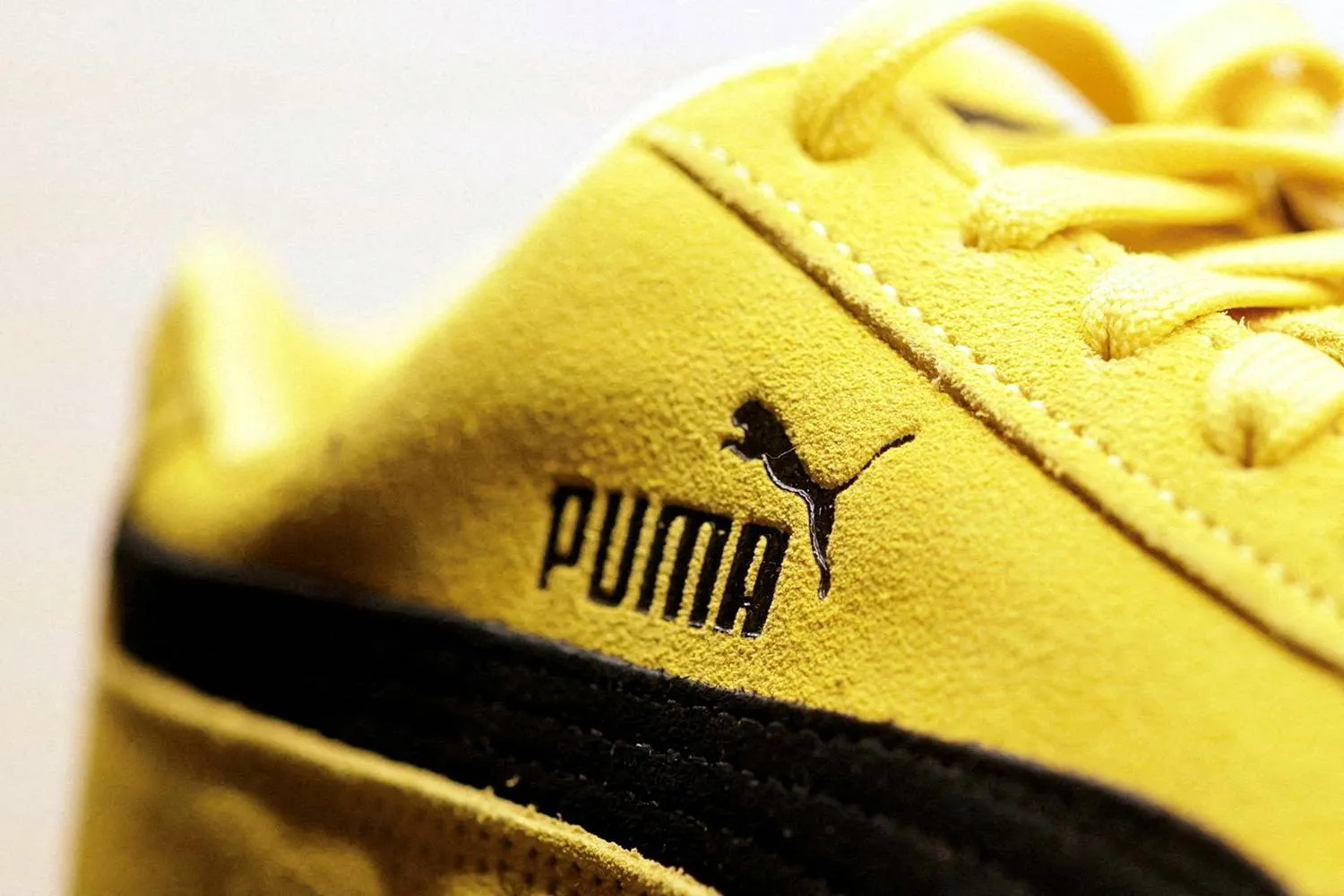
A Puma logo is seen on a Puma Speedcat OG sneaker displayed at the Puma Mostro House in Paris, France, January 24, 2025. (Reuters)
TT

Puma’s Long Slide: The Rise and Fall of a German Sports Icon

A Puma logo is seen on a Puma Speedcat OG sneaker displayed at the Puma Mostro House in Paris, France, January 24, 2025. (Reuters)

Germany's Puma and fierce rival Adidas have their roots in the ​very same house where brothers Rudolf and Adolf Dassler launched their shoe business a century ago, before a major fall-out between the siblings split the company in two.

From the split of the original company Geda, Rudolf founded Ruda - later renamed Puma - while Adolf founded Adidas. The two firms' headquarters remain just a short walk from each other in the Bavarian town of Herzogenaurach.

Now Puma is set to come under the wings of China's top sportswear firm Anta, which would become its biggest shareholder in a $1.8 billion deal aimed at turning around one of Europe's most iconic sports brands that has fallen sharply from grace.

Puma, with its leaping wildcat logo, has struggled to win consumers to ‌its sportswear and ‌Speedcat sneakers, even as Adidas has streaked ahead with its retro Terrace ‌shoes - widening ⁠a ​sales gap ‌between the two firms.

"Puma became ... too dependent on maybe lifestyle products rather than performance sports shoes, which really drove this industry," said Morningstar analyst David Swartz, adding its lower revenues meant it had less to spend on star names boosting the brand.

"So they don't have the visibility."

CHALLENGES FROM EMERGING BRANDS

Puma was the no. 3 in sportswear after Nike and Adidas until recent years, competing to churn out cool sneakers and win top athletes and soccer-team sponsorships. But as newer brands like On Running and Hoka grew, Puma fell off the pace.

"Puma has become too commercial, over-exposed in the wrong channels, with ⁠too many discounts," Puma's CEO Arthur Hoeld, formerly sales chief at arch-rival Adidas, said in October.

The Anta deal for the 29% stake held by ‌the Pinault family behind Gucci-owner Kering, could give the firm an opportunity to ‍regain some ground lost, including in China. The deal pushed ‍Puma's shares up 9% on Tuesday.

"We have a lot of insight how to make Puma more ‍successful in China," Wei Lin, global vice president for sustainability and investor relations at Anta, told Reuters. "It is one of the most valuable brands in this industry."

The Anta deal values Puma at some $6.2 billion. Its enterprise value is around one times its forecast sales for 2027 using Visible Alpha analyst estimates, relatively cheap compared to rivals including Adidas, Nike and Swiss firm On.

SPEEDCAT VERSUS ​SAMBA

Puma, founded in 1948, has a long history of outfitting athletes with track spikes and soccer boots, then made in its Herzogenaurach factory and now mostly sourced from factories in China, Vietnam, ⁠and Indonesia.

While Adidas boomed, Puma climbed too and its stock hit a peak of 115 euros in late 2021. Since then, though, it's slid, losing 80% of its value. Its market cap on Tuesday was 3.2 billion euros ($3.8 billion), an eighth of the size of Adidas.

Trade war uncertainties have hit the retail sector as a whole in recent years, but Puma has particularly suffered.

It has been under pressure as sportswear competition intensified and its recent sneaker launches, including the Speedcat, have been overshadowed by Adidas' Samba and other "terrace" shoes - retro models inspired by soccer fans' footwear in the 1970s and 1980s.

CEO Hoeld, in charge since July last year, announced in October a turnaround plan aiming to cut 900 corporate jobs, to discount less, improve marketing and reduce its product range.

Felix Dennl, retail analyst at German bank Metzler, said Adidas had put pressure on Puma by getting a "head start" on sneakers.

"Adidas was a first mover in capitalizing on the retro sneaker ‌trend, roughly six months before Puma," he said.

"This not only allowed Adidas to get a head start... but also transfer the brand heat generated across lifestyle footwear into performance franchises."

Chanel Couture Gets a Breath of Fresh Air and Stars. Armani Revamps

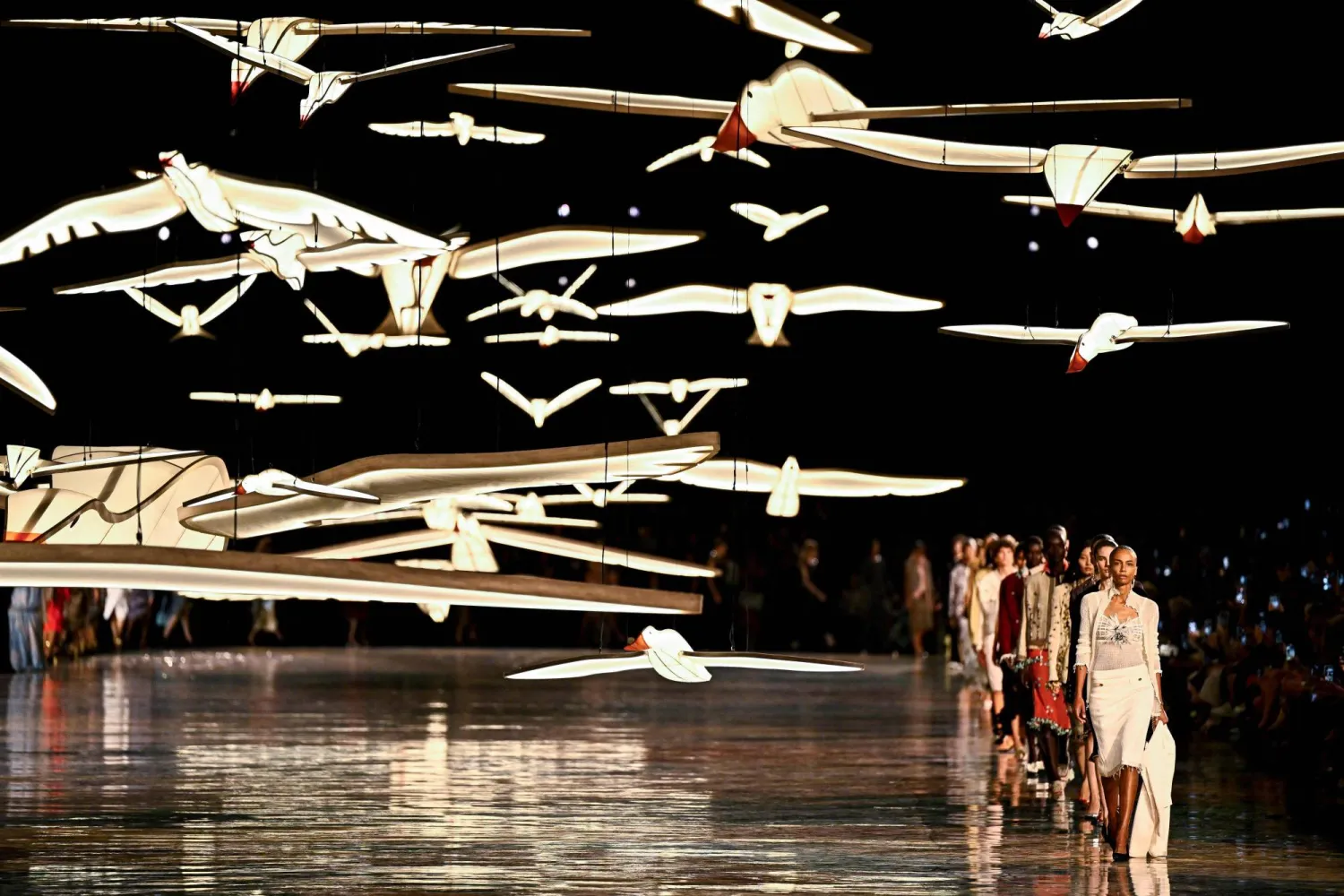
A model presents a creation by designer Matthieu Blazy appears as part of his Haute Couture Spring/Summer 2026 collection show for fashion house Chanel in Paris, France, January 27, 2026. (Reuters)
TT

Chanel Couture Gets a Breath of Fresh Air and Stars. Armani Revamps

A model presents a creation by designer Matthieu Blazy appears as part of his Haute Couture Spring/Summer 2026 collection show for fashion house Chanel in Paris, France, January 27, 2026. (Reuters)

Fashion powerhouse Chanel stacked the Paris front row like a movie premiere Tuesday: Nicole Kidman, Dua Lipa, Penélope Cruz, A$AP Rocky, Gracie Abrams, Margaret Qualley. Then, it handed the spotlight to its new designer, Matthieu Blazy, for his much-anticipated couture debut built on one big, confident swing: joy.

Inside the Grand Palais, the house went full fantasy. The set was a dream-garden of candy-colored trees and giant pink-and-red mushrooms: a surreal antidote to the gray January day outside, and to the even heavier mood of the world beyond the doors.

Before the first look, Blazy even teased the mood with an animation film of woodland animals at work in the Chanel ateliers, “Cinderella” style: a wink that said this would be couture, but not grim.

Then came the clothes, and the message landed fast: lightness. Blazy took Chanel’s most famous codes — the suit, the pearls, the chain-weighted hems — and made them feel almost weightless.

A classic skirt suit arrived as a sheer, barely-there version of itself, cut so delicately it looked like air had been tailored.

In a house where tweed can be armor, this was tweed as whisper. Birds hovered over the collection as a guiding idea: freedom, motion, travel. Featherlike textures and flighty embroideries fluttered across silhouettes that moved like breath instead of structure.

There were flashes of plumage in color and surface — at times bright, at times raven-dark — and plenty of soft, floating chiffon that made the models look as if they were gliding rather than walking.

The best trick was how the craft wasn't obvious.

Up close, the work was meticulous: a level of handwork couture clients pay for, and ateliers live for. But the overall effect stayed easy, almost casual; as if the clothes were beautiful without demanding applause.

Blazy played with the artistic technique trompe l’oeil, including a tank top-and-jeans idea reimagined in organza, and with textures that were romantic but also a little strange; couture that winked.

In a brand built on total looks and strong house signatures, Blazy offered something personal: choice. Models were invited to pick symbols and messages to stitch into the clothes — a love note, a sign, a private mark.

It pushed Chanel away from “uniform” and toward intimacy: couture as a wearable secret, not just a public statement.

The show also had a sense of casting as storytelling.

Blazy’s runways have tended to carry an open, joyful energy, and that continued here — a mix of ages, backgrounds and presences that made the clothes feel lived-in.

Model Bhavitha Mandava, fresh off her viral moment at the house’s Métiers d’Art show, returned.

Later she closed as a couture bride, shimmering and feathered, smiling as if she knew she was ending the scene exactly on the right note.

The soundtrack shifted moods like a DJ set, moving from Disney sweetness to millennial nostalgia — including Moby’s “Porcelain,” and a mashup that blended Oasis’ “Wonderwall” with The Verve’s “Bitter Sweet Symphony.”

By the finale, the room was playing along.

Big sets are easy. Blazy’s debut didn’t try to overpower Chanel with noise or force a new era with aggression. Instead, he made it feel alive.

Armani's new direction

Silvana Armani stepped forward Tuesday with her first couture collection as creative director of Armani Privé, taking the spotlight after the death of her uncle, Giorgio Armani, in September.

Armani, who worked alongside him for more than four decades, becomes the only woman leading a couture house this season, in a week dominated by high-profile debuts from male designers.

Her debut kept the house’s signature restraint but pushed it toward a lighter, more wearable mood. The lineup was trimmed to about 60 looks, a sharper edit than the brand’s typical scale.

Tailoring opened the show, but softened: relaxed suits, sheer organza shirts with ties, and wide-leg trousers in light layers that moved easily on the runway. Accessories were kept minimal — and hats were left out entirely, a notable change for a house long associated with Giorgio Armani’s love of headwear.

Tribute couture The palette stayed pale and controlled, with celadon and blush tones running through the collection.

Decoration was largely contained to embroidery, with sparkle used selectively rather than as an all-over effect.

Evening looks brought the strongest statements, including crystal-shimmered gowns that read almost weightless, sequins paired casually with wide trousers, and a column dress covered in translucent crystals under a black satin opera coat lined in matching green.

The finale delivered a direct link to the founder: a bridal gown designed by Giorgio Armani for his last Privé collection, shown publicly for the first time.


Dr Martens Projects Flat 2026 Revenue as It Scales Back Discounts

People walk past a Dr Martens store in Manchester, Britain, May 26, 2023. (Reuters)
TT

Dr Martens Projects Flat 2026 Revenue as It Scales Back Discounts

People walk past a Dr Martens store in Manchester, Britain, May 26, 2023. (Reuters)

Dr Martens on Tuesday forecast ​broadly flat revenue for fiscal 2026, after quarterly sales dipped as the British bootmaker pulled back on discounts as part of its plan to return ‌to profit ‌growth.

Dr Martens ‌has ⁠been ​scaling ‌back discounting and expanding into shoes, sandals and bags as it seeks a return to profit growth in the current financial year. However, ⁠tariffs imposed by US President Donald ‌Trump have complicated the ‍bootmaker's targets, adding ‍fresh pressure to costs ‍in its largest market.

Dr Martens, known for its chunky lace-up boots, plans to raise US ​prices from January, and has shifted production to Vietnam ⁠from Laos to blunt the impact of higher US import tariffs.

For the three-month period ended December 28, the company's revenue fell 3.1% to 251 million pounds ($343.42 million), pressured by weaker consumer demand in its European market.


Dior Couture Debut for Anderson Mixes Wonder, Wit, Celebrity-Wattage

Danish model Mona Tougaard presents a creation for Christian Dior during the Women's Haute Couture Spring/Summer 2026 collection fashion show as part of the Paris Haute Couture Fashion Week, in Paris, on January 26, 2026. (AFP)
TT

Dior Couture Debut for Anderson Mixes Wonder, Wit, Celebrity-Wattage

Danish model Mona Tougaard presents a creation for Christian Dior during the Women's Haute Couture Spring/Summer 2026 collection fashion show as part of the Paris Haute Couture Fashion Week, in Paris, on January 26, 2026. (AFP)

Dior turned the Musée Rodin into a celebrity waiting room — then into a garden.

Guests packed into the museum as the start time for the show drifted.

French first lady Brigitte Macron arrived. Lauren Sánchez Bezos swept in. Parker Posey twirled in her trench-dress.

And then the whole room, celebrities and editors alike, sat and waited for Rihanna.

When the popstar finally took her seat, the lights dropped on a suspended ceiling hung with a garden of flowers.

Gravity did its quiet work: a bloom loosened and fell to the floor.

It was a fitting opening image for Jonathan Anderson’s first Dior haute couture show: beauty under pressure.

Dior’s showman does everything at once Anderson, the Northern Irish designer who revived Loewe with craft and wit, is now doing something Dior has never asked of one person in the modern era: he commands menswear, womenswear and couture at once.

That scale matters.

Dior is one of the main engines of the luxury conglomerate LVMH, and couture is where a house shows its power.

The collection was pitched as “nature in motion,” with technique treated as living knowledge, not museum display. Anderson followed that logic, reworking fragments of the past into something meant to feel new.

From the start, the palette was disciplined — blacks, whites and ecru — then punctured by flashes of color and texture. Lines were clean. Draping softened, then snapped back into structure: archetypal couture.

At its best, Anderson’s couture had the crispness he has already shown in menswear, and previously at Loewe.

A sublime silken Asian-style coat, strict and elegant, was cut through with black lapels that felt archive-meets-modern.

The house’s history appeared not as costume but as distortion.

The show’s oddest and most telling jokes were the pannier gowns: 18th-century volume reimagined as a take on a fanny pack silhouette.

It was classic Anderson: take something precious, tilt it, and make the result feel both witty and exact. Micro became macro — flowers cut from light silks, dense embroideries, chiffon and organza layered like feathers.

He also nodded to a broader Dior lineage without leaning on nostalgia.

Dior cited bunches of cyclamen given to Anderson by its former creative director John Galliano, and the show carried a faint echo of Galliano-style spectacle — filtered through Anderson’s cooler, more controlled hand.

Hydrangea-like blooms appeared as oversized earrings throughout, a decorative flourish, but one that felt like Dior’s house codes pushing him toward embellishment.

For all the ambition, the accomplished show occasionally felt like a set of strong parts still settling into a single, defining line.

Couture raises the stakes. When it works, it doesn’t just impress; it convinces. Anderson’s debut did both — but not always at the same time.

The ceiling garden promised one complete world. At times, the clothes felt like a designer still deciding where that garden begins and ends.